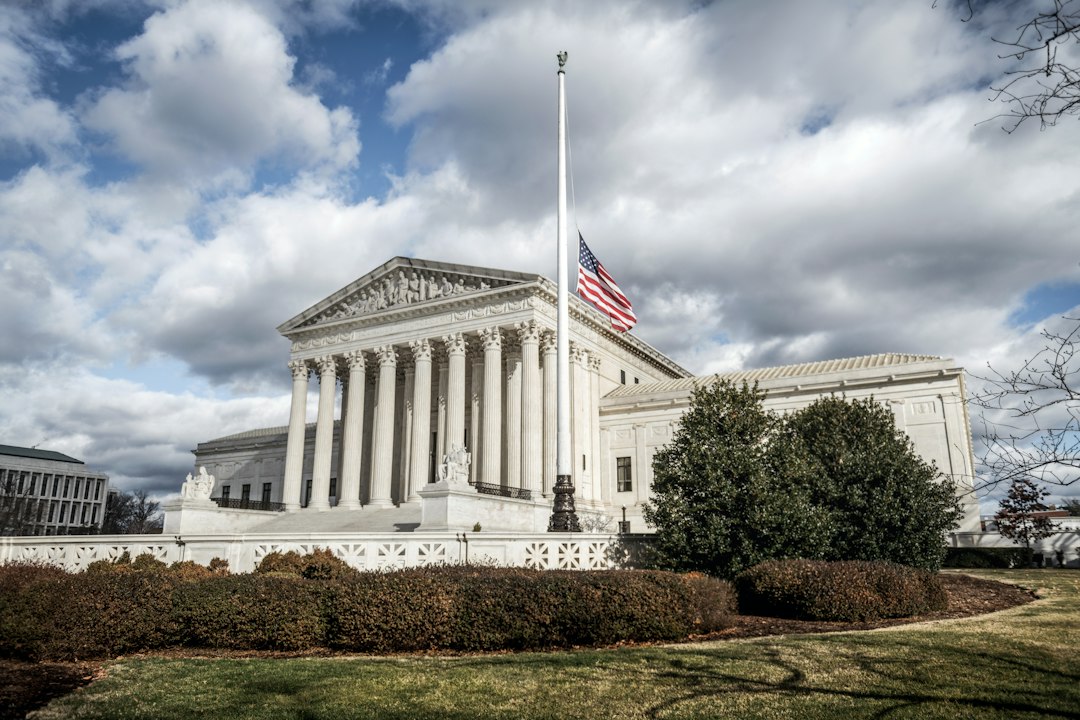
Should the Supreme Court remain at nine justices, or would a larger bench strengthen the nation’s highest court? That question is drawing renewed attention after a Republican-backed constitutional amendment to permanently limit the court to nine seats failed in the House in September. Democratic proposals include expanding the court to 13 justices, while supporters and opponents disagree over whether changing its size would improve its credibility or deepen political divisions.
Although nine justices may seem like a constitutional requirement, Congress determines the court’s size. Its membership changed several times before settling at nine in 1869. Legislation introduced by Rep. Al Green would increase that number to 13, reopening a debate over how much influence elected officials should have over the structure of the judiciary. Supporters see expansion as a way to restore balance and bring additional perspectives to the bench. Critics worry that adding seats to secure favorable rulings could encourage future majorities to pursue similar changes.
The broader issue is how to preserve public confidence in an institution designed to exercise independent judgment. The Constitution’s protections for federal judges, including service during good behavior and protection against salary reductions, are intended to shield them from partisan pressure. Changing the court’s membership would create new opportunities for presidential appointments, with consequences that could extend well beyond a single administration. As the debate continues, Americans face a consequential question: What reforms would strengthen accountability while preserving the Supreme Court’s ability to interpret the law independently?
·
1 min
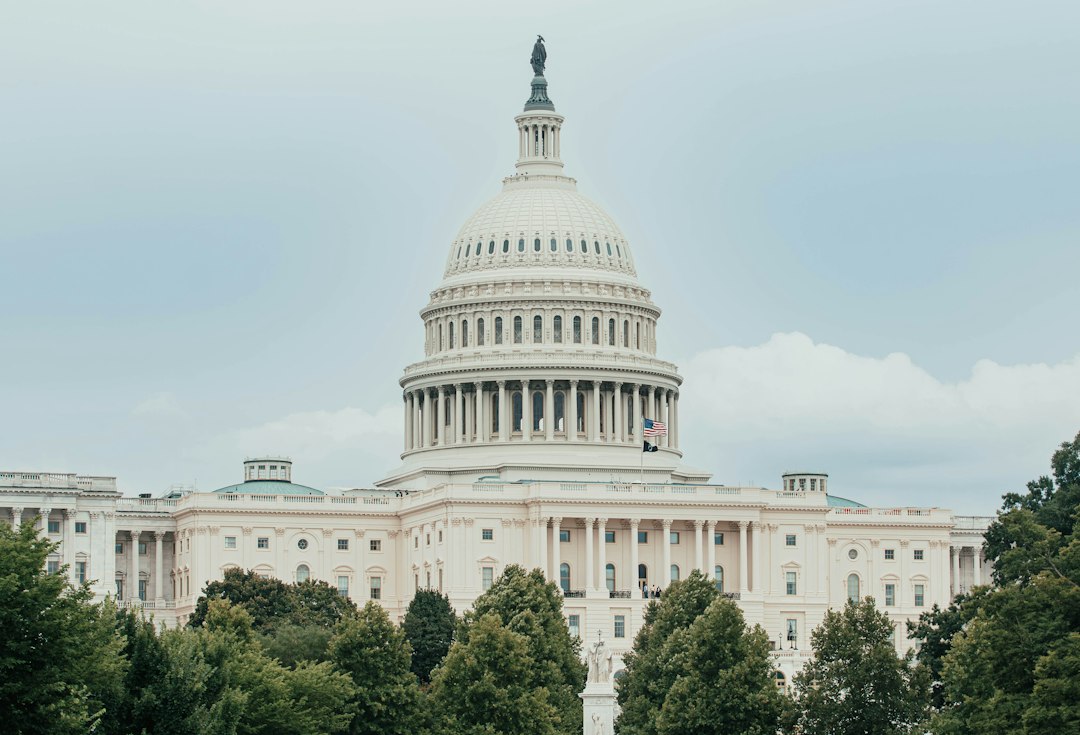
When will Congress stop kicking the budget proverbial can down the road with a continuing resolution and begin addressing the issue of leading with a balanced budget? Having a balanced budget, and spending within our means should be expected of our legislators--but for decades, this has not been the case.
Lawmakers from both political parties are guitly of not addressing the issue that has created several 11th-hour deals regarding the budget. While this strategy helps keep some legislators in power, it's providing no benefit to the American people.
Congress has now opted to not work on this issue until December--if it even does it then. However, the deadline buys our political leaders time to get past the midterm elections, campaign for each other, and hope the American public doesn't notice. And, in doing so, we'll experience another government shutdown in December.
·
3 min
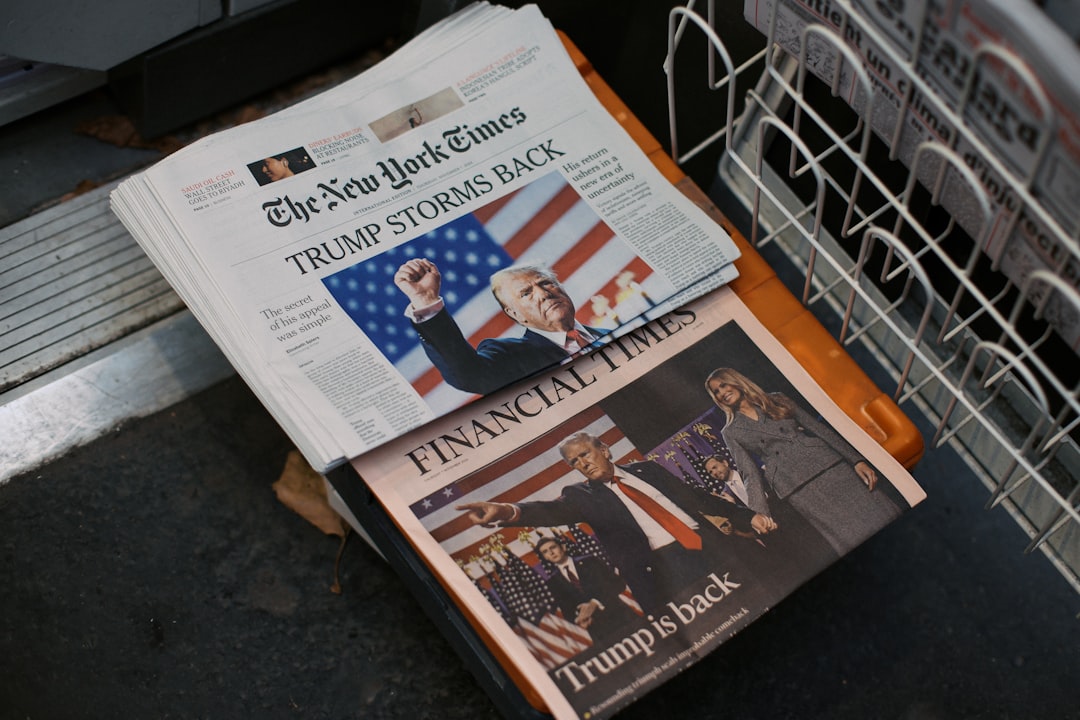
In All the King’s Men, Robert Penn Warren describes Willie Stark’s final victory. “And there wasn’t any Democratic party. There was just Willie, with his hair in his eyes and his shirt sticking to his stomach with sweat. And he had a meat ax in his hand and was screaming for blood.” Warren’s description is darkly poetic and metaphorical. Stark, the populist governor of a fictional state, did not murder his rivals, but he did destroy them, along with the political party he rode to power. Like Stark, Donald Trump has carved up the Republican Party of old, and in its place, there is just Trump.
This is not the first time a politician has remade a political party, but the death of the G.O.P. threatens to unbalance our political system. We are defined by close elections, tight legislative majorities, and polarized preferences. Neither side in the cultural conflict can achieve core objectives, so the temptation to put more hope and power into the Executive, to skew the system, is mounting.
We can argue about the degree to which past Republicans were truly restrained, especially in government spending, but at least the G.O.P. used to advocate for two seatbelts to keep the body politic safe from accidents: character to govern the self and constitutionalism to limit what government can do to others.
As the G.O.P. grew to rival Democratic power, in the 1980s and 1990s, the New Deal coalition fractured, along with the assumption that simply more power, expertly applied, could solve our problems. Democrat Bill Clinton conceded “the era of big government is over.” Justice Elena Kagan recognized, “we’re all textualists now.” The tug of war between an evolving progressivism and a robust conservatism may not have made for an ideal way to solve problems, but it did encourage humility, born of the recognition that radical actions, even if successful, would be punished.
Dr. Mark Caleb Smith serves as Professor of Political Science and the Director of the Center for Political Studies at Cedarville University. He teaches courses in American Politics, Constitutional Law, and Research Methodology/Data Analysis. His primary research interest is in the field of religion and American politics. View his profile Those days are over. Donald Trump’s Republicans are no longer a restraint of any kind. The seatbelts of the past have been snipped by the same leaders who claimed to buckle them in place. The Epstein Files are the exception of congressional pushback that proves the rule of the party’s degradation.
But what of the appointment of unqualified and incompetent leaders in the F.B.I., H.H.S., Homeland Security, and the Department of Defense? Illegal and extra-judicial killings in the Caribbean? An unexplained and unauthorized military buildup in the same region? Shakedowns of universities and media outlets? Crypto corruption? Tariffs? Strong-arming law firms and firing career civil servants for seeking justice in our courts? The Republican response has mostly been crickets.
There is no longer a major party that pretends to restrain the president through the law out of principle. The real disagreement between Trump Republicans and Biden Democrats is not about should the president abuse his power, but how.
Unless something dramatic happens, the politics of the meat ax will come for us all.
Mark is available to speak with the media regarding the state of politics in America. Simply click on his icon now to arrange an interview.
Media
Social
Biography
Dr. Smith serves as Professor of Political Science and the Director of the Center for Political Studies at Cedarville University. He teaches courses in American Politics, Constitutional Law, and Research Methodology/Data Analysis. Dr. Smith has authored numerous refereed journal articles, book chapters, and other publications. His primary research interest is in the field of religion and American politics. He received his B.A. in history from Bryan College (1992), an M.A. in the history of Christianity from Trinity Evangelical Divinity School (1995), and an M.A. (1997) and Ph.D. (2001) in political science from the University of Georgia. Before arriving at Cedarville in 2004, Dr. Smith taught at Tulane University and Calvin College.
Industry Expertise
Research
Education/Learning
Areas of Expertise
Constitutional Law
Presidential Politics
Presidential Campaigns
Education
University of Georgia
Ph.D.
Political Science and Government
2001
Trinity Evangelical Divinity School
M.A.
History of Christianity
1995
University of Georgia
M.A.
Political Science
Bryan College
B.A.
History
1992
Media Appearances
Get Ready for Contentious Battle
WDTN TV tv
2018-06-28
Mark Caleb Smith joins WDTN TV to discuss the retirement of Anthony Kennedy from SCOTUS.
"Comey told members of Congress on Friday that newly discovered emails believed to be related to the Clinton case were prompting a new review.
Cedarville University’s Mark Caleb Smith says it’s hard to say the impact this could have on her campaign.
'It makes me think that there must be something there that is significant or they wouldn’t go through the process,' Smith said. 'And the headache of re-opening it. It’s interesting for me to think through that the director has the same president, same attorney general, same director so what exactly is happening? You wonder if it’s an internal issue in the FBI...'"
Forum at Cedarville U. helps sort out history-making presidential race
Springfield News-Sun online
2016-10-26
"A history-making presidential campaign with history-making candidates will make for a remarkable election, the director of Cedarville University’s Center for Political Studies said tonight.
'No matter what you think of Donald Trump or Hillary Clinton, this is historic,' the director, Mark Caleb Smith, said.
'No matter what takes place, it will be remarkable,' he said, because the nation will either election someone who has never held public office or the first woman president of the United States..."
On the prospect of linking religious right identification with political behavior: Panacea or Snipe Hunt?
Journal for the Scientific Study of Religion
2002
Although it is a popular topic, the religious right is understudied in two areas. First, scholars have not developed an agreed-upon profile of religious-right adherents at the individual level. Second, little is known about how religious-right status functions as a predictor of political behavior. There is a possibility that religious-right status functions similarly to party identification, as an indicator that is both related to a wide range of variables and capable of functioning independently of those variables as a predictor of political behavior. Using multivariate statistical techniques we analyze survey data that allows respondents to self-identify as members of the religious right. We find that religious-right identifiers are social and theological conservatives who demonstrate high levels of religious commitment. However, they are neither monolithically Republican nor ideologically conservative. Religious-right status does have cross-cutting characteristics, for it is fluid across partisan, ideological, and denominational lines. This status is not, however, politically distinguishing as whatever impact it has on political behavior is apparently subsumed by traditional political variables.
Religiosity, secularism, and social health: A research note
Journal of Religion & Society
2006
This article is a research note addressing various theoretical and methodological issues in the measurement and analysis of religiosity and secularism and their relationship to quantifiable measures of social health in advanced and prosperous democracies. Particular attention is given to cross-national frameworks for studying religiosity and secularism as well as to the conceptualization and statistical analysis of these notions for research design. Various procedural suggestions regarding the use of comparative frameworks are presented to assist in the development and implementation of future studies gauging the impact of worldview commitments upon societal wellbeing.
Fanning the flames: Religious media consumption and American politics
American Politics Research
2007
Both religion and mass media are politically important in the United States. However, little is known about the political role of religious media. Religious media might be politically influential because they help translate religion into political thinking and because their consumers are likely to internalize the political cues these media provide. We find that almost a quarter of the public claims to have relied on religious media when making voting decisions in 2000. Religious media users felt significantly closer to George W. Bush and Pat Buchanan and farther away from Al Gore and were more likely to vote for Bush and Republican House candidates than nonusers, even after controlling for a host of religious and political variables. These findings reflect more than self-selection effects and suggest that religious media have a polarizing effect on the candidate evaluations and voting behavior of their core audience of political conservatives.