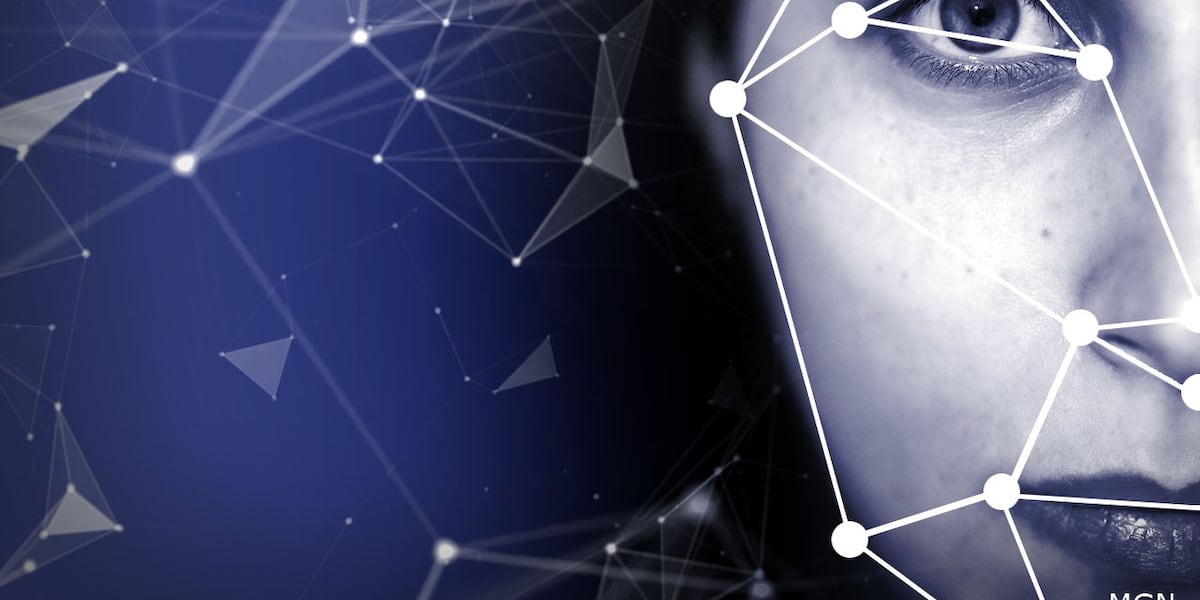
As artificial intelligence becomes increasingly sophisticated, distinguishing authentic political messages from fabricated content is becoming a growing challenge for voters, journalists and election officials.
AI-generated videos, images and audio can now convincingly portray political candidates saying or doing things that never happened. With the November midterm elections approaching, the technology is raising important questions about misinformation, political persuasion and public trust.
The issue was recently highlighted in an Oct. 13 WRDW News report, Real or Fake? Deepfakes Flood Georgia Political Ads, featuring Augusta University's Lance Hunter, PhD.
The report examined the growing presence of AI-generated political advertising, including a fabricated video involving Georgia Senator Jon Ossoff, and the challenges associated with identifying and regulating this material.
A New Challenge for Political Communication Hunter explained how artificial intelligence is fundamentally changing the way political content can be created and distributed.
"Artificial intelligence can really increase the persuasiveness, the amount of content it can create." Unlike traditional political advertising, AI-generated content can create seemingly authentic footage of events that never occurred.
"What makes this different is the ability to actually show someone doing something that they did not do." The technology raises important questions about how voters evaluate political information, whether existing regulations provide adequate protections and how campaigns may use artificial intelligence in future elections.
Lance Hunter, PhD, is a political science professor at Augusta University whose expertise in political behaviour, elections and political communication makes him a valuable resource for journalists covering the growing influence of artificial intelligence on American politics. View his profile An Emerging Story With National Implications While the WRDW report focused on Georgia, the implications extend well beyond one state or election.
As AI-generated political content becomes more accessible and convincing, journalists are increasingly examining several important questions:
How can voters distinguish authentic political content from AI-generated misinformation? What influence could deepfakes have on public opinion and voter confidence? Should political campaigns be required to disclose their use of artificial intelligence? How can election officials and policymakers respond as the technology evolves? These are emerging issues at the intersection of political science, technology, public policy and democratic participation.
As news organizations continue examining AI-generated campaign advertising, election misinformation and the future of political communication, Hunter can provide expert analysis of the challenges facing voters and the broader implications for democracy.
If you're interested in speaking with Dr. Lance Hunter about AI deepfakes, political advertising, election misinformation, voter behaviour and the impact of emerging technologies on democracy, simply click on his profile to arrange an interview today.
·
2 min
Artificial Intelligence is often framed as a driver of innovation. But it also has the power to disrupt the very foundations of our societies.
In a recent study, experts Craig Albert, PhD, and Lance Hunter, PhD, from Augusta University explored how AI, as part of the Fourth Industrial Revolution, could reshape economies, politics and security within states.
Here are three key takeaways from the research:
AI brings breakthroughs in health care, logistics and engineering, but also disrupts jobs and economies. Unmanaged disruption can fuel instability, widening inequality and increasing risks of unrest or domestic conflict. Governments must act now with retraining, adaptive policies and strong governance to harness AI’s benefits while reducing risks. Lance Hunter, PhD, is an assistant professor of political science with a background in international relations. His research focuses on how terrorist attacks influence politics in democratic countries and how political decisions within countries affect conflicts worldwide. Hunter teaches courses in international relations, security studies and research methods. He received his PhD in Political Science from Texas Tech University in 2011. View his profile here. Craig Albert, PhD, is a professor of Political Science and the graduate director of the PhD in Intelligence, Defense, and Cybersecurity Policy and the Master of Arts in Intelligence and Security Studies at Augusta University. His areas of concentration include international security studies, cybersecurity policy, information warfare/influence operations/propaganda, ethnic conflict, cyberterrorism and cyberwar, and political philosophy. View his profile here. The question we face is not whether AI will transform society (it already is!) but how we will manage that transformation to strengthen rather than destabilize.
What steps do you think policymakers should prioritize to prepare for this future?
Here's the abstract from the paper in Research Gate: An emerging field of scholarship in Artificial Intelligence (AI) and computing posits that AI has the potential to significantly alter political and economic landscapes within states by reconfiguring labor markets, economies and political alliances, leading to possible societal disruptions. Thus, this study examines the potential destabilizing economic and political effects AI technology can have on societies and the resulting implications for domestic conflict based on research within the fields of political science, sociology, economics and artificial intelligence. In addition, we conduct interviews with 10 international AI experts from think tanks, academia, multinational technology companies, the military and cyber to assess the possible disruptive effects of AI and how they can affect domestic conflict. Lastly, the study offers steps governments can take to mitigate the potentially destabilizing effects of AI technology to reduce the likelihood of civil conflict and domestic terrorism within states. Read the full report here: Looking to know more? Let us help. Both Albert and Hunter are available to speak with media. Simply click on either experts icon now to arrange an interview today.
·
2 min
Augusta University's Lance Hunter, PhD, was recently published in the highly acclaimed World Affairs. His article “The polarization paradox: How state wealth and online media consumption affect polarization” highlights his expertise and insight on this very important topic, especially as America faces division and tension.
Here's the abstract: Previous valuable scholarship has found that wealth inequality can affect political polarization within states. However, less is known regarding how overall levels of state wealth and online media consumption affect polarization. Thus, this study examines how state wealth and online media consumption affect polarization in 157 states from multiple regions and levels of development from 2000 to 2022. When including standard controls and controlling for potential endogeneity, the findings reveal that greater state wealth and online media consumption are associated with increased polarization. The rationale for the findings is that greater state wealth and online media consumption increase the prevalence of postmaterialist values within states that often clash with materialist values, leading to heightened polarization. These findings have important implications in considering how state wealth and online media consumption interact to influence polarization cross-nationally. Hunter is an assistant professor of political science with a background in international relations. His research focuses on how terrorist attacks influence politics in democratic countries and how political decisions within countries affect conflicts worldwide. His work has appeared in journals such as: Journal of Peace Research, Terrorism and Political Violence, Party Politics, Studies in Conflict and Terrorism, Armed Forces and Society, Conflict, Security and Development and the International Journal of Data Analysis Techniques and Strategies. Hunter teaches courses in international relations, security studies and research methods.
Interested in learning more let us help. Lance Hunter, PhD, is available to speak with media about this important topic simply click on his icon to arrange an interview today.
Multimedia
Social
Biography
Hunter is an assistant professor of political science with a background in international relations. His research focuses on how terrorist attacks influence politics in democratic countries and how political decisions within countries affect conflicts worldwide. His work has appeared in journals such as: Journal of Peace Research, Terrorism and Political Violence, Party Politics, Studies in Conflict and Terrorism, Armed Forces and Society, Conflict, Security and Development, and the International Journal of Data Analysis Techniques and Strategies. Hunter teaches courses in international relations, security studies, and research methods. He received his PhD in Political Science from Texas Tech University in 2011.
Areas of Expertise
Politics
Terrorism
International Relations
Voting
Civil Liberties
Education
Texas Tech University
Ph.D.
Political Science and Government
2011
Texas Tech University
MA
Political Science and Government
2008
University of Georgia
MSW
Social Work
2004
University of Georgia
BSW
Social Work
2003
Affiliations
Augusta University Political Science Club : Co-Advisor
Augusta University ONE Organization : Advisor
Augusta University Cyber Institute: Advisory Committee Member
Augusta University Honors Program: Committee Member
Real or fake? Deepfakes flood Georgia political ads
WRDW online
2026-10-13
Dr. Lance Hunter, a professor of political science at Augusta University, said artificial intelligence can increase the persuasiveness of political messaging and the amount of content that can be created.
Iranian hacking groups go dark during US, Israeli military strikes
The Straits Times online
2026-03-03
“Predatory Sparrow highlights the evolving nature of warfare,” said Professor of International Relations Lance Hunter at Augusta University.
“We’ll see many more examples of this, including from Western countries, combining cyber, traditional military and information warfare. This is the nature of conflict moving forward.”
Professors weigh in on how NIL’s affecting college sports following Ferrelli fiasco at Clemson
FOX Carolina tv
2026-01-28
CLEMSON, S.C. (FOX Carolina) - WATCH: Clemson Football Coach Dabo Swinney details tampering timeline of Ole Miss with former Tiger Luke Ferrelli, Augusta University professors, Dr. Wesley Meares and Dr. Lance Hunter, weigh in on how NIL (name, image and likeness) is affecting college sports.
Government Shutdown Threatens Cybersecurity Just as Nation Marks Cyber Awareness Month
ClearanceJobs online
2025-10-16
“The U.S. federal government shutdown can increase the risk to national cybersecurity for several reasons. First, with a larger number of employees in federal cyber units furloughed, activities such as threat monitoring, security system updates, and incident response can be delayed,” explained Dr. Lance Hunter, professor of International Relations and faculty member within the Master of Arts in Intelligence and Security Studies Program at Augusta University.
Hunter further suggested that in this environment, the sharing of cyber intelligence data may stop or slow, which can in turn weaken situational awareness for the federal government and private companies. Following the shutdown, it won’t be business as usual immediately.
“Furloughs and potential layoffs can harm worker morale, leading to retention issues and a loss of institutional knowledge,” Hunter told ClearanceJobs. “Overall, the combined effects of the shutdown can increase the extent to which the U.S. government, state and local governments, and private companies are vulnerable to cyberattacks by adversaries.”
IN THE SHADOWS Inside Putin’s shady new spy unit dubbed ‘KGB 2.0’ wreaking havoc on West despite Trump peace talks
The Sun online
2025-05-11
Dr Lance Hunter, a professor of international relations and intelligence expert at Augusta University, explained this isn’t just another Russian intel unit.
He said it is Frankenstein ‘KGB 2.0’ — stitched together from multiple agencies and turned into a force that can strike anywhere, anytime.
Pamplin professors publish research on impact of Name, Image and Likeness
Augusta University News online
2025-01-09
Wesley Meares, PhD, and Lance Hunter, PhD, are avid sports fans and were intrigued by the U.S. Supreme Court’s June 2021 ruling in NCAA v Alston that allowed student-athletes to profit from their Name, Image and Likeness.
Before the ruling, student-athletes were prohibited by the NCAA from entering into contracts to promote products or brands.
The first presidential election of the generative AI era is only weeks away — and we’re not ready
Yahoo! online
2024-09-02
The 2024 elections are the first US presidential elections of the generative AI era, and we’re already seeing examples of the technology being used to impact how Americans cast their ballots.
On Aug. 18, former President Donald Trump shared a series of AI-generated images of Taylor Swift fans wearing pro-Trump shirts, despite the fact that the photos originally appeared in a post marked as satire on X (formerly Twitter). In January, deepfake phone calls went out to some New Hampshire residents, attempting to discourage them from participating in the state’s Democratic primary.
With the election just a few short months away and generative AI detection technologies hit-or-miss, experts say we can expect to see more generative AI-based content designed to sow discord among the electorate.
“The danger is that if there is a type of AI disinformation … like the Taylor Swift images … if millions of people are exposed to it and only 10% or 15% do not realize that that's fake, that could be a substantial number for thinking about elections,” explained Augusta University political science professor Lance Hunter.
Election 2024: Expect Politician Misinformation To Kick Into High Gear
Forbes online
2024-07-12
The Republican National Convention will kick off on Monday, and unless something monumental occurs, former President Donald Trump will be named the party's nominee, while he is also expected to name his running mate in the coming days.
At the same time, President Joe Biden is facing increasing calls from Democratic lawmakers, pundits, editorial boards, and many voters to drop out of the race. This is setting up for an "interesting" second half of summer—and the lead-up to the Democratic National Convention next month.
Election Day is now under five months away, and while there remains no shortage of uncertainty, one thing is already becoming clear—we can expect misinformation and disinformation to make the rounds on social media like never before.
U.S. Navy Using Social Media To Counter Houthi Disinformation
Forbes online
2024-06-20
The Iranian-back Houthi rebels in Yemen have made repeated claims that they have damaged or even sunk the United States Navy's Nimitz-class nuclear-powered aircraft carrier USS Dwight D. Eisenhower (CVN-69). The Houthi misinformation/disinformation campaign has continued to make the rounds on social media, while satirical posts have served to confuse matters at home and abroad.
However, as of this week, the warship and other vessels in her carrier strike group remain in the Red Sea protecting commercial shipping. In addition, the United States Navy's carrier and other vessels in the region have continued to target the Houthis on the ground, and increasingly they've been countering the group online as well—taking the fight to social media. Yet, instead of engaging directly with the militants, the current media effort has been built around highlighting the daily routine.
As The Associated Press first reported, after one false Houthi claim, Capt. Christopher "Chowdah" Hill—the commanding officer onboard CVN-69—responded by sharing images on social media of the carrier's bakery that included muffins and cinnamon rolls, while another post boasted about the flattop's "Taco Tuesdays."
The U.S. Navy's use of social media to counter misinformation regarding the carrier could be useful for several reasons, explained Dr. Lance Hunter, professor of International Relations within the Online Master of Arts in Intelligence and Security Studies Program at Augusta University.
"First, given that the Houthi rebels have sunk two commercial ships in the Red Sea since November 2023, some individuals may mistakenly believe false information that the USS Eisenhower has been sunk," said Hunter.
Misinformation Rampant Following Trump And Hunter Biden Verdicts
Forbes online
2024-06-17
In the past month, the nation witnessed two high-profile criminal trials—and the outcome was similar. Both defendants were found guilty on all counts. The first involved former President Donald Trump, who was charged in New York for covering up hush money payments made to adult film actress Stormy Daniels to conceal an alleged affair. Hunter Biden, the troubled son of sitting President Joe Biden, was convicted for purchasing a handgun while addicted to crack cocaine, and then possessing the firearm while illegally using drugs.
The similarities don't just end there, across social media there has been no shortage of misinformation and disinformation about the trials and what could happen next. Supporters of the former president have largely agreed with his allegations that the trial was "rigged" and was a form of election interference intended to keep him off the campaign trail and to ruin his chances for reelection in November.
Extremist Groups Rely On Social Media, Rooting Them Out Won't Be Easy
Forbes print
2024-05-13
Social media continues to be an echo chamber for those with strong political stances, and that will likely continue to contribute to our great national divide. However, a far more ominous concern is how social media is being used as a recruiting tool for extremist militias and other fringe groups—and it appears little efforts are being made to stamp it out.
"Social media platforms are attractive to extremist groups for many reasons," warned Dr. Lance Y. Hunter, professor of international relations at Augusta University. "Extremist groups can use social media platforms to recruit new members due to the significant number of individuals on social media and the ability to reach people across large geographical areas."
How governments use artificial intelligence to enhance their information warfare and influence operations
Voices of America radio
2024-04-23
Artificial intelligence continues to play a role in modern information warfare, revolutionizing the way data is processed, analyzed, and disseminated. As technology advances, understanding the intersection of AI and information warfare becomes increasingly crucial in safeguarding the integrity of information ecosystems. To take a closer look at how the United States, China, and Russia use AI in their respective information warfare operations, VOA’s Steve Miller caught up with Augusta University professors Lance Hunter and Craig Albert. Authorities say they've uncovered hundreds of bodies at Gaza hospitals. A U.S. Congressional deligation is in Ukraine.
A 'perfect tool' to increase division: Augusta University professor talks TikTok ban
Augusta Chronicle print
2024-03-26
An Augusta University political science professor said national politicians are justified in their concerns over TikTok and he understands the federal government's recent steps in banning the China-based app.
TikTok, which is owned by ByteDance, is one of the most popular social media sites in the world. In the United States, more than 170 million people and businesses use the app on a regular basis, according to national reporting.
Recently, the U.S. House of Representatives passed a bipartisan bill in support of banning the app unless it is sold. The decision now rests with congress.
What role will artificial intelligence play in 2024 presidential election?
WRDW tv
2024-03-14
As we get closer to November’s presidential election, experts are warning of the dangers of artificial intelligence and misinformation.
AI is playing a factor in how those will decide in the November election.
“AI algorithms can be used by countries to conduct influence operations and try to influence one election, but also try to influence levels of division, polarization, you know, divisiveness, things like that,” said Augusta University professor of International Relations in the Department of Social Sciences, Lance Hunter.
An issue now is how this technology can be regulated. Talks on how to do this started in the Biden Administration when ChatGPT became public.
Terrorism Charges for Mass Shooters? Experts Are Divided
The Trace online
2022-01-14
The 15-year-old student accused of fatally shooting his classmates at Michigan’s Oxford High School in November is inching toward a trial to determine his guilt on 24 felony charges. One of them — committing an act of terrorism — has rarely been applied in the context of mass shootings, so the move has reignited a debate over whether such violence should be treated as terrorism in the eyes of the law.
Lance Hunter, an associate professor of international relations at Augusta University, said many scholars and policymakers do not consider mass shootings a form of terrorism because they think of them as an expansion of day-to-day criminal activity. “Terrorist acts are viewed more so as hijackings or bombings; novel acts that fall outside of criminal activity,” Hunter said. “I think the action — the shooting versus a bomb — is a large part of how people view it.”
Was it terrorism? Local expert weighs in on mass shooting in Buffalo
WJBF tv
2022-05-16
The mass shooting that took place in Buffalo on Saturday, is considered a hate crime. But, an expert at Augusta University said it also fits the definition of terrorism.
Dr. Lance Hunter is an Associate Professor of Political Science at AU. He spent years researching mass shootings and terrorism, and eventually published his findings.
He explained an event must fit three criteria to be considered an act of terror. It must be a violent event, be motivated by radical political, social, or religious ideologies and have a target “enemy” or “other”.
Augusta University professor Lance Hunter and Wesley Meares discuss recent research on the affects of Name, Image, Likeness on universities and colleges.
There can be multiple concerns regarding disinformation and elections. One, if voters make decisions about whether to vote for a candidate based on disinformation/misinformation, this is a concern for elections because in a democracy the hope is that voters can make informed voting decisions based on accurate information.Second, if millions of people are exposed to disinformation/misinformation and only a small percentage of those are not aware that the disinformation/misinformation is false, this could have significant effects for elections. The reason is that in recent presidential elections, and likely in the upcoming election, the margin of victory in some swing states can be less than 1% of the total state vote in some cases. Thus, if only a small percentage of individuals who are exposed to disinformation/misinformation believe the information is true, and the disinformation/misinformation affects their voting decisions, that could have significant effects on the election outcome of a given swing state. Furthermore, we know that the election outcome of each swing state has important implications for the overall presidential election outcome.
People can go to the celebrity’s social media page to see their recent social media activity. On the page, people can search for information regarding political endorsements. People should be aware that many fake and parody social media accounts exist for celebrities, so people need to make sure they locate the real social media accounts of the celebrity in question. Also, people can search reputable news sources to see if there is any verifiable information (i.e., the information has been verified by other reputable news sources) regarding celebrity endorsements.
“They do want to influence elections at times, absolutely. But one of their other goals, and sometimes even more predominant goals for them is to increase division, increase polarization, and that’s a great way to do that. Even if you have a temporary reaction, you’ve increased that division which could have longer term effects.”
Articles
NIL and Higher Education: An Exploration of the Early Impact of NIL on Fundraising and Competition in Universities and Athletic Departments
Journal of Intercollegiate Sport
Wesley Meares, PhD; Lance Hunter, PhD; Martha Ginn, PhD; William Hatcher, PhD
2024-11-08
While there has been a large amount of discussion by the media and government officials regarding the need for rules and regulations surrounding name, image, and likeness (NIL) in college athletics, to date, there is a lack of research on the effects NIL has on higher education fundraising. Thus, this study examines NIL's effects on university and athletic fundraising and fair competition among universities. In surveying chief financial officers and athletic department directors in Power and Non-Power universities, we aim to understand university officials’ perceptions regarding the early impact NIL is having on higher education. The survey results offer valuable guidance on the regulation of NIL to ensure that it benefits both universities and student-athletes.
Civil Society Participation and Suicide Rates: A Cross-National Analysis
Cross-Cultural Research
Lance Y. Hunter, PhD
2024-09-17
Previous valuable research has examined the effect individual-level social and psychological factors have on suicidality. However, scholarship has yet to investigate the role civil society participation plays in suicide rates cross-nationally. Thus, this study examines the effect civil society participation has on suicide rates in 156 countries from varying levels of development from 2000 – 2019 from Africa, Asia, Europe, Latin America, the Middle East, and North America. When including standard controls and controlling for potential endogeneity, the findings indicate that civil society participation, both political and non-political, has a negative and statistically significant effect on suicide rates. The results suggest that both political and non-political forms of civil society participation may produce positive social and psychological benefits that are associated with lower suicide rates.
Chinese and US Overseas Foreign Direct Investment and Democracy in the Developing World
Sage Journals
Glen Biglaiser, Lance Y. Hunter, and Kelan (Lilly) Lu
2024-07-28
This paper integrates the political influence and foreign capital literatures and examines the association between United States and Chinese overseas foreign direct investment (FDI) and host states’ political institutions. Using up to 109 developing countries from 2003 to 2019, and employing two-stage least squares selection modeling, we find negative and significant relationships between Chinese FDI and host states’ democracy while US FDI has positive and significant associations. Our study suggests Chinese FDI and host state leaders may mutually benefit from increasing authoritarianism, producing closer political and economic ties between China and the developing world.
Analyzing influence operations on Facebook: an exploratory study
Springer Link
Craig Albert, Lance Y. Hunter, Samantha Mullaney, Meagan Mays
2024-05-01
Recently, there have been groundbreaking studies that seek to create unique cybersecurity datasets used to empirically test theories related to strategic cybersecurity. To date, however, this research has neglected cyber-enabled information operations (CEIO). With the remarkable amount of information operations being reported on social media platforms such as Facebook, Twitter, and Instagram, there is a substantial gap in the literature regarding empirical studies on CEIO using cross-national datasets. This exploratory, descriptive study seeks to remedy this dilemma. To do so, this paper investigates the question, “What are the political and economic characteristics of states that are most likely to be targeted by CEIO over social media on Facebook?” To investigate, this exploratory, descriptive study utilizes a unique Information Operations Threat Report Dataset (2020) based on Facebook’s release of 2020 influence operations information that captures CEIO on its platform from 2017 to 2020. A descriptive data analysis reveals that mixed regimes (i.e., states that are partially authoritarian and democratic) and slightly wealthier states are more likely to be targeted in CEIO on Facebook. These exploratory findings provide useful insights into what types of states may be more susceptible to CEIO attacks on Facebook.
Chinese Overseas Foreign Direct Investment and Online Digital Freedom in Developing Countries
University of California Press
Lance Y. Hunter, Glen Biglaiser, Kelan (Lilly) Lu
2024-04-30
Although studies have shown China’s growing influence on developing countries’ policies, little empirical work has considered the relationship between Chinese overseas foreign direct investment (FDI) and host countries’ online digital freedom. Considering as many as 112 developing countries from 2003 to 2019, and using a two-stage least squares selection modeling approach, we find an association between Chinese FDI and four types of limits on online digital freedom. Conversely, when we substitute global FDI (excluding Chinese FDI), we obtain different results, suggesting there is something unique about Chinese multinational corporations and online digital freedom. Our research indicates that China and host states’ domestic leaders mutually benefit by restricting online digital freedom.
Ronald J McGauvran, Glen Biglaiser, Lance Y Hunter, Hoon Lee
2024-04-15
Conflict research has recently found that increased inequality weakens institutional conditions, opening the door for terrorism. While this research often accounts for endogeneity, or the possibility of a reverse causal relationship, there has yet to be an empirical investigation of the impact of terrorism on income inequality. Using a sample of 139 countries between 1994 and 2018, we show that both domestic and transnational terrorism result in higher levels of income inequality. Our results are consistent for both pre- and post-tax and transfer inequality as well as multiple model specifications. Additionally, we explore multiple potential causal mechanisms that link terrorism and income inequality finding that the effect is, in part, due to terrorism’s negative effects on institutional stability, increased military expenditure, possibly to fund counterterrorism operations, and reduced foreign capital, especially for greenfield investment. Our analysis indicates a positive relationship between terrorism and inequality and the mechanisms that produce the effect, contributing to the terrorism and inequality literatures.
Telework and Work Flexibility in the United States Federal Government Post-Pandemic
Sage Journals
Lance Y. Hunter, Martha Ginn, Wesley L. Meares, William Hatcher
2024-04-11
A decade before the COVID-19 pandemic, the United States (US) federal government was working to create flexible work environments for employees under the 2010 Telework Enhancement Act. Given this reality and the growing desire for greater flexibility of workers inspired by the “Great Resignation” during the pandemic, the US federal government appears to have recovered lost employees faster than other levels of the public sector. Still, given that federal workers skew older with less than a tenth of the workforce being under age 30 years and nearly a third reaching retirement age, a true crisis still looms in our administrative state. Using the 2021 Federal Employee Viewpoint Survey Data, we analyze what factors predict turnover intention post-pandemic, focusing the analysis on teleworking and other workplace flexibility policies. We use the findings to make recommendations to help increase employee recruitment and retention within the US federal government.
The effects of COVID-19 on domestic and international security in democratic and authoritarian regimes
Cambridge University Press
Kristen Topping , Yousef Hosny , Lance Y. Hunter and Yufan Yang
2024-04-03
While numerous studies have examined how the COVID-19 pandemic has affected health care systems, supply chains, and economies, we do not understand how the pandemic has impacted the security of democratic and authoritarian states from a global standpoint. Thus, this study examines how COVID-19 has affected the security of democratic and authoritarian regimes. In conducting a historical, qualitative review of the security effects of the pandemic, we find that COVID-19 significantly affected domestic and international security for democratic and authoritarian states in both similar and varied ways. Additionally, the manner in which states responded to the pandemic was often conditioned by their regime type and by the nature of the governing leadership during the pandemic. These findings have important implications in considering how COVID-19 affected the security of democratic and authoritarian states, how regime type shapes government responses to infectious disease outbreaks, and how democratic and authoritarian states may respond to future pandemics.
Artificial intelligence and information warfare in major power states: how the US, China, and Russia are using artificial intelligence in their information warfare and influence operations
Taylor & Francis Online
Lance Y. Hunter, Craig Albert, Josh Rutland, Kristen Topping, Christopher Hennigan
2024-03-05
Previous research in security studies contends that information warfare (IW) is becoming a critical element in states' overall security strategies. Additionally, many researchers posit that artificial intelligence (AI) is quickly emerging as an important component of digital communications and states' military applications worldwide. However, less is known regarding how states are incorporating AI in their information warfare and influence operations (IWIO). Thus, given the growing importance of AI and IW in global security, this paper examines how the United States, China, and Russia are incorporating AI in their IWIO strategies and tactics. We find that the US, China, and Russia are utilizing AI in their IWIO approaches in significant ways depending on each state's overall IW strategy, with important implications for international security.
Weaponizing Words: Using Technology to Proliferate Information Warfare
The Cyber Defense Review
Craig Douglas Albert, Ph.D., Lance Y Hunter, PhD, Samantha Mullaney Lieutenant Colonel Joseph Huitt, Lydia Snyder
2023-12-05
The United States risks losing its information advantage over its near-peer competitors, specifically China. One reason behind this possibility is that the U.S. lacks a coherent doctrine of information warfare, which has put the U.S. at a disadvantage. Considering the Russian interference in elections of several North Atlantic Treaty Organization (NATO) states and allies, including Ukraine, Germany, and, the United States, most stunningly in the 2016 presidential election, this article addresses the question: What is to be done? Before delving into possible solutions, the exact nature of the complex problem must be explored. The purpose of this article is to investigate the ways the U.S. could improve in information warfare, specifically against one of its top near-peer competitors, China. First, this article summarizes how China compares with the United States concerning information warfare and influence operations. Second, it delves into some of the definitional chaos in which the U.S. is mired. Thirdly, the article illustrates the doctrinal and data policies of the U.S. Department of Defense. Finally, it concludes with policy recommendations.
Domestic terrorism, incumbency, and legislative vote shares
Sage Journals
Lance Y Hunter, Joseph W. Robbins, Martha H. Ginn
2023-11-20
A small number of studies have examined the effect terrorism has on political ideology and vote choice cross-nationally. However, scholars yet to understand how terrorist attack type influences vote choice based on the political ideology of incumbent governments. Thus, we examine the effect domestic and transnational terrorist attacks have on vote choice in legislative elections while accounting for the ideology of the incumbent government. In examining 56 democracies from 1975 – 2014 from various regions and levels of development, we find that domestic attacks, and not transnational, significantly effect both right and left party votes shares when the incumbent party in government is of a similar ideology. We attribute these results to the perception of instability that accompanies domestic attacks and the effects it has on voters’ evaluations of political parties. These findings have important implications for understanding how terrorism influences electoral behavior.
The effects of COVID-19 on domestic and international security in democratic and authoritarian regimes
Cambridge University Press
Kristien Topping, Yousef Hosny, Lance Y Hunter, Yufan Yang
2023-10-12
While numerous studies have examined how the COVID-19 pandemic has affected health care systems, supply chains, and economies, we do not understand how the pandemic has impacted the security of democratic and authoritarian states from a global standpoint. Thus, this study examines how COVID-19 has affected the security of democratic and authoritarian regimes. In conducting a historical, qualitative review of the security effects of the pandemic, we find that COVID-19 significantly affected domestic and international security for democratic and authoritarian states in both similar and varied ways. Additionally, the manner in which states responded to the pandemic was often conditioned by their regime type and by the nature of the governing leadership during the pandemic. These findings have important implications in considering how COVID-19 affected the security of democratic and authoritarian states, how regime type shapes government responses to infectious disease outbreaks, and how democratic and authoritarian states may respond to future pandemics.
Social media, disinformation, and democracy: how different types of social media usage affect democracy cross-nationally
Taylor & Francis Online
Lance Y. Hunter
2023-05-15
Much speculation exists regarding how social media impacts the health of democracies. However, minimal scholarly research empirically examines the effect social media has on democracy across multiple states and regions. Thus, this article analyses the effect social media and disinformation transmitted over social media have on democracy. The findings from a cross-national, time-series analysis of 158 states from 2000–2019 indicate that different types of social media usage have varying effects on democracy. General social media consumption, the presence of diverse political viewpoints on social media, and the use of social media in political campaigns bolster democracy. However, social media disinformation, online political polarization, and the use of social media to organize offline violence reduce overall levels of democracy. In addition, a mediation analysis is conducted to identify the precise linkages between social media disinformation and democracy and indicates that government and political party disinformation impact democracy by weakening key democratic norms.
Community-level internet connectivity and mental health: an analysis of United States counties
Journal of Mental Health
William Hatcher, Lance Hunter, Wesley Meares, Mary-Kate Lizotte, Dustin Avent-Holt
2023-04-09
Background: Access to the Internet is often viewed as a positive feature of communities, but little research has been conducted examining the effects of internet access on mental health at the community level.
Aims: To examine the relationship between internet connectivity and mental health in United States (US) counties, an analysis that has not been conducted in the public health literature.
Methods: We analyzed predictors of mental health in US counties. Data from the Federal Communications Commission (FCC), the U.S. Bureau of the Census, and the County Health Rankings and Roadmaps were used to construct a time-series regression analysis. The data were available from 2013 to 2016.
Results: US counties that increased their internet connectivity over this period also had more citizens report suffering from mental health conditions.
Conclusions: Public health needs to focus on the county-level predictors of mental health and how internet connectivity may not always produce positive effects and may be contributing negatively to the mental health of communities.
The Double-Edged Sword of Foreign Direct Investment on Domestic Terrorism
Sage Journals
Glen Biglaiser, Lance Y. Hunter, Ronald J. McGauvran,
2023-01-27
This paper studies the effects of foreign direct investment (FDI) on domestic terrorism. Using a cross-national, time-series analysis of 114 countries from 1991–2017, and employing structural equation modeling to test a number of mediating factors, we find that the impact of FDI on domestic terrorism depends on the host state’s level of economic development. For host countries at higher-income levels, FDI boosts economic development and global integration promoting prosperity, increasing counterterrorism resources, and reducing the economic grievances that foster terrorism. Conversely, for lower-income host countries, increased FDI fuels higher domestic terrorism, as it intensifies clashes between traditional and modern elements within society, raises economic discrimination, heightens perceptions of economic insecurity, and subsequently leads to grievances directed against the state. Our results indicate a curvilinear relationship between FDI inflows and domestic terrorism, suggesting that FDI produces a double-edged sword between promoting economic development and increasing domestic terrorism in host states.
Understanding the cyber-victimization of young people: A test of routine activities theory
ScienceDirect
Candice E. Griffith, Melissa Tezlaff Bemiller, Lance Y. Hunter
2023-01-22
Research on cybervictimization focuses on a variety of behaviors. The present study focuses on four behaviors: hacking, having obscene photos shared, bullying, and stalking/trespass to test the Lifestyles Routine Activities Theory (LRAT). Much of the research on cybervictimization uses LRAT to help explain how some groups of individuals are susceptible to becoming victims. We surveyed young adults, aged 18-25, using a paid Qualtrics sample and a convenience sample from a southern university. Using binominal logistic regression, we test the likelihood of victimization across the various behaviors and with the three main elements of LRAT, motivated offender, suitable target, and absence a capable guardian. We found that online dating was the most likely way to be exposed to a motivated offender, that visiting explicit websites made one a suitable target, and knowing how to set privacy settings helped guard against victimization.
Lance Y. Hunter, Glen Biglaiser, Ronald J. McGauvran, Leann Collins
2023-01-02
Much qualitative research has drawn an association between social media and domestic terrorism, with the studies reaching different conclusions. However, few empirical studies have evaluated whether the surge in social media participation affects domestic terrorist events. Controlling for common explanations in the literature, we conduct a cross-national, time-series analysis of up to 151 countries from 2000 to 2019 to assess the impact of social media penetration on domestic terrorism. We find that greater social media penetration increases the likelihood of domestic terrorism in countries as it supports extremists’ ability to recruit, mobilize, and train terrorists. Using mediation analysis, we also find that greater social media penetration amplifies online and political polarization, increasing the likelihood of domestic terrorism events. Our work indicates the possible mechanisms linking social media and domestic terrorism and the need to develop and apply appropriate counterterrorism strategies to mitigate terrorist operations.
The Effects of Social Media, Elites, and Political Polarization on Civil Conflict
Taylor & Francis Online
Lance Y. Hunter, Glen Biglaiser
2022-12-29
Although prior research has investigated how social, economic, and political factors affect civil conflict, empirical scholarship has yet to consider how social media impacts civil conflict. Using cross-national research for up to 157 states from 2000–2019, this study examines the effect social media has on civil conflict. We find that more time spent on social media, greater social media penetration (i.e. the number of users), and the specific manner elites use social media are associated with an increased number and severity of civil conflicts. We also carry out mediation analysis and see that elite use of social media to organize offline political activities, government elites’ dissemination of false information, and political party elites’ dissemination of disinformation are all correlated with an increase in political polarization, and polarization raises the likelihood of civil conflict. Our results indicate the ways social media affects political violence, showing how different communication technologies can serve to exacerbate civil conflict under certain conditions.
The Fourth Industrial Revolution, Artificial Intelligence, and Domestic Conflict
Taylor & Francis Online
Lance Y. Hunter, Craig Albert, Josh Rutland & Chris Hennigan
2022-11-22
An emerging field of scholarship in Artificial Intelligence (AI) and computing posits that AI has the potential to significantly alter political and economic landscapes within states by reconfiguring labor markets, economies, and political alliances, leading to possible societal disruptions. Thus, this study examines the potential destabilizing economic and political effects AI technology can have on societies and the resulting implications for domestic conflict based on research within the fields of political science, sociology, economics, and artificial intelligence. In addition, we conduct interviews with 10 international AI experts from think tanks, academia, multinational technology companies, the military, and cyber to assess the possible disruptive effects of AI and how they can affect domestic conflict. Lastly, the study offers steps governments can take to mitigate the potentially destabilizing effects of AI technology to reduce the likelihood of civil conflict and domestic terrorism within states.
Epidemiological intelligence fusion centers: health security and COVID-19 in the Dominican Republic
Taylor & Francis Online
Craig Douglas Albert, Alejandro Amado Baez, Lance Hunter, John Heslen, Josh Rutland
2022-07-07
Research on health security has focused on how many different political, economic, social, and health-related factors affect disease containment within states. However, largely missing from this scholarship is an examination of the role public health intelligence plays in limiting the spread of disease. Thus, this study focuses on the effect epidemiological intelligence fusion centers have on disease prevalence. We conduct a case study analysis of the Dominican Republic’s use of epidemiological intelligence fusion centers during the COVID-19 pandemic and provide policy recommendations for other states to follow.
Democracy and cyberconflict: how regime type affects state-sponsored cyberattacks
Journal Of Cyber Policy
Dr. Craig Albert, Dr. Lance Hunter, Eric Garrett, Josh Rutland
2022-04-18
A large body of research in international relations has focused on the relationship between regime type (i.e., the degree a nation is democratic or authoritarian) and traditional military conflict between states. However, to date, no research has examined how regime type affects conflict in the cyber domain. Thus, we attempt to analyze the effect regime type has on the initiation of state-sponsored cyberattacks. We examine 143 states from 2005 - 2013 utilizing cyber data on known state-sponsored cyberattacks taken from the Council on Foreign Relations Cyber Operations Tracker dataset (CFR-COTD) and economic, political, military, and social data collected by the authors. In conducting a cross-sectional, time series analysis we find that democratic institutions have a pacifying effect on the initiation of state-sponsored cyberattacks.
Destabilizing effects of terrorism on party system stability
Terrorism and Political Violence
2016
In this work, we surmise that terrorist attacks have important implications for two commonly used measures of party system stability. The results of a pooled, cross-sectional time series analysis confirm our hypothesis: deadly attacks proximate to elections destabilize party systems; in addition, the level of democratic consolidation within states also influences the degree that fatal terrorist attacks affect party system stability.
Does accountability matter? How electoral systems affect conflict initiation
Conflict, Security & Development
2016
In this study we contend that legislators are more accountable individually in candidate-centred electoral systems which impacts a state’s decision to initiate interstate conflict.
Military Spending and Electoral Systems: A Reconsideration
Armed Forces & Society
2016
We present a pooled time-series cross-sectional analysis of military spending and electoral institutions and we find that party-based electoral systems, rather than majoritarian ones, foment higher military spending levels—which we attribute to these systems’ predilection for public goods spending.