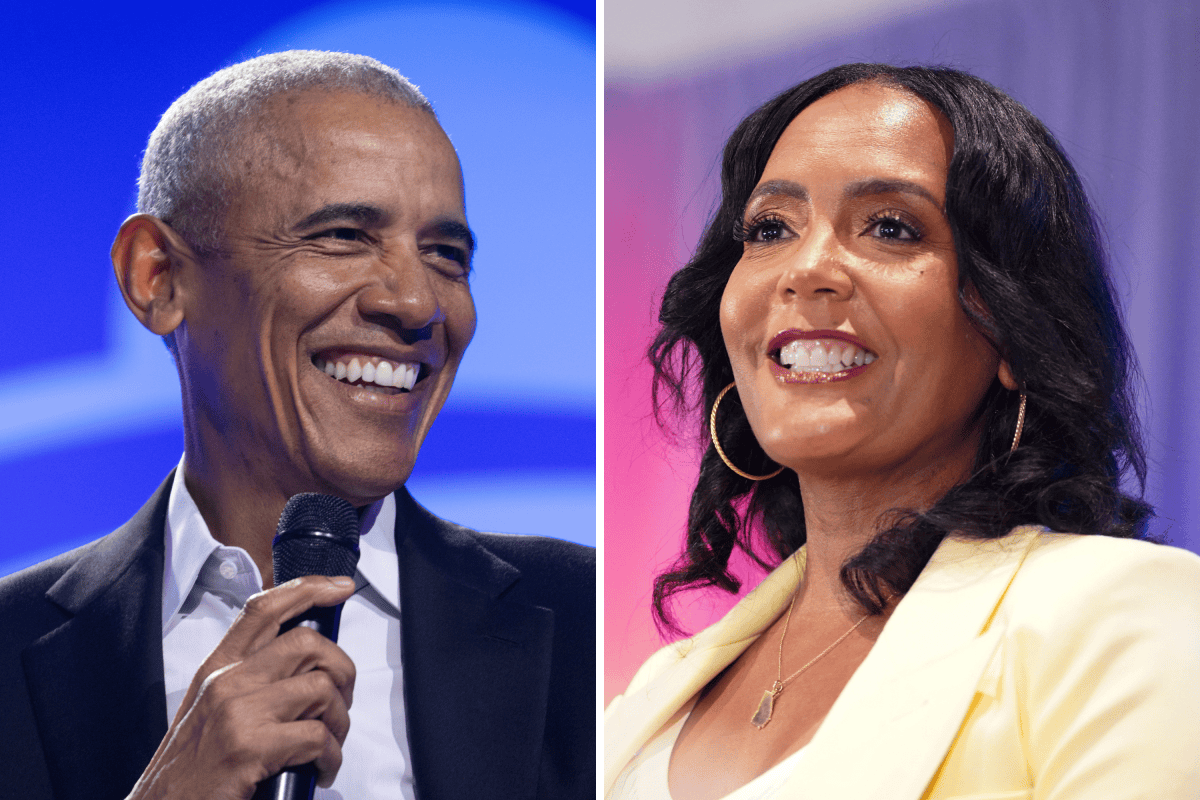
Former President Barack Obama's endorsement of Keisha Lance Bottoms in Georgia's gubernatorial race has brought renewed national attention to one of the state's closely watched political contests.
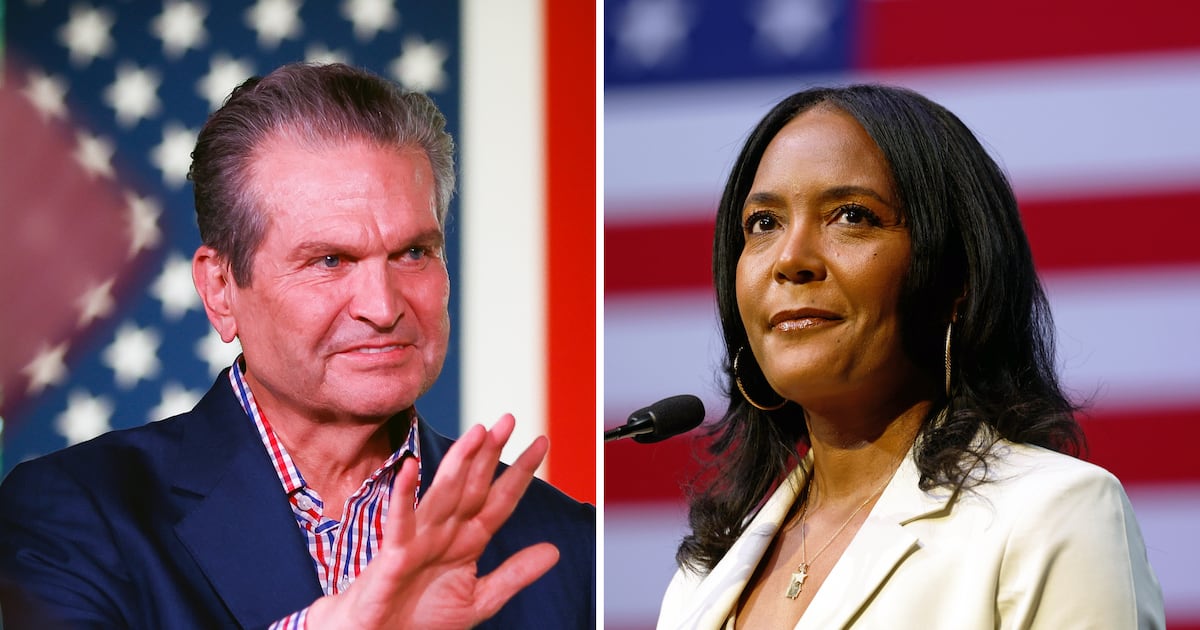
In recent coverage by Newsweek, the endorsement was examined alongside polling showing a competitive race between Democrat Keisha Lance Bottoms and Republican Rick Jackson.
Among the experts providing perspective was William Hatcher, PhD, chair and professor of social sciences at Augusta University, who discussed the differences between polling results and election forecasting models.
Hatcher's analysis highlights the importance of understanding what polls can reveal about voter preferences, how forecasting models interpret available information and why election outcomes remain uncertain.
Augusta's experts are regulars – when it comes to national media. Hatcher's inclusion in Newsweek reinforces the role university experts can play in helping national media audiences understand the political forces shaping important elections.
William Hatcher, chair and professor of social sciences at Augusta University, told Newsweek the race is a “statistical tie” based on limited polling, but noted there have not been many high quality surveys so far. “The few polls that have been conducted show a statistical tie, as noted, but often do have Jackson with a small lead. On the other hand, the predictive models are showing that Bottoms may have a slight edge,” he said. Oct. 8 – Newsweek With Georgia voters preparing for the Nov. 3 election, Hatcher can help journalists explore polling, voter turnout, political endorsements and the broader implications of the state's gubernatorial contest.
If you're interested in speaking with Dr. William Hatcher about Georgia politics, the governor's race, election polling and public policy, simply click on his profile to arrange an interview today.
·
2 min
This November marks the first time in over a generation that there are so many competitive statewide elections in Georgia. Voters in the state will have the opportunity to cast their ballot in multiple federal, state and local elections, including a competitive race for the governor’s mansion and a U.S. senate election.
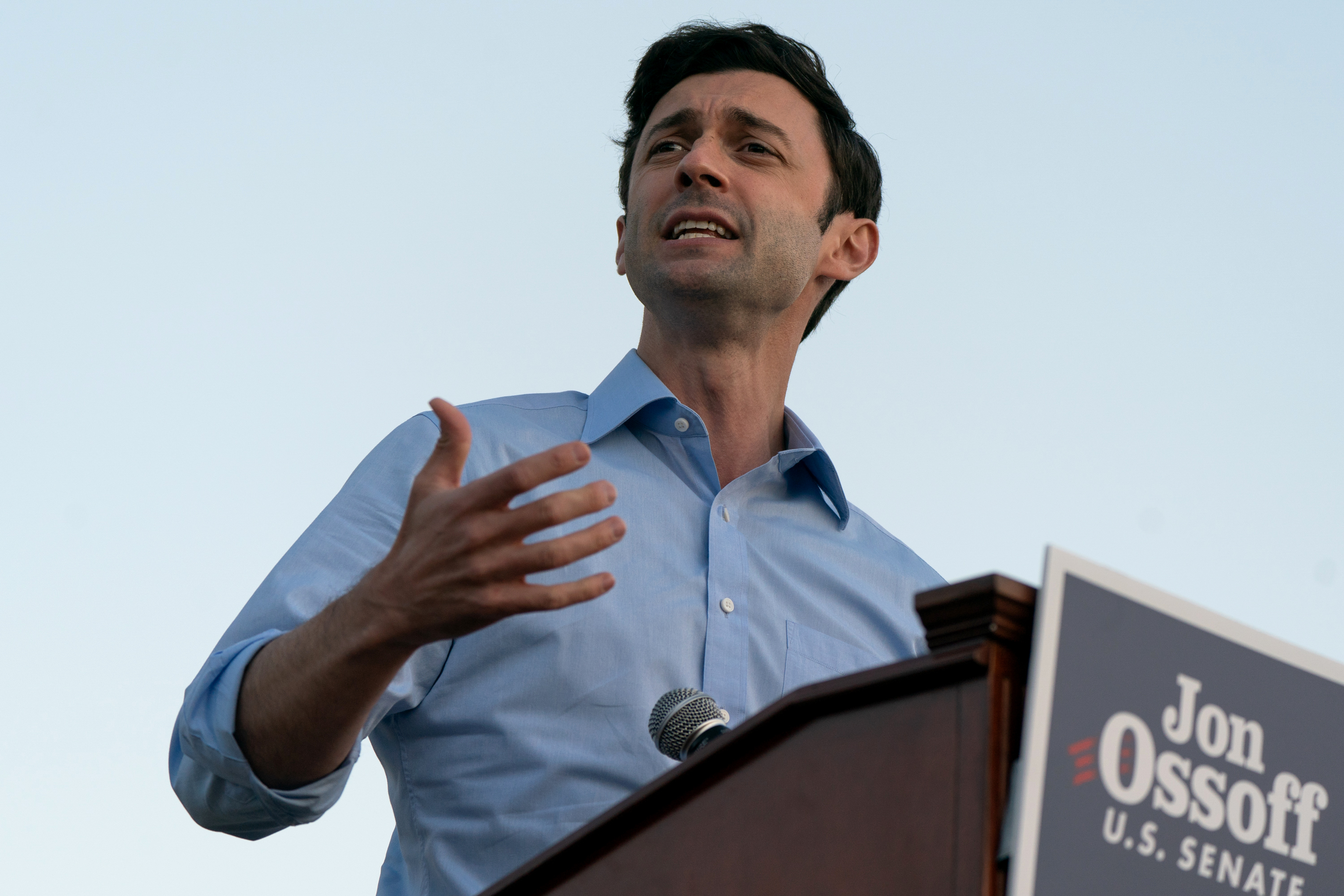
Control of the Senate is key for most administrations, and with a razor-thin edge favoring the Republicans, any pickup to keep control of the Senate after the mid-term elections is a priority. But it appears so far that the incumbent Senator Jon Ossoff (D) has a lead in the polls over the challenger, U.S. House Representative Mike Collins (R). Still, the election will be a close one.
For the state’s gubernatorial election, what is turning out to be an even closer election, the Democrat Keisha Lance Bottoms is mounting a strong campaign against the Republican Rick Jackson. A Democrat has not won the Georgia’s governorship since 1998.
These competitive elections put Georgia firmly in the camp of states to watch in November. This has political watchers and media trying to cover and figure out as parties enter the final weeks of the 2026 campaigns.
It's also why journalists and news outlets like Newsweek are connecting with experts like William Hatcher, PhD, for expert opinion and perspective.
An award-winning scholar, Hatcher is the chair of the Department of Social Sciences and a professor of political science. His research focuses on the connection between public administration and the development of local communities. Last year, Brian Kemp (R), the state’s popular governor, decided not to challenge Ossoff in the state's 2026 Senate race, which led to a competitive primary on the Republican side and most likely contributed to the election being more competitive. Polls suggested Kemp would have been the strongest candidate against Ossoff.
Recent polling from the Atlanta Journal-Constitution has Ossoff with a four-point lead over Collins.
When it comes to the state’s gubernatorial race, recent polling by Rasmussen shows Jackson with a three-point lead over Bottoms.
Election predicators, such as Nate Silver, have forecasted that the Democrats are likely to win the Senate election and are very competitive in the gubernatorial contest.
Hatcher said that “This November’s election marks the first time in over a generation that there are so many competitive statewide elections in Georgia." May 06 Newsweek The races in Georgia will have significant impact on politics in the state and the nation. If you're a journalist looking to cover Georgia politics, let us help. William Hatcher, PhD, is available to speak with media – simply click on his icon now to arrange an interview today.
·
2 min
Control of the Senate is key for most administrations, and with a razor-thin edge favoring the Republicans, any pickup to keep control of the Senate after the mid-term elections is a priority.
However, with a heavy favorite in Gov. Brian Kemp stepping away from the chance to run for the GOP, many are speculating the once traditionally Republican stronghold could stay blue under the Democrats with the re-election of Sen. Jon Ossoff.
It's a topic that has political watchers and media trying to cover and figure out as parties get ready to get back on the campaign trail for next year.
It's also why journalists and news outlets like Newsweek are connecting with experts like William Hatcher, PhD, for expert opinion and perspective.
An award-winning scholar, Hatcher is the chair of the Department of Social Sciences and a professor of political science. His research focuses on the connection between public administration and the development of local communities. Kemp's decision not to challenge Ossoff in the state's 2026 Senate race could be a boon to Democrats' chances of holding the seat in the battleground state, according to recent polls...
Kemp's announcement follows months of speculation about whether he would challenge Ossoff, a Democrat first elected in 2020. Polls suggest Kemp would have been the strongest candidate against Ossoff and that other potential Republicans trail the incumbent senator in a hypothetical matchup.
"Given that Kemp was perhaps the strongest candidate to face Ossoff, his decision to not run will make it difficult to find another candidate that would be as competitive. However, the election is over a year away, and in politics, a lot can happen in that amount of time," William Hatcher, chair and professor of social sciences at Augusta University, told Newsweek on Tuesday. A poll from the Atlanta Journal-Constitution found that Kemp led Ossoff by 3.3 points (49% to 45.7%), Ossoff led three other prospective challengers. That poll surveyed 1,426 respondents from April 24 to April 27, 2025, and had a margin of error of plus or minus 2.9 percentage points.
Hatcher said the state Republicans face a "limited" bench to challenge Ossoff, but whoever prevails will eventually have to defend Trump's "unpopular economic policies that will most likely adversely affect states like Georgia, particularly his recent commentary on leveling tariffs on the film industry – a industry that has a significant presence in Georgia." May 06 Newsweek The race is obviously already on for the mid-term elections in November of 2026, and if you're a journalist looking to cover Georgia politics, let us help. William Hatcher, PhD, is available to speak with media simply click on his icon now to arrange an interview today.
Multimedia
Social
Biography
Professor of Political Science and Public Administration and Chair of the Department of Social Sciences at Augusta University, USA. He serves as the co-editor of the Routledge series on Public Affairs Education, and he is former co-editor-in-chief of the Journal of Public Affairs Education. Dr Hatcher has served as a public planner and as chair of the Board of Adjustment in Richmond, Kentucky. His research has appeared in journals such as the Journal of Public Affairs Education, Public Administration Review, American Journal of Public Health, and American Review of Public Administration. He is the author of The Curious Public Administrator (Routledge, 2023) and coauthor of Work-Life Balance in the Public Sector (Routledge, 2025).
Areas of Expertise
Public Administration
Public Policy
Community and Economic Development
Health Policy
Public Budgeting and Finance
Accomplishments
Co-editor-in-chief
Journal of Public Affairs Education
Scholarship of Teaching and Learning Award
An award presented by the Georgia Political Science Association.
H. George Frederickson PA Times Best Article Award
American Society for Public Administration
Distinguished Education Leader Award, Excellent Student Support
Student Government Association at Eastern Kentucky University
Distinguished Education Leader Award, Outstanding Service
Student Government Association at Eastern Kentucky University
Education
Georgia College & State University
Bachelor's Degree
Political Science and Government
Georgia College & State University
Master's in Public Administration
Public Administration
Mississippi State University
Doctorate
Affiliations
Phi Kappa Phi, National Honor Society
Pi Alpha Alpha, National Honor Society for Public Administration
Pi Sigma Alpha, National Honor Society for Political Science
Mike Collins vs. Buddy Carter’s Chances of Beating Jon Ossoff in Georgia
Newsweek online
2026-04-21
William Hatcher, chair and professor of social sciences at Augusta University, told Newsweek on Tuesday that Ossoff is a strong candidate who has “amassed a large financial war chest to wage what is going to be overall a very expensive campaign for both sides.”
Chicago faces government shutdown threat as budget clock ticks
Smart Cities Dive online
2025-12-23
“City shutdowns have not occurred in recent decades and are uncommon within our political system,” said William Hatcher, professor of public administration and chair of the social sciences department at Augusta University.
Why are car insurance laws so different from state to state?
In the United States, insurance regulation is often a state-level issue. This is the case in areas from healthcare to car insurance. When it comes to car insurance, the argument is that states regulate it best because of the differences in road conditions, traffic patterns, state fees, taxes, etc. Additionally, the issuing of driving licenses is a state-level issue, which makes it even more likely that the regulation of car insurance will continue to be mostly done by the states.
Trust in government, and opportunities to rebuild it
Route Fifty online
2024-02-22
But Will Hatcher, chair of the department of social sciences at Augusta University, cautions that relying exclusively on public meetings may not engender universal trust. “It may be difficult for people in lower income groups to participate,” he says, “and that may make them less likely to trust in government. There’s a frustration in not being involved. When you expand public participation but don’t get it to as many people as possible, you’re empowering the people who already have power and potentially losing confidence from the rest.”
Augusta University professor weighs in on S.C. Primary
WRDW tv
2024-02-06
“From a practical standpoint, it would be very difficult in the Republican primary for somebody to beat former President Trump,” said Professor of Public Administration at Augusta University, Dr. William Hatcher.
What will be Mike Johnson's first challenges as speaker of the US House of Representatives?
Voices of America online
2023-10-27
“Given President Johnson’s record on Israel, it appears that the aid package for that conflict will not be stalled… however, Johnson and his far-right supporters have tended to be skeptical about supporting Ukraine, so the aid package to support its struggle may face a more uphill battle,” William Hatcher, a social science professor at Augusta University in Georgia, told Voice of America .
Early Voting kicks off: WJCL 22 anchor Olivia Wile interviews Dr. William Hatcher about history
WJCL tv
2023-10-17
“It’s an effort to expand democracy in the US compared to others the US has more restrictions on voting, some states have you have to register days or weeks before the election. So it was an effort along with expanding absentee ballots and reforming our system and increasing democracy,” said Hatcher.
What does the continuing resolution that the US government keeps open consist of?
Voices of America online
2023-10-05
“After Republicans decide who their president will be, leaders will have to develop a plan for how to negotiate with Democrats and get appropriations bills through the House and then the Senate. It’s highly unlikely the entire budget will pass. The most likely best course of action is to continue with resolutions to keep the government open,” William Hatcher, a social science professor at Augusta University in Georgia, told VOA .
William Hatcher, director of the Master of Public Administration program, talks about the feasibility of running a country (or a public institution) like a business.
William Hatcher, director of the Master of Public Administration Program, talks about how diversity makes Augusta University – and the U.S. – a stronger, more inclusive place.
Augusta University’s Master of Public Administration program was recently reaccredited by the Network of Schools of Public Policy, Affairs, and Administration – a hallmark of excellence in public service education that is earned by only 63 percent of the world’s graduate public administration programs.
What happens when you value diversity? Success, for a start August 15, 2016by Nick Garrett
Jagwire online
2016-08-15
Having a diverse campus is more than just a feather in the cap of a good university. It’s also the best way to bring the world to your own hometown. Watch to hear about some of the ways Augusta University’s various departments are bringing the wide world to classrooms, clinics and offices across the state of Georgia.
William Hatcher, director of the Master of Public Administration program, was featured in a 2016 WalletHub analysis of the best-run cities in America. For the analysis, WalletHub compared 150 of the U.S.’s top cities in areas like financial stability, education, health and safety, then asked Hatcher and other local government, economic and diversity experts how to evaluate how well a city is run.
The main reason is tax incentives. That was a very targeted tax incentive that had a positive effect. Georgia basically said you produce your movies and films here, but there are certain rules to follow, such as having a certain percentage of your workforce be local, you'll receive those tax incentivies.
In luring businesses to invest in the state, companies look at several needs that include built infrastructure and human capitol. They also look at lifestyle choices in the immediate area where they want to locate. They look at what are the assets in the community? What are workers going to be doing after work?
Georgia's politicians have been more responsible in managing their budgets and investing in long-term development, and this goes back decades.
Articles
NIL and Higher Education: An Exploration of the Early Impact of NIL on Fundraising and Competition in Universities and Athletic Departments
Journal of Intercollegiate Sport
Wesley Meares, PhD; Lance Hunter, PhD; Martha Ginn, PhD; William Hatcher, PhD
2024-11-08
While there has been a large amount of discussion by the media and government officials regarding the need for rules and regulations surrounding name, image, and likeness (NIL) in college athletics, to date, there is a lack of research on the effects NIL has on higher education fundraising. Thus, this study examines NIL's effects on university and athletic fundraising and fair competition among universities. In surveying chief financial officers and athletic department directors in Power and Non-Power universities, we aim to understand university officials’ perceptions regarding the early impact NIL is having on higher education. The survey results offer valuable guidance on the regulation of NIL to ensure that it benefits both universities and student-athletes.
Academic burnout: This simple solution will cost leadership little
University Business
William Hatcher
2024-07-16
Academic burnout is a formidable challenge plaguing colleges and universities in the U.S. If left unaddressed, this issue could transform our institutions of higher education into “burnout shops” for faculty and students.
The implications of such a transformation are far-reaching, affecting not only the state of education and the quality of our economy but also the health of our democratic institutions, which rely heavily on an educated society. Furthermore, “burnout shops” in higher education are detrimental to the mental and also physical health and well-being of those learning and working in these organizations.
Experts suggest a simple solution to alleviate burnout: leadership faculty, and staff promoting compassion and belonging in our organizations. In other words, we simply need to be nicer to one another.
Telework and Work Flexibility in the United States Federal Government Post-Pandemic
Sage Journals
Lance Y. Hunter, Martha Ginn, Wesley L. Meares, William Hatcher
2024-04-11
A decade before the COVID-19 pandemic, the United States (US) federal government was working to create flexible work environments for employees under the 2010 Telework Enhancement Act. Given this reality and the growing desire for greater flexibility of workers inspired by the “Great Resignation” during the pandemic, the US federal government appears to have recovered lost employees faster than other levels of the public sector. Still, given that federal workers skew older with less than a tenth of the workforce being under age 30 years and nearly a third reaching retirement age, a true crisis still looms in our administrative state. Using the 2021 Federal Employee Viewpoint Survey Data, we analyze what factors predict turnover intention post-pandemic, focusing the analysis on teleworking and other workplace flexibility policies. We use the findings to make recommendations to help increase employee recruitment and retention within the US federal government.
COVID-19 and 2020 presidential election speeches: A content analysis of pandemic campaign rhetoric
Wiley Online Library
William Hatcher, Martha H. Ginn
2024-01-17
This study examines how public health issues were communicated during the 2020 US presidential campaign, particularly those concerning the global COVID-19 pandemic. Using content analysis, we examined the available campaign speeches of the two major candidates, Donald Trump and Joseph R. Biden. We examined how the candidates discussed the COVID-19 pandemic and vital areas of public health in those speeches. Analysis of these speeches found little discussion on healthcare in general and little to no discussion on the vital areas of public health. We also found that COVID-19 statements were not as prevalent as we anticipated, given the unprecedented scope of the pandemic. Even during a pandemic, public health matters received very little attention during a Presidential campaign. Public health topics accounted for less than 1% of the content in candidates' official speeches. Given that elites help increase knowledge of public health concerns and influence policy, the lack of attention given to the pandemic in the 2020 general election cycle is surprising, if not alarming.
Surveys show US local governments must do more to address their cyber insecurity.
London School of Economics
William Hatcher Donald F. Norris Laura Mateczun Wesley L. Meares John Heslen
2023-12-20
Cyberattacks on organizations and institutions have unfortunately become commonplace, and the 90,000 local governments in the US are often targets for these incidents. Taking data from local government surveys, William Hatcher, Donald F. Norris, Laura Mateczun, Wesley L. Meares, and John Heslen assess the current state of cybersecurity in state and local government, finding that these organizations are in fact practicing cyber insecurity. Considering these findings, they make a number of recommendations, including better funding for cybersecurity measures in local government budgets, and improved staff training and management practices.
During the summer of 2023, New York City’s school system was hit by two successful cyberattacks that left the data of over 45,000 students and their families vulnerable. In response, the NYC Department of Education centralized management of school websites, email systems, and other information technologies. This is one of the hundreds or thousands of examples of cyber-attacks on the public sector. It is telling, though, that the largest city in the US, even with its significant resources, struggles to ensure cybersecurity.
Local Government Cyber Insecurity: Causes and Recommendations for Improvement
Wiley Online Library
Donald Norris, Laura Mateczum, William Hatcher, Wesley Meares, John Heslen
2023-10-02
In this paper, we address several facets of the problem we call local government cyber insecurity – a problem that plagues such governments across the nation, if not the world. We describe this problem and discuss its manifestations in local governments. This is followed by our analysis of why, on average, local government cybersecurity is managed and practiced so poorly. Next, we discuss several constraints on local governments that may help to explain why so many of these governments are not able to provide highly effective cybersecurity. We then discuss steps that local governments can and should take to improve their cybersecurity, including adopting dedicated cybersecurity budgets, adopting several highly recommended cybersecurity policies, and following best cybersecurity practices.
Louis Brownlow, one of public administration's historical thinkers, once argued that “the principal requirement of a good administrator is an insatiable curiosity.” This book is rooted in the notion that public administrators must practice insatiable curiosity to be effective, fair, and democratic. By seeking to uncover how the world works, and therefore practicing curiosity, public administrators may be more likely to move toward evidence-based decisions, improving the efficacy and efficiency of public service. Curiosity encourages public administrators to seek answers in a caring manner, and in doing so empathize with the communities that they serve.
First, the book incorporates the concept of curiosity into the field of public administration. Scholarship in philosophy, business administration, social science, and other scholarly fields address curiosity, but public administration has yet to examine this concept in detail. This book fills that hole in the literature. Second, the book presents novel primary data on curiosity in public agencies by examining curious organizations and surveying local government officers. Third, the book presents novel primary data on how public affairs faculty view curiosity and incorporate the concept in their research and the classroom. Lastly, author William Hatcher integrates this information in the book’s final chapter to present a model of administrative curiosity, focusing on creating a guide for future research and teaching. Thus, this book serves as a roadmap for developing a new doctrine of curiosity in public administration theory and practice, and it will be of enormous interest to students enrolled in public affairs courses as well as practicing public administrators and nonprofit managers.
Using the Asset-Building Model of Development in Teaching the Politics of Community Development in Appalachia
Journal of Appalachian Studies
2016
This teaching note discusses an undergraduate course on the politics of community development in Appalachia. The course teaches students that the economic issues facing Appalachia are the product of not only economics but also social and political factors. The goal of the course is to teach students the role that community development can play in the region...
From Compassionate Conservatism to Obamacare: Funding for the Ryan White Program During the Obama Administration
American Journal of Public Health
2016
Objectives: To examine President Obama's fiscal commitment to the Ryan White Program (formerly Ryan White Comprehensive AIDS Resource Emergency Act), which provides funding for economically disadvantaged people and families affected by HIV.
The Efficacy of Public Participation in Municipal Budgeting: An Exploratory Survey of Officials in Government Finance Officers Association's Award Winning Cities
Public Administration Quarterly
2015
Municipal reformers often call for more public participation in the budget process. However, few studies have surveyed the viewpoints of budget practitioners on the efficacy of public involvement in municipal budgeting. In this paper, we report a survey administered by e-mail to budget directors in cities that won the Government Finance Officers Association’s (GFOA) distinguished budget presentation award in 2011.
Reflecting on over 100 years of public administration education
Wiley Online Library
William Hatcher, Catherine Farrell, John Diamond
2021-11-16
Public administration education has an interesting history rooted in numerous scholarly disciplines, such as sociology, political science, economics, and engineering. The article reflects on the last 100 years of scholarship on public administration education, starting with an article on the topic in the first issue of Public Administration in 1923. We provide a concise review focused on the development of public administration education over this time. Next, we discuss scholarship in top journals on public administration education, Journal of Public Affairs Education and Teaching Public Administration. We use Denhardt's (2001) big questions in public administration education as a framework to examine this scholarship. We conclude by discussing the future of public administration education and advocating a community-based approach to pedagogy practice and research in the field.
The career paths of the chief administrative officers of U.S. cities: a survey of city managers and content analysis of how they discuss their careers
Taylor & Francis Online
William Hatcher, Beth Rauhaus, Wesley L. Meares
2022-10-08
We expand the research on the career paths of the chief administrative officers managing cities of all sizes in the United States (U.S.) by surveying the chief administrative officers working in the small, medium, and large cities throughout the U.S. We collected 345 surveys from chief administrative officers. The survey included questions on the career paths of managers and asked respondents to discuss factors and challenges that have influenced their career paths. From our analysis, we find that the career path to city management positions often begins with prior experience in local government administration and higher educational attainment, such as an MPA degree.
Introduction to the symposium on international and comparative public administration education
Journal of Public Affairs Education
William Hatcher, Bruce D. McDonald
2022-12-16
We live in a global society. Our countries may maintain their own borders and bureaucratic structures, but the onset of the COVID-19 pandemic and the problems that arouse out of it have highlighted the intermingled relationship we have with all parts of the globe (McDonald et al., 2022). The interconnectedness of the globe can even be seen from our own experience as co-editors-in-chief of the Journal of Public Affairs Education. In the early days of the pandemic, printing of the journal was temporarily halted as our publisher had challenges getting access to paper from its distributor in one country, trouble shipping the paper to its printer in another, and finally delivering the hardcopies to the United States. Although this example focuses on JPAE, we are not alone. What happens in one country impacts and effects those around it. But what does this mean for public affairs education? From our standpoint, we believe that it means we should be preparing our students to engage in an international arena.
This book explores the issue and struggle of work-life balance in higher education. It provides a rare opportunity to shape the conversation surrounding work-life balance in academia and provide a venue for dialogue around balance that had previously been forced into secret.
The challenges that surround work-life balance are something that we must all confront, but they are also something that is rarely discussed within academia. Faculty and graduate students face increasing demands to publish, while also being expected to effectively teach and engage in service to both the university and the community. The demands of an academic career have been cited as a reason for faculty and students to leave the academy, but they have also been tied with rising rates of depression throughout the community. Concerns about balance have led to challenges in recruiting diverse students and faculty for academic careers.
Community-level internet connectivity and mental health: an analysis of United States counties
Journal of Mental Health
William Hatcher, Lance Hunter, Wesley Meares, Mary-Kate Lizotte, Dustin Avent-Holt
2023-04-09
Background: Access to the Internet is often viewed as a positive feature of communities, but little research has been conducted examining the effects of internet access on mental health at the community level.
Aims: To examine the relationship between internet connectivity and mental health in United States (US) counties, an analysis that has not been conducted in the public health literature.
Methods: We analyzed predictors of mental health in US counties. Data from the Federal Communications Commission (FCC), the U.S. Bureau of the Census, and the County Health Rankings and Roadmaps were used to construct a time-series regression analysis. The data were available from 2013 to 2016.
Results: US counties that increased their internet connectivity over this period also had more citizens report suffering from mental health conditions.
Conclusions: Public health needs to focus on the county-level predictors of mental health and how internet connectivity may not always produce positive effects and may be contributing negatively to the mental health of communities.