Keith Gaddie profile photo

Keith Gaddie

Hoffman Chair of the American Ideal and Professor

  • Fort Worth TX UNITED STATES

Dr. Gaddie's writes about the American South in architecture, politics, sports, and history.

Contact

Spotlight

3 min

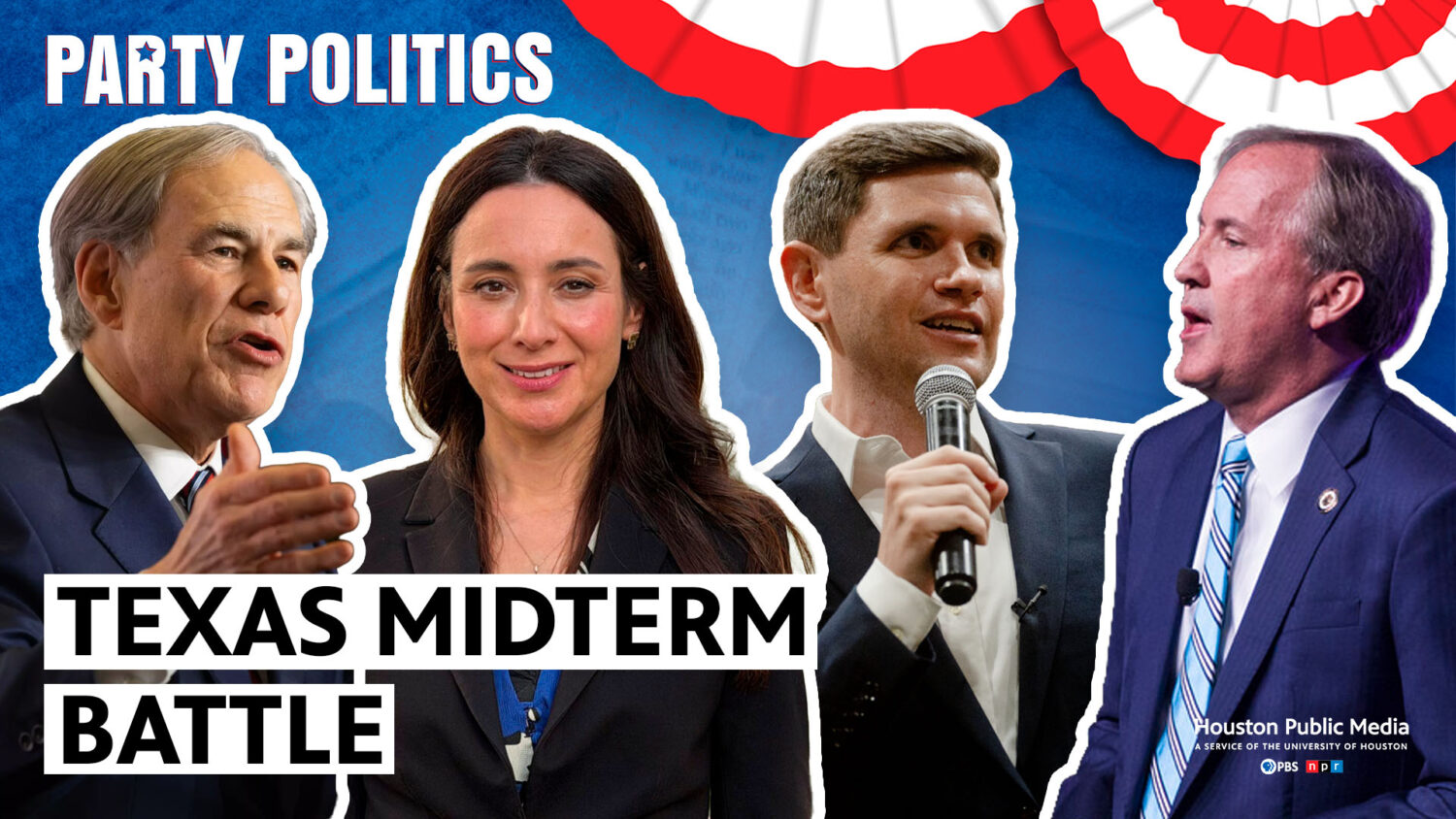
The poll numbers will keep coming between now and Election Day. Keith Gaddie wants you to ask a different question: not who's ahead, but why. Gaddie is the Hoffman Chair of the American Ideal and a professor at Texas Christian University. He says the biggest mistake people make is treating polls like a horse race. A poll is a photo, not a prediction "A poll is just a snapshot of a sample of reality at a particular point in time, and they age out really quickly." The numbers show what one group of people thinks right now. The real work, Gaddie says, is figuring out why they think that way and how it shapes the choices they make. And those opinions are often shallow. Gaddie says that "most of the time, when polling, people haven't thought about a question until you ask them, so their opinions are immediate. It is a knee-jerk reaction to the question." Noise vs. a real trend Poll movement comes from two places. One is the sample itself. Gaddie explains that "any oscillation within 4 or 5 points, if it's happening all the time, that's just from the sample. That's just noise." A real shift looks different: numbers that keep moving in the same direction over time. Don't expect many minds to change. "There are very few true undecideds. Most people are out there actually seeking information to verify prejudice that they have or preference that they have." What does move an election is a true crisis. The 2008 financial meltdown helped lock in Barack Obama's first win, and Gaddie says crises like that tend to work against the party in power. October surprises, on the other hand, are rare. Gaddie says, "They can't be engineered or manufactured." Today's fragmented media makes it harder still. He says, "You can't create a singular story that moves in one direction." Why turnout is the real story Hardcore partisans always vote. The voters in the middle turn out when something gives them a reason, and you can't predict which party they'll back. This year, Gaddie sees a signal in Texas, where more people voted in the Democratic primary than the Republican one. He says, "Primary turnout was at a record level." And in his view, high turnout usually means one thing: "When you get high turnout, you're usually voting for change." The reason, he says, is that "anger and disappointment and desire are much more powerful motives." Presidential years pull more voters because the race is national and the choices feel simple. Midterms are harder because, as Gaddie puts it, "life gets in the way." He adds: "Once you get registered, you have to work really hard to not be able to vote, even in Texas." What to watch instead of the numbers Look at how each candidate presents themselves for the job they're running for. Then compare the reality each candidate describes with the one you see. Gaddie's reminder: "only you know what that is, and we don't all see the same reality." The election isn't over when the votes are counted Gaddie also has a warning about what comes after Election Day. He says, "This election will not be over until the last lawsuit." He believes there are "procedural concerns that everyone ought to have." He points to a line from political scientist V.O. Key that he thinks captures what's at stake: "If a democratic regime is to work successfully, it must be generally agreed that contestants for power will not shoot each other and that ballots will be counted as cast." The takeaway A poll number is where the story starts, not where it ends. Turnout, timing, trust in the process and the candidates themselves will tell you far more about how this midterm plays out. Covering the midterms? Click on Keith's icon below to connect with him. He can speak to: Polling and public opinion Midterm turnout Texas and Southern politics Voting rights and redistricting Democracy and trust in elections

Keith Gaddie

Media

Social

Biography

Keith Gaddie is a writer and college professor. He grew up in rural Kentucky and after college in Florida and Georgia, taught at Tulane University and the University of Oklahoma. He writes about the American South in architecture, politics, sports, and history.

Areas of Expertise

Democracy
Voting Rights
Southern Politics
Politics and Architecture

Accomplishments

The Georgia Historical Records Advisory Council Award

2015

Impact Award for Large Scale Development, The Urban Land Institute

2017

President’s Award for Outstanding Campus Activities, The University of Oklahoma

2017–2018

Education

Florida State University

A.A.

Liberal Arts

1986

Florida State University

B.S.

Political Science, History

1987

University of Georgia

M.A.

Political Science

1989

Affiliations

  • Southern Political Science Association
  • Southwestern Social Science Association
  • American Institute of Architects
  • American Bar Association

Media Appearances

Early voting & the fight for turnout | Battleground Texas

FOX 4 Dallas Fort Worth  tv

2026-10-22

The Texas Senate race heats up as early voting numbers roll in and candidates battle to energize voters ahead of Election Day. A Fox News poll shows 28% of “Non-MAGA Republicans” say that they are willing to vote for James Talarico. Keith Gaddie, Hoffman Chair of the American Ideal and professor at Texas Christian University, says that is Talarico’s best path to victory. “No Democrat has won statewide in three decades. And that means you’ve got to pull from Republican voters for a Democrat to win.” Speaking about the poll numbers, Gaddie explains “I think you ought to look at these as a best guess of what might happen. It’s a close race. It can go one way or the other. What polls do is, they tell you why people make the choices they make, but we rarely get to that point. So we keep reporting the horse rance, but we really ought to step back from it and ask the ‘why?’”

View More

JD Vance and Marco Rubio Are Both Losing Ground in 2028 Race

Newsweek  online

2026-10-21

Vice President JD Vance and Secretary of State Marco Rubio have both lost ground in leading the 2028 Republican presidential nomination prediction markets, according to a Newsweek analysis of Polymarket and Kalshi data. “These are not polls,” Keith Gaddie, the Hoffman chair of the American Ideal at Texas Christian University, told Newsweek. “It is dangerous to view them as a proxy for public opinion.” Gaddie said traders may be hedging while voters and party activists remain focused on more immediate contests. He added that Vance’s remarks could combine expectations management with a desire to preserve his political options.

View More

Early voting draws statewide candidates to ‘battleground’ Tarrant County ahead of Nov. 3

Fort Worth Report  online

2026-10-20

Gov. Greg Abbott and U.S. Senate candidates Ken Paxton and James Talarico each made campaign stops in Fort Worth, while gubernatorial challenger Gina Hinojosa spent the first day of early voting in Austin and San Antonio.  It makes sense that the statewide candidates would spend time in Tarrant County at the beginning of early voting, said Keith Gaddie, a political science professor at Texas Christian University.  “Tarrant County is potentially the most competitive large urban county in the state of Texas. Why wouldn’t you start here?” Gaddie said in a phone interview.

View More

Event Appearances

Symposium on the 2024 Election in the South

Richard B. Russell Library at the University of Georgia | 2024  Athens, GA

‘Politics and Pizza Roundtable: The Electoral College’

University of Colorado at Boulder | 2024  Boulder, CO

Speaker, ‘National Election Overview’

American Fidelity PAC | 2024  Oklahoma City, OK

Research Grants

Grant # HHM402

U.S. Department of Defense, Defense Intelligence Agency

2014– 2019

Articles

The Systemic Affect of Culture, Power, and Terror in the Southern Public Space

Social Science Quarterly

2021

Objective
We explore how political space is disrupted by racialized politics, and how differentiated affect among racial groups emerge in the political space.

Method
We use Goodsell's architectural classifications of public space in conjunction with systems theory to ascertain how differing architectural affects of pride and heritage versus terror and oppression are experienced in the post-bellum South.

View more

Frustrated Majorities: How Issue Intensity Enables Smaller Groups of Voters to Get What They Want. By Seth J. Hill.

Perspectives on Politics

2023

In contemporary politics, there is no shortage of pundits and scholars identifying frustrated majorities (and governing minorities) as the root cause of our most recent “crisis of democracy.” In Democracy in America (2020), Benjamin Page and Martin Gilens, for example, make the case that the solution to America’s latest democratic crisis is to empower majorities so that public policy better reflects the public will. Seth Hill thinks differently. Frustrated majorities arise because political candidates are attempting to win popular elections by securing the most votes. They are not ignoring voters or are constrained by institutional design; they are simply responding to voter intensity in ways that increase the probability that they will be elected.

Response to Seth J. Hill’s Review of Democracy’s Meaning: How the Public Understands Democracy and Why It Matters

Perspectives on Politics

2023

Before we begin, we would like to thank Seth Hill for his careful read of our work. His criticisms are largely on the mark. They reflect both the limitations of our data and our imagination. In an ideal study, we would have captured elite discourse surrounding questions of democracy, carefully theorized, and tested how such discourse was reflected in public understandings of democracy. We suspect, as Hill observes, that public understandings shift in accordance with elite cues, similar to the process outlined by John Zaller (1992) in The Nature and Origins of Mass Opinion. Indeed, we would take this criticism a step further. Elite understandings of democracy shift as elites perceive strategic advantages in advancing procedural or substantive understandings of democracy, and public understandings of democracy follow suit.

View more