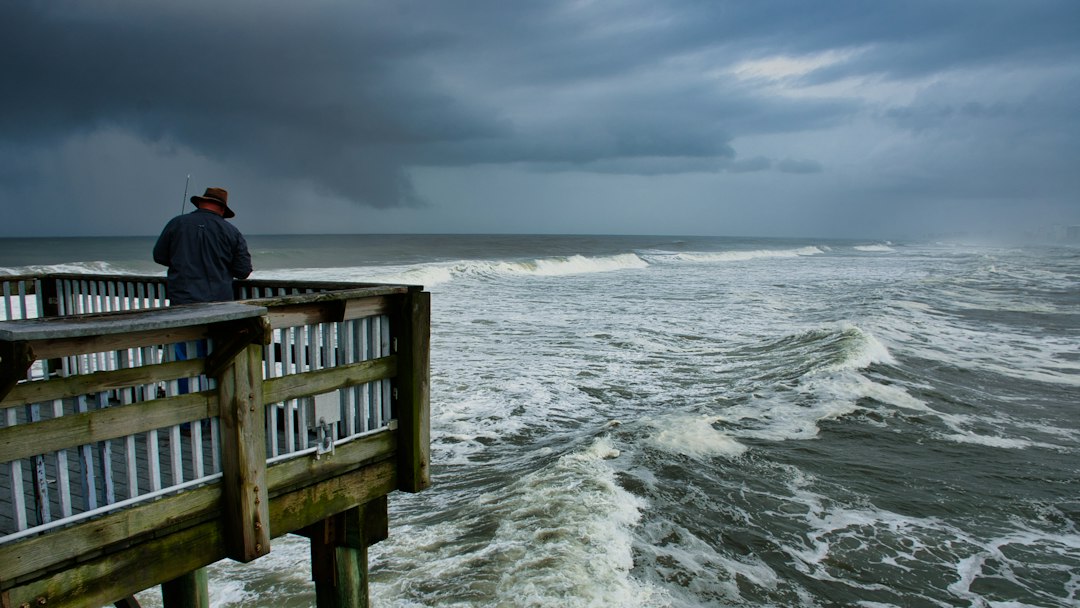
When hurricanes threaten communities already facing social and economic challenges, the need for effective disaster preparedness and response becomes even more critical. University of Delaware disaster research experts can discuss the challenges communities face before, during and after hurricanes, including Hurricane Isaias and its potential impacts across Alabama, Mississippi, the Florida Panhandle and other parts of the northern Gulf Coast.
The following experts from UD's Disaster Research Center are available to discuss the public health consequences of hurricanes, disaster preparedness and community recovery.
Sarah DeYoung, associate professor of sociology and criminal justice, can discuss the needs of refugee and immigrant communities before, during and after disasters, including challenges accessing information, assistance and essential resources. She worked for several years with refugee and immigrant communities in southern Alabama through a grant-funded project.
Jennifer Horney, professor of epidemiology, can discuss the public health consequences of hurricanes and other disasters, including evacuation decisions, the risks posed by inland flooding and the challenges communities face during recovery. She was part of the public health response to Hurricane Harvey and can discuss how communities still recovering from major storms may face additional challenges when another hurricane threatens the region.
Jennifer Trivedi, associate professor of anthropology, studies how disasters affect marginalized communities. She can discuss how disasters compound existing challenges for people struggling to meet basic needs, particularly when flooding disrupts housing, transportation, food access and other essential services.
Tricia Wachtendorf, co-director of the Disaster Research Center, can discuss the social impacts of hurricanes and inland flooding, including evacuation, preparedness, community response and recovery. She can also discuss how storms that are not the most powerful can nonetheless cause significant damage and disruption.
To reach these experts directly, visit their ExpertFile profile and click on the "contact" button. Interested journalists can also contact MediaRelations@udel.edu.
·
1 min
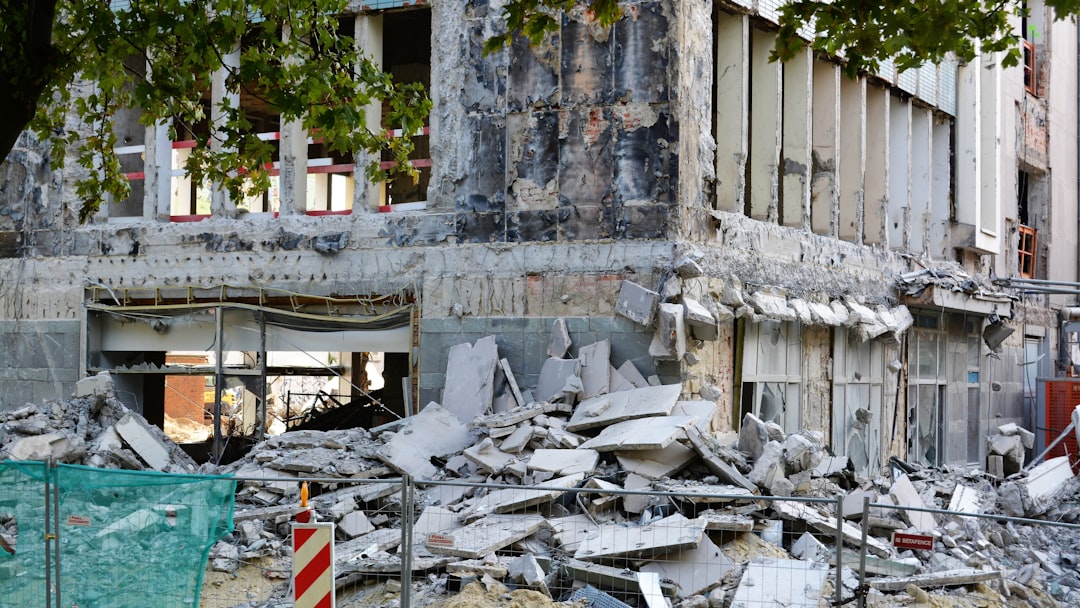
The shaking from a major earthquake may be over in minutes, but its consequences will last for years. University of Delaware experts can address emergency response, distributing aid, assessing damaged buildings, helping vulnerable communities and planning for long-term recovery.
Their expertise is particularly relevant as communities across Latin America respond to major earthquakes, including the deadly magnitude 7.4 earthquake in Colombia.
Tricia Wachtendorf, co-director of UD’s Disaster Research Center, offers expertise on how governments, nonprofits, emergency responders and community groups coordinate following a major disaster. Her research examines the role of spontaneous or “emergent” groups, humanitarian aid and donations, and how communities and organizations respond in the aftermath of disasters.
Jennifer Trivedi, associate professor of anthropology and Disaster Research Center faculty member, specializes in disaster vulnerability and why some communities are more severely affected than others. She also addresses the long-term recovery needs and planning that emerge after the immediate crisis.
Michael Chajes, professor of civil and environmental engineering, provides expertise on the structural damage caused by earthquakes, why some buildings collapse while others withstand the shaking and how engineers assess damaged structures and improve earthquake resilience.
To arrange an interview with one of these experts, visit their profiles and click on the contact button. Interested reporters can also email MediaRelations@udel.edu.
·
1 min
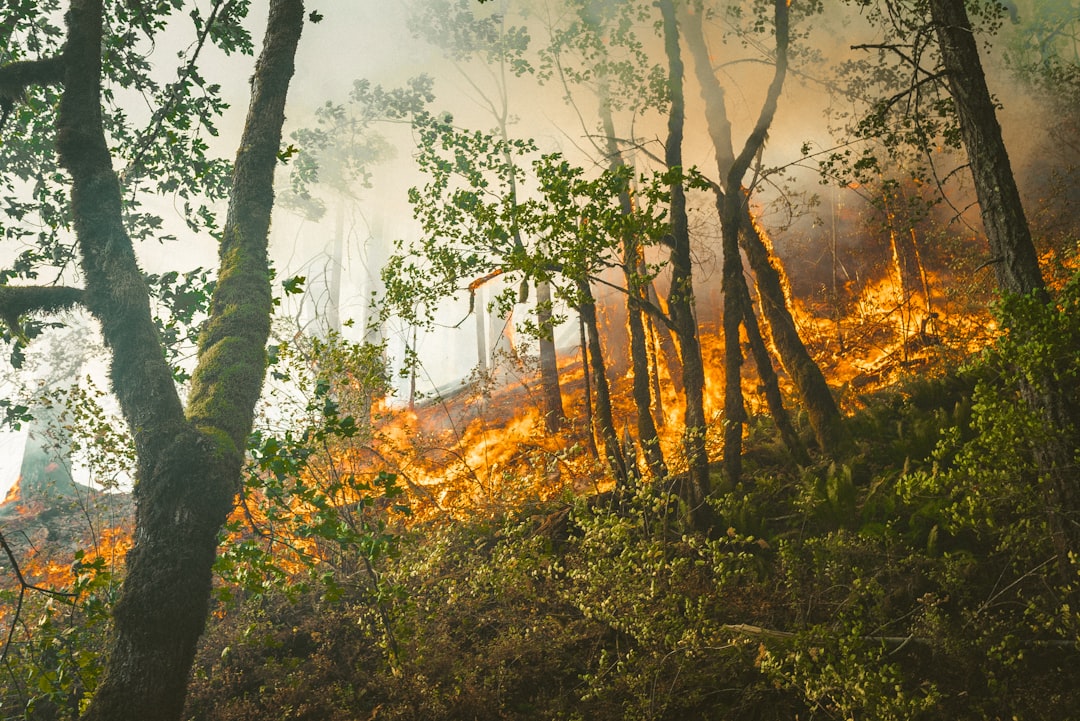
Wildfires burning across the world, now in parts of France and Spain, are forcing hundreds of thousands of people to evacuate. University of Delaware experts are available to discuss wildfire evacuations, vulnerable communities, animal rescue and the health effects of wildfire smoke exposure.
Those experts, from UD’s Disaster Research Center, include:
Sarah DeYoung Professor of sociology and criminal justice: How people are forced to make split-second decisions involving horses, livestock and companion animals during fast-moving wildfires.
Why some owners must turn animals loose when evacuation time is limited.
Lessons from past disasters and animal rescue research.
Jennifer Trivedi Assistant professor of anthropology: The unique challenges faced by vulnerable populations during wildfires.
Complications surrounding evacuation decision-making and evacuation needs.
Long-term recovery following catastrophic disasters.
Jennifer Horney Chair of UD’s Department of Epidemiology: Health risks associated with wildfire smoke exposure, including respiratory infections.
How wildfire smoke and airborne pollutants affect population health.
The strain major wildfires can place on public health and health care systems.
To arrange an interview with these experts, visit their profile page and click on the "contact" button. Interested journalists can also send an email to MediaRelations@udel.edu.
Media
Social
Biography
Jennifer (Jenn) Trivedi received a Ph.D. and M.A. in anthropology from the University of Iowa and a B.A. in history from the University of Georgia. She was a Postdoctoral Researcher at the Disaster Research Center at the University of Delaware from 2016 to 2018, working on a large NSF-funded evacuation study, collaborating extensively with civil engineers and atmospheric scientists, and conducting quick-response research following flooding in Louisiana, Hurricane Matthew, and related inland flooding and the false ballistic missile alert in Hawaii.
Trivedi's work focuses on the historical and cultural contexts surrounding disaster vulnerability, response, recovery, resilience, and decision-making. She is engaged in multiple ongoing research projects, including studies of the impacts of the COVID-19 pandemic on different groups in the United States; hurricane evacuation decision-making and timing as part of an interdisciplinary team; varied cultural aspects of disasters; and long-term recovery processes.
Trivedi is the author of Mississippi after Katrina: Disaster Recovery & Reconstruction on the Gulf Coast (Lexington Books, 2020), which examines the cultural-historical context in long-term recovery from Hurricane Katrina in Biloxi, Mississippi, building on her ethnographic fieldwork there in 2006 and 2010-2011.
Trivedi is a current member and social media manager (@RiskDisasterTIG) of the Risk and Disaster Topical Interest Group (R&D TIG) in the Society for Applied Anthropology (SFAA), as well as a former R&D TIG co-chair.
Areas of Expertise
Disaster Resilience
Disaster Response
Disaster Vulnerability
Disaster Recovery
Hurricanes
Flooding
Media Appearances
Texas Is Unprepared for Compound Climate Disasters
Public Health Watch online
2025-01-15
“When a compound disaster strikes, we don’t only have multiple ongoing disasters, but disasters that start to bounce back and forth on one another,” said Jennifer Trivedi, a core faculty member at the University of Delaware’s Disaster Research Center. “[They] impact the ways that people might adapt or recover, which further complicates the situation. This is particularly true for people who are already vulnerable.”
How Heat Combined with Hurricane Beryl to Cause Misery in Houston
Scientific American online
2024-07-20
Compound disasters such as hurricanes and heat waves are increasingly testing Texas and other states along the Gulf of Mexico, said Jennifer Trivedi, an expert on disaster vulnerability at the University of Delaware.
Those who went online usually found reassurance sooner. Some saw posts by Hawaii congresswoman Tulsi Gabbard that dispelled the missile myth. But others bemoaned the lack of physical cues around them. “A lot of people talked about listening for or noticing a lack of air raid sirens,” says Jennifer Trivedi, an assistant professor in the University of Delaware’s Disaster Research Center who conducted interviews on the ground after the false missile alert.
A Caribbean island's quest to become the world's first climate-resilient nation
BBC online
2023-04-19
This element of neighbourly communication is hugely important for early warning systems, says Jennifer Trivedi, assistant professor of anthropology at the University of Delaware's Disaster Research Center.
Covid Hazard Pay Has Ripple Effects in Today’s Overtime Cases
Bloomberg online
2022-07-26
Covid hazard pay started disappearing for many workers by the summer of 2020, months before they would get access to vaccines, said Jennifer Trivedi, a professor at the University of Delaware’s Disaster Research Center.
Hurricane Ida destroyed affordable rental units. Hundreds of families still can’t find new ones.
The Philadelphia Inquirer online
2021-12-09
“If you’re already in a precarious situation financially ... that narrow slice of availability can get erased,” said Jennifer Trivedi, a faculty member at the University of Delaware’s Disaster Research Center.
"With adaptation and resilience, we can get caught up in talking about things like managed retreat and home buyouts and things like that," said Jennifer Trivedi, assistant professor of anthropology at the University of Delaware. "But for a lot of people it comes down to a simple question, ‘What do I need to survive? Once I know that, I’m going to make the best choice for me and for my family.’"
Nearly a third of Americans worry about having their work hours cut or losing their jobs
Marketplace online
2020-09-01
“I’ve definitely had some of these same worries and uncertainties myself, and then thinking through what, what happens if I do lose my job? Where, where do we go from there?” said Jenn Trivedi, who teaches anthropology and studies disasters at the University of Delaware.
Hurricane Katrina hit Biloxi 15 years ago. Here’s what other coastal cities can learn from its recovery
Fast Company online
2020-08-29
The one-two punch of tropical storms Marco and Laura along the U.S. Gulf Coast eerily echoes Hurricane Katrina’s arrival 15 years ago, on August 29, 2005. Katrina, which caused some $170 billion in damages, remains the most costly storm in U.S. history.
Can visits to certain businesses help predict evacuation decisions in real time?
Natural Hazards
2025
This study aims to help understand and predict evacuation behavior by examining the relationship between evacuation decisions and visits to certain businesses using smartphone location and point of interest (POI) data collected across three hurricanes—Dorian (2019), Ida (2021), and Ian (2022)—for residents in voluntary and mandatory evacuation zones. Results from these data suggest residents visit POIs as part of preparatory activities before a hurricane impacts land. Statistical tests suggest that POI visits can be used as precursor signals for predicting evacuations in real time. Specifically, people are more likely to evacuate if they visit a gas station and are more likely to stay if they visit a grocery store, hardware store, pet store, or a pharmacy prior to landfall. Additionally, they are even less likely to leave if they visit multiple places of interest. These results provide a foundation for using smartphone location data in real time to improve predictions of behavior as a hurricane approaches.
Trust, Traffic, and Contemporary Evacuation Barriers in Hurricane Ida
Journal of Disaster Studies
2024
In hurricane evacuation decision-making research, it is critical to understand complex influences and larger processes at work in shaping the decisions and experiences of people and communities in affected areas and evacuation zones. Hurricane Ida made landfall in Louisiana in 2021, in the midst of the COVID-19 pandemic, ongoing economic problems, and disruptions to trust in political officials. Gulf Coast residents made decisions about if and when to evacuate in this context. We use a framework that emphasizes the social causes of evacuation decision making, including optimism bias, compounding disasters, and situational factors. Results show that during Ida residents were navigating the relative risks, varied perceptions, and previous experiences with other disasters, compounding disasters, traffic, work and school demands, and long-term systemic problems.
Evacuating Pets and People: Time, Decisions, and Resources
Practicing Anthropology
2023
Increasingly, research focuses on challenges associated with people threatened by disasters but who refuse evacuation without their pets. Less attention is paid to decision making processes and costs of evacuating or sheltering-in-place with pets. Pet owners consider whether or not to evacuate, but—importantly—they also consider the financial costs of staying at pet-friendly shelters, securing necessary supplies for safe pet evacuation, and the impact of pet preparation on evacuation timing (temporal costs). Decision making is compounded by the risks they face, the preparations necessary, and their perceived impact on their animals. Those without pets in their household can be impacted by those with pets, as people often make evacuation decisions in groups.
Imagining an ethnographic otherwise during a pandemic
Human Organization
2022
By understanding pandemics and compounding disasters as disruptive sociopolitical processes rooted in histories and geographies of systemic inequality, we reflect on both novel and familiar manifestations of research practice, ethical decision making, and responsibility during the COVID-19 pandemic. We advocate for the importance of flexible, care-driven research methods that forefront local expertise and collaborations and relational ethics that are, oftentimes, at odds with neoliberal and institutional temporalities. Lastly, we reflect on how our own positionalities and experiences shape how we have navigated, reconceptualized, and challenged our own research practices in the context of a global pandemic.
Community resilience: toward a framework for an integrated, interdisciplinary model of disaster
Natural Hazards Review
2021
The science of resilience presents the opportunity to explain how natural, social, and physical systems interact to impact community functioning and well-being postdisaster. This paper describes the development and theoretical foundation of a comprehensive conceptual model, presenting a shift from the usual thinking about resilience to construe resilience more precisely as the trajectory of postdisaster recovery, with community functioning and well-being as the outcome of interest. Unique contributions of the results include the identification of the natural, social, and physical systems that are implicated in disasters, and the dynamic nature and directionality of how these elements relate in the context of hazards.
Hurricane evacuation beliefs and behaviour of inland vs. coastal populations
Environmental Hazards
2021
Although hurricanes can cause severe hazard effects well inland, little is known about the evacuation behaviour of inland populations compared to coastal populations. Using survey data collected in the United States after Hurricanes Florence (2018), Michael (2018), Barry (2019), and Dorian (2019), we investigate differences between coastal and inland populations in evacuation decisions and timing, and their causes. The data indicate that coastal populations evacuated at a higher rate than their inland counterparts (those not in coastal counties) in every hurricane studied. Chi-square tests identified differences in characteristics of coastal and inland populations, and a multiple logistic regression identified variables associated with evacuation.
The COVID-19 pandemic has disrupted teaching over the past year, pushing many instructors and students into remote learning. These changes have forced new discussions about serious issues with the digital divide and an array of intersectional inequities, and they have prompted conversations about the physical and mental health of everyone involved. While initial transitions to remote learning were treated as distinct from previous in-person or online learning, increasingly we are seeing a push to “return to normal.” This essay argues that pandemic recoveries take many forms, and risk and uncertainty must continue to shape our teaching. We must continue to engage with critical issues related to inequity, intersectionality, and broad discussions of health if we are to ensure a safe return.
COVID-19 recoveries will not only be rooted in the pandemic itself but also questions of access, rights, and resources that long pre-dated the emergence of the virus or people’s responses to it. While such recoveries have not yet begun, signs are already emerging that indicate the risks of a “return to normal” that leaves many without equal, affordable, and often wanted and needed access to virtual or real-world spaces and resources. Examining and questioning these issues now, during short-term recovery efforts, and in the years and decades of long-term recovery to come are essential to working towards a more just system of COVID-19 recoveries.