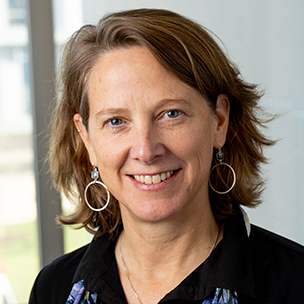
Mariana Chilton
Professor of Practice in the School of Public Health & Health Sciences
- Amherst MA UNITED STATES
Mariana Chilton is a nationally recognized expert on food security, human rights, trauma and economic empowerment with families.
Expertise
Biography
Before joining UMass, Dr. Chilton carried out research and programming on food security, trauma, and economic empowerment with mothers of young children. She launched Witnesses to Hunger, a movement to increase women's participation in the national dialogue on hunger and poverty, and she founded and directed the Building Wealth and Heath Network to incentivize entrepreneurship, build family wealth, and reduce food insecurity. For 15 years, Dr. Chilton served as principal investigator for the Philadelphia site of Children's HealthWatch, a research network devoted to improving health and well-being of young children and their caregivers.
Dr. Chilton served as the Co-chair of the National Commission on Hunger meant to advise Congress and the United States Department of Agriculture on how to improve anti-poverty programs. She has testified before the U.S. Senate and U.S. House of Representatives and served as advisor to Sesame Street and the Institute of Medicine. Dr. Chilton’s work has been covered in the feature-length documentary A Place at the Table, and in the Washington Post, the Philadelphia Inquirer, public radio, and national television news outlets.
Social Media
Video
Education
University of Pennsylvania
Ph.D.
Folklore & Folklife
2000
University of Oklahoma
M.P.H.
Epidemiology
1999
University of Pennsylvania
M.A.
Folklore & Folklife
1995
Harvard University
A.B.
History and Literature: Latin America
1991
Magna Cum Laude; Phi Beta Kappa
Select Recent Media Coverage
More Than 770,000 Children Are No Longer Receiving SNAP Benefits After Trump Changes Federal Food Program
ProPublica online
2026-06-17
Mariana Chilton, an expert in child hunger at University of Massachusetts, Amherst, said a smaller program won’t save money in the long run. Research shows that children who receive SNAP benefits are healthier, have better academic outcomes, use hospitals less often and have better mental health as teenagers.
It’s How Millions of Americans Afford Food. Trump Has Thrown It Into Chaos. The Toll Is Bigger Than You Realize.
Slate online
2026-04-19
There is nothing that being hungry does not worsen. Hunger and mental health issues feed off each other, said Mariana Chilton, a professor in the department of nutrition at the University of Massachusetts Amherst. She’s done extensive research showing that food insecurity is strongly associated with major maternal depressive symptoms; she points to research focused on the association between food insecurity and suicidal ideation and attempts in teenagers.
'They remember that trauma of having nothing.' UMass researcher says hunger changes the body, brain
New England Public Media radio
2025-11-18
UMass Amherst public health professor Mariana Chilton has spent decades studying food insecurity, trauma, and human rights.
Chilton thinks the term “food insecurity” can be confusing. Yes, it refers to people who don’t earn enough money to buy the food they need.
“Food Is a Fundamental Human Right”: U.S. Hunger Expert Decries Trump Withholding Food Assistance
Democracy Now! tv
2025-11-12
The government shutdown has brought attention to food insecurity in the United States, as it disrupted the Supplemental Nutritional Assistance Program, or SNAP, which helps about 42 million people across the country. Delayed and partial payments have occurred despite the availability of contingency funds to keep the program going during the shutdown, because the Trump administration initially chose not to use those funds. “Forty-two million Americans, 16 million of them children, are really struggling to be able to afford nutritious food for their health,” says Mariana Chilton, child hunger expert. “It’s deeply concerning.”
“Denying People the Right to Food”: Millions Could Go Hungry as Trump Admin Holds Up SNAP Benefits
Democracy Now! tv
2025-11-03
As the U.S. federal government shutdown enters its second month, over 40 million people are now struggling to feed themselves and their families after SNAP food assistance was cut off over the weekend. “We are headed for a major public health and economic crisis,” says child hunger expert Mariana Chilton. She adds that by refusing to disburse SNAP benefits, “the Trump administration is breaking the law.”
Weekend reading: Hunger in America
Food Politics online
2024-10-01
A review of the book “The Painful Truth About Hunger in America”
Select Publications
Sacred Nutrition: Asserting Indigenous Sovereignty and Rights of Women and Nature to Ensure the Right to Food in the United States
University of Miami International and Comparative Law ReviewMM Chilton
2024-01-01
This Paper is a provocation to move beyond a standard human rights and right to food framework to encourage scholars, activists, and political leaders to engage in full throttle societal transformation. Ending hunger in the United States demands nothing less. The modern human rights framework is enshrined in the modern nation-state system that is rooted in the transatlantic slave trade, colonization, and genocide. Three primary ways in which these roots took hold were through land theft, rape, and starvation. Hence, to assert that integrating the right to food and freedom from hunger into nation-state constitutions or into national plans to end hunger without significantly altering the structure of the nation-state will be fundamentally ineffective. Nation states currently depend on keeping people hungry, especially women and children. If this is the case, then we ought to consider new ways of envisioning and devising a world in which all people are free from hunger and have good nutrition that supports human and more-than human flourishing. To do so demands we address food insecurity at its roots.
This Paper relies on twenty-five years of empirical research with Black women, Native communities, and other groups of color, as well as on the scholarship of Black and Native thinkers. In doing so, the Paper outlines how rape, colonization, racism, and gender discrimination continue to generate food insecurity and hunger, and how incorporating a broad view of the right to food to support rights of women, Indigenous peoples, peoples of African descent, and the rural poor are integral to the right to food. Finally, this Paper shows that societal transformation can only be made possible through providing reparations to descendants of people who were enslaved, respecting and repairing treaty rights with Native nations, and changing human beings’ relationship with the natural world from viewing food as commodity to revering food and the natural world as kin with equal standing to humans. In doing so, we can meet the challenges of the climate catastrophe and promote resilience of future generations.
How trauma-informed programming to treat social determinants unveils challenges to systems alignment
Journal of Health Care for the Poor and UnderservedEmily Brown Weida, Victoria Egan, Mariana Chilton
2021-01-01
Cross-sector collaboration and systems alignment to promote a culture of health can address social determinants of health (SDH), improve family well-being, and create a more equitable society. This paper documents our attempt to align Temporary Assistance for Needy Families (TANF) and Medicaid to promote health through a trauma-informed program, The Building Wealth and Health Network (The Network). The Network successfully integrated into traditional TANF and addresses SDH through peer-group programming where caregivers heal from adversity and build financial skills. We identify three challenges to alignment of TANF and Medicaid: 1) TANF's culture of compliance, 2) societal and systems-level forces including racism and discrimination, 3) misaligned partnerships (values, priorities, structure, and capability). For each challenge, we propose solutions including incentives for innovation and partnership, and promotion of racial equity initiatives, including reparations. By highlighting challenges and solutions we seek to strengthen current approaches to achieve health equity through systems alignment.