
Massimo Faggioli, PhD
Professor of Theology and Religious Studies | College of Liberal Arts and Sciences
Massimo Faggioli, PhD, is an expert on the history and administrative inner workings of the Catholic Church and of the papacy.
Pope Leo XIVPope FrancisChurch HistoryHistory of ChristianityHistorical Theology and Ecclesiology
Kevin Hughes, PhD
Professor of Historical Theology; Chairperson, Theology and Religious Studies | College of Liberal Arts and Sciences
Kevin Hughes, PhD, is a frequent commentator on Catholicism and contemporary culture.
Augustinian StudiesThe Church in Public LifeArt, Literature and TheologyAncient and Medieval Theology and SpiritualityRessourcement Theology
Jaisy A. Joseph, PhD
Assistant Professor of Theology and Religious Studies | College of Liberal Arts and Sciences
Jaisy A. Joseph, PhD, is an expert in the study of unity and difference in the global Church, synodality and the Eastern Catholic Churches.
Pope Leo XIVEastern Catholic ChurchesAsian/Asian American TheologyPostcolonial/Decolonial TheoryTheological Anthropology
Paul Camacho, PhD
Associate Teaching Professor of Philosophy; Associate Director, Augustinian Institute | College of Liberal Arts and Sciences
Paul Camacho, PhD, is an expert on St. Augustine, the Catholic intellectual tradition and the philosophies of love and religion.
Augustinian StudiesPlatoDanteMetaphysicsHistory of Philosophy
Michael Moreland, JD, PhD
Professor of Law and Religion; Director, Eleanor H. McCullen Center for Law, Religion and Public Policy | Charles Widger School of Law
Michael Moreland, JD, PhD, is an expert in the areas of law and religion, free speech, constitutional law and bioethics.
Supreme CourtFree SpeechSupreme Court Nomination ProcessLaw and ReligionConstitutional Law
Ilia Delio, OSF, PhD
Josephine C. Connelly Endowed Chair in Theology | College of Liberal Arts and Sciences
Sister Ilia Delio, OSF, PhD, works to find a new unity and synthesis in science and religion.
TheologyNeuroscienceArtificial Intelligence and BecomingCulture and ReligionCatholicity
Patrick McKinley Brennan, JD
Professor of Law; John F. Scarpa Chair in Catholic Legal Studies | Charles Widger School of Law
Patrick McKinley Brennan, JD, is an expert in Christian legal thought, constitutional law and religion and the law.
Catholic ChurchCommon-Good ConstitutionalismCatholic Legal StudiesPolitical FriendshipConstitutional Law
Tia Noelle Pratt, PhD
Special Assistant to the Vice President and Director of Mission Engagement and Strategic Initiatives; Assistant Professor of Sociology
Tia Noelle Pratt, PhD, researches Catholicism in the U.S. with emphasis on systemic racism and African American Catholics.
African American CatholicsSystemic RacismCatholic Social TeachingU.S. Catholic Church
Luca Cottini, PhD
Professor of Italian Studies | College of Liberal Arts and Sciences
Luca Cottini, PhD, is a scholar of 20th-century Italian design and literature and the creator of the YouTube channel "Italian Innovators."
Italian DesignItalian Industry & AdvertisingEntrepreneurship & InnovationDesign ThinkingItalian Literature
Héctor M. Varela Rios, PhD
Assistant Professor of Theology; Raquel and Alfonso Martínez-Fonts Endowed Assistant Professor in Latin American Studies | College of Liberal Arts and Sciences
Héctor Varela Rios, PhD, specializes in Latinx theology, constructive theologies and religion and material culture.
Latinx TheologyTheories of ReligionConstructive and Lived TheologiesReligion and Material CulturePuerto Rican Culture
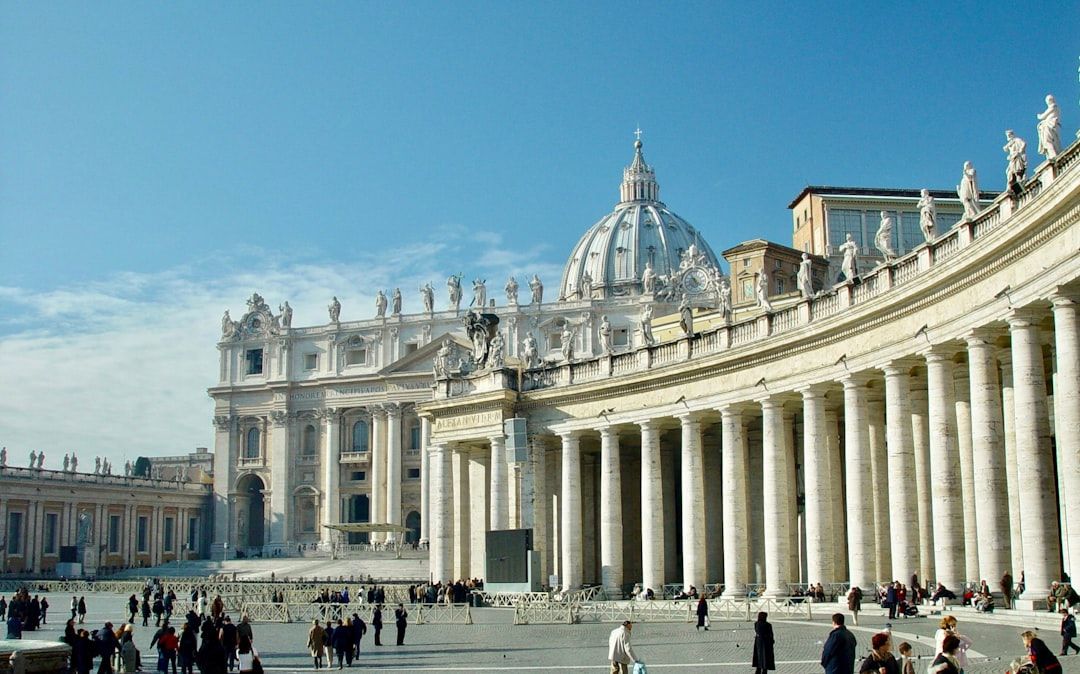
Papacy Experts
Expert insight into Pope Leo XIV's papacy, the Vatican and the global Catholic Church
Villanova University connects media and collaborators with faculty and scholars who study the papacy and its influence across history, theology, culture and global affairs. Our papacy experts bring deep context on the Vatican, Pope Leo XIV, Church leadership, Catholic social teaching and the evolving role of the Pontiff in a changing world. Explore experts ready to provide timely insight, background and analysis for your next story, event or collaboration. To visit Villanova’s Pope Leo XIV webpage for news and events, click here.


Expert Insight
Fresh perspectives and timely insights on the papacy.
Q&A
Expert answers and context on questions related to the papacy.
- How does Pope Leo XIV's first encyclical help the Church respond to the opportunities and challenges presented by AI?



When Leo warns us that “the technocratic paradigm in which we are immersed, which is amplified by the digital evolution and AI, threatens to normalize an anti-human vision,” he is warning us about a world that centralizes power and meaning among some while excluding the many. This contrasts with the Civilization of Love which welcomes the poor, the wounded, the unborn, and the migrant. Thus, a litmus test for a Leonine society is whether it welcomes the contributions of all, especially the smallest and the most forgotten. This is not just a work for the powerful; rather, the “civilization of love will not arise from a single or spectacular gesture, but from the sum total of small and steadfast acts of fidelity that serve as a bulwark against dehumanization.” We all need to be such bulwarks against dehumanization.
AI is changing the world faster than moral theorists can keep up, but an encyclical aims to frame a social issue in a global manner that calls readers to see what is at stake, who will be impacted, and how the most vulnerable and marginalized among the human family will be affected. Pope Leo XIV’s earlier exhortation included not only the material poor, but the sick and elderly, the orphan, those who are lonely, those who experience spiritual or moral poverty, those who are socially marginalized and culturally poor, those who lack space or rights or freedom. Each of these—and all of us—will be dramatically impacted by AI. How can we build a world that cares for the poor among us—who are us—while creating a technology that serves the common good and upholds human dignity? Readers of Leo’s first social encyclical will surely find a continuation of the call to care for our common home and to avoid harmful practices that worsen the living conditions of the most vulnerable.—From Church Life Journal
Adequately assessing AI's role requires situating technology within the broader framework of biological development. Technology is integral to evolution. Understanding technology's relationship to human welfare means grasping its role within the flow of biological and human life. AI personhood follows a new relational logic providing creative engagement spaces. One lives not in binary mode (me and you) but in creative interrelatedness. The "I" flows from constitutive relationships of shared existence where the middle—the place of creative engagement—forms identity's basis. Gen AI is already here, seeking a better world and a living God. The question remains whether institutional religion can evolve quickly enough to meet them where they are, or whether it will remain trapped in binary thinking while humanity moves toward posthuman futures.—From Global Sisters Report
- In what ways does Pope Leo XIV draw on the thoughts and teachings of St. Augustine in Magnifica Humanitas?

With his first encyclical, Magnifica Humanitas, Pope Leo XIV beautifully aligns himself with traditional Catholic Social Teaching and Pope Francis, while grounding his vision in the theology of St. Augustine. The result is a groundbreaking defense of the human person in our new age of artificial intelligence. Leo resurrects Augustine’s famous warning that human history is a constant struggle between two loves fighting for our hearts (MH, 130). He specifically equates the unrestricted love of self, driven by pride and arrogance, with the scriptural metaphor of the Tower of Babel. In this story, the builders tried to create “a single language, a single technology, a single direction” without reference to God. This attempt by human ingenuity alone resulted in cultivating a “uniformity that eliminated diversity” and “homogenization over communion” (MH, 7). In contrast, the properly oriented love of God and neighbor enables authentic unity capable of creating a civilization that preserves human dignity without dehumanization. In building this civilization, Leo addresses both the need for humanity to not fear the limitations of our finitude and the profound human desire for self-transcendence.
As in “Drawing New Maps of Hope,” the apostolic letter on Catholic Education, Pope Leo draws on an Augustinian spirituality that highlights fundamental desiring in the shared search for truth. Our desire for truth, or wonder, reflects humanity’s transcendent origin and end. That we are created in the image and likeness of the Triune God (Genesis 1:26-27) distinguishes human knowing from mere data processing. Pope Leo remarks: “So-called artificial intelligences do not undergo experiences, do not possess a body, do not feel joy or pain, do not mature through relationships and do not know from within what love, work, friendship or responsibility mean. Nor do they have a moral conscience, since they do not judge good and evil, grasp the ultimate meaning of situations, or bear responsibility for consequences” (99).—Tim Hanchin, PhD, Associate Professor of Theology
- What is Pope Leo XIV's communication style, and what impact could it have in successful discourse with global audiences?
In his language to diplomats and about matters of international concern, Pope Leo is notably good at articulating and reaffirming the principles that Catholics insist must guide decision-making, without getting down into the conclusions at a contestable level. The way he speaks and his presence could make it easier to discuss such sensitive topics. There were times when Pope Francis would talk off the cuff and give exaggerated responses, which would sometimes cause [the Vatican] to have to backtrack. With Leo, it's always careful. I think he sees his job to be a model of deliberation, care and unequivocal commitment to first principles that everybody should live by.
Pope Francis was very prophetic, and he had a spiritual charism—there was a freedom there. He saw where the Church needed to go. He saw that it was too sluggish, too staid and too reserved, and his Laudato si' encyclical was really groundbreaking in what it could call us to... A fear with Pope Leo is that he's going to be too moderate and too much of a statesman. He wants to keep everyone happy and together, but I don't think "The universal Church is universal" approach works anymore. Because it's such a very large, complex world, it's very hard to hold together something that is unifying. Unity can only work locally.
Pope Leo is cautious, but he is still bold. He has still spoken out on Russia and Ukraine, the situation in the Middle East and all of that. And his caution is not out of fear; it's a caution out of truly wanting to listen before speaking. If anything, I think he's modeling a hunger for a "spirituality of we," and he's also insisting that we need silence for a little bit. It's a lot of noise, but the silence is going to help us understand what's that next step we take together.
- How does Pope Leo XIV embody the idea of a global Church?

For a long time, because the Church has been run in Italian and the Pope speaks Italian, there has been a kind of implicit sense that Italians own the Church and that all other expressions of Catholicism are not the "real thing." Pope Leo XIV brings this sense of the universal Church that is much needed, and his ability to speak English, Spanish, French and Italian emphasizes that. I think one of the reasons that he was chosen as Pope is because of his global exposure and global understanding, not just from his time spent in Peru but also from his experience as Prior General of the Order of Saint Augustine. He traveled to many different places in this role and gained an understanding of the different cultures that are part of the body of Christ and of the Church, and the different voices that exist and challenge us to think differently.
- What themes does Pope Leo XIV carry into his papacy from his namesake, Pope Leo XIII?
Pope Leo XIII was known as the "Pope of the East." He was actually listening to many of the patriarchs at the time who were opposed to a lot of the colonization that was happening—and Latinization. So, in my mind, it's notable that one of Pope Leo XIV's first addresses was to the Eastern Catholic Churches and that his first papal visit was to celebrate the 1700th anniversary of Nicaea [an ecumenical council that was among the first efforts to attain theological consensus among Christians]. To me, it signals his recognition of the concentric circles of unity that are needed. First of all, we Catholics have to figure out our own unity. But then what does it mean to be in right relationship with Churches that have equal dignity in terms of their apostolic heritage and have drifted away for historical reasons? I think Pope Leo XIV is trying to listen to the cry of our generation, and younger generations, and help us all discern what is the right response.
Leo XIII had followed St. Augustine in saying that there can be no peace, except peace understood as a "tranquility of order," where order means that all things are ordered according to the will of Christ. What Leo XIII thought we needed to do is to find that and try to order our individual lives and our lives as a Church, so that the world can live in peace. Leo XIV also picks up on themes like that a lot. His first words on the on the loggia on May 8, 2025, were, "Peace be with you all!" And he keeps coming back to that, time after time, understanding that peace isn't just the absence of conflict. Peace is things being rightly ordered, and "rightly ordered" means a world in which people love each other, including through law and politics.
There are a few big themes, the first being migration. Pope Leo XIII saw emigration, which was actually forbidden by the Church, as an opportunity to build a new idea of the Church and extend its influence on the international scale. He took a really important stand to defend migrants, especially Italian migrants, at the time of the Great Italian Immigration, because he saw them as missionaries who could bring their faith to the United States. Pope Leo XIV carries that same instinct—he sees immigrants not as a plight, but rather as an opportunity to make contact with new worlds.From the European perspective, the commercial expansion of the U.S. and its westward growth was viewed with some fear during Leo XIII's papacy. Leo XIII again viewed this expansion as an opportunity, and he oversaw the establishment of new dioceses from Kansas westward in the U.S. He praised the development and mission of the American Church while also recognizing the hesitations many had about the new world. Leo XIV also has somewhat of a mixed relationship with the United States. He grew up in the U.S. but primarily lived in Peru, so he observed the U.S. from the outside and has a critical lens of the country. He recognizes both the insider and outsider perspective of the U.S.


Experts in the News
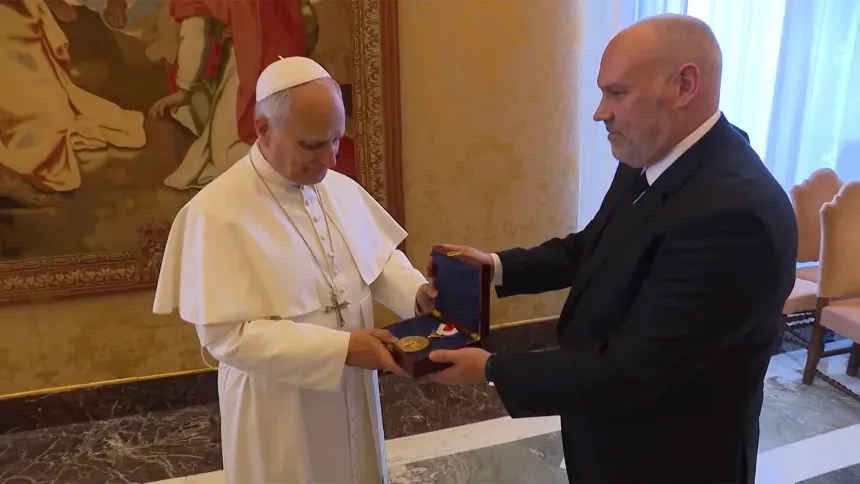
“I think [the Pope] has been a conciliatory figure,” said Michael Moreland, professor of Law and Religion at Villanova University. “...He can be a source of unity and pride certainly for American Catholics especially, but [also] for Americans generally at a time of sometimes national division.”
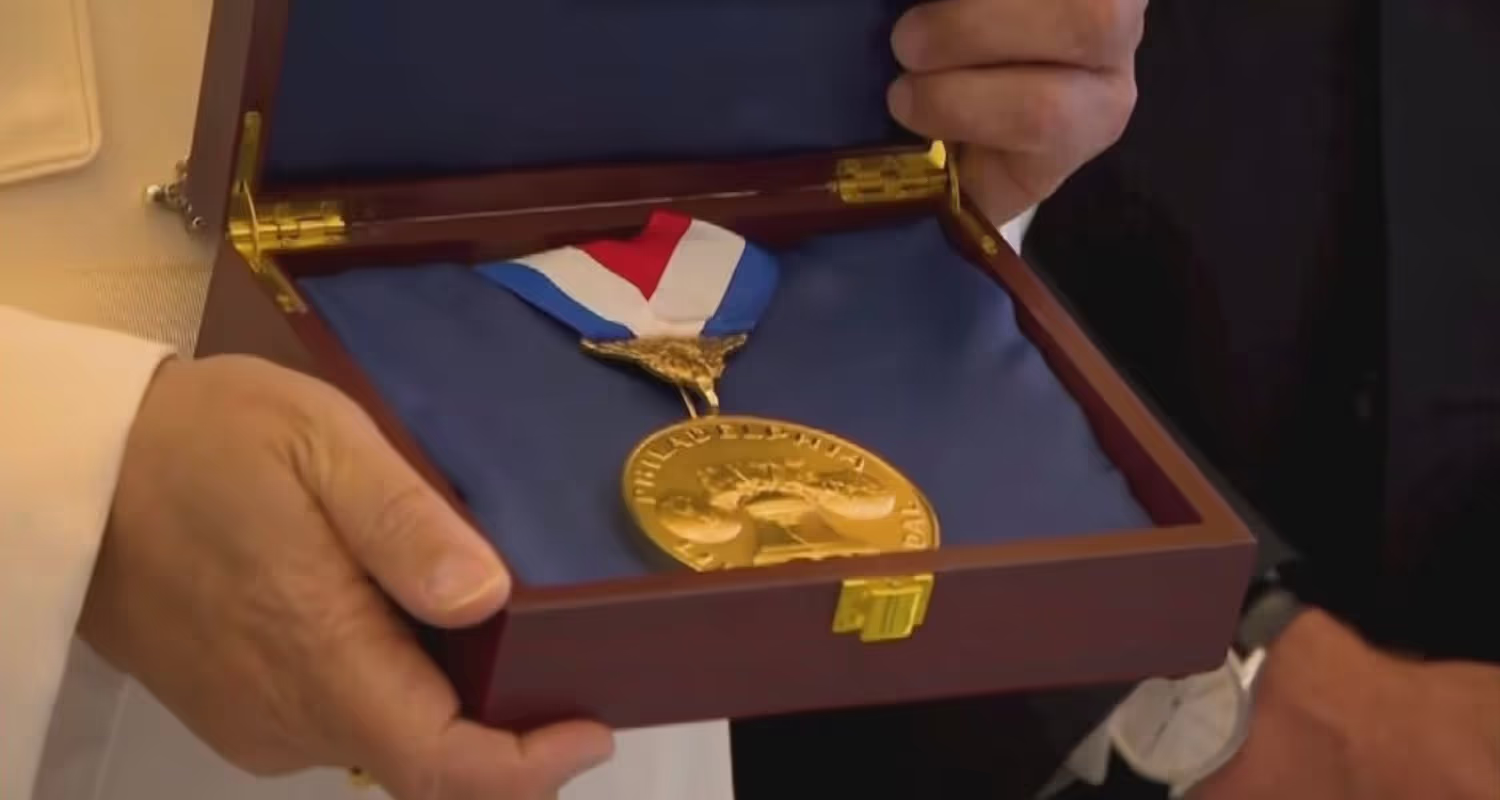
“Seeing them on stage as the Pope spoke of an America that ‘has long championed the religious freedom necessary to follow responsibly the dictates of conscience’ was like seeing the American Dream becoming just a little truer in real time,” wrote Villanova's Terence Sweeney.
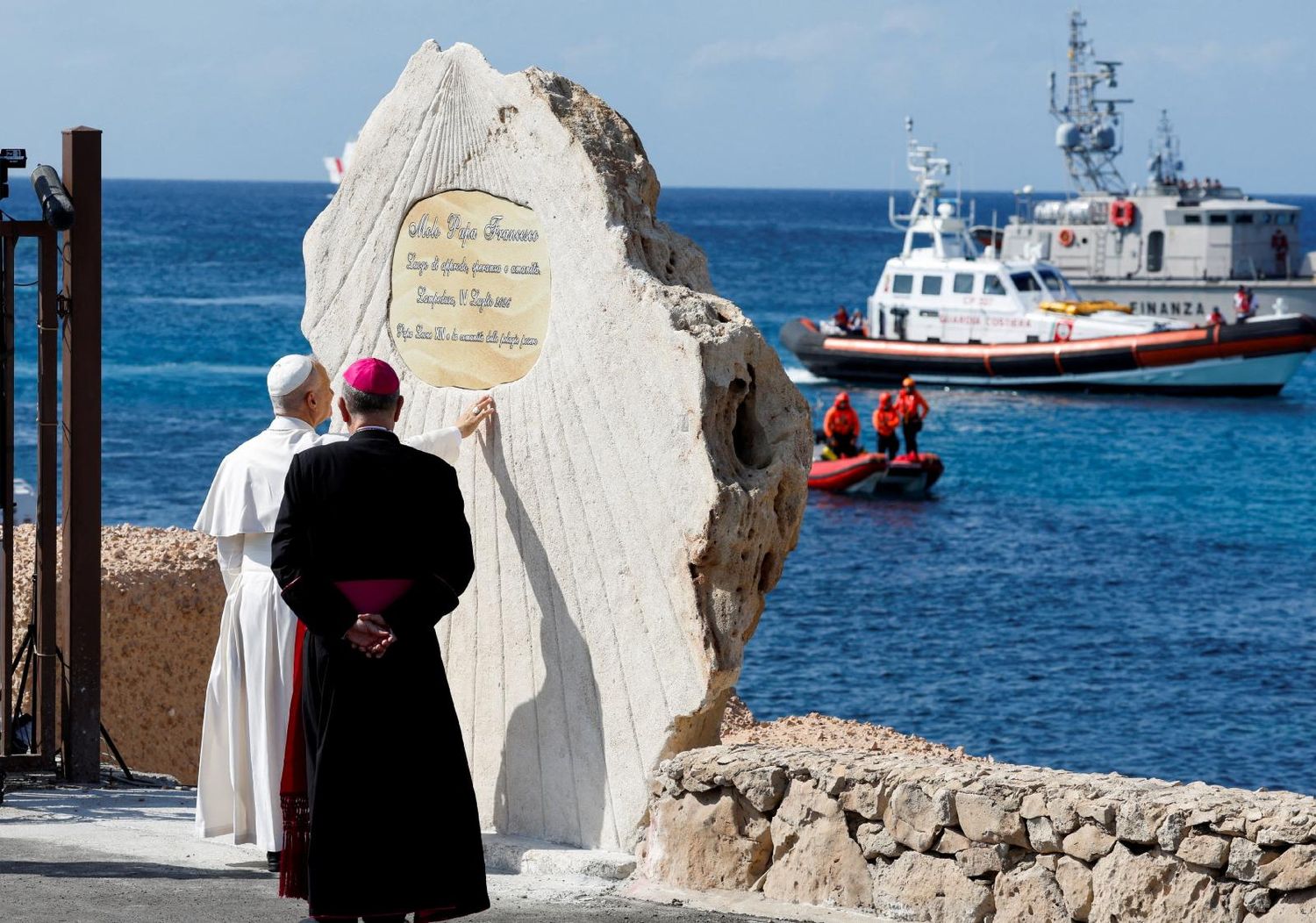
Augustinian priest the Rev. John Lydon, director of the Mother Cabrini Institute on Immigration at Villanova University, says Leo was speaking both to Europe and to his native United States. “One of our litmus tests of our society today in terms of moral value is how we treat migrants and refugees,” Father Lydon said.
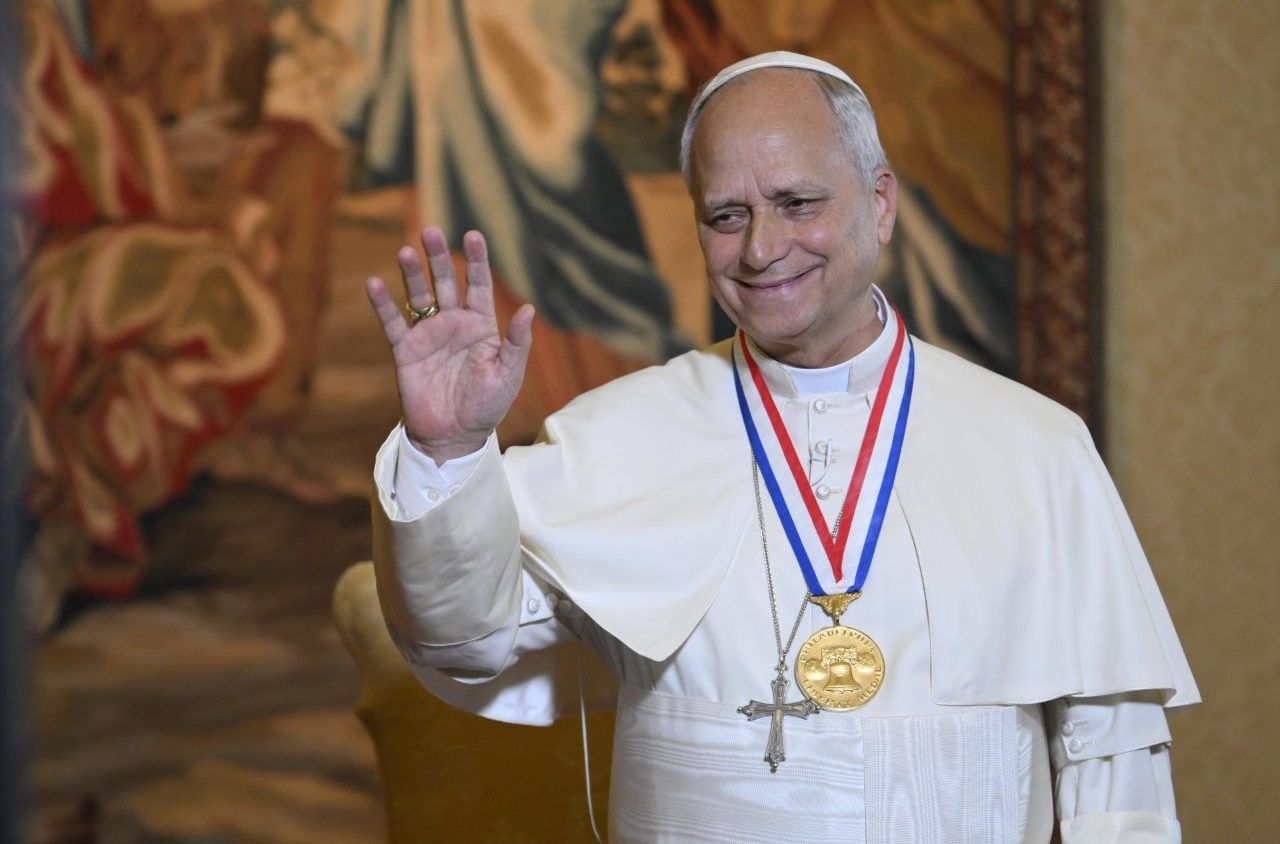
“What the American Pope can do now, in a way no other person on earth can, is to remind Americans that the equality to which their nation has been dedicated since 1776 depends on what Christianity has shown the world: that even the least, in worldly eyes, are equals in God’s eyes,” wrote Villanova University’s Patrick Brennan.
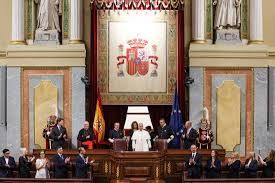
“Pope Leo is signaling how important immigration is to him by doing these two trips early in his papacy,” said Michele Pistone, a Villanova University professor who leads its new center on immigration.
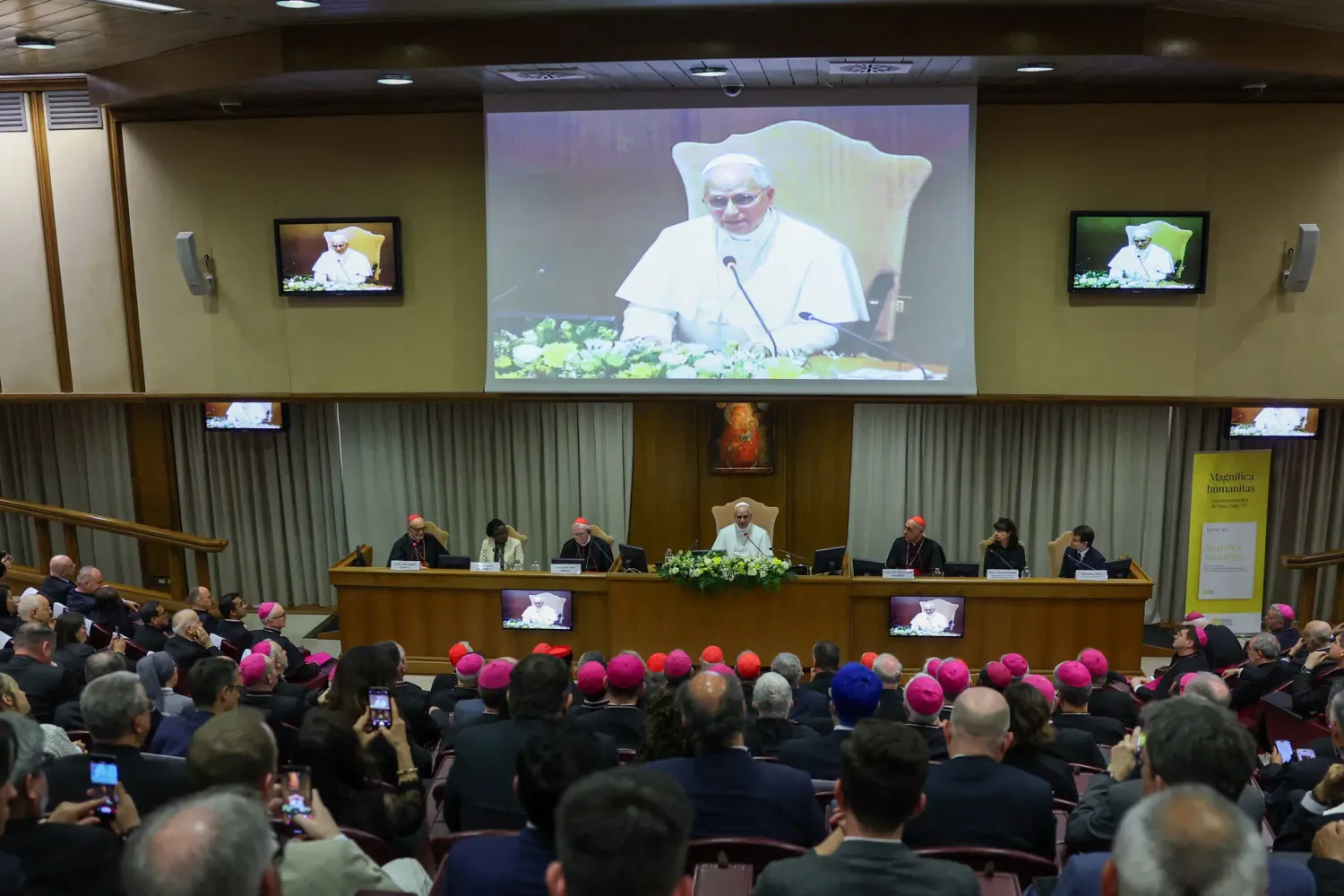
“With his first encyclical's vivid imagery of two contrasting construction projects, Pope Leo XIV invites all people of goodwill to resist indifference and challenge the apparent inevitability of events in the world.” Sally J. Scholz is professor of philosophy at Villanova University.
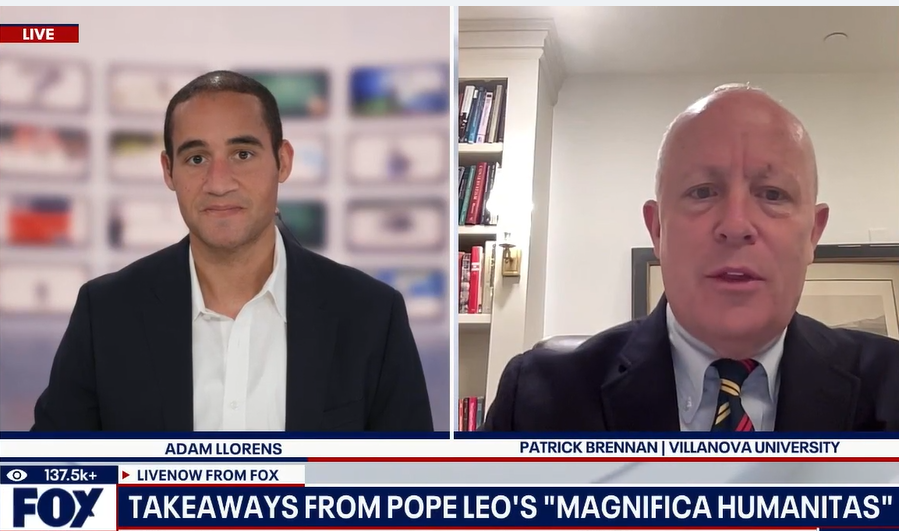
Pope Leo XIV's first encyclical, titled "Magnifica Humanitas," was 42,000 words in length, and Villanova University's Patrick Brennan, Chair of Catholic Legal Studies, joined Adam Llorens on LiveNow From Fox to break it all down.
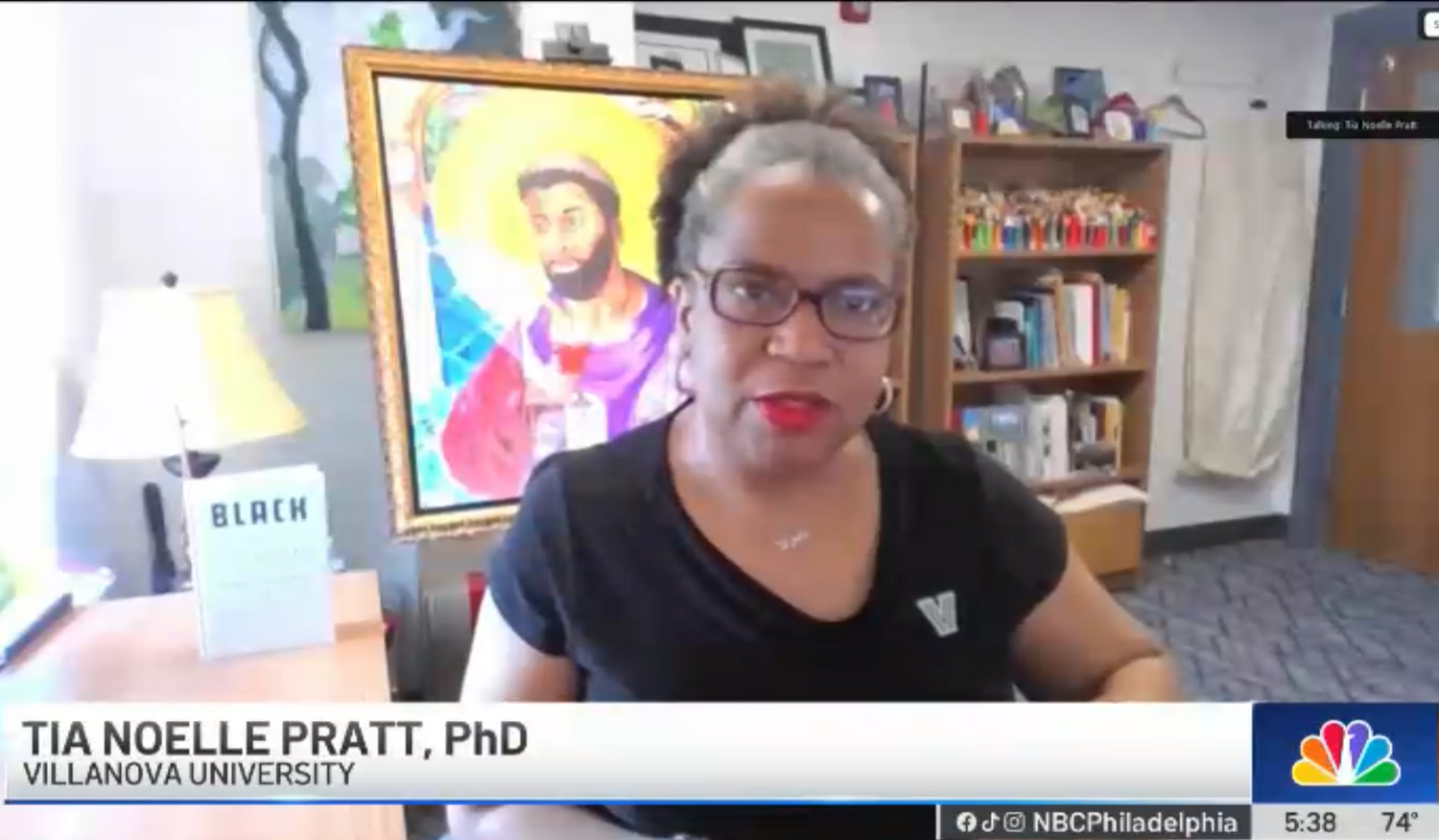
"He has taken this conversation to the next level... it is truly impossible to overstate the importance of what happened with this document today," said Villanova University's Dr. Tia Noelle Pratt.
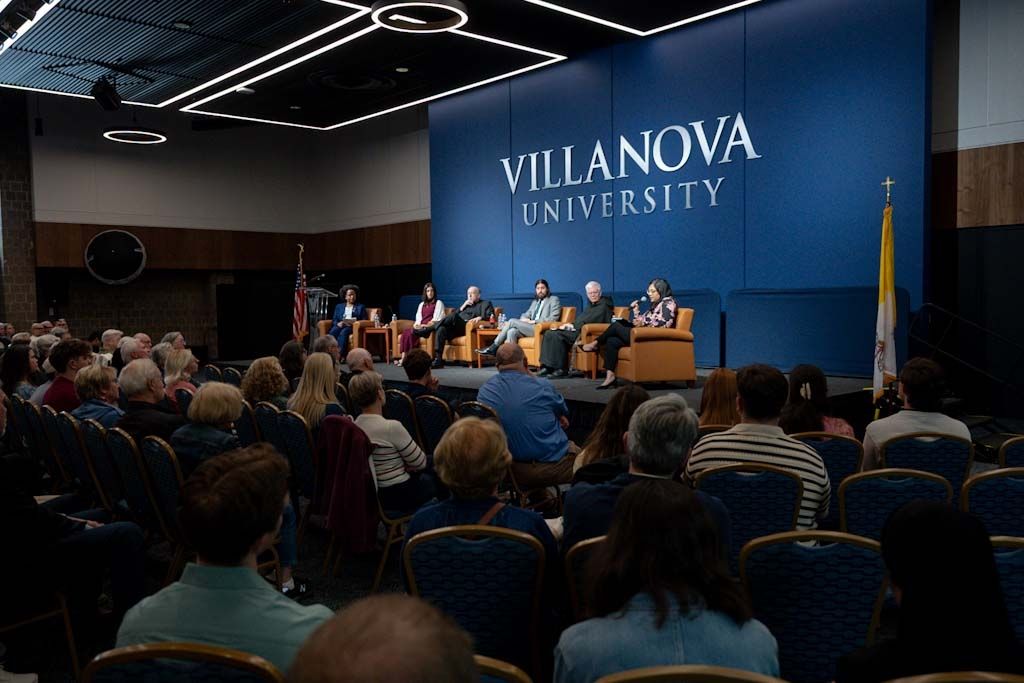
One year in, Pope Leo XIV's papacy has been rooted in truth, unity and love—the distinct gifts of his religious order. A panel made up of a brother bishop, a brother in the order, a student, an academic and a journalist each shared their take on the first American pope's pastoral and prophetic style a year after his election at the Augustinian-run Villanova University April 28.