
Industry and researchers call for action to tackle climate impact of organic, carbon-based chemicals

Aug 30, 2024

4 min

Patricia Thornley
  • Call led by members of Supergen Bioenergy Hub, based at Aston University
  • They highlight that carbon-based chemicals cannot be decarbonised but can be defossilised
  • They want a transition to renewable carbon sources such as biomass, recycled carbon, and carbon dioxide.


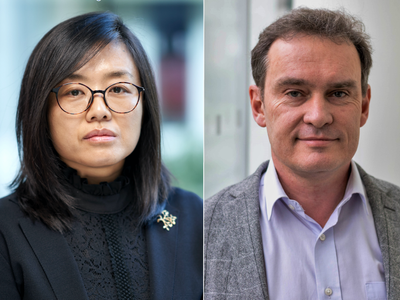
Director of Supergen Bioenergy Hub, Professor Patricia Thornley


Industry experts and university researchers have joined together to ask the government to address the climate impact of organic, carbon-based chemicals.


While demand for fossil fuels as energy is expected to fall in the coming decades, the

petrochemicals sector is set to grow significantly according to experts and is set out in a 2018 report by the International Energy Agency.


Members of the Supergen Bioenergy Hub which is based at Aston University and the Biomass Biorefinery Network believe the issue has yet to receive proper attention and is calling for a strategy that addresses this key component of our greenhouse gas emissions. They want a move to a more circular economy, managing supply and demand levels and transitioning away from fossil feedstocks which are raw materials required for some industrial processes.


In their paper Carbon for chemicals How can biomass contribute to the defossilisation of the chemicals sector? they highlight that carbon-based chemicals cannot be decarbonised but can be defossilised through a transition to renewable carbon sources such as biomass, recycled carbon and carbon dioxide.


Many products in modern society contain carbon such as pharmaceuticals, plastics, textiles, food additives, cosmetics, and cleaning products. These chemicals are derived from fossil feedstocks, so they are classed as petrochemicals. As a result, they contribute to global greenhouse gas emissions and climate change. Carbon is embedded in organic chemical products and released when they break down at end-of-life, for example through incineration.


To address the emissions from carbon in chemicals and accelerate the development of bio-based chemicals, the group want a cross-party consensus to support a sustainable chemical system.


Director of Supergen Bioenergy Hub, Professor Patricia Thornley, said: “We need to consider the UK’s future feedstock and chemicals production and use, and how it relates to net zero, agriculture, environment, economy, trade, and just transition policy objectives. There are opportunities here for the UK to lead the way on sustainable chemical production, but we need to carefully plan a roadmap for the transition, that delivers opportunities around jobs and the economy as well as sustainable greenhouse gas reductions.


“There is a definite role for biomass here. But it is essential that any future use of biomass in the chemicals sector is underpinned by rigorous, trusted, and enforceable sustainability governance to build confidence, deliver sustainability benefits, and minimise negative impacts. That requires improvements in sustainability governance and regulation.


“We think there are real economic and trade opportunities by the UK accelerating sustainable chemicals. At the moment bio-based chemicals, and chemicals derived from other renewable carbon sources, are not being expanded in the UK because there are no explicit incentives that prioritise them over fossil-based production.”


The group argues that the UK has significant academic and industrial research expertise to underpin the development of sustainable bio-based products and could be a global leader in bio-based products and sustainability governance. They believe that to date little of this has manifested as UK-based scale-up and manufacturing, whilst there are numerous examples of UK-led research being scaled up elsewhere. The paper was delivered at a webinar on 7 August.


Notes to Editors


Carbon for chemicals How can biomass contribute to the defossilisation of the chemicals sector? https://www.supergen-bioenergy.net/output/carbon-for-chemicals-how-can-biomass-contribute-to-the-defossilisation-of-the-chemicals-sector-policy-briefing/


Author: Joanna Sparks (formerly Aston University)

With contributions from:

Cristiane Scaldaferri (formerly Aston University),

Andrew Welfle (University of Manchester),

Patricia Thornley (Aston University),

Ashley Victoria (University of Leeds),

Caspar Donnison (Lawrence Livermore National Laboratory),

Jason Hallett (Imperial College London),

Nilay Shah (Imperial College London),

Mirjam Rӧder (Aston University),

Paul Mines (Biome Bioplastics),

David Bott (Society of Chemical Industry),

Adrian Higson (NNFCC),

Neil Bruce (University of York)


2018 International Energy Agency report https://www.iea.org/reports/the-future-of-petrochemicals


https://www.supergen-bioenergy.net/

The Supergen Bioenergy Hub works with academia, industry, government, and societal stakeholders to develop sustainable bioenergy systems that support the UK’s transition to an affordable, resilient, low-carbon energy future. The Hub is funded jointly by the Engineering and Physical Sciences Research Council (EPSRC) and the Biotechnology and Biological Sciences Research Council (BBSRC) under grant EP/Y016300/1 and is part of the wider Supergen Programme.


www.bbnet-nibb.co.uk

The Biomass Biorefinery Network (BBNet), a phase II Network in Industrial Biotechnology & Bioenergy funded by the Biotechnology and Biological Sciences Research Council (BBSRC-NIBB) under grant BB/S009779/1. The aim of the Biomass Biorefinery Network is to act as a focal point to build and sustain a dynamic community of industrial and academic practitioners who work together to develop new and improved processes for the conversion of non-food biomass into sustainable fuels, chemicals and materials.


About Aston University

For over a century, Aston University’s enduring purpose has been to make our world a better place through education, research and innovation, by enabling our students to succeed in work and life, and by supporting our communities to thrive economically, socially and culturally.

Aston University’s history has been intertwined with the history of Birmingham, a remarkable city that once was the heartland of the Industrial Revolution and the manufacturing powerhouse of the world.

Born out of the First Industrial Revolution, Aston University has a proud and distinct heritage dating back to our formation as the School of Metallurgy in 1875, the first UK College of Technology in 1951, gaining university status by Royal Charter in 1966, and becoming the Guardian University of the Year in 2020.

Building on our outstanding past, we are now defining our place and role in the Fourth Industrial Revolution (and beyond) within a rapidly changing world.

For media inquiries in relation to this release, contact Nicola Jones, Press and Communications Manager, on (+44) 7825 342091 or email: n.jones6@aston.ac.uk


Connect with:
Patricia Thornley

Patricia Thornley

Director of EBRI, Energy and Bioproducts Research Institute

Patricia Thornley works in assessing the environmental, economic and social impacts of renewable energy technologies.

ChemistrySupergen ProjectClimate ChangeBioenergyEnvironmental Sciences
Powered by

You might also like...

Check out some other posts from Aston University

2 min

Aston University economists say Prime Minister can reduce UK trade vulnerability with China visit

Greenland episode exposed UK’s lack of effective response to economic coercion from allies Research shows tariff retaliation would have cost the average UK household up to £324 per year Economists say China visit is “portfolio risk management” – diversification reduces vulnerability. The Prime Minister’s visit to China – the first by a British PM since 2018 – is an opportunity to reduce the UK’s vulnerability to economic coercion, according to new research from Aston University. A policy paper from Aston Business School’s Centre for Business Prosperity analyses the January 2026 Greenland tariff episode, when President Trump threatened and then withdrew tariffs on eight European countries. The researchers found that the UK had no good options: retaliation would have made Britain worse off, while absorbing the tariffs left Europe without credible deterrence. Director of the centre for business prosperity, Professor Jun Du, said: “The Greenland episode was a wake-up call. When your principal security ally threatens economic coercion, the old assumptions about who is safe and who is dangerous no longer hold. “The PM’s China visit should be framed as portfolio risk management – building diversified trading relationships that reduce the UK’s exposure to any single partner. Just as investors don’t put all their money in one stock, countries shouldn’t put all their trade into one basket. A UK with multiple strong partnerships is harder to pressure, whether the pressure comes from Washington or Beijing.” The research found that coordinated UK–EU tariff retaliation would have cost British households up to £324 per year – the worst outcome modelled. But the authors argue that Europe has untapped leverage elsewhere: the US runs a €148 billion annual services surplus with the EU, and mutual investment exceeds €5.3 trillion. Associate professor of economics and co-author, Dr Oleksandr Shepotylo, said: “Tariff retaliation fails because it hurts consumers and distorts the economy – the retaliator suffers similarly to the target. But Europe has cards it isn’t playing. Services, investment screening, and regulatory access are pressure points where Europe can respond effectively.” UK exports to China fell by 10.4% in the year to Q2 2025, with goods exports down 23.1% – the sharpest decline among major trading partners. The researchers argue that this closes off the UK’s largest alternative market at precisely the moment US reliability is in question. The paper identifies three priorities for UK policy: Recognise the permanent incentives behind US tariffs. US tariff revenue hit $264 billion in 2025. Trade negotiations alone cannot resolve revenue-driven policy. Build UK–EU coordination on non-tariff instruments. Services, investment, procurement, and regulation offer leverage that tariffs do not. Treat China engagement as portfolio risk management. Concentration in any single market creates vulnerability. Diversification is not about picking sides – it’s about resilience. Professor Du added: “The question for the Prime Minister is whether to use this breathing space to build resilience – or wait for the next Greenland.” To read the policy paper in full, click on this link:

2 min

Medication adherence: Why it matters and how we can improve it – public lecture by Professor Ian Maidment

Professor Ian Maidment is a professor in clinical pharmacy at Aston Pharmacy School His inaugural lecture will explain why patients struggle with taking medication and present possible solutions to the problem Professor Maidment is a former practising pharmacist and an expert in medication optimisation and management in mental health and dementia. Professor Ian Maidment, professor in clinical pharmacy at Aston Pharmacy School, will give a public lecture about his life’s work on 5 February 2025. In his inaugural lecture, Professor Maidment will reflect on his journey from a childhood in Kent to becoming a leading researcher in clinical pharmacy. After more than two decades working in the NHS, in community pharmacy, mental health, dementia care, and leadership roles, he joined Aston University in 2012. His research focuses on the real-world challenges of medication optimisation for patients, carers, and healthcare professionals. The title of Professor Maidment’s lecture is ‘Medication adherence: Why it matters and how we can improve it’. Every year, the UK spends nearly £21 billion on medicines. Yet up to half of people with long-term conditions do not take their medication as prescribed—a problem known as non-adherence. This has profound clinical consequences and significant financial implications for the NHS. Professor Maidment will draw on his experience to explore how factors such as medication burden and side-effects influence adherence, the challenges posed by conditions such as dementia and severe mental illness, the role of pharmacy in supporting adherence and why tackling non-adherence requires a system-wide approach. He will also offer practical solutions to one of healthcare’s most persistent problems. Professor Maidment said: “We need to understand why patients struggle to take their medication and then develop and test solutions that work well.” The lecture on Thursday 5 February 2026 will take place at Aston Business School. In-person tickets are available from Eventbrite. The public lecture will begin at 18:00 GMT with refreshments served from 17:30 GMT. It is free of charge and will be followed by a drinks reception. The lecture will also be streamed online.

3 min

New research partnership to develop biodegradable gloves from food waste for healthcare sector

Knowledge Transfer Partnership between Aston University and PFE Medical to develop a biodegradable clinical glove from food waste The gloves will provide a low-cost, convenient and sustainable alternative to the 1.4bn disposable gloves used in the NHS each year The innovation will reduce clinical waste and costs and help the NHS reach its net zero goals. Aston University and Midlands-based company PFE Medical are teaming up to create biodegradable gloves made from food waste for use in the NHS. They will offer a low-cost, convenient alternative to disposable gloves without compromising patient safety. More than 1.4bn disposable gloves are used by the NHS each year. They create large volumes of clinical waste which has both an environmental and economic cost. The Knowledge Transfer Partnership (KTP) project will develop a more sustainable alternative made from polymers derived from food waste such as orange peel, able to degrade naturally. The gloves will initially be for use during low-risk tasks such as ultrasound scans, rather than in more critical situations such as operating theatres. The gloves would be designed to not only reduce clinical waste and costs in the NHS, but also carbon emissions, helping the NHS reach its goal to be the world’s first net-zero health service. With most personal protective equipment (PPE) currently sourced from Chinese manufacturers, the goal is to develop a biodegradable glove that can be manufactured using a UK supply chain. The challenging project draws on Aston University’s expertise in sustainable polymer chemistry, centred at Aston Institute for Membrane Excellence (AIME). Aston University has one of the largest research groups of polymer chemists in the UK. The project will be led at the University by Professor Paul Topham, director of AIME, and Dr James Wilson, AIME associate member. The research team have chosen to focus on polymers from food waste in order to ensure that the final product can be manufactured sustainably. Most polymers are currently made from petroleum. Polymers made from food waste, ranging from fruit waste to corn or dairy products, have the potential for antioxidant and antibacterial properties if designed appropriately. The team will manipulate the polymer molecules so that they include the right monomers (the smaller units which make up the molecules) in the right location to achieve the properties they require. Critical to the success of the project will be PFE Medical’s commercial and clinical experience of taking new innovations into medical use. It will be the third KTP between Aston University and PFE, following on from successful projects to develop an automated endoscope cleaner, now in use across University Hospitals Birmingham NHS Foundation Trust (UHB). Professor Topham said: “At Aston University, we have a long history of working with industry, of translating fundamental research into solutions for real world problems. This project with PFE Medical provides us with that route, to take our science and engineering and make a difference to peoples’ lives. That’s exactly where, as researchers, we want to be.” Rob Hartley, CEO of PFE Medical, said: “Our previous KTP with Aston University was a phenomenal success, thanks to the brilliant team we had on board. I’m just as excited by this project, which is looking to solve an equally long-standing problem. If we can achieve our goal, then the implications are huge, going far beyond the NHS to all the other situations where people are wearing disposable gloves.” KTPs, funded by Innovate UK, are collaborations between a business, a university and a highly qualified research associate. The UK-wide programme helps businesses to improve their competitiveness and productivity through the better use of knowledge, technology and skills. Aston University is a sector-leading KTP provider, ranked first for project quality, and joint first for the volume of active projects. For further details about this KTP, visit the webpage: www.aston.ac.uk/business/collaborate-with-us/knowledge-transfer-partnership/at-work/pfe-medical.

View all posts