You might also like...
Check out some other posts from Augusta University
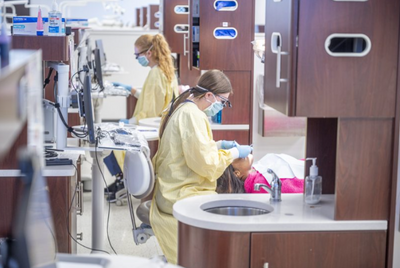
Artificial intelligence is transforming the workplace, including healthcare. But when it comes to dental hygiene, technology still cannot replicate the empathy, judgment and personal connection that patients depend on.
Meghan Watkins, a dental hygiene instructor at Augusta University's Dental College of Georgia, believes the profession offers a compelling example of why human skills remain essential in an increasingly automated world.
In a recent article, Watkins explains how dental hygienists do far more than clean teeth. They recognize subtle changes in oral health, assess potential risks, educate patients and develop relationships that often span years.
“I don’t think a robot will take into consideration a patient’s feelings, or if something is uncomfortable or painful,” Watkins explains. “I will. I want them to come back and see me.” And the profession is growing. Federal projections anticipate 7% employment growth over the next decade, with a median annual salary of $90,670 in 2024.
As AI raises questions about which jobs might disappear and which will endure, dental hygiene offers an interesting perspective on the future of work: technology can improve the tools, but it cannot replace the person providing compassionate, individualized care.
For journalists exploring AI's impact on employment, the future of health care, or careers that depend on uniquely human skills, Meghan Watkins offers a valuable perspective on why dental hygiene remains essential.
If you're interested in speaking with Meghan Watkins contact AU's External Communications Team mediarelations@augusta.edu to arrange an interview today.
World Diabetes Day is Nov. 14 and the theme for 2026-2027 is Early Action. Worldwide, one out of nine adults are currently living with diabetes and in the United States, over 40 million people have diabetes. However, many people are undiagnosed and remain aware of their risk of diabetes.
Currently, 635 million adults worldwide are at high-risk for diabetes and 12 million persons in the United States are undiagnosed. Undoubtedly, we have a lot of work to do. Early action and prevention are key in the fight against the epidemic of diabetes. Early action "accelerates care, reduces the risk of diabetes, and leads to better health for all."
As a nurse for the past 40 years, I have provided care for countless people living with type 2 diabetes. I have witnessed the struggles of people living with diabetes and the many associated complications that can occur. Diabetes can be a very devastating disease, but I am hopeful that there are new emerging treatment options for diabetes, such as GLP-1 medications, and new user-friendly technologies, including the use of continuous glucose monitoring.
Lynn Glenn's research and practice promotes high quality, equitable health care and enhanced outcomes in underserved, diverse communities. View her profile Since being at Augusta University, I have focused my efforts on diabetes prevention in younger adults and rural populations. I have developed an adaptation of the Diabetes Prevention Program that incorporates flexibility and socioecological needs amidst competing priorities in young adulthood.
My objectives also include improving access to screening and early detection of diabetes which have been implemented in several community events and health fairs, as well as other non-traditional settings. I have addressed the need for enhanced access for persons at high-risk for diabetes, such as Hispanic populations, at the annual AU College of Nursing Costa Layman International Health Outreach Fair and diabetes screening of Hispanic adults at the Dental College of Georgia. Most recently, I am working in partnership with Georgia Center for Diabetes Translational Research at Emory University to advance the science of diabetes prevention research.
For Diabetes Month in November, TAKE ACTION and consider the following: Increase awareness of diabetes risk with friends and family members. Know your risk factors for diabetes and take the diabetes risk test. Approximately 115 million people and more than 42% of adults 18 years and older have prediabetes and at high for developing diabetes in the future. Encourage others to get diabetes screening. Almost one-third of adults with diabetes are undiagnosed or unaware of their condition. With the latest recommendations, more than 11 million adults are now eligible for diabetes screening. All adults aged 35 years and older should undergo screening for prediabetes and diabetes annually. Regardless of age, adults should undergo screening for prediabetes and diabetes if they have risk factors such as being overweight/obese, family history of diabetes, history of gestational diabetes (diabetes in pregnancy), or history of high blood pressure or hear disease. Participate in or organize a community-based screening for diabetes. Local events are an easy, non-threatening alternative to traditional health care office visits to receive preventive screenings. Advocate for increased awareness, screening, and early detection of diabetes in your local community. Increase equitable access to healthy food and physical activity at home and work. There is strong evidence that a healthy lifestyle has numerous benefits, such as prevention of cancer, diabetes, and other chronic conditions. We spend a large proportion of time outside the home, yet our workplace environments may not be conducive to our health, such as prolonged sitting time, inadequate time or access to healthy meals, and a high burden of stress. Try to make healthier choices, such as less sitting time, eating healthier meals and snacks, and having quick exercise "snacks" at work. More research is needed to understand how healthy workplace environments can have a positive impact on health outcomes. Please help support people at risk or living with diabetes and TAKE ACTION!
Connect with an Expert Dr. Lynn Glenn, PhD, MSN, of Augusta University's College of Nursing, is available to speak with media about diabetes prevention, early detection, emerging treatments and the importance of expanding access to screening, particularly among younger adults, rural communities and underserved populations.
To arrange an interview or learn more about her research, click Dr. Lynn Glenn's ExpertFile profile below.
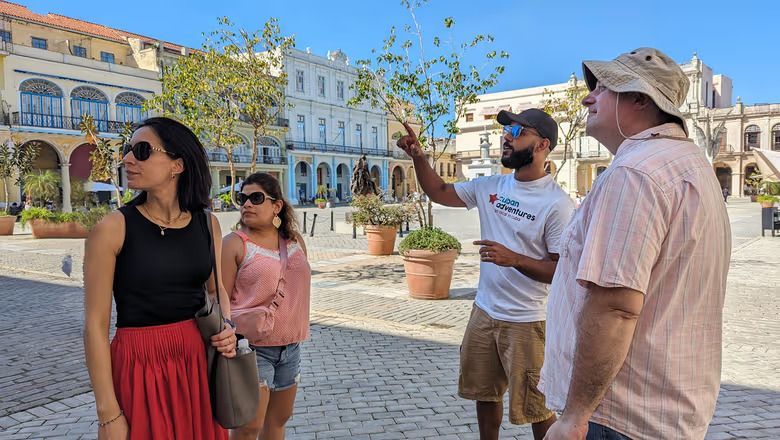
Cuba is making a significant move to revive its struggling tourism industry, opening the door to foreign investment, private hotel ownership and greater participation by independent businesses. But will these changes be enough to bring tourists and investors back to the island?
That's the question being examined by Dr. Paolo Spadoni, associate professor of political science at Augusta University, in a recent Travel Weekly article titled Experts laud Cuba reforms but don't see quick travel rebound, published Oct. 26.
The reforms would allow hotels to become fully foreign-owned and private businesses to operate travel agencies, tour companies and car rental services. While the changes represent a departure from Cuba's traditionally state-controlled tourism model, Spadoni cautions that the economic and political environment remains a major obstacle.
Paolo Spadoni, a recognized authority on Cuba's political economy and co-author of the 2025 book The Cuban Tourism Industry: Evolution, Challenges and Prospects, told Travel Weekly that the reforms are necessary but arrive at a particularly difficult moment. View his profile They want to change the model, which is, I think, a good thing to do, but the conditions are not there now to actually reap the benefits,” Spadoni told Travel Weekly. He also warned that attracting substantial foreign investment remains unlikely under current conditions, pointing to the departure of international hotel operators, declining visitor numbers and continuing U.S. economic restrictions.
Spadoni noted that U.S. tourist arrivals between January and August were just 9.9% of their levels during the same period in 2019. He also explained that Cuba's state-controlled tourism model was showing signs of exhaustion even before the pandemic.
His analysis raises important questions about the future of one of Cuba's most important industries, the potential for private-sector growth and whether economic reforms can succeed without broader changes in U.S.-Cuba relations.
For journalists covering international tourism, foreign investment, economic reform or U.S.-Cuba relations, Dr. Spadoni offers timely insight into the challenges facing Cuba and what it will take to rebuild its tourism economy.
An internationally recognized expert on Cuba, Spadoni specializes in Latin American political economies, international relations, foreign investment and U.S.-Cuba relations.
To arrange an interview or connect with Dr. Paolo Spadoni, visit his ExpertFile profile below.





