Racial Disparities in Maternal Mortality Rates Need More Time to Improve

Feb 18, 2025

1 min

Martine Hackett

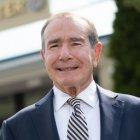
A Newsday story on racial disparities in maternal mortality rates in New York featured an interview with Dr. Martine Hackett, associate professor and chair of Hofstra’s Department of Population Health. While national statistics have improved overall in recent years, experts say it will take more time to close the gap.


National statistics released by the Centers for Disease Control and Prevention show overall maternal mortality across the U.S. dropped for the second year in a row. However, while the rate for white women, decreased from 19 deaths per 100,000 live births in 2022 to 14.5 in 2023, it rose from 49.5 to 50.3 for Black women.


Dr. Hackett, cofounder of Birth Justice Warriors, called the disparity “shocking” and said, “When you’re looking to address a problem as big and complex as maternal mortality, it is going to take a long time.”
Connect with:
Martine Hackett

Martine Hackett

Associate Professor of Population Health

Dr. Hackett's research focuses on public health and health inequities, particularly in the American suburbs and minority communities.

Public HealthHealth CommunicationResearch MethodsMaternal-Child HealthInfant Injury
Powered by

You might also like...

Check out some other posts from Hofstra University

1 min

Housing Shortage Could Cost NY Politically

Lawrence Levy, associate vice president and executive dean of the National Center for Suburban Studies, was interviewed by the Investigative Post for the article: “Housing shortage could cost New York politically.” New York’s persistent housing shortage, driven in part by restrictive local zoning and slow homebuilding, is contributing to population loss that could cost the state two U.S. House seats after the 2030 Census as people relocate to more affordable areas. Levy said that because housing policy is handled town by town, many communities “become villages of no,” resisting new housing and exacerbating the problem.

1 min

Blizzard of ’26 – One for the History Books

“The blizzard of ‘26 will be remembered in meteorology circles,” Dr. Jase Bernhardt told Newsday about the historic storm this week that dropped approximately 30 inches of snow on parts of Long Island. The Hofstra University associate professor of geology, environment, and sustainability and director of meteorology explained the blizzard hit what’s known as the “70/40 benchmark." That’s 40 degrees north latitude and 70 degrees west longitude, geographic coordinates for a spot over the Atlantic Ocean: “That’s the sweet spot,” said Dr. Bernhardt. “Say it tracks 50 miles south and east, that means the heaviest snow shifts farther away. If it tracks closer, oftentimes, it’s bringing in warm air closer to the center [of the storm], and if it tracks too close, it might yield heavy precipitation, but it’s going to be too warm for all snow.”

1 min

Pennsylvania Officials Highlight Snow Squall Safety

Research by Dr. Jase Bernhardt, Hofstra University associate professor of geology, environment, and sustainability, was recently highlighted during a press conference held by several state agencies in Pennsylvania on snow squall safety. The Pennsylvania Department of Transportation (PennDOT), Pennsylvania Turnpike Commission (PA Turnpike), Pennsylvania Emergency Management Agency (PEMA), Pennsylvania State Police (PSP), and the National Weather Service (NWS) highlighted investments by Governor Josh Shapiro’s administration that have led to an average of 7% fewer winter crashes and a 34% decrease in serious injuries and fatalities in those crashes. Media outlets that covered the press conference included the Times News Online.

View all posts