Worth Longest research on more targeted aerosol drug delivery systems

As a Minnesota biotech company chases life-saving applications for their research, two VCU professors press forward on their work to use aerosols — tiny particles released into the airways — to deliver advanced drugs to those in need.

Jun 22, 2022

5 min

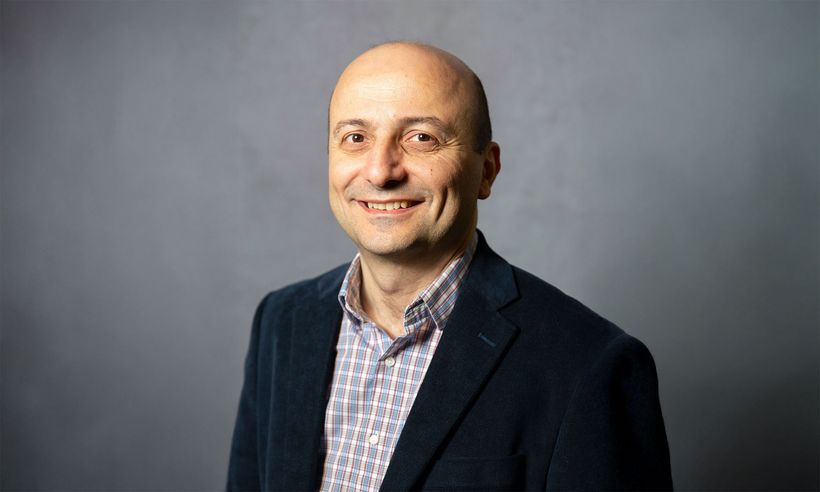
Worth Longest, Ph.D.

Michael Hindle, Ph.D., a professor in the VCU Department of Pharmaceutics, and P. Worth Longest, a professor in the VCU Department of Mechanical and Nuclear Engineering, have invested years of time and millions of dollars to address challenges found in the field of medical aerosols.


In particular: While smaller particles are more effective in delivering drugs into the lungs and airways, these tiny particles are often exhaled out immediately when taking a dose.


Current aerosol delivery systems — think asthma inhalers — effectively deliver just 10 percent of an aerosolized dose. That’s fine for most asthma and COPD sufferers who use standard inhalers with existing medications, as these patients only need a small amount of the potent drugs to reach the lungs and have an effect.


“But the medical world wants to use the lungs for delivery of other drugs, whether it’s locally to the airways or systemically to the body, and for that, you need more efficient devices,” Hindle says. To effectively use inhaled drugs for complex medical conditions requires more of the aerosol to reach the airways and to potentially target different regions of the airways — plus the devices to get them there.


“Our work is about doing something different — changing that ballgame from having 90% of the drug wasted and 10% make it to the lungs, and flip it so that we get just 10% lost and 90% in the lungs,” Hindle says. “That’s always been our goal.”


Taking aerosols from lab to lung


Over more than a decade, the duo and their teams have created the three keys to making aerosol drug-delivery work: “developing the strategy, developing the device, and developing the formulation,” says Longest, the College of Engineering’s Louis S. and Ruth S. Harris Exceptional Scholar Professor. “When you see inhalation of aerosols fail, or a new pharmaceutical aerosol product fail, one of these areas has often been neglected. Between my lab and the Hindle lab, we have expertise in each of these different areas.”


The fourth component — commercializing their inventions — is underway through a partner in Quench Medical in a deal signed in 2020 thanks to VCU Innovation Gateway. The Minnesota-based company, led by founder and CEO Bryce Beverlin II, Ph.D., has identified lung cancer, severe asthma, and cystic fibrosis as potential initial applications using VCU’s intellectual property, the licensing of which covers both the aerosols and the delivery devices.


“It’s very difficult for an academic institution to develop a drug product,” says Hindle, the Peter R. Byron Distinguished Professor in Pharmaceutics. “So Bryce has moved forward with a team of manufacturers, clinical testing plans, and is talking to the Food and Drug Administration.”


The VCU researchers had not previously pursued lung cancer as a possible application until Quench came along, Hindle says. “The idea that you could deliver a chemotherapy locally to the lungs is obviously very advantageous, because you don’t get the systemic side effects through the body like with traditional chemotherapy,” he says. “You’re just delivering drugs direct to that site of action for targeting the metastases in the lung.”


In May, Quench presented data using the VCU technology to the Respiratory Drug Delivery conference in Florida showing that using a chemotherapeutic dry powder aerosol in rats was highly effective. It significantly reduced tumor burden but used half of the standard IV-delivered chemo dose. “This approach also aims to decrease the total drug delivered with reduced systemic drug levels in the circulation to decrease systemic toxicity,” the report read. It noted the efforts “solve a critical unmet medical need to develop new strategies to improve treatment outcomes in patients with lung cancer.”


Heavy interest nationally


Hindle and Longest have millions of dollars in funded projects underway, backed by the National Institutes of Health, U.S. Food & Drug Administration, and the Bill & Melinda Gates Foundation.


Their work is building on the reputation of VCU’s Aerosol Research Group, founded in 1988 by emeritus professor Dr. Peter Byron (the name on Hindle’s professorship). The group’s work spans a wide variety of research areas in aerosol formulation and delivery. Hindle and Longest have worked together since 2006.


While Hindle is focused on drug formulations, Longest is the engineering and computer modeling expert. His background is in biological fluid flow, and prior to joining VCU in 2004 had worked in the area of blood flow in vascular disease. But he wanted to differentiate his work, and found VCU’s reputation in medical aerosols was the place he could, in his words, “make an impact.”


Through computer models, Longest and his team can understand how powders or liquids will turn into aerosol particles and the behaviors they will undertake when delivered into the body. “The lung is an area of the body where we have all these complex phenomena occurring with airflow and moving walls,’” he says. “It really takes high performance computers to understand it.”


Drs. Longest and Hindle have developed a series of technology platforms that produce particles that are tiny when entering the lungs to minimize deposition losses in the mouth and throat — but grow in size as they travel down the warm, humid airways. One of the devices uses a mixer-heater to produce tiny particles, other technologies use a pharmaceutical powder or liquid containing a simple hygroscopic excipient such as sodium chloride; it is this excipient that attracts water from the lungs and makes the particles grow and deposit in the lungs with high efficiency.


Eyes on infants


Lately, the pair have been working on a method of aerosol drug delivery to newborns and prematurely born babies. “It’s a different set of challenges when you’re trying to deliver aerosols to infants who are born prematurely, and don’t have the ability to breathe on their own due to the lack of airway surfactant,” Hindle says. “And that’s something that, academically, we thought we were in a position to try and make a contribution to the field.” The group is working with funding from the NIH and the Bill and Melinda Gates Foundation to develop a method of delivering an aerosol surfactant to infants that will hopefully remove the need to intubate these fragile babies.


In addition to striking licensing deals with Quench and building relationships with additional partners, Innovation Gateway has backed the pair’s work with an initial $25,000 from VCU’s Commercialization Fund as well as a just-awarded additional $35,000. “We turned that into a series of intellectual property that has resulted in three licensed patents and a whole family of IP in relation to both formulations and devices,” Hindle says. “There’s been lots of interest in delivering drugs to the lungs, it’s just been very difficult to institute any sea change, because the pharmaceutical industry is relatively risk averse.”


And so their research continues, as Quench moves forward to bring their inventions to the bedside.


“What I’m doing, I don’t really consider it work — it’s an opportunity to interact with great colleagues and contribute to a mission that will be very helpful to a broad range of people,” Longest says. “I also see it as a big responsibility. We want to do this in the right way. Because people’s health and lives are at stake. We want to make sure we approach this with a large sense of responsibility, and do our best.”

Connect with:
Worth Longest, Ph.D.

Worth Longest, Ph.D.

Alice T. and William H. Goodwin, Jr. Distinguished Chair, Department of Mechanical and Nuclear Engineering

Professor Longest works to address significant current challenges in the field of medical aerosols

Infant Aerosol DeliveryTargeting Inhaled Medications within the LungsInhaled MedicationsRespiratory Drug DeliveryParticle Engineering
Powered by

You might also like...

Check out some other posts from VCU College of Engineering

2 min

Department of Energy awards $928,000 to Lane Carasik, Ph.D., for fusion energy systems research

The Department of Energy (DOE) recently announced $128 million of funding for seven Fusion Innovation Research Engine (FIRE) Collaboratives. Virginia Commonwealth University (VCU) College of Engineering researchers will support the project titled “Advancing the maturity of liquid metal (LM) plasma facing materials and first wall concept” led by the Department of Energy’s Princeton Plasma Physics Laboratory (PPPL). This includes $928,000 to support research led by Lane Carasik, Ph.D., assistant professor in the Department of Mechanical and Nuclear Engineering, as part of a multi-institution effort for fusion energy systems. The FIRE Collaborative seeks to advance the maturity of liquid metal plasma-facing materials and wall concepts. High operating temperatures within fusion energy systems pose a significant material design challenge. Research will help solve technical problems with liquid metal plasma-facing materials and first wall concepts, including four main challenges: testing protective materials, understanding material properties, studying how liquid metals behave in magnetic fields and developing new liquid metal alloys. The goal is to make liquid metals viable for fusion pilot plant designs. “The work done by VCU as part of the FIRE Collaborative will help raise the technology readiness of Liquid Metal based fusion energy concepts. Over the next four years, we will train undergraduate and graduate students on how to extract electricity from these fusion concepts,” Carasik said. Rajesh Maingi, Ph.D., is the lead primary investigator at PPPL. Institutional investigators for the group include Sergey Smolentsev, Ph.D., Oak Ridge National Laboratory (ORNL); Vsevolod Soukhanovskii, Ph.D., Lawrence Livermore National Laboratory (LLNL); Daniel Andruczyk, Ph.D., University of Illinois Urbana-Champaign; Bruce Koel, Ph.D., Princeton University; Michael Kotschrenreuther, Ph.D., ExoFusion; Xing Wang, Ph.D., The Pennsylvania State University; Kevin Woller, Ph.D. from Massachusetts Institute of Technology; and Carasik from VCU. Up to $220 million is expected to fund the FIRE Collaboratives over four years, with $31 million allocated for the 2025 fiscal year. Future distributions are dependent on congressional appropriations.

3 min

Mechanical and Nuclear Engineering professor John Speich, Ph.D., advances bladder biomechanics research through collaboration with VCU School of Medicine

The year was 2003, and John Speich, Ph.D., professor in the Department of Mechanical & Nuclear Engineering, felt like he had a clear sense of the direction his burgeoning career was heading in. Speich had recently completed his doctorate in mechanical engineering from Vanderbilt University, where he concentrated on robotics. Following Vanderbilt, Speich went on to become an associate professor at the Virginia Commonwealth University (VCU) College of Engineering, working with students in the Department of Mechanical & Nuclear Engineering. Leveraging his robotics expertise, Speich planned to continue his work developing robotics for medical surgery and rehabilitation. Then Speich got a call from Paul Ratz, Ph.D., a professor at the VCU School of Medicine, asking for assistance that would change the entire focus of Speich’s career. Ratz used a small robotic lever that moved up and down just a few millimeters to stretch tiny strips of bladder muscle and rings of artery, trying to determine how different chemical compounds changed the mechanical properties of the muscle. Speich was intrigued—this was a form of mechanical engineering. “In mechanical engineering, we pull on things to determine the mechanical properties,” says Speich. “Here, Dr. Ratz was pulling on pieces of bladder instead of the typical substances mechanical engineers are known to work with, like steel, aluminum or plastic.” Speich and Ratz began working together in 2003, and now, because of that unique partnership, nearly all of the research Speich does is about the bladder. “Before I started working with Dr. Ratz, I had never even heard the words neurourology or urodynamics,” says Speich. “Now, Neurourology and Urodynamics is the name of the journal I publish in the most.” Today, Speich collaborates on bladder biomechanics with two doctors at VCU Health. Adam Klausner, MD is a urologist and the interim chair of the new Department of Urology at VCU. Linda Burkett, MD is a urogynecologist from the Department of Obstetrics and Gynecology; prior to medical school, Burkett completed her bachelor’s degree in Biomedical Engineering from the VCU College of Engineering. Together, Speich, Klausner and Burkett aim to find non-invasive methods to characterize and diagnose overactive bladder, with the goal of allowing doctors to precisely match patients with the most effective treatments. A number of students across the VCU College of Engineering and VCU School of Medicine have aided in their research, including recent Biomedical Engineering graduate Mariam William. Speich’s primary methods of research involve Near-Infrared Spectroscopy (NIRS)—a non-invasive technology that uses light to measure tissue oxygenation and brain activity—and ultrasound imaging. By using NIRS to study the brain activity associated with the sudden urge to urinate, Speich and his team are working to pinpoint the brain’s role and determine whether it or the bladder is the primary cause of an individual’s condition. “There are a lot of potential causes of overactive bladder,” says Speich. “Some people may have more than one cause. Individual responses to these treatments vary; what works well for one patient may not work at all for the next. We want to give doctors better tools for quantifying information about their patients so they can make better decisions and more optimized treatments.” Thanks to research grants, including a National Institutes of Health (NIH) grant from 2015-2025, Speich has been able to make a number of important findings in his bladder research. His team has closely examined the bladder’s dynamic elasticity, investigating the biomechanical mechanisms that allow the bladder muscle to fill and expand. Another recent focus asks, “Bladder or Brain. Which is it?” Speich and his team developed a tool called a sensation meter that they use to help determine what an individual is feeling as their bladder is filling over time. All this groundbreaking research and medical school collaboration, and to think—Speich nearly missed the opportunity to enter this field entirely. “When I tell students about how I came to be involved in bladder biomechanics, I tell them, you will always keep learning throughout your entire career,” says Speich. “You never know where you’re going to end up. If you’re an engineer, you’re a problem solver, and there are all kinds of problems in areas like business and medicine—beyond the traditional areas people think of when they think of mechanical engineering.”

2 min

VCU College of Engineering receives $4.5 million of funding for research supporting blind-visually impaired individuals

Pioneering systems to aid the visually impaired, Dianne Pawluk, Ph.D., associate professor in the Department of Biomedical Engineering, recently received two grants totaling $4.5 million in support of her research. Real-time Conversion and Display of Visual Diagrams in Accessible Forms for Blind-Visually Impaired (BVI) is a five-year project to develop real-time assistive technology for BVI individuals. It received a $3.2 million grant from the National Institutes of Health’s National Eye Institute to fund a low-cost system that will automatically convert and render visual diagrams in effective accessible formats on a multimodal display, including a refreshable tactile display and an enhanced, visual magnification program. Diagram exploration support will be provided by an automated haptic assistant. Pawluk is collaborating with Tomasz Arodz, Ph.D., associate professor in the Department of Computer Science, on the project. Including Blind and Visually Impaired Students in Computer Programming Education Through a Tangible Interface for Scratch is a four-year project to develop a nonvisual interface for the Scratch programming platform. Receiving a $1.3 million grant from the National Science Foundation, the project aims to make computer science education more accessible to BVI students. The interface will allow these students to learn programming alongside their sighted peers in classrooms, camps and clubs, supporting both BVI and other kinesthetic learners with a haptic-based tangible interface. High contrast visual information will also be provided for those with low vision and collaboration with sighted peers. This project is a collaboration with the Science Museum of Virginia, Arizona Science Center and Liberty Science Center. “Equal access to information is important for individuals who are blind or visually impaired to have autonomy and control over their decision-making processes and other tasks, which will allow them to live productive and fulfilling lives,” Pawluk said. “These projects go beyond creating an equivalent experience. They enable full collaboration between visually impaired and sighted people, ensuring equal opportunity.”

View all posts