A recent Forbes article highlights the rapid growth of sponsorship revenue across North America's major professional sports leagues, which generated a record $7.66 billion in sponsorship revenue last season. According to research from SponsorUnited, Major League Baseball led the way with nearly $300 million in new sponsorship business in 2024, reaching $1.84 billion league-wide.
One of the biggest drivers was the arrival of Japanese superstar Shohei Ohtani in Los Angeles. SponsorUnited estimates the Dodgers added 12 Japanese-based partners and $70 million in incremental sponsorship revenue during Ohtani's first season with the club. The impact extended beyond the Dodgers, with Japanese brands purchasing advertising and signage opportunities at ballparks across the league whenever Ohtani played on the road.
The article also points to broader industry trends fueling sponsorship growth, including jersey patch advertising, digital signage, premium fan experiences, international expansion, and increasingly sophisticated audience targeting.
Tim Derdenger is an Associate Professor of Marketing and Strategy at Carnegie Mellon’s Tepper School of Business. An expert in sports markets, his research is centered around celebrity endorsements and how to optimize their impact on product sales. View his profile According to Carnegie Mellon University marketing expert Tim Derdenger, technology will play a critical role in the future of sports sponsorship.
"Using technology to reach customers and personalize those messages for them is going to be a key player in the growth of sponsorship across the leagues." As teams seek new revenue opportunities and brands look for more effective ways to engage fans, sponsorship has become one of the fastest-growing segments in professional sports. The trend reflects how leagues are increasingly leveraging data, technology, and innovative marketing strategies to create value for partners while connecting with audiences in new ways.
Connect with Tim Derdenger from Carnegie Mellon University's Tepper School of Business, who is available to discuss:
• The economics of sports sponsorship • How technology is transforming sports marketing • The business impact of global athletes and superstar brands • Fan engagement and personalized advertising • Emerging trends in professional sports business
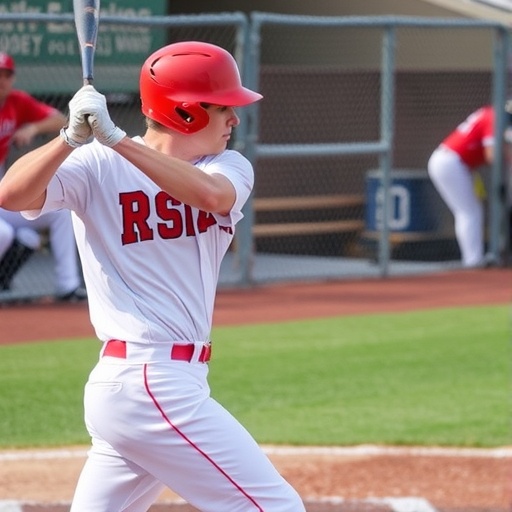
Professional sports have always embraced innovation, but today's competitive advantage increasingly comes from science.
Researchers are applying advances in neuroscience, artificial intelligence, biomechanics, data analytics, and human performance to better understand how athletes make decisions, respond under pressure, recover from injury, and maximize performance. What once relied heavily on intuition and experience is now being informed by sophisticated research that can measure, predict, and improve outcomes at every level of competition.
Recent studies from Carnegie Mellon University highlight the growing role science is playing across the sports landscape. Whether examining decision-making in high-pressure situations, analyzing performance strategies, or using artificial intelligence to improve health outcomes, researchers are uncovering insights that can help athletes perform at their best while extending careers and reducing injury risk.
Ron Yurko is an Assistant Teaching Professor in the Department of Statistics & Data Science at Carnegie Mellon University, and the Director of the Carnegie Mellon Sports Analytics Center (CMSAC). View his profile Scott Powers, an assistant professor at Rice University with vast front-office experience in Major League Baseball—including stints with the Los Angeles Dodgers and the Houston Astros—joined forces with Ron Yurko, a director at the Carnegie Mellon Sports Analytics Center, to analyze this cutting-edge data. Their study, published in The American Statistician in 2026, marks a significant advancement in the quantitative understanding of batting dynamics. It uses high-resolution measurements of bat speed and swing length, metrics that were publicly released for the first time in 2024, to explore how hitters modulate their swings under different pitch counts, particularly when facing two strikes. Eric Yttri is an Associate Professor at Carnegie Mellon University where his research goal is to establish how neural circuits lead to these action selection decisions. View his profile As a neuroscientist, I have been working to uncover how the brain decides when to act and when to wait. Recent research from my team and me helps explain why this split-second pause happens, offering insight not only into elite athletic performance, but also how people make everyday decisions when the potential outcome isn't clear. We found that the key to hesitation is a response to uncertainty. This could be where a dropped hockey puck will land, when a race starts, or placing your order at a new restaurant. Eni Halilaj is an Associate Professor at Carnegie Mellon University where she directs the CMU Musculoskeletal Biomechanics Lab, an interdisciplinary group of engineers seeking to understand and optimize human movement mechanics. View her profile According to Eni Halilaj, an assistant professor in mechanical engineering at Carnegie Mellon University and biomechanist who specializes in orthopedic rehabilitation, 60 percent of those who suffer this common knee injury also develop osteoarthritis early in life. The degenerative joint disease, which affects an estimated 32.5 million individuals in the U.S., is especially problematic for younger patients because of the longer time span during which the chronic condition can cause debilitating pain, stiffness and limited mobility. "How can we make the 60 percent have the same long-term outcome as the 40 percent?" asked Halilaj, who is working to understand the difference between those who do and those who do not develop osteoarthritis following knee trauma. Matthew Walker is a Professor, Astrophysics & Cosmology at Carnegie Mellon University. His research focuses on the astrophysical properties of dark matter, but he is also a former collegiate D1 baseball player and lifelong, passionate fan staying apprised of advancements in the game. View his profile Carnegie Mellon University physics professor Matthew Walker said the system still has limitations, especially on pitches that are extremely close to the edge of the strike zone. "Every measurement device has a margin of error," Walker said. "ABS is, from what I can tell, somewhere around half an inch -- which means if the ABS call says that the pitch was within half an inch of the border between a ball and a strike, whether it says it’s a ball or a strike is really no better than a guess." Walker said that in those situations, the umpire’s original call should remain in place rather than letting the automated system make the final decision. The influence of science in sports extends far beyond professional athletics. Research developed for elite competitors often finds applications in healthcare, rehabilitation, education, workplace performance, and everyday decision-making. As teams continue to invest in analytics, wearable technology, artificial intelligence, and performance science, the relationship between research and sports is expected to grow even stronger. The result is a deeper understanding of how humans learn, adapt, compete, and perform under pressure.
If you're covering or looking to know more, we can help! Carnegie Mellon University experts can discuss: • The growing role of science and technology in sports • Performance optimization and decision-making under pressure • Artificial intelligence and data analytics in athletics • Injury prevention, rehabilitation, and athlete health • The future of sports research and innovation

FIFA's decision to introduce mandatory hydration breaks in every match of the 2026 FIFA World Cup is drawing attention far beyond player welfare circles. The new rule requires a three-minute stoppage in each half of all 104 tournament matches, creating more than 10 hours of additional broadcast inventory that did not exist in previous World Cups. Analysts estimate the added commercial value could approach $500 million, making the breaks one of the most significant business stories of the tournament.
While FIFA has emphasized player health and safety amid concerns about summer temperatures across North America, broadcasters and advertisers have quickly recognized the value of guaranteed in-game breaks. Networks are now able to sell premium advertising inventory during some of the most highly watched sporting events on the planet, creating opportunities that resemble the commercial structure of American sports broadcasts.
Tim Derdenger is an Associate Professor of Marketing and Strategy at Carnegie Mellon’s Tepper School of Business. An expert in sports markets, his research is centered around celebrity endorsements and how to optimize their impact on product sales. View his profile The move has generated debate among fans and observers, with some questioning whether commercial considerations played a role in expanding hydration breaks to every match regardless of venue or weather conditions. Critics argue the stoppages alter the traditional flow of soccer, while supporters point to growing concerns about extreme heat and player safety.
For brands, however, the development represents a rare opportunity. Unlike traditional halftime advertising, hydration breaks occur while viewers remain actively engaged in the match, creating premium moments for sponsors seeking global reach and attention. The breaks also open new possibilities for branded content, integrated sponsorship activations, and enhanced fan engagement strategies during live play.
Looking to know more? We can help. Tim Derdenger is an expert in sports marketing, sponsorship strategy, media rights, and the business of major sporting events. He can discuss:
• How hydration breaks create new revenue opportunities for broadcasters and sponsors • The growing commercialization of global sports properties • Whether fans will accept more advertising during live sporting events • How brands can maximize engagement during high-profile World Cup broadcasts • What this development signals about the future of sports media rights and sponsorship Looking for expert insight on the business side of the 2026 FIFA World Cup? Connect with Tim Derdenger today to discuss how FIFA's hydration breaks could reshape sports marketing, sponsorship activation, and broadcast economics for years to come.