
As Trump rolls back regulations, this expert examines the costs of compliance

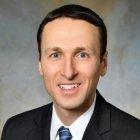
University of Rochester assistant professor of finance Joseph Kalmenovitz studies how rules shape businesses—and what happens when governments ease them.

Aug 26, 2025

2 min

Joseph Kalmenovitz

President Donald Trump has signaled a push to scale back federal regulation across a wide range of industries, reigniting a national debate over the costs and benefits of government rules. For Joseph Kalmenovitz, an assistant professor of finance at the University of Rochester’s Simon Business School who studies the economics of regulation, the moment underscores the importance of understanding not just what regulations do — but how much they cost.


Kalmenovitz, who combines legal training with cutting-edge empirical methods, has developed innovative ways to measure regulatory intensity. His research shows how compliance requirements translate into millions of additional hours of paperwork for firms — costs that often fall outside public view. A recent Bloomberg Law article cited his work in explaining how Wall Street alone devotes an estimated 51 million extra hours each year to compliance since the Great Financial Crisis.


Beyond tallying hours, Kalmenovitz’s studies also explore how overlapping rules across agencies — what he calls “regulatory fragmentation” — can stifle productivity, profitability, and growth, especially for smaller firms. His long-term aim is to provide evidence-based insights that can guide smarter rulemaking in Washington.


“The dream is that people will take insights from my work and use them to improve the way regulation is conceived,” he told Simon Business Magazine.


Kalmenovitz is a leading voice in translating data into meaningful insights about the hidden costs and design of regulation whose work has been published in the Journal of Finance, the Review of Financial Studies, Management Science, and the Journal of Law and Economics.


He is available for interviews and can be contacted through his profile.


Connect with:
Joseph Kalmenovitz

Joseph Kalmenovitz

Assistant Professor of Finance at the Simon Business School

Kalmenovitz is an expert in the economics of regulation, how regulation is formed, and how regulation affects economic decisions.

Regulation
Powered by

You might also like...

Check out some other posts from University of Rochester

Research Matters: Water, Water Everywhere — and Lots to Drink featured image

2 min

Research Matters: Water, Water Everywhere — and Lots to Drink

Researchers at the University of Rochester have discovered a better way to turn seawater into drinking water as climate change, population growth, and drought intensify pressure on freshwater supplies. Desalination, as the process of converting saltwater to freshwater is known, has been used for some time. But desalination methods commonly used today have significant drawbacks: they require large amounts of energy and generate brine waste that can damage marine ecosystems. Enter University of Rochester optics and physics professor Chunlei Guo and his research team, who have developed a solar-thermal desalination technology that converts seawater into drinking water without chemical additives and without producing the harmful brine. Their system uses a specially engineered solar panel made of “superwicking” black metal etched with ultrafast lasers that allow it to absorb light and attract water. The panels have a laser-treated “active” region that pulls a think layer of water across the surface, absorbs sunlight, distills the water, and deposits leftover salts and minerals onto the untreated “passive” region. The technology also transforms waste into a resource. Instead of generating brine, the process captures salts in solid form, creating opportunities to recover valuable minerals. Guo's team has already demonstrated the ability to extract lithium, a critical component in rechargeable batteries, from salt-rich water sources. For reporters covering sustainability innovation, Guo is available to discuss: • Why desalination is becoming increasingly important worldwide • The environmental challenges associated with current desalination technologies • How solar-powered desalination works • The role of advanced materials and laser engineering in water purification • Recovering valuable minerals such as lithium from seawater • The future of sustainable water and resource management With an estimated 2.2 billion people worldwide lacking access to safely managed drinking water, Guo's research offers a glimpse of how next-generation technologies could help address both global water shortages and growing demand for critical minerals. Researchers recently explained their method in a paper published in Light: Science & Applications. Journalists can connect with Guo by contacting Luke Auburn, director of communications at the University of Rochester’s Hajim School of Engineering and Applied Sciences, at luke.auburn@rochester.edu.

Spielberg's "Disclosure Day" Revives the UFO Debate. But What Would Real 'Disclosure' Mean? featured image

2 min

Spielberg's "Disclosure Day" Revives the UFO Debate. But What Would Real 'Disclosure' Mean?

What if the government finally revealed the truth about UFOs and extraterrestrial visitors? That’s the premise of the new Steven Spielberg film “Disclosure Day,” which the director has said was inspired by the U.S. government’s release of previously classified records related to unidentified aerial phenomena (UAPs) that sparked congressional hearings and renewed interest in so-called “disclosure.” But to University of Rochester astrophysicist Adam Frank the real question isn't whether the government is hiding secrets. It's what would count as actual evidence of extraterrestrial interaction. “Over the last several years, we’ve had hearings, testimony, and lots of extraordinary claims,” Frank says. “What we haven’t had is the one thing science requires: hard physical evidence.” Frank, an award-winning science communicator, astrophysicist, and leading expert on the search for extraterrestrial life, says the distinction matters. Stories, rumors, and secondhand accounts may generate headlines, but they don't constitute proof. "What true disclosure would mean is simple," Frank says. "It wouldn’t be stories about alien spaceships, but the actual spaceships. Not stories about alien bodies, but actual physical evidence that independent scientists around the world could examine and verify." As media coverage surrounding UFOs, government transparency, and extraterrestrial life intensifies, Frank offers a grounded scientific perspective on what we know, what we don't know, and how science separates possibility from proof. Frank is available to discuss: • The science behind UFO and UAP investigations • What constitutes evidence of extraterrestrial life • Why government disclosures have so far failed to provide proof • The search for life elsewhere in the universe • How Hollywood portrays alien contact versus scientific reality • Why scientists remain open to — but skeptical of — extraordinary claims "The universe is vast, and the possibility of life elsewhere is real," Frank says. "But if we're going to claim aliens have visited Earth, then we need evidence that meets the same standards we would demand for any other scientific discovery." Frank is a frequent on-air commentator for live interviews and segments in national media outlets and the author of The Little Book of Aliens (Harper Collins, 2023). He also regularly contributes to written publications, including Forbes, The Atlantic, The New York Times, and Scientific American. He is a recipient of the Carl Sagan Medal, which recognizes and honors outstanding communication by an active planetary scientist to the general public. Click on Frank's profile to connect with him. 

World Cup: Expert Sees World History in Motion featured image

2 min

World Cup: Expert Sees World History in Motion

Most soccer fans watch the FIFA World Cup for the goals, the stars, and the drama. Pablo Sierra Silva sees a lot more. “You’re seeing empire, migration, nationalism, labor, religion, commercialization, and identity all unfolding in real time,” says Sierra Silva, a University of Rochester history professor who teaches a course called “World History Through Soccer.” He adds: “The World Cup is never just 22 players kicking a ball.” As the largest World Cup field ever unfolds across North America, Sierra Silva says the tournament offers a unique lens into the forces shaping the modern world. Fans need only look for it. Take the scheduled Group Stage game between France and Senegal. The matchup reflects centuries of shared history, from French colonial rule in West Africa to contemporary migration patterns and diaspora populations. The crowd, the flags, the chants, and even who is playing can reveal as much as the final score. The same is true for players like Spain’s teenage superstar Lamine Yamal, whose Moroccan and Equatorial Guinean heritage reflects broad changes in European society. “He is redefining what it means to be Spanish,” Sierra Silva says. “This is one of the stories of modern Europe, and soccer makes it visible.” Sierra Silva also studies how the World Cup has evolved into a global cultural phenomenon shaped by social media, celebrity, commerce, and fandom. Even seemingly simple traditions — such as collecting Panini World Cup stickers — offer lessons about geography, migration, and national identity. For journalists looking for unique angles on the World Cup, Sierra Silva can provide expert commentary on: • The history and politics behind international soccer rivalries • Migration, diaspora communities, and national identity • Race, religion, and representation in global sport • Sports marketing, fandom, and media culture • The World Cup as a reflection of world history and its various impacts on nations  “People feel connected to histories and identities through these teams,” Sierra Silva says. “That’s why it matters.” To connect with Sierra Silva, contact University of Rochester media relations specialist David Andreatta at david.andreatta@rochester.edu.

View all posts