
Experts in the Media: Eating Habits of People Who Grew Up Poor

Sarah Hill, Ph.D, professor of psychology helped reporters explore how early life poverty continues to foster food preferences and mental associations around eating.

Sep 29, 2025

2 min

Sarah Hill


Sarah Hill, Ph.D, professor of psychology, contributed insights to an AOL article, “Eating Habits of People Who Grew Up Poor,” exploring how early life poverty continues to foster food preferences and mental associations around eating. The piece examines why many adults raised in low-income households feel “unnatural” when switching from inexpensive comfort foods to fresh produce and how habits formed in scarcity can linger long after financial hardships subside.


Hill emphasizes that these patterns aren’t just personal quirks but deeply ingrained coping strategies.


“For someone who rarely saw fresh fruits or vegetables growing up, the cost, smell, even the way they cut or cook produce, can feel foreign,” she wrote.


The article also discusses how scarcity conditioning can lead to behaviors like eating beyond fullness to avoid waste, attachment to “cheap staples” or resistance to change in diet, even when healthy choices are available. Hill argues that recognizing these habits with compassion, as adaptations rather than flaws, is key to promoting lasting healthy change.


Sarah Hill is currently a researcher and professor at TCU, lead research advisor at 28, and a thought leader in the area of women’s hormones and sexual psychology. Sarah’s groundbreaking research has resulted in more than 80 research publications. Her work has been featured in The New York Times, The Washington Post, Scientific American, The Economist, and on television shows like Good Morning and The Today Show.


See her profile here.


The full article is available here:


Looking to know more - simply click on Sarah's icon below to arrange an interview time today.

Connect with:
Sarah Hill

Sarah Hill

Professor, Psychology

Dr. Hill specializes in research on women's sexual psychology, sex hormones, and the birth control pill.

Women's PsychologySex HormonesThe Birth Control PillInterpersonal RelationshipsMenstrual Cycle
Powered by

You might also like...

Check out some other posts from Texas Christian University

Who Decides Which Stories Children Get to Read? featured image

2 min

Who Decides Which Stories Children Get to Read?

As book bans surge nationwide, Jan Lacina — professor at Texas Christian University and Interim Director for Starpoint and KinderFrogs Schools — explores the benefits of diverse children's literature in her new textbook for educators, "Children's Literature to Read Our World: Text Selection and Strategies for Critical Reflection (Routledge, 2026). The research-grounded guide aims to help teachers intentionally select books for their students, centering age-appropriate books that present Black, Latinx and Asian culture as wellsprings of understanding. It also highlights titles that explore complex issues such as homelessness and poverty, and those that can help educators teach about historical topics like the Holocaust or the Civil Rights Movement. One chapter explores how scented books can be used as a vehicle for multisensory literacy development. Lacina's book arrives at a critical moment, in a critical state. Texas ranked second in the nation for school book bans during the 2024-25 school year, with 1,781 instances of censorship, according to PEN America's latest report. Jan was recently featured in The 74 article "Who Decides Which Stories Children Get to Read?" by Mark Swartz, which explores why access to diverse literature matters and how her new textbook helps educators respond to rising censorship. Read the full article here. We can look back through history and see that there's always been censorship, and I think books have historically been targeted over a long period of time for anti-intellectual censorship efforts. Books are primarily a source for people to learn new ideas and to critically think about a variety of topics within our society. "Books are powerful, and that's what scares people," Lacina said. Reading helps children identify with the protagonist — with their feelings, with their actions — and it's important to read about experiences that are similar to our own, whether they're positive experiences or challenges we might face in life, Lacina said. Lacina is available to speak with media on literacy leadership, children's literature, early childhood and elementary education, and teacher preparation — timely topics as school districts nationwide navigate rising challenges to classroom books. To arrange an interview or request a comment, click through to Jan Lacina's profile below.

Fewer Essays, Fiercer Odds: The New College Application Math featured image

2 min

Fewer Essays, Fiercer Odds: The New College Application Math

A growing number of top colleges — including Tulane, Washington University in St. Louis, and UNC Chapel Hill — are trimming or eliminating supplemental essays, citing student stress and the rise of AI-assisted writing that makes it harder to tell who actually wrote an application. But the shift comes with a catch: fewer barriers to applying tend to mean more applications and lower admit rates. The Wall Street Journal explored the trend, and pointed to Texas Christian University as a case study already living the tradeoff. Heath Einstein is Vice Provost for Enrollment at Texas Christian University, now in his 13th year at TCU after previously serving as dean of admission and director of freshman admission. With more than two decades in admission and college counseling, he is a frequent speaker at national conferences and a voting delegate to the National Association for College Admission Counseling's Assembly, the governing body that sets national admissions-practice standards. He has chaired Texas ACAC's Government Relations and Advancement committees, received the association's Founders' Award, and served as Board Chair of ACCEPT: Admissions Community Cultivating Equity and Peace Today. His expertise spans cultural humility, shared governance, crisis management, staff development, and data analytics.  Einstein was recently featured in The Wall Street Journal article “Colleges Juice Application Numbers by Letting Students Write Fewer Essays” by Roshan Fernandez (July 10, 2026), which examines how cutting supplemental essays is reshaping admissions strategy nationally. “TCU said responses to the questions it cut—about its values and inclusivity—lacked originality. ‘You still see a narrowing to the mean,’ said Heath Einstein, vice provost of enrollment management. ‘Students are still going to respond in ways that they think we want to hear.’ Einstein said the school's aim in expanding application numbers is simply to increase enrollment, not lower its admit rate.” Einstein is available to speak with media on college admissions strategy, the impact of AI on application review, supplemental essays and holistic review, enrollment management, and higher-education leadership through crisis and change — all live issues as the 2026-27 application cycle takes shape. To arrange an interview or request a comment, click through to Heath Einstein's profile below.

The Truth About “Negative-Calorie” Cucumbers featured image

2 min

The Truth About “Negative-Calorie” Cucumbers

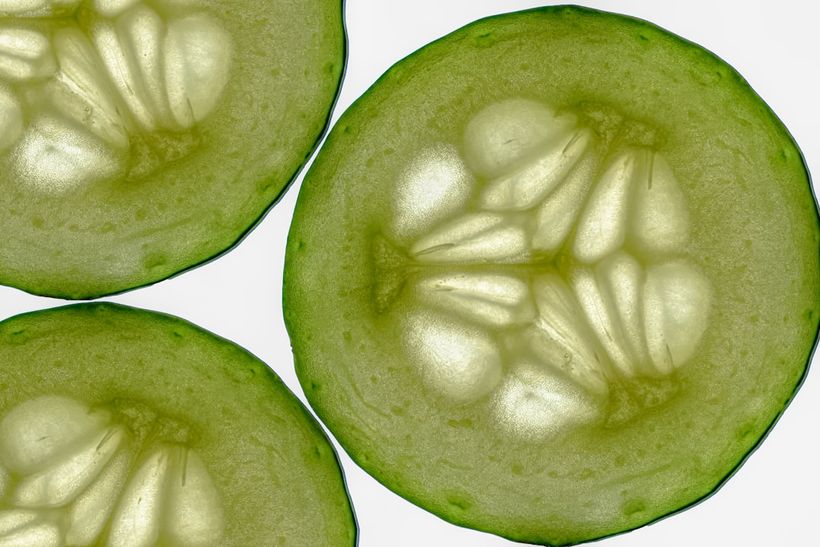
As summer temperatures climb, so does interest in cucumbers — crunchy, hydrating, and long rumored to be a “negative-calorie food” that burns more energy to digest than it provides. It's a claim that circulates every year in diet culture, but it isn't true. The New York Times recently set out to separate the nutrition science from the myth, and turned to registered dietitians for a clear-eyed answer. Dr. Gina Jarman Hill is a Professor and Chair of the Department of Nutritional Sciences at Texas Christian University. A Registered and Licensed Dietitian, she has worked as a clinical and consultant dietitian and is a member of the Hunger and Environmental Nutrition (HEN) and Dietitians in Integrative and Functional Medicine dietetic practice groups. Her teaching and research center on food and sustainability, nutrition ecology, community nutrition, and public health — with particular expertise in food security, urban agriculture, and hunger. She earned her BS, MS, and PhD in Food and Nutrition from Texas Tech University and was named the Texas Academy of Nutrition and Dietetics' Outstanding Nutrition Educator in 2017. Dr. Hill was recently featured in The New York Times article “How Healthy Are Cucumbers?” by Amanda Schupak (July 13, 2026), which examines what cucumbers do — and don't — offer nutritionally. Read the full article here. A 10.5-ounce unpeeled garden cucumber, for instance, contains just over one cup of water and 45 calories. Gina Jarman Hill, a professor of nutritional sciences at Texas Christian University, said there is a common misconception that cucumbers are “negative-calorie foods” — meaning they contain fewer calories than it takes to burn digesting them. “There’s no such thing as a ‘negative-calorie food,’” she said, but because the number of calories in cucumbers is so low, they’re about as close as you will get to one. As long as you’re mindful of what you pair them with, Dr. Hill said, there is no reason to curb your cucumber consumption. Dr. Hill is available to speak with media on nutrition myths, food security, sustainable and urban agriculture, community nutrition education, and healthy eating on a budget — timely topics as outlets continue to cover diet trends, food waste, and seasonal eating. To arrange an interview or request a comment, click through to Dr. Hill's profile below.

View all posts