
American Nuclear Society names Lane Carasik, Ph.D., as one of its “40 Under 40”

The recognition highlights leaders shaping the future of nuclear science and technology

Nov 7, 2025

2 min

Lane Carasik, Ph.D.

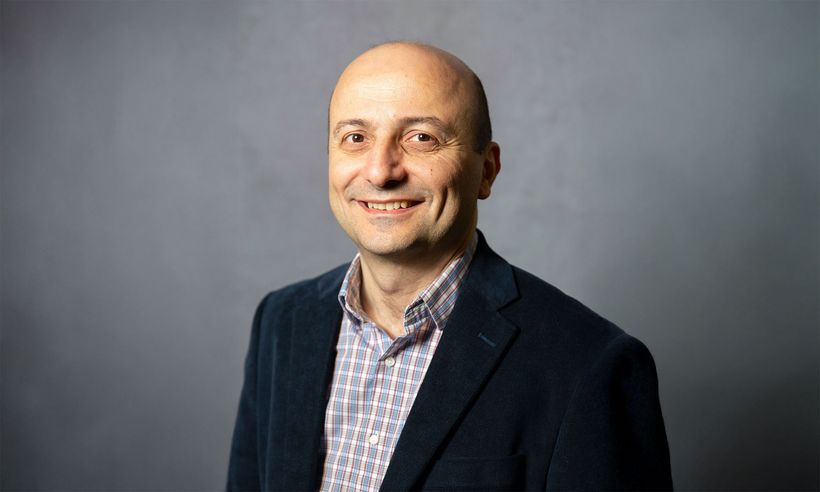
Recognized as an emerging leader in the nuclear science and engineering field, Lane Carasik, Ph.D., assistant professor in the Department of Mechanical and Nuclear Engineering, was recently acknowledged by the American Nuclear Society as one of its top “40 Under 40.”


“It is a huge honor to receive this acknowledgement from my professional community,” said Carasik. “I feel it is a reflection of the amazing nuclear engineering activities I’ve gotten the opportunity to pursue before and during my time at the VCU College of Engineering.”


The list, featured in the most recent issue of Nuclear News magazine, celebrates young professionals who are driving innovation and shaping the future of nuclear science and technology. Created to spotlight a new generation of nuclear professionals, the “40 Under 40” program highlights those who are advancing technical fields, from advanced reactor deployment to AI applications and national security, while actively engaging the public, mentoring peers and advocating for nuclear’s role to achieve energy independence and security.


“Dr. Carasik’s research efforts, together with his support for students and their own research goals, exemplifies the best qualities of the VCU College of Engineering,” said Arvind Agarwal, Ph.D., chair of the Department of Mechanical and Nuclear Engineering, “integrating research and teaching at the core of everything he does, from classroom and lab work to community outreach.”


Carasik was selected for the “40 Under 40” from hundreds of candidates across the United States. Mentoring his first three Ph.D. graduates, Arturo Cabral, Connor Donlan and James Vulcanoff, is one of Carasik’s proudest achievements. He was also honored by the American Society of Mechanical Engineers (ASME) as a rising star in mechanical engineering in 2024 This builds off Carasik receiving the highly competitive and prestigious Department of Energy (DOE) Early Career Research Award ($875k split over five years) in 2023 to support his work on molten salt based fusion energy systems similar to Commonwealth Fusion Systems’ ARC technology. Carasik’s Fluids in Advanced Systems and Technology (FAST) research group, is a computational and experimental thermal hydraulics group focused on enabling the development of advanced energy systems and critical isotope production methods.


Legendary physicist Enrico Fermi was an early inspiration to Carasik during his undergraduate studies. Fermi’s expertise mirrored Carasik’s interests, and the physicist’s impact on the field of nuclear engineering was motivating. As an established nuclear engineering faculty member, Carasik seeks to make a lasting impact on the field and the people in it. His ’s long-term goal is earning membership in the National Academies of Sciences, Engineering and Medicine.

Connect with:
Lane Carasik, Ph.D.

Lane Carasik, Ph.D.

Assistant Professor, Department of Mechanical and Nuclear Engineering

Dr. Carasik researches computational and experimental thermal hydraulics for fusion & nuclear energy and medical isotope production.

Nuclear EngineeringExperimental Thermal-FluidsThermal-Fluids DesignVerification and ValidationComputational Fluid Dynamics
Powered by

You might also like...

Check out some other posts from VCU College of Engineering

2 min

Department of Energy awards $928,000 to Lane Carasik, Ph.D., for fusion energy systems research

The Department of Energy (DOE) recently announced $128 million of funding for seven Fusion Innovation Research Engine (FIRE) Collaboratives. Virginia Commonwealth University (VCU) College of Engineering researchers will support the project titled “Advancing the maturity of liquid metal (LM) plasma facing materials and first wall concept” led by the Department of Energy’s Princeton Plasma Physics Laboratory (PPPL). This includes $928,000 to support research led by Lane Carasik, Ph.D., assistant professor in the Department of Mechanical and Nuclear Engineering, as part of a multi-institution effort for fusion energy systems. The FIRE Collaborative seeks to advance the maturity of liquid metal plasma-facing materials and wall concepts. High operating temperatures within fusion energy systems pose a significant material design challenge. Research will help solve technical problems with liquid metal plasma-facing materials and first wall concepts, including four main challenges: testing protective materials, understanding material properties, studying how liquid metals behave in magnetic fields and developing new liquid metal alloys. The goal is to make liquid metals viable for fusion pilot plant designs. “The work done by VCU as part of the FIRE Collaborative will help raise the technology readiness of Liquid Metal based fusion energy concepts. Over the next four years, we will train undergraduate and graduate students on how to extract electricity from these fusion concepts,” Carasik said. Rajesh Maingi, Ph.D., is the lead primary investigator at PPPL. Institutional investigators for the group include Sergey Smolentsev, Ph.D., Oak Ridge National Laboratory (ORNL); Vsevolod Soukhanovskii, Ph.D., Lawrence Livermore National Laboratory (LLNL); Daniel Andruczyk, Ph.D., University of Illinois Urbana-Champaign; Bruce Koel, Ph.D., Princeton University; Michael Kotschrenreuther, Ph.D., ExoFusion; Xing Wang, Ph.D., The Pennsylvania State University; Kevin Woller, Ph.D. from Massachusetts Institute of Technology; and Carasik from VCU. Up to $220 million is expected to fund the FIRE Collaboratives over four years, with $31 million allocated for the 2025 fiscal year. Future distributions are dependent on congressional appropriations.

3 min

Mechanical and Nuclear Engineering professor John Speich, Ph.D., advances bladder biomechanics research through collaboration with VCU School of Medicine

The year was 2003, and John Speich, Ph.D., professor in the Department of Mechanical & Nuclear Engineering, felt like he had a clear sense of the direction his burgeoning career was heading in. Speich had recently completed his doctorate in mechanical engineering from Vanderbilt University, where he concentrated on robotics. Following Vanderbilt, Speich went on to become an associate professor at the Virginia Commonwealth University (VCU) College of Engineering, working with students in the Department of Mechanical & Nuclear Engineering. Leveraging his robotics expertise, Speich planned to continue his work developing robotics for medical surgery and rehabilitation. Then Speich got a call from Paul Ratz, Ph.D., a professor at the VCU School of Medicine, asking for assistance that would change the entire focus of Speich’s career. Ratz used a small robotic lever that moved up and down just a few millimeters to stretch tiny strips of bladder muscle and rings of artery, trying to determine how different chemical compounds changed the mechanical properties of the muscle. Speich was intrigued—this was a form of mechanical engineering. “In mechanical engineering, we pull on things to determine the mechanical properties,” says Speich. “Here, Dr. Ratz was pulling on pieces of bladder instead of the typical substances mechanical engineers are known to work with, like steel, aluminum or plastic.” Speich and Ratz began working together in 2003, and now, because of that unique partnership, nearly all of the research Speich does is about the bladder. “Before I started working with Dr. Ratz, I had never even heard the words neurourology or urodynamics,” says Speich. “Now, Neurourology and Urodynamics is the name of the journal I publish in the most.” Today, Speich collaborates on bladder biomechanics with two doctors at VCU Health. Adam Klausner, MD is a urologist and the interim chair of the new Department of Urology at VCU. Linda Burkett, MD is a urogynecologist from the Department of Obstetrics and Gynecology; prior to medical school, Burkett completed her bachelor’s degree in Biomedical Engineering from the VCU College of Engineering. Together, Speich, Klausner and Burkett aim to find non-invasive methods to characterize and diagnose overactive bladder, with the goal of allowing doctors to precisely match patients with the most effective treatments. A number of students across the VCU College of Engineering and VCU School of Medicine have aided in their research, including recent Biomedical Engineering graduate Mariam William. Speich’s primary methods of research involve Near-Infrared Spectroscopy (NIRS)—a non-invasive technology that uses light to measure tissue oxygenation and brain activity—and ultrasound imaging. By using NIRS to study the brain activity associated with the sudden urge to urinate, Speich and his team are working to pinpoint the brain’s role and determine whether it or the bladder is the primary cause of an individual’s condition. “There are a lot of potential causes of overactive bladder,” says Speich. “Some people may have more than one cause. Individual responses to these treatments vary; what works well for one patient may not work at all for the next. We want to give doctors better tools for quantifying information about their patients so they can make better decisions and more optimized treatments.” Thanks to research grants, including a National Institutes of Health (NIH) grant from 2015-2025, Speich has been able to make a number of important findings in his bladder research. His team has closely examined the bladder’s dynamic elasticity, investigating the biomechanical mechanisms that allow the bladder muscle to fill and expand. Another recent focus asks, “Bladder or Brain. Which is it?” Speich and his team developed a tool called a sensation meter that they use to help determine what an individual is feeling as their bladder is filling over time. All this groundbreaking research and medical school collaboration, and to think—Speich nearly missed the opportunity to enter this field entirely. “When I tell students about how I came to be involved in bladder biomechanics, I tell them, you will always keep learning throughout your entire career,” says Speich. “You never know where you’re going to end up. If you’re an engineer, you’re a problem solver, and there are all kinds of problems in areas like business and medicine—beyond the traditional areas people think of when they think of mechanical engineering.”

2 min

VCU College of Engineering receives $4.5 million of funding for research supporting blind-visually impaired individuals

Pioneering systems to aid the visually impaired, Dianne Pawluk, Ph.D., associate professor in the Department of Biomedical Engineering, recently received two grants totaling $4.5 million in support of her research. Real-time Conversion and Display of Visual Diagrams in Accessible Forms for Blind-Visually Impaired (BVI) is a five-year project to develop real-time assistive technology for BVI individuals. It received a $3.2 million grant from the National Institutes of Health’s National Eye Institute to fund a low-cost system that will automatically convert and render visual diagrams in effective accessible formats on a multimodal display, including a refreshable tactile display and an enhanced, visual magnification program. Diagram exploration support will be provided by an automated haptic assistant. Pawluk is collaborating with Tomasz Arodz, Ph.D., associate professor in the Department of Computer Science, on the project. Including Blind and Visually Impaired Students in Computer Programming Education Through a Tangible Interface for Scratch is a four-year project to develop a nonvisual interface for the Scratch programming platform. Receiving a $1.3 million grant from the National Science Foundation, the project aims to make computer science education more accessible to BVI students. The interface will allow these students to learn programming alongside their sighted peers in classrooms, camps and clubs, supporting both BVI and other kinesthetic learners with a haptic-based tangible interface. High contrast visual information will also be provided for those with low vision and collaboration with sighted peers. This project is a collaboration with the Science Museum of Virginia, Arizona Science Center and Liberty Science Center. “Equal access to information is important for individuals who are blind or visually impaired to have autonomy and control over their decision-making processes and other tasks, which will allow them to live productive and fulfilling lives,” Pawluk said. “These projects go beyond creating an equivalent experience. They enable full collaboration between visually impaired and sighted people, ensuring equal opportunity.”

View all posts