
Pushing the edge of computing, magneto-ionics imagines efficient processing for AI with reduced resource consumption

Nano Letters paper outlines magneto-ionic technique for physical reservoir computing

Dec 18, 2025

4 min

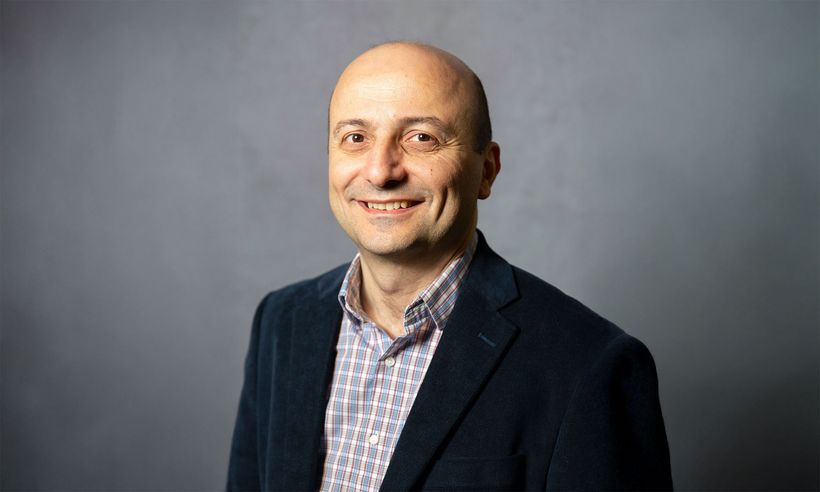
Jayasimha Atulasimha, Ph.D.

Artificial intelligence is a resource-intensive technology. A paper recently published in Nano Letters by collaborators at the Virginia Commonwealth University (VCU) College of Engineering and Georgetown University hopes to improve AI’s ability to parse the vast amounts of information it creates by applying magneto-ionics to the established concept of physical reservoir computing (PRC).


“Demonstrating we can make solid-state devices with magneto-ionic materials is an important step into further energy-efficient computing research, and this Nano Letters publication reinforces that,” said Muhammad (Md.) Mahadi Rajib, Ph.D., a postdoc with Jayasimha Atulasimha, Ph.D., Engineering Foundation Professor in the Department of Mechanical & Nuclear Engineering.


What makes a decision?


Our brains make countless complex decisions everyday. Input comes in, we weigh options and decide what to do. Within that simple path are countless identical loops of input, consideration and output as neurons fire in a chain that takes you from cause to effect.


For artificial intelligence, nodes within a neural network receive inputs and provide output, much like the neurons in our brains. These outputs can be sent to other nodes for continued processing, but those outputs need weight to have value. For AI, weight signifies one input or connection is more important than another.


Traditional neural networks have multiple layers consisting of countless nodes like this. Each node requires training in order to weigh things properly. Training consumes processing power, and processing power takes time and energy. Making tasks like analysis and prediction more efficient is how to continuously improve AI technology.


Less training, more efficiency.


Physical reservoir computing reduces the number of nodes an AI needs to train. Only the final output layer needs training in PRC, using a simple method for classification or prediction tasks. A physical “black box” replaces neural network nodes and synapses, like the ones used for AI inference, in PRC and processes inputs by implementing a nonlinear mathematical function with temporal memory.


To explain the inner workings of the black box, imagine two stones thrown into still water. One stone is thrown with high force and the other with low force, creating big and small ripples respectively. If the stones are thrown so the second stone lands before the previous ripples have dissipated, the new ripple is affected by the earlier one. This illustrates the concept of temporal memory. In this analogy, if multiple stones are thrown one after another into still water according to some complex trend, observing the ripples over time allows you to understand the trend and train a simple set of weights to predict the force of the next stone throw from the ripple pattern.


Repeatedly performing this cycle of input, interaction and observation is PRC. It reveals patterns over time that can predict chaotic systems, like market trends or the weather, using techniques like linear regression modeling to plot each output as a single point.


The magneto-ionic approach.


Using this same example above, the “water” in a magneto-ionic PRC is represented by a positive and negative electrode with solid-state electrolyte between them through which ions move when voltage is applied. The application of voltage is equivalent to throwing a stone and the ripple effect is comparable to the movement of oxygen ions in the system.


“In addition to its energy efficiency, a useful feature of the magnetoionic system is that time scales for ion diffusion can be controlled from microseconds to minutes,” Atulasimha said. “This leads to simple experimental demonstration, as no megahertz and gigahertz measurements are needed. One can work at the natural time scales of the target application in practical systems and remove the need for complex frequency conversion, which takes both energy and space due to complex electronics.”


Atulasimha imagines these energy-efficient reservoir systems have applications in edge computing devices like drones, automated vehicles and surveillance cameras. Tasks such as household energy load forecasting, weather prediction or processing hourly readings from wearable devices, which operate on hour-scale data, can also be performed using magneto-ionic PRC without additional preprocessing.


“We showed that the magneto-ionic physical reservoir has both memory and nonlinear behavior, two important properties necessary for using it as a reservoir block,” Rajib said. “Our system stands out because voltage-controlled ion migration is a highly energy efficient method of manipulating magnetization. We demonstrated the required reservoir properties in a physical system and did so using a very energy efficient approach.”


Two labs came together in order to pursue this research. Virginia Commonwealth University collaborators included Atulasimha, Rajib, and VCU Ph.D. students Fahim Chowdhury and Shouvik Sarker. The Georgetown University team included Kai Liu, Ph.D., Professor and McDevitt Chair in Physics, Dhritiman Bhattacharya, Ph.D., Christopher Jensen, Ph.D. and Gong Chen, Ph.D.


Atulasimha’s group illustrated physical reservoir computing using numerical models of spintronic devices and sought a material system to experimentally demonstrate PRC. Liu’s team worked with magneto-ionic materials and was intrigued by the possibility of using them for computing applications.

Connect with:
Jayasimha Atulasimha, Ph.D.

Jayasimha Atulasimha, Ph.D.

Engineering Foundation Professor, Department of Mechanical and Nuclear Engineering

Professor Atulasimha researches nanomagnetic/spintronic memory and neuromorphic computing devices.

Spintronics and NanomagnetismExploratory neuromorphic devicesStraintronics: Strian mediated electric field control of magnetismElectric field (VCMA) control of skyrmionsMagnetic and multiferroic materials
Powered by

You might also like...

Check out some other posts from VCU College of Engineering

VCU College of Engineering Dean Azim Eskandarian, D.Sc., named Fellow of The Society of Automotive Engineers International featured image

2 min

VCU College of Engineering Dean Azim Eskandarian, D.Sc., named Fellow of The Society of Automotive Engineers International

Recently named a Fellow of the Society of Automotive Engineers (SAE) International, Azim Eskandarian, D.Sc., the Alice T. and William H. Goodwin Jr. Dean of the Virginia Commonwealth University (VCU) College of Engineering, received one of the organization’s highest honors. The designation recognizes individuals who have made extraordinary and sustained impacts on the mobility industry through technical excellence, leadership, innovation and dedicated service to the profession and to SAE International. “SAE Fellows – whose leadership and technical contributions strengthen our organization embody the highest level of professional achievement,” said Carla Bailo, 2026 SAE International president and chair of the board of directors. “Election to SAE Fellow reflects an individual’s lasting influence on mobility engineering and reinforces the standards of excellence that guide SAE’s strategic direction.” Selected through a comprehensive review process led by the SAE International Fellows Committee and approved by the SAE International Board of Directors, SAE Fellows exemplify the organization’s mission to advance mobility knowledge and solutions for the benefit of humanity. “It is a great honor to receive this distinction from an organization that is so essential to the advancement of the automotive industry,” said Eskandarian. “I hope to continue collaborating with engineers, researchers and other professionals who share a vision for the great work we can do to improve the safety and efficiency of transportation.” Numerous scientific and technical contributions to automotive safety, academic programs, workforce development in crashworthiness, collision avoidance, advanced driver assistance systems, intelligent vehicles, and autonomous driving have stemmed from the more than 40 years of work Eskandarian has pioneered. His research on intelligent and autonomous vehicles includes the development of novel methods for driver safety systems. As an academic leader, Eskandarian’s enduring commitment to education, mentorship and service led him to start impactful academic programs at several universities. This includes robotics and autonomous systems programs and new master’s concentrations at the VCU College of Engineering, a graduate academic program in intelligent transportation systems and an undergraduate concentration in transportation engineering at George Washington University, and an automotive engineering concentration at Virginia Tech. Eskandarian is also a Fellow of two other technical societies, the American Society of Mechanical Engineers (ASME) and the Institute of Electrical and Electronics Engineers (IEEE).

VCU College of Engineering receives $600,000 for AI-driven cybersecurity research featured image

2 min

VCU College of Engineering receives $600,000 for AI-driven cybersecurity research

To advance AI-enabled cybersecurity research, the National Science Foundation (NSF) presented Kemal Akkaya, Ph.D., professor and chair of the Department of Computer Science, with a $600,000 grant through the organization’s Cybersecurity Innovation for Cyberinfrastructure program. Akkaya’s three-year project will explore how large language models (LLMs) can automate packet labeling for intrusion detection systems. “From transportation and healthcare to finance, improving the accuracy of machine learning algorithms used to defend the networks that underpin these sectors’ cyberinfrastructure is critical for protecting them from cyberattacks. Strengthening these defenses helps ensure the reliability and security of the essential services people rely on every day,” said Akkaya. Intrusion detection systems monitor network traffic to identify suspicious or malicious activity. These systems rely on machine learning models trained on large volumes of accurately labeled data. Producing those datasets, however, is time intensive and often requires expert cybersecurity knowledge. As digital systems increasingly power transportation, health care, finance and communication, the volume and sophistication of cyber attacks continue to grow. At the same time, artificial intelligence is reshaping how both attackers and defenders operate. Improving how quickly and accurately security systems can be trained is critical to protecting the infrastructure that supports daily life. Akkaya’s project will investigate how generative AI can help address this challenge. The team will fine tune open-source large language models using network data, threat signatures and expert annotations. Model accuracy will be strengthened through retrieval-augmented refinement, ensemble modeling and human-in-the-loop verification. Labeled datasets will be released in stages to support the development and evaluation of cybersecurity models. Using data from AmLight, an international research and education network operated by Florida International University (FIU), the project includes collaboration with researchers from FIU. The award strengthens VCU’s growing leadership in AI-enabled cybersecurity research and provides hands-on research training for graduate students. Resulting datasets from this work will support machine learning education for undergraduate students.

Director Gennady Miloshevsky, Ph.D., shares his vision for the nuclear program at the VCU College of Engineering featured image

5 min

Director Gennady Miloshevsky, Ph.D., shares his vision for the nuclear program at the VCU College of Engineering

Recently named the nuclear program director at the Virginia Commonwealth University (VCU) College of Engineering, Gennady Miloshevsky, Ph.D., associate professor in the Department of Mechanical & Nuclear Engineering, answers some questions about the direction of VCU Engineering’s nuclear program and what he hopes it can accomplish. What are your top priorities for the nuclear program at the VCU College of Engineering? I want to focus on student development, innovative research and our rankings in best program lists, but that is not everything. Strategy is important. We need to align ourselves with the country’s national energy needs. There are many new developments in the energy sector, like small modular reactors or fusion energy systems, and having the right faculty to engage with these advancements is important. Providing students with a well-rounded education and good opportunities for gaining experience benefits the College of Engineering’s public and private sector partners. Nuclear subject matter is complex, so higher education is very important for workforce development. We want to build partnerships, like the one we have with Dominion Energy, that support this goal. A priority for me is continuing to establish relationships with Commonwealth Fusion Systems, which seeks to build and operate the first commercial grid-scale fusion plant in Chesterfield County, Virginia. Our workforce partners will benefit from VCU’s well-trained nuclear engineering graduates joining the workforce. So, aligning our strategy with national energy needs, hiring the right faculty to support our programs and building industry partnerships that benefit our student’s education and career opportunities are important things for VCU Engineering’s nuclear program. Where would you like to see the College of Engineering’s nuclear program 10 years from now? I would like to see growth in the nuclear program. For example, some new graduate courses on topics like nuclear materials or fusion energy. In 2024, I developed a general course for fusion energy, so building out a curriculum that goes more in-depth would be good. When you look at small modular reactors and micro reactors, current energy policy does not allow private companies to build their own. However, as energy demands increase, policy could change to where you see these compact devices installed in places like data centers, for example. A more in-depth curriculum allows VCU Engineering students to step into industry roles that lead growth of the energy industry while also ensuring students are capable of adapting to the changing field and taking advantage of new developments. What sort of cross-disciplinary opportunities are there for the College of Engineering’s nuclear program? Nuclear engineering and nuclear science are very interdisciplinary fields. You have physics that covers the nuclear reaction and the radiation it generates, for example, then chemistry is needed when talking about nuclear fuel cycles and nuclear waste. You also need materials science because good materials capable of withstanding radiation and high temperatures are needed in nuclear fission and fusion energy systems. This science then connects to engineering, building the reactors, the energy distribution systems like a power grid. It is a small sample of the overall work, but you see how mechanical and electrical engineering are key to this part. All these disciplines come together to solve the same problem. One researcher might be figuring out how to confine plasma and make it stable, then another researcher is looking at how plasma can disrupt the containment wall and how to make materials to protect the wall. Within our department, we are making connections between mechanical-focused faculty working on high-temperature ceramics or additive manufacturing techniques and those of us researching nuclear energy systems in order to make joint proposals. We are also collaborating outside VCU. As an example, I am involved with an alliance founded by the Defense Threat Reduction Agency (DTRA) comprised of 17 universities, research labs and military centers. Coordinated through DTRA, we work together on many of the same problems.Through this partnership, my Ph.D. students do summer research rotations with national labs like Lawrence Livermore National Laboratory in California and The Pacific Northwest National Laboratory. We also bring cadets and midshipman into VCU from other institutions, like the DTRA Nuclear Science and Engineering Research Center, United States Military Academy West Point and the Virginia Military Institute, whose students have been part of research experience for undergraduates programs in the summer. How is artificial intelligence impacting the field of nuclear engineering? So, the United States is sponsoring the Genesis Mission, which seeks to transform science innovation through the power of AI. One area of the Genesis Mission is nuclear fission and fusion energy. I see this playing out with the Department of Energy encouraging national labs, universities and industry to work together on applying these AI advancements to solve the research problems of nuclear energy. It is a great opportunity for students, who we can involve in this work to give them real-world experience with topics they will see after graduation. Last semester I taught a course at VCU on the practical applications of AI on nuclear engineering problems. It is not something like ChatGPT or anything like that. What we did is take Google’s TensorFlow platform that is a library of AI models and machine neural networks. Using Python scripting students learn how to apply these AI resources to about 30 problems in mechanical and nuclear engineering. They create scripts, use data sets and run analytics. We have a nuclear reactor simulator and I have some ideas to create AI-based software we can pair with the simulator, then give the software a data set and let it control the operation of the simulator in a safe way. Tell us about your background. What brought you VCU and the Department of Mechanical and Nuclear Engineering? Actually, I am not a mechanical or a nuclear engineer. My background is in physics. I graduated from the Belarusian State University in 1990 and continued to a Ph.D. in physics from the Heat and Mass Transfer Institute of the National Academy of Sciences of Belarus working on topics related to fusion plasmas and nuclear weapon effects. In space, nuclear weapons produce shockwaves and radiation. I computationally model these effects in my research to determine how something like a nuclear warhead detonation in orbit will impact the materials a satellite is made of, for example. My research also crosses over into nuclear fusion, specifically thermodynamic and optical plasma properties, fusion plasma disruptions, melt motion and splashing from plasma facing components. Accelerating Next-Generation Extreme Ultraviolet (EUV) Lithography (ANGEL) is my most recent collaborative project, supported by the Department of Energy’s (DOE) Office of Science, Fusion Energy Sciences. It involves two national laboratories, three universities and a private-sector company focusing on advancement of future micro-electronic chips, EUV photon sources, mitigation of material degradation and plasma chemistry. Prior to joining the VCU College of Engineering I worked at Purdue University at a DOE-funded center investigating nuclear fusion and the effects of plasma on materials. Around 2019 I wanted to develop my own lab, so I came to VCU with startup funds from the Nuclear Regulatory Commission and DTRA. My first priority after joining the VCU College of Engineering was continuing my fusion research, the second was collaborating with an alliance of universities focused on work for DTRA and DOE.

View all posts