

2 min
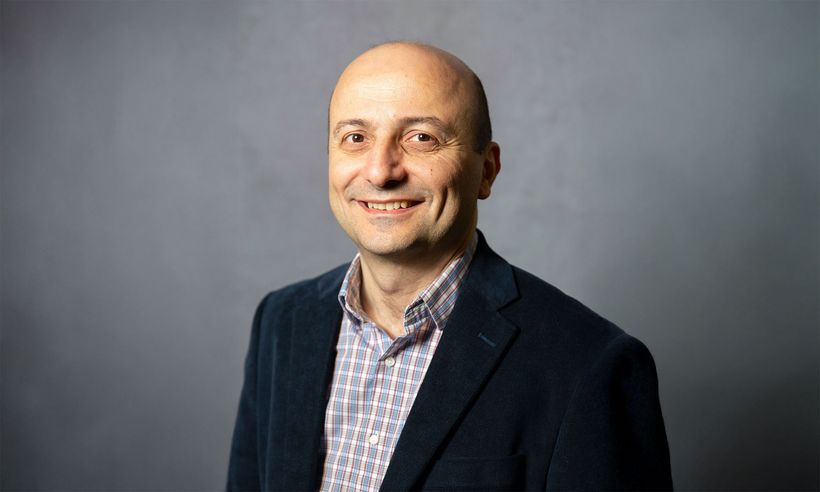
VCU College of Engineering Dean Azim Eskandarian, D.Sc., named Fellow of The Society of Automotive Engineers International
Recently named a Fellow of the Society of Automotive Engineers (SAE) International, Azim Eskandarian, D.Sc., the Alice T. and William H. Goodwin Jr. Dean of the Virginia Commonwealth University (VCU) College of Engineering, received one of the organization’s highest honors. The designation recognizes individuals who have made extraordinary and sustained impacts on the mobility industry through technical excellence, leadership, innovation and dedicated service to the profession and to SAE International. “SAE Fellows – whose leadership and technical contributions strengthen our organization embody the highest level of professional achievement,” said Carla Bailo, 2026 SAE International president and chair of the board of directors. “Election to SAE Fellow reflects an individual’s lasting influence on mobility engineering and reinforces the standards of excellence that guide SAE’s strategic direction.” Selected through a comprehensive review process led by the SAE International Fellows Committee and approved by the SAE International Board of Directors, SAE Fellows exemplify the organization’s mission to advance mobility knowledge and solutions for the benefit of humanity. “It is a great honor to receive this distinction from an organization that is so essential to the advancement of the automotive industry,” said Eskandarian. “I hope to continue collaborating with engineers, researchers and other professionals who share a vision for the great work we can do to improve the safety and efficiency of transportation.” Numerous scientific and technical contributions to automotive safety, academic programs, workforce development in crashworthiness, collision avoidance, advanced driver assistance systems, intelligent vehicles, and autonomous driving have stemmed from the more than 40 years of work Eskandarian has pioneered. His research on intelligent and autonomous vehicles includes the development of novel methods for driver safety systems. As an academic leader, Eskandarian’s enduring commitment to education, mentorship and service led him to start impactful academic programs at several universities. This includes robotics and autonomous systems programs and new master’s concentrations at the VCU College of Engineering, a graduate academic program in intelligent transportation systems and an undergraduate concentration in transportation engineering at George Washington University, and an automotive engineering concentration at Virginia Tech. Eskandarian is also a Fellow of two other technical societies, the American Society of Mechanical Engineers (ASME) and the Institute of Electrical and Electronics Engineers (IEEE).