
Workplace jargon hurts employee morale, collaboration, study finds

Mar 17, 2026

2 min

Olivia Bullock


You’ve probably heard it before in a meeting: “Let’s touch base offline to align our bandwidth on this workflow.” Corporate jargon like this is easy to laugh at — but its negative impact in the office can be serious.


According to a new study, using too much jargon in the workplace can hurt employees’ ability to process messages, leading them to experience negative feelings and making them feel less confident. In turn, they’re less likely to reach out and ask for or share information with their colleagues.


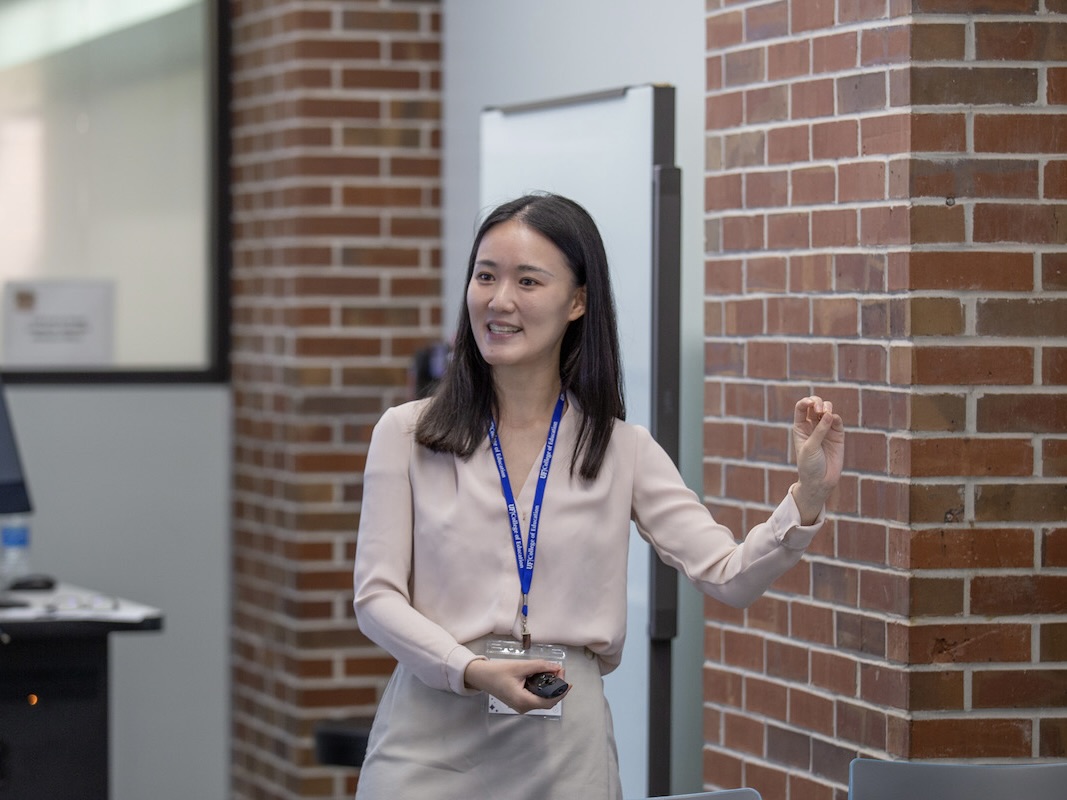
“You need people to be willing to collaborate, share ideas and look for more information if they don't understand something at work,” said Olivia Bullock, Ph.D., an assistant professor of advertising at the University of Florida and co-author of the new study. “And jargon might actually be impeding that information flow across teams.”


Age made a difference, though. Older workers had a harder time processing jargon, but were more likely to intend to ask for more information to clarify the message. Younger employees were less likely to seek and share information when confused by jargon.


“It gives credence to the idea that younger people are more vulnerable to these workplace dynamics,” Bullock said. “If you're onboarding younger employees, explain everything clearly.”


Bullock and her co-author, Tiffany Bisbey, Ph.D., an assistant professor at George Washington University, published their findings Aug. 25 in the International Journal of Business Communication.


An expert in communication research, Bullock has long studied jargon’s negative effects for talking about health and science. Then, faced with jargon in her own work, she started to ask how these arcane, technical words might get in the way of a smooth workplace.


To find out, Bullock surveyed nearly 2,000 people who were told to imagine they had just started a new job and received an email with important directions. Half had to navigate a jargon-filled message about “intranets” and “EFT” payments. The other half had that jargon translated back into plainer language.


The message packed with jargon, not surprisingly, made it harder for people to process the information, which can throw off an entire workday.


“It doesn't just make them feel bad about the information they've been given. It makes them feel bad about themselves,” Bullock said.


The study then asked people how they would respond to the jargon. The impenetrable language made them feel insecure and less likely to ask for help right when they needed it the most.


“They weren’t as willing to collaborate,” Bullock said. “If you can’t ask for more information or share that information downstream, you’re creating silos, and that’s disrupting your workflow and environment.”


Having studied jargon for so long, Bullock has one piece of advice for employers and employees alike.


“Always reduce jargon,” she said. “The benefit of using jargon doesn’t outweigh the cost.”
Connect with:
Olivia Bullock

Olivia Bullock

Assistant Professor

Olivia Bullock studies how gaps between experts' beliefs and the public's beliefs can be closed with effective messaging interventions.

Risk Communication (Science, Health, and Technology)PersuasionMessage ProcessingRisk Communication
Powered by

You might also like...

Check out some other posts from University of Florida

CEOs 5 times more likely to survive fraud than a personal scandal featured image

2 min

CEOs 5 times more likely to survive fraud than a personal scandal

If the CEO of Astronomer had overseen tax fraud instead of being caught on a kiss cam cuddling his HR chief in an extramarital affair, he might still have a job. That’s because, according to a new study, CEOs are five times more likely to be fired for personal misconduct than for overseeing financial fraud. “For financial fraud, the CEO can easily say, ‘Hey, it wasn’t me,’” said Aaron Hill, Ph.D., an associate professor in the University of Florida Warrington College of Business who led the study. “With personal misconduct, there’s no excuse.” The research, forthcoming in Strategic Organization, examined 59 cases of personal misconduct and compared them with more than 300 financial scandals at publicly traded companies between 1997 and 2020. The personal cases included inappropriate relationships, drug or alcohol incidents, domestic violence, falsifying credentials and derogatory speech. Hill and his colleagues found that boards move decisively when a CEO’s private behavior becomes public. By contrast, financial misconduct — such as accounting restatements that can wipe out billions in shareholder value — often leaves room for a chief executive to deflect blame onto others in the organization. Recent company performance influenced how boards responded, to a point. A CEO whose company was thriving could often survive a financial scandal because directors had both plausible deniability and a strong incentive not to disrupt success. But good numbers offered little protection when the problem was personal behavior. For example, McDonald’s ousted Steve Easterbrook in 2019 over a consensual relationship with a subordinate, even though the company’s stock price had doubled under his leadership. Hewlett-Packard similarly dismissed CEO Mark Hurd after harassment allegations despite his reputation for turning the firm around. “Even strong performance can’t erase certain kinds of misconduct,” Hill said. “There are some things you just can’t excuse.” The study also uncovered how scandals influenced succession decisions. When personal misconduct led to a firing, boards were more likely to promote an insider, signaling that the problem lay with one person rather than the culture of the company. Financial scandals, on the other hand, often prompted boards to recruit outsiders as a way of reassuring markets that the firm was serious about change. “It’s a signaling move,” Hill said. “Bring in an outsider after fraud, and the market reacts positively. Stick with an insider after a personal scandal, and it says the organization itself is sound.” The researchers argue that these choices reveal how boards balance their fiduciary duty with the reputational risks of scandal. While dismissing a CEO can serve as a public relations reset, Hill emphasized that it is almost always a financially motivated calculation. “Boards are supposed to look out for the company and its shareholders,” he said. “But when they decide to keep a CEO after misconduct, I think it sends the wrong message — to employees, to investors and to the public.”

UF develops breakthrough magnet that could transform metal production featured image

3 min

UF develops breakthrough magnet that could transform metal production

Imagine if producing steel parts for agricultural equipment or even aluminum soda cans required only a fraction of the energy it does today. A University of Florida-led innovation may soon make this a reality. In a groundbreaking collaboration backed by a nearly $11 million federal grant, UF researchers have developed a first-of-its kind superconducting magnet that could advance metal production and position the United States as a global leader in alloy production.   “This revolutionary technology has the potential to substantially reduce the cost and energy use of heat treatments in the steel industry, and we are excited to help pave the way for its adoption in industry.” —Michael Tonks, Ph.D., UF’s interim chair of Materials Science and Engineering Funded by the U.S. Department of Energy’s Advanced Manufacturing Office, the project uses Induction-Coupled Thermomagnetic Processing, or ITMP, an advanced manufacturing method that integrates magnetic fields with high-temperature thermal processing. The national consortium of industry, academic and national laboratory partners is now led by Michael Tonks, Ph.D., UF’s interim chair of Materials Science and Engineering, who succeeded Michele Manuel, Ph.D., the project’s long-time leader. “This revolutionary technology has the potential to substantially reduce the cost and energy use of heat treatments in the steel industry, and we are excited to help pave the way for its adoption in industry,” said Tonks. It’s not just any piece of equipment; it’s a custom-built superconducting magnet with a unique ability to combine magnetic fields with high-temperature thermal processing. In partnership with the UF physics department, Oak Ridge National Laboratory, or ORNL, and six companies interested in the technology, the magnet and cylinder induction furnace now sit atop a 6-foot-high platform. The prototype, which costs more than $6 million to purchase and install, is capable of processing steel samples up to 5 inches in diameter making it a rare asset for academic research. Yang Yang, Ph.D., UF materials science research faculty member, estimated ITMP could reduce steel processing time by as much as 80 percent, cutting energy use and operational costs. “Thermomagnetic processing changes a material’s phase stability and kinetic properties, accelerating carbon diffusion in steel, said Yang. “Traditional furnaces cannot achieve these advanced material properties.” The system works by modifying the driving forces for important steel phase changes, which shortens heat treatment. “What normally takes eight hours can be done in just a few minutes.” Yang explained. “The magnetic field acts as an external driving force to make atoms diffuse faster.” Unlike conventional energy sources like electricity or natural gas, the ITMP process uses volumetric induction heating along with high-static magnetic fields to lower energy consumption. The project is still in a pilot phase and requires additional research and testing. At ORNL, researchers emphasized the rarity of UF’s prototype, citing its unprecedented combination of magnetic field strength and ability to process large samples and components. “This could significantly advance U.S. manufacturing and process efficiency for heat treatment of materials such as metal alloys of steel or aluminum,” said Michael Kesler, Ph.D., ORNL research scientist and lead collaborator. Kesler noted successful implementation of this technology could contribute to a reliable energy grid and more efficient industrial electrification. UF researchers contend it could also reduce carbon emissions, supporting cleaner, more sustainable manufacturing processes. The tall, two-level magnet now resides in the Powell Family Structures and Materials Laboratory on UF's East Campus. MSE plans to officially unveil it in December, inviting representatives from national labs, industry and academia. While Engineering students will have future opportunities to use it for research and experiential learning, UF researchers are optimistic about potential industry adoption for industrial manufacturing in the next five to 10 years. The award is part of a $187 million DOE initiative to strengthen competitiveness in U.S. manufacturing. If successful, the innovation could redefine how the world shapes the materials of tomorrow.

UF researchers aim to improve nutrition for cancer patients featured image

3 min

UF researchers aim to improve nutrition for cancer patients

A new study and first-of-its-kind food pharmacy at UF aim to help patients with cancer access and eat nutritious foods, giving them the best possible shot at a healthy future. As many as a third of cancer patients face food challenges, particularly in rural areas. Good nutrition can improve outcomes during and after treatment. With a grant from the Florida Department of Health, a team of researchers at the University of Florida Health Cancer Center and Sylvester Comprehensive Cancer Center will first assess the community’s nutritional needs. Then they’ll test the usefulness of a food-focused digital tool designed to connect patients to helpful resources. An on-site food pharmacy will help patients not only get the food they need to thrive but also provide tools for lasting change. “We’re taking a community-based approach to holistic cancer care,” said Dejana Braithwaite, Ph.D., associate director for population sciences at the UF Health Cancer Center. “Patients consistently express that nutrition is an important issue for them during cancer treatment. We want to address nutritional needs from treatment through survivorship with a sustainable intervention. ASCENT brings science and community together to make that a reality in Florida.” Braithwaite, a professor and division chief in the UF Department of Surgery, is leading the multi-institution study with Tracy Crane, Ph.D., R.D.N., director of lifestyle medicine, prevention and digital health and co-lead of the Cancer Control Program at Sylvester, part of the University of Miami Health System. Researchers from the UF colleges of Journalism, Medicine, and Public Health and Health Professions and UF/IFAS Extension are participating. The Florida Partnership for Adding Social Context to Address Cancer Survivorship Outcomes study, which the researchers have nicknamed ASCENT, will focus on those affected by the most prevalent cancers in Florida, including breast, lung, colorectal, prostate and blood cancers. “Cancer survivors who follow a healthy dietary pattern have a lower risk of recurrence and death,” said Cora Best, Ph.D., R.D.N., an assistant professor of nutritional sciences in the UF College of Agricultural and Life Sciences and study team member. “Some cancer therapies have long-term or late side effects that increase the risk for chronic conditions, like osteoporosis, which can be alleviated with good nutrition. That means a healthy diet during and after oncologic treatment can enhance lifespan and quality of life.” Researchers will start by conducting interviews with patients, providers and community-based organizations. They want to understand how to best use resources to meet the nutritional needs of those with cancer, such as food security and diet quality. “Community outreach and engagement with various groups is a cornerstone of the study,” said Francis Dalisay, Ph.D., an associate professor in the UF College of Journalism and Communications who helped develop the interview guides. The team will use the information to build a diet intervention with online surveys and patient navigator support, which they will test in a randomized clinical study at UF Health and Sylvester. Patient navigators will connect patients with resources like community programs or specialist referrals. The food pharmacy, located at the UF Clinical and Translational Sciences Metabolic Kitchen, will help cancer patients get healthy, whole nutrient-dense foods like high-protein items, fruits, vegetables and pantry staples. It will also provide workshops, personalized recipes and meal plans. Although the United States is a wealthy nation, food insecurity remains common, including in Florida, Best said. “The ASCENT study pairs evidence-based dietary guidance for cancer survivors with innovative strategies to overcome barriers like food insecurity,” she said. Ultimately, the study aims to empower patients so they can address lifestyle factors in their control, boosting their well-being. “I am hopeful this study will provide patients with appropriate resources to improve their overall nutrition, especially those who are malnourished,” said Paul Crispen, M.D., the Cancer Center’s associate director for clinical research and a study adviser.

View all posts