

The Grace to Fail: My MBA Journey (Part 3)

Jun 17, 2026

8 min

Sue Pimento

I have a confession to make.


My wife Bonnie and I are addicts. Not the kind that requires an intervention, exactly, but close. We are addicted to home improvement. We are always planning the next upgrade, the next project, the next thing to tear apart and make better. It gives us genuine pleasure and a profound sense of accomplishment. Bonnie leads most of these endeavours. She is remarkably capable with power tools and can pull off a tool belt like she is strutting down a Home Depot runway (aisle). Our shared obsession has even spawned a series of Facebook posts called the 2 Capable Women, where we document everything from felling trees to the deeply humbling art of Ikea assembly.


So there we were, driving in traffic, and Bonnie was telling me about her next project: removing the circa-1960 wood panelling and replacing it with modern shiplap. Mid-conversation, she went quiet for a moment and said, almost to herself, “I guess I need to allow myself the grace to fail.”


I nearly drove off the road.


You must understand something about Bonnie. She is a self-declared perfectionist. Not casually. She is committed to being a perfectionist at being a perfectionist. So, hearing those words come out of her mouth, unprompted, while discussing a renovation project, was like hearing your accountant quote Oprah. It stopped me completely.


The truth has a certain ring to it. I heard that bell loud and clear.


Because sometimes wisdom does not arrive in a lecture hall or a leadership book or a TED talk. Sometimes it arrives in a car, in traffic, from the person sitting next to you holding a coffee and thinking about shiplap.


That phrase has not left me since.


Many of us do this. We replay mistakes endlessly, convinced that self-criticism is somehow productive. We lie awake revisiting conversations and missteps, assuming that if we beat ourselves up long enough, we will emerge wiser. All we accomplish is a thorough self-beating followed by self-flagellation. Lots of noise. Zero progress. Zero calories burned.


This is not just a problem for people climbing mountains or starting businesses. It plays out in

perfectly ordinary moments. You send an email and immediately wish you had worded it differently. You make a comment at dinner that lands wrong and spend three days replaying it. You make a small error at work and carry it around like luggage for a week. The inner courtroom convenes regardless. Most of us are not failing spectacularly. We are just living, occasionally getting things slightly wrong, and treating that as evidence of something deeply and permanently wrong with us.


It is not. It is just Tuesday.


I have been thinking about this a lot lately because I am in the middle of my MBA at the Sprott School of Business. I wrote about My MBA at age 69 in Part I and Part II. Back in graduate school after four decades in the workforce, opportunities to feel uncomfortable, uncertain, and occasionally like you have wandered into the wrong building are plentiful.


A recent assignment on crafting Team Charters and enhancing my leadership skills inspired me to write a personal manifesto for my graduate studies and to take a closer look at myself. You can read mine here. While working through it, I made a surprising discovery. Most of the commitments I was making to myself had nothing to do with school. They were about life.


Read the instructions carefully. Ask for help sooner. Pay attention to what your emotions are trying to tell you. Trust your experience. Hold yourself to your own standards. And this one, which stopped me cold, and sounded very familiar: Allow yourself the grace to fail.


There was that bell again.


Those six words turned out to be the most important thing I wrote. Not because failure is something to celebrate, but because the willingness to risk it is the price of admission for virtually everything worth doing.


Failure is not a topic most of us rush toward. It is about as pleasant as stubbing your toe in the dark. Yet every meaningful thing I have ever done required me to risk it. Starting a new career. Leading a sales team. Launching a business. Climbing a mountain. Writing a book. Going back to school at 69. None of it came with guarantees. All of it came with uncertainty, mistakes, and moments where I genuinely wondered whether I had lost my mind. The jury is still out on some of those.


The irony is that failure and growth are inseparable. Dweck (2006) found that people who view setbacks as learning opportunities rather than evidence of inadequacy are more likely to persevere and ultimately succeed. Duckworth (2016) agreed, and in Grit, one of my favourite books, long-term success depends less on talent and more on the willingness to keep going after things fall apart. Neff (2023) added that people who respond to failure with self-compassion rather than harsh self-judgment show greater improvement and are more likely to try again. The friction produced by failure is often exactly what generates learning, but only if we give ourselves enough grace to stay in the game.


I see this everywhere. Professionals are staying in jobs they no longer enjoy because starting over feels too risky. Retirees hesitate to try something new because they might not be good at it right away. Students who will not ask a question because they do not want to appear uninformed. And if I am being honest, I see it in myself. Every time I hesitate to contribute to class because everyone else seems younger and sharper. Every time I catch myself wondering whether I belong in the room.


One exercise has helped me enormously. When I catch myself spiralling into negative self-talk, I imagine my five-year-old self standing beside me, listening. Would that little girl feel encouraged? Not a chance. So why do we think inner dialogue helps us?


A recent example: I made a point in a meeting that got a polite nod and complete silence. You know the silence. The one that could mean anything from “interesting” to “what on earth did she just say?” I replayed that moment for two days. Eventually, I asked a colleague how the meeting had gone, and she said she barely remembered it. The forensic investigation was conducted entirely in my own head.


I am not suggesting we lower our standards. We should hold ourselves accountable, learn from our mistakes, and strive to do better. But there is a meaningful difference between accountability and cruelty. Between reflection and rumination. Between learning from a mistake, and building a summer cottage on top of it, and checking in every long weekend.


I worry about what this means for the generation behind us.


Research by Professor Gabriel Rubin at Montclair State University found that despite living in one of the safest periods in history, Gen Z perceives risk virtually everywhere (Rubin, 2023). They have grown up knowing that at any moment, someone has a phone. One stumble, one terrible dance move, and the clip is posted before you catch your breath. Permanent, searchable, shareable public failure is something entirely new, and the consequences are showing up in surprising places.


Monocle magazine noted young people standing completely still on nightclub dance floors, phones in hand, unable to lose themselves to the music. The club has become a stage, and the crowd has become the content. Instead of dancing, people film. Instead of connection, there is performance.


This is not a small thing. Dancing is how humans have always signalled availability, built trust, and found each other. It requires a willingness to look slightly absurd. If we have raised a generation so terrified of being captured mid-stumble that they will not move to the music, we have handed surveillance culture a victory it does not deserve. Calculated risks lead to new opportunities, foster innovation, and teach lessons that comfort never could (Rubin, 2023). Risk aversion makes short-term sense. As a way of life, it quietly closes doors that were never meant to stay shut.


Give yourself and the young people around you, explicit permission to be unpolished in public. To dance badly. To say the wrong thing and survive it. The phone will always be there. So, fortunately, will the music.


Here is what I keep learning inside this MBA: wisdom arrives disguised as failure. The assignments that challenge me teach me more than the ones that come easily. The questions I most resist asking are usually the most important. I did not expect graduate school to teach me this. Then again, I did not expect to be here at seventy.


I no longer think in terms of Wins and Losses. Those categories are too simple. I think in terms of Wisdom and Learning. Success builds confidence. Setbacks build insight. Both move us forward.

Read that again.


So the next time you find yourself at two in the morning replaying something you said three days ago, ask whether your five-year-old self would find your internal monologue useful. If the answer is no, offer yourself a little grace.


Which brings me back to Bonnie.


Last weekend, she pulled off that 1960s panelling. Every last piece. It was messy and uncertain, and at several points she was unsure what she would find underneath. There were surprises. There were moments of doubt. She kept going anyway. By the end of the weekend, the shiplap was going up, clean and bright and exactly right.


She did not do it perfectly. She did it anyway. And it is beautiful.


That is the whole lesson, right there, delivered by a woman with a pry bar and a tool belt, on a weekend in June.


Failure is not the enemy. Most of the time it is just fear wearing a funny hat. And if you are lucky, it will teach you something genuinely worth knowing. Sometimes it comes from a research paper. Sometimes it comes from your wife, in a car thinking out loud about shiplap.


Either way, listen for the bell.


Writing my manifesto was one of the most clarifying things I did this year. Not because it solved anything, but because it forced me to decide, on paper, who I was going to be when things got hard. I want that for you, too.


So I created the ReWirement Manifesto: a simple template for anyone navigating a new chapter, a big transition, or simply a Tuesday that did not go as planned. It is not a bucket list. It is not a vision board. It is a set of honest commitments you make to yourself, in your own words, that you can return to when your inner courtroom calls you to order.


Download your free ReWirement Manifesto template here.


Fill it in. Keep it somewhere you can find it. And the next time you are staring at a wall of 1960s panelling, wondering if you are in over your head, remember: the grace to fail is not a consolation prize. It is the whole point.


Don’t Retire…Re-Wire!


Sue


My Book is Now Available for Pre-Order

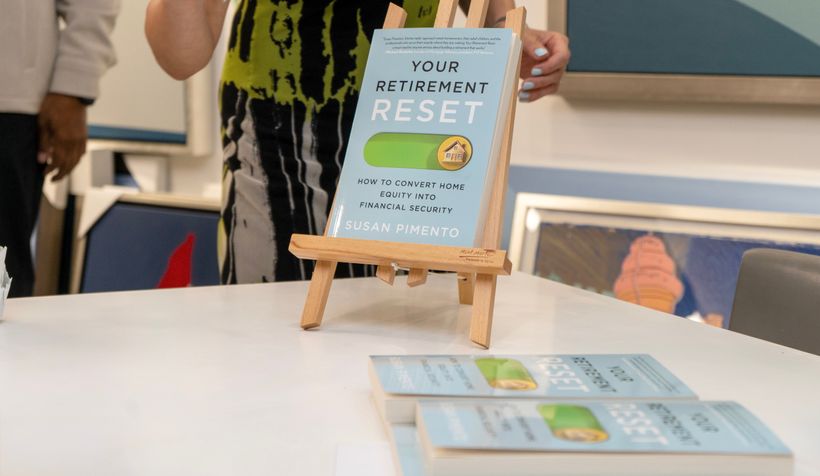
I hope you will consider pre-ordering a copy of Your Retirement Reset for you, a friend or loved one. It's available September 8, 2026 published by ECW Press - You can now order at Indigo or Amazon. And if you love supporting Canadian booksellers, please also check with your local independent bookstore. Most can easily order it for you.


Connect with:
Sue Pimento

Sue Pimento

Founder | CEO

Writer, author & presenter focused on financial literacy and retirement strategies. I advocate for the health, wealth & purpose for retirees

Pension ReformInterest RatesHome EquityMortgagesReverse Mortgages
Powered by

You might also like...

Check out some other posts from Retire with Equity

The Tipping Point: How Gratitude Grew into a Guilt Trip (and How to Get Off It) featured image

9 min

The Tipping Point: How Gratitude Grew into a Guilt Trip (and How to Get Off It)

My dog Dottie is, and I say this with love, a con artist in a fur coat. She has trained me to hand over a treat every time she sits, spins, or simply exists in my general direction, those big brown eyes fixed on me. If I hesitate even three seconds, she tilts her head and stares at me as if I have personally bankrupted her. I always fold. It turns out that I am not the only sucker for this routine. These days, entire industries have figured out that if you make a person stand there long enough while a screen stares back at them, they will fold too. Except instead of a milk bone, they want eighteen to twenty-two percent of your bill, and instead of a good girl, you get a receipt. Welcome to modern tipping culture, where a simple thank-you has somehow become a math test administered under duress, with a cashier watching as you decide, and somewhere behind the screen, a very deliberate mind has already worked out exactly how to nudge your answer higher. A Short History of Guilt with Percentages Tipping began as a compliment, not a demand. Historians trace it to a Tudor England custom called a vail, in which a noble slipped an extra coin to a servant for going above and beyond (Blueprint Financial, 2024). North America initially wanted nothing to do with it, meeting tipping's arrival in the late 1800s with the kind of suspicion usually reserved for chain letters. Americans who travelled to Europe came home grumbling about being nickeled and dimed by porters and waitstaff, and in 1884 the New York Times ran an editorial calling English-style tipping downright un-American (Mentzer, 2013). Between 1909 and 1915, six American states banned tipping outright, but it did not work. Tipping also has a less charming cousin: bribery, extra money paid in advance for special treatment, a jump on the waitlist, or a better table, not a reward for service already rendered. That is also roughly where the phrase "nickel and dimed" comes from, back when tipping meant tossing a server the smallest coins in your pocket. These days, the phrase seems to describe the opposite, a whole system of small additions that always land in the business's favour. Researchers who study why people tip find that the reasons run deeper than economics. One ethnographic study of servers and diners in Vancouver found that people tip for good service, to follow the social norm, out of sympathy, to signal status, or to lock in a preference for next time. Tipping has never been just a transaction; it has always been part performance and part quiet social contract, which is probably why opting out feels so uncomfortable. Then Tipping Went on a Growth Spurt Fifteen percent used to be the polite standard and twenty percent was for showing off. That range has crept steadily upward. Canadians now commonly tip eighteen to twenty percent at restaurants, bars and at hair salons. Even coffee shops and fast-food counters are edging toward five to fifteen percent as digital prompts normalize the ask (Blueprint Financial, 2024). Nearly two thirds of Canadians say they feel pressured to tip more than they used to, and the share tipping twenty percent or higher has more than doubled in under a decade (Blueprint Financial, 2024). In the US food industry alone, tipping adds up to an estimated forty-seven billion dollars a year (Azar, 2011), proof that this habit is not shrinking on its own. The Power of Suggestion (and the Screen That Stares Back) Once you know the tactics at play, it becomes easier to push back without guilt. The first is plain old anchoring. When a screen offers eighteen, twenty, and twenty-five percent as your only real options, your brain quietly narrows its sense of what is normal to fit that range, even if fifteen felt generous a few years ago. The second is assumptive closing, a sales trick in which, instead of asking whether you would like to tip, the screen assumes you already said yes and only asks how much, with the highest number often listed first or made visually larger. The third is technology itself, which makes the ask frictionless in places it never used to be, a tap and a swivel where someone just handed you a bag. And the fourth is old-fashioned shaming, the discomfort of picking a lower number while the cashier watches your thumb hover over the screen. If this sounds suspiciously like how Dottie gets her treats, that is because it is the same playbook. Offer a limited set of flattering options, stand there expectantly, and let the silence do the persuading. Research shows this tip-screen genuinely works, boosting tips by fifteen to thirty percent compared with a plain jar on the counter, largely because people gravitate to the middle option and nobody wants to look cheap in front of an audience (GlobalTill, 2026). One Toronto bakery owner told CBC that customers get visibly upset just being asked, even with signs posted that tips are not expected (CBC, 2022). University of Saskatchewan professor Marc Mentzer called the whole system a human rights catastrophe we are simply stuck with (CBC, 2022). None of these four tactics are about rewarding good service. They are behavioural design, and once named, they lose a surprising amount of power over you. Then the Pandemic Showed Up and Ruined Math for Everyone It is worth remembering why this all accelerated, because the original impulse was genuinely kind. When the pandemic hit, restaurant workers were being laid off and dining rooms were closed. Tipping generously was in solidarity, meant as temporary help during a crisis. Except it did not stay temporary, and that part was not really an accident either. Once businesses saw customers would tolerate a higher default tip during a crisis, many kept it in place long after. What began as compassion got hardwired into the software as the new normal, with no memo ever announcing that the emergency measure was now permanent. And Then Delivery Apps Moved the Tip Jar to Before Dinner Even Arrives Just as the tip screen had already rewired one part of the routine, delivery apps quietly rewired another. With services like Uber Eats and Skip the Dishes, you are asked to tip before your food has even left the restaurant, a bit like tipping a movie based on the trailer. The gratuity is baked into checkout, so what used to be a reward for good service becomes a pre-negotiated cost of doing business from your couch. Drivers often rely on that upfront tip because base pay per delivery is thin, meaning customers are subsidizing wages before a single doorbell rings, tipping blind. Wait, What? Are We Tipping the Government Too? If the delivery app section left you feeling like every corner of a transaction has been quietly monetized, buckle up, because there is one more layer nobody warns you about. Tipping etiquette has always technically called for calculating your percentage on the pre-tax total, but the machine does not know or care about etiquette. It simply applies a percentage to whatever total is on the screen, tax already included. So, the moment you tap one of those preset percentage buttons, you are effectively handing your server a tip on the government's cut of the meal too, not just on your food. The good news is the money itself still goes straight to the server, not to the government (phew). A flat twenty percent tip, calculated the way the machine calculates it, works out closer to twenty-two percent in provinces with a combined sales tax around thirteen percent, a touch less where the tax rate is lower, once the tax already baked into that total gets factored in (ouch). Let that marinate for a second. You went in planning to leave twenty and walked out having left twenty-two. When There Was No Service to Begin With And then there is the increasingly common experience of being asked to tip somewhere where no actual service happened. The dry cleaners. Seriously? You hand over a bag of shirts, come back two days later, and someone hands you the same shirts on a hanger, and now there is a tip screen. Insert the mother of all eye rolls. Nobody brought anything to a table; nobody checked on you twice. The job was already priced into what you paid. This is the moment tipping stops being gratitude and starts being a business outsourcing payroll onto customers who never agreed to it. Let's Talk About What This Does to Seniors This part matters to me personally, since I spend my days helping retirees stretch every dollar with intention. Tipping fatigue hits seniors differently and being asked to add another eighteen to twenty-two percent to everyday errands can feel less like generosity and more like an unplanned pop quiz. I have heard from clients who now avoid certain errands or choose a drive-through, specifically to sidestep the awkward prompt. Seventy-three percent of Canadians already believe tipping lets employers get away with underpaying staff, and fifty-nine percent would rather see fair wages built into prices than keep gambling on tip guilt (Blueprint Financial, 2024). If tipping anxiety is nudging older adults toward staying home instead of enjoying a coffee with a friend, this so-called social norm is quietly chipping away at connection, not what any of us want for our golden years. This is not strictly a seniors’ problem either. Many people across every age group now quietly admit to choosing pickup over dine-in, skipping a small business altogether, or simply going out less, purely to avoid the awkward math of a screen and an audience. The difference for seniors is that the squeeze lands on top of a fixed income and a lifetime of budgeting habits that never had to account for an eighteen percent surcharge for saying yes to a friend's invitation. Maybe It Is Time for a Cash Tip Movement Here is an idea worth trying and sharing with your friends. The next time the screen swivels toward you, select no tip (usually tucked into the custom tip section rather than sitting out with the percentage buttons), pay the bill, and leave whatever cash tip you want directly on the table or in the jar afterward. To be clear, this is not about skipping the tip; it is about choosing how and when you deliver it. The server still gets paid fairly, just without a screen and an audience deciding for you. That one move sidesteps the anchoring, the assumptive question, the audience, and the algorithm quietly nudging the suggested amount upward. You decide the amount in private, hand it over with a genuine thank you, and walk out having tipped exactly what you meant to, power fully intact. If anyone asks why you skipped the prompt, just smile and say you do not tip machines; you tip people. This is also a great excuse to talk about it with your people. Ask your friends what they tip and why and figure out together where you all want to draw the line. Strength in numbers works on tipping the same way it works on everything else. Taking Back the Tipping Wheel A couple of practical notes before the cheat sheet below. Most screens that appear to offer only percentages hide a custom tip option that lets you enter zero or a flat dollar amount. It is worth finding, since a flat five dollars does not creep upward the way twenty percent does as prices rise. What to Tip, By Service Tipping Around the World Check Please! At the end of the day, tipping culture can feel like a money furnace, quietly burning through your paycheque, one percentage point at a time, while insisting the whole thing was your idea. And when the topic is your own money and your own life, also known around here as YMYL, letting action absorb anxiety beats letting anxiety run the show every time. Decide your numbers ahead of time, carry a bit of cash, ask a friend what they think, and stop apologizing for wanting a system that rewards real effort rather than clever design. Dottie has never apologized for expecting a treat, and to be fair, she earns hers. A screen swivelling toward you over a bagel has not. Tipping began as a genuine thank-you for genuine effort, so keep it simple. Decide your number before the screen decides it for you and save the big percentages for those who earned them. Next time that screen stares you down for twenty-two percent, channel your inner Dottie: sit, stay, and reward only the performance that deserves it. Don't Retire…ReWire! Sue My Book is Now Available for Pre-Order I hope you will consider pre-ordering a copy of Your Retirement Reset for you, a friend or loved one. It's available September 29, 2026 published by ECW Press - You can now order at Indigo or Amazon. And if you love supporting Canadian booksellers, please also check with your local independent bookstore. Most can easily order it for you.

A Closer Look at Index Funds in Retirement featured image

6 min

A Closer Look at Index Funds in Retirement

Someone in their early sixties slides a statement across the kitchen table. Balanced portfolio. Broad index funds. Low annual fees. They did everything the industry told them to do, in the order the industry prescribed. Then they ask the question that has nothing to do with the statement: "Will it last?" I call that FORO. Fear Of Running Out. People tell me it's just nerves. It isn't. Here's what I think is really happening. An index fund is a very good machine for one job: growing money over thirty years. It assumes you have time. It assumes you're buying, not selling. It assumes you don't much care what's inside, as long as the number goes up. Every one of those assumptions stops being true the day you retire. Why do index funds treat expensive stocks as growth stocks? Campbell Harvey teaches finance at Duke University's Fuqua School of Business. This spring, he published a paper with four colleagues in the Financial Analysts Journal that tackles something so basic that most of us never think about it. (Source: Arnott, Brightman, Harvey, Nguyen & Shakernia, "Fundamental Growth," Financial Analysts Journal, 2026.) Almost every index fund is built on one idea: if a stock is expensive, the company must be growing rapidly. Harvey's finding is that this is often wrong. A stock can be expensive because it's popular. But popularity and growth are two different things. If you want proof that price and business performance can go their separate ways, think back to 2021. GameStop. AMC. Stocks that shot up on Reddit forums, with very little of the chatter based on earnings reports. Think back to 2021. GameStop. AMC. Share prices shot straight up because people online decided they should. Not because those companies were selling more of anything. Now consider how index funds work across every retirement account. A stock becomes popular, its price rises, and the fund buys more of it, not because the business improved, but because the price went up. How concentrated is the S&P/TSX Composite? Everything above is American. Here's the Canadian version, eh? The main Canadian index is not a broad mix of the world's best businesses. It's dominated by banks, mining and oil. Those three groups make up close to 70% of the index. Banks alone account for about 31%. According to the iShares Core S&P/TSX Capped Composite, the ten biggest holdings are roughly 38% of the whole thing, with Royal Bank at the top. In fact, close to half the weight of the index is made up of just financials and energy. I'm not saying anything negative about those companies. I'm saying you own them, whether you picked them or not, in amounts you didn't choose, for reasons that have nothing to do with what you need at age 72. That's been a fine bet for long stretches. It's also a narrow one. And narrow feels very different at 65 than it did at 35, because at 65 you no longer have the thing that makes a bad market survivable. Time. Why does a market drop cost a 65-year-old more than a 35-year-old? Let’s illustrate this with an example. Two people own the same fund. One is 35 and still contributing, while the other is 65 and withdrawing. Both are dealing with $6,000 this year. A unit of the fund costs $100. Then the market drops 20%, and a unit costs $80. The 35-year-old puts in $6,000. Before the drop, that money bought 60 units. Now it buys 75. Fifteen units he didn't pay for. The 65-year-old needs $6,000 to live on. Before the drop, she'd have sold 60 units to get it. Now she must sell 75. Fifteen units she'll never get back. Then the market recovers. Units return to $100. His 15 extra units are worth $1,500 more than he paid for them. Her 15 units were sold at the bottom. They aren't there to recover. Same fund. Same market. Same $6,000. The only difference is the direction the money was moving. That's why a retiree needs to look inside the fund, whereas a 35-year-old mostly doesn't. RRIF minimum withdrawals: why Canadian retirees are forced to sell In Canada, we've set a rule. When your RRSP becomes a RRIF, you must withdraw a minimum amount each year. The rate starts at 5.28% at age 71 and increases each year after that. (Source: Canada Revenue Agency, prescribed RRIF minimum withdrawal factors.) So, a Canadian retiree can be forced to sell in a bad year, from a narrow index based on a definition of growth that a Duke University business professor has just called flawed. Three problems stacked on top of each other. None of them show up on the statement. This is exactly the point I made with EY Canada in The Canadian Retirement Evolution, published in July (Source: EY Canada, 2026). FORO isn't a personal failing. It's a design gap. We built a system to save money, then asked it to pay people reliably for thirty years. It was never built for that. And the biggest thing most Canadians over 55 own isn't in the index at all. It's the house. About 70% of the coming wealth transfer in this country sits in real estate, and more than 85% of seniors say they want to stay in their homes (Source: EY Canada, The Canadian Retirement Evolution, 2026). Asset-rich, cash-poor, and treating their largest asset as off-limits. 5 questions to ask your advisor about your index funds I'm not telling you to sell anything. I can't. I don't know your health, your pension, your taxes, or your nerves. But here's what I'd want answered before my next meeting with an advisor. What are the ten biggest things I actually own?  Not the fund name. The holdings. Do my funds overlap?  Three funds that all own the same five banks isn't three bets. It's one. What happens if I must withdraw in a bad year? Is my "growth" fund measuring actual growth, or just price? Where does my home equity fit into all this? Ask. A good advisor will be glad you did. If you get a pie chart and a pat on the back, ask again. One last point from Professor Harvey. More than half of all invested money now sits in funds that buy automatically. He thinks it could reach 80% within ten years. (Source: Duke University Fuqua School of Business, 2026.) When enough money buys without looking, price stops being a judgment and becomes a reflex. But retirees are the least able to afford someone else's reflex. Here's the plain truth beneath all the jargon: nobody swapped out your equipment when the game changed. You're still holding a golf club on a pickleball court. Momentum is still wearing a cardigan. Your funds still can't tell the difference between expensive and growing. And most retirement plans still hand you a seatbelt when what you need is a crash-proof suit. Nobody in the industry is racing to fix this for you. So I will. Consider this the first chapter, not the last word. It's time to take back our retirements and reset. Don't Retire…ReWire! Sue  My Book is Now Available for Pre-Order I hope you will consider pre-ordering a copy of Your Retirement Reset for you, a friend or loved one. It's available September 29, 2026 published by ECW Press - You can now order at Indigo or Amazon. And if you love supporting Canadian booksellers, please also check with your local independent bookstore. Most can easily order it for you. References: All figures verified 4 August 2026 Important: This article is general information and commentary only and does not constitute financial, mortgage, tax, legal, or investment advice. Before making decisions about your retirement or home equity, consult qualified liscensed professionals who can assess your personal circumstances.

There's No Such Thing as the Average Canadian Retiree. There Are Three. featured image

6 min

There's No Such Thing as the Average Canadian Retiree. There Are Three.

You've seen the photo. Silver-haired couple on a sailboat, or walking on a beach at golden hour, laughing about nothing in particular. It's on the cover of every retirement brochure ever printed. It's what "the average Canadian retiree" looks like. In thirty years of banking, I never met that couple. I met a widow in her seventies deciding between a dental crown and her property taxes. I met a couple in their sixties quietly draining their RRSPs to keep a grandchild in university. And yes, I met people with sailboats, though they weren't asking me about retirement income. They were asking about estate freezes and charitable foundations. Three conversations. Three completely different Canadians. And after three decades of having them, most recently as a vice president at one of Canada's Schedule I banks, I've come to believe our biggest retirement problem isn't that Canadians plan badly. It's that we keep designing for an "average retiree" who doesn't exist. In The Canadian Retirement Evolution, a report newly published by EY that I was proud to co-author, I make the case for seeing Canadian retirees as three distinct groups. 1) Retirees in Need (roughly 30%) Nearly one-third of Canadian retirees are living close to the edge. Limited pension income, modest personal savings, and rising living costs define their retirement. Adding to the pressure, retirement debt is becoming the new reality. According to Royal LePage, 29% of Canadians who are recently retired or approaching retirement expect to continue making mortgage payments on their primary residence. For many Canadians, debt has become a permanent companion, extending well into what should be their most financially secure years. Perhaps the most troubling reality is this. Most people in this group have never received professional financial advice. The Canadians who need planning the most are often the Canadians the financial planning industry reaches the least. That should concern every financial institution, advisor and policymaker in this country. When retirement arrives with too little income, too much debt and no plan, the result is not just financial stress. It is anxiety, reduced independence and difficult choices that no Canadian should have to make after a lifetime of work. 2) Retirees Seeking Stability (roughly 60%) This is the majority of Canadian retirees, and the group that the sailboat photo completely misses. They are not financially struggling, but neither are they financially free. They have enough to retire, but not enough to stop worrying. What they want is simple. They want to maintain the lifestyle they spent forty years building. They want confidence that their money will last as long as they do. They want a retirement plan that offers stability and predictability. And they want the freedom to help the people they love, whether that's contributing to a grandchild's education, helping with a first home, or lending a hand when life throws one of their children an unexpected curveball. That is where retirement becomes complicated. Retirement has changed dramatically over the past three decades, but much of the advice Canadians receive has not. The result is a growing gap between today's retirement realities and yesterday's retirement plans. Every dollar shared with family is one less dollar available to fund their own future. Every unexpected expense raises the same unsettling question: Will I still have enough? This group lives in the space between abundance and anxiety. They have assets, but not always confidence. They have choices, but every choice comes with trade-offs. They don't need a miracle. They need a plan that provides stability, predictability, and the confidence to enjoy the retirement they worked so hard to earn without constantly wondering if today's decisions will become tomorrow's regrets. 3) Affluent Retirees (roughly 10%) The remaining ten percent focuses on sophisticated wealth management: transferring wealth to the next generation, structuring estates to minimize taxes, and giving philanthropically. These are good problems to have, served by an entire industry built to solve them. And that's the uncomfortable truth hiding in the framework: most of our retirement advice, most of our products, and most of our planning tools were designed with this group in mind. Retirement Fear Has a Name In 1990, more than 70% of Canadian workplace pension plans were defined benefit plans, providing predictable, guaranteed lifetime income. By 2022, that figure had fallen to just 37%. In the span of a single working generation, we quietly shifted the risk of outliving retirement savings from institutions to individuals. The anxiety created by that shift is something I encountered in thousands of conversations with Canadians throughout my lending career, long before I had a name for it. I call it FORO, the Fear of Running Out. In the EY report, we describe it this way: "Fear of running out (FORO) reflects a structural gap in retirement system design, not a failure of individual planning. Most retirement frameworks were built for accumulation rather than sustainable income in later life." That is the heart of the challenge. Canada's retirement system does an excellent job of helping people save, but far less to help them transform those savings into sustainable, predictable income throughout retirement. It is little wonder that so many Canadians approach retirement with uncertainty rather than confidence. The Elephant in the Living Room One final reality deserves far more attention. Canada is in the midst of one of the largest intergenerational wealth transfers in its history. Much of that wealth is tied up in residential real estate, owned by Canadians who consistently say they want to remain in their homes for as long as possible. That creates an important contradiction. The largest asset held by most Canadian households is also one of the least integrated into mainstream retirement planning. We encourage Canadians to build home equity for decades, then often ignore it when they need income the most. If retirement planning is meant to consider every available resource, why do we continue to overlook the largest one? Resolving that question has become the focus of my research and my forthcoming book, Your Retirement Reset: How to Convert Home Equity into Financial Security (ECW Press, September 2026). But that discussion extends beyond the scope of this article. For now, it is enough to recognize the disconnect. Retirement has changed. Canadians' balance sheets have changed. It may be time for retirement planning to change as well. A Retirement System Designed for Everyone The EY report reminds us that retirement is more than a financial milestone. It is one of life's most significant transitions, and every Canadian deserves to approach it with confidence, dignity and choice. That outcome will not be achieved with a retirement system designed around a single, hypothetical retiree. Canadians retire with different financial realities, different goals and different challenges. A retirement system that recognizes only one path will continue to leave too many people behind. Designing for the three retirement realities outlined in this paper is not simply good policy. It is good business. Financial institutions that tailor products, advice and education to meet the needs of all three groups will be better positioned to serve Canada's fastest-growing demographic. Policymakers who encourage that evolution will help create a retirement system that reflects the way Canadians actually live today, not the way they lived thirty years ago. The question is no longer whether retirement has changed. It has. The question is whether our retirement system will evolve quickly enough to meet Canadians where they are. Don't Retire... Re-Wire! Sue My Book is Now Available for Pre-Order I hope you will consider pre-ordering a copy of Your Retirement Reset for you, a friend or loved one. It's available September 29, 2026 published by ECW Press - You can now order at Indigo or Amazon. And if you love supporting Canadian booksellers, please also check with your local independent bookstore. Most can easily order it for you.

View all posts