In my last article, I wrote about couples retiring together. The dishwasher. The thermostat. The 1,500 Tuesdays. If you are retiring solo, you may have read it with a certain amount of satisfaction, thinking, Thank God I don't have to deal with that. Sorry. This week is about you.
There are, admittedly, some advantages to retiring solo. Nobody questions why you bought another pair of golf shoes. The thermostat stays exactly where you left it. If the dishwasher is loaded incorrectly, the list of suspects is short. You can eat dinner at 4:30 or 9:00, watch whatever you want on television, and go to bed with a book without anyone asking when you are going to turn out the light.
But retiring solo has its own complications. While you may be living without a partner, you aren't retiring without relationships. In fact, those relationships may matter more than ever. Adult children, siblings, friends and neighbours begin to take on different roles in our lives. Work friendships fade. Social circles shift. Things we once did as two may now have to be done as one. Underneath all of that is a question we don't spend nearly enough time thinking about when we plan for retirement: Who are your people?
When Solo Wasn't the Plan
There are people who retire solo by choice, people who arrive there after a divorce, and people who would give almost anything not to be there at all.
Statistics Canada reported that 4.4 million Canadians lived alone in 2021, representing 15 per cent of adults. Living alone becomes increasingly common as we age (Statistics Canada, 2022). But numbers can only tell us how many people live alone. They can't tell us how they got there, and that matters.
For someone who has lost a spouse after decades together, solo life isn't necessarily an exciting new chapter of independence. There is an empty chair at dinner and a quietness in the house that wasn't there before. But I suspect some of the hardest losses are much smaller. There is nobody to ask whether you fed the dog, what time you want to leave, whether you need anything from the grocery store, or what you feel like having for dinner.
Nothing profound, just thousands of tiny conversations that made up a life.
The older I get, the more I realize how much of life unfolds in those unremarkable moments. We photograph birthdays, weddings, anniversaries and vacations, but sometimes the person drinking coffee across from you on an ordinary Tuesday morning turns out to be the event.
For anyone who finds themselves alone because somebody died, I think we need to be careful with our cheerful retirement advice. There is no timetable for rebuilding a life, and grief doesn't respond well to project plans, motivational sayings or well-meaning people telling you it's time to "get out there."
Eventually, though, perhaps the question begins to change. "How do I live without this person?" can slowly become "What might my life become now?". That isn't replacing anyone. It's continuing, carrying them with you.
Living Alone and Being Lonely Are Not the Same Thing
You can live alone and have a wonderfully full life. You can also be married and profoundly lonely. A second toothbrush has never been a reliable measure of human connection.
Still, retirement removes something many of us didn't realize work was providing: a surprising number of people. Think about an ordinary working day. Someone says good morning. Someone asks about your weekend. There is coffee, hallway chatter, gossip, meetings, lunch, and the person who drops by your office to tell you something that absolutely could have been an email. None of those interactions seemed particularly important at the time, but together they created the social fabric of the day. Then one Friday you retire, and come Monday morning, most of it is gone.
Research supports what many retirees discover instinctively. Social isolation and loneliness are related but not the same. Low social participation among older Canadians has been linked to poorer health and a higher risk of mortality. In other words, those seemingly insignificant interactions may not be so insignificant after all (Gilmour & Ramage-Morin, 2020).
I see a version of this in the fitness classes I teach. People don't just arrive, exercise and leave. They come early. They talk. They know who has a bad knee, who just got back from Florida, who has a grandchild who got into university, and who hasn't shown up for a couple of classes. Sometimes I think the ten minutes before class are every bit as important as the class itself.
Someone is expecting you, and there is something wonderfully ordinary and incredibly important about that.
Who Are Your People?
Couples tend to have a built-in default. Something happens, and you tell your spouse. You need a ride home after a medical procedure, and there is an obvious candidate. You have a terrible day, hear a ridiculous story, or get wonderful news, and you know who you're going to call first.
When you're solo, that role can gradually shift to a best friend, sibling, neighbour or adult child. Before long, one person has become the emergency contact, travel companion, dinner date, sounding board, tech support and the person expected to answer the phone when something goes bump in the night. That's a fairly demanding job description.
Your daughter may adore you, yet not want to be your entire social life. Your best friend may love travelling with you, but occasionally want to travel with someone else. Your sister may happily drive you home from a colonoscopy. Friendship has limits, but apparently that isn't one of them.
Maybe the answer isn't to find your person at all. Maybe it's to find your people. Who could you call at 2 a.m.? Who makes you laugh? Who would notice if you hadn't heard from them for a few days? Who knows when you need company and when you need to be left alone? Who can tell you you're being ridiculous and still survive the experience?
We have spent decades being told to diversify our investment portfolios. I think our relationship portfolios deserve the same consideration.
And there is another side of independence that we don't talk about enough. Independence is wonderful, right up until the day you get tired of it. There is a difference between being perfectly capable of handling something yourself and occasionally wishing you didn't have to. The furnace breaks, the car won't start, or you have an important medical appointment, and, of course, you can deal with it.
Sometimes what you miss isn't help. It's backup. Someone who simply says, "I'll come with you," even though you both know you could go alone.
Your Children Love You. They Also Have Lives.
Retirement can rewrite the relationship with adult children, too. You retire, and they hear: Mom has time. Suddenly there are grandchildren to pick up, dogs to sit, deliveries to receive, and errands that somehow land on the desk of the person who no longer has one.
Much of this can be wonderful. Having more time for family is one of retirement's great gifts, and being involved with grandchildren can bring enormous joy and purpose. But helping can quietly become being on call, just as needing companionship can quietly become expecting your children to provide it.
Nobody has necessarily done anything wrong. The relationship changed, and nobody held a meeting. So maybe hold one. Your children can be an important part of your retirement without being responsible for creating it, and you can be important in their lives without automatically becoming the unpaid Uber driver, dog walker, daycare provider, or the person who waits between noon and 5:00 for the new dishwasher to arrive.
Love each other. Help each other. Just don't confuse retirement with unlimited availability.
Learning to Occupy the World as One
Then there are all the little firsts. The first restaurant. The first trip. Maybe, eventually, the first date.
You walk into a restaurant and say, "Table for one." The host smiles brightly. "Right this way," and off you go, past the tables by the window, past the cozy booth, and around the corner to a tiny table directly outside the noisy kitchen door. Apparently, this is where they keep the single people.
"Table for one" can be funny until you remember that, for some people, it used to be a table for two. But I wouldn't give up restaurants because of it. Sit at the bar. Bring a book. Become a regular somewhere. Ask another solo friend to join you sometimes, and other times don't. Take yourself somewhere nice because good food and a decent table aren't benefits reserved for couples.
I especially wouldn't overlook the neighbourhood diner or watering hole. These places often become little communities. One of the women in my spinning class is in her 80s and started a euchre club that became so popular that she now has a waiting list. I love that story because she didn't wait for someone to invite her into a social life. She created one and then invited everybody else.
Sometimes community isn't something you find. It's something you build.
Travel requires a little nerve, too. There is something liberating about choosing where you go, when you get up, and whether visiting six museums in one afternoon sounds fascinating or like a human-rights violation. Then you discover the single supplement, the travel industry's charming way of saying, "Congratulations on your independence." That will be another $1,800.
There may also be a moment when you see something beautiful and instinctively turn to share it with someone who isn't there. That's the part the travel brochures don't mention. But there may also come a morning when you realize you've travelled to somewhere you wanted to go, figured it out, and had a wonderful time. Both feelings can be true.
And then, perhaps, there is dating. If you're my vintage, you may remember the old Canadian Togethers dating-service commercial: "Adult, alone, unattached? Tired of the bar scene?" I can practically hear it. Back then, joining a dating service seemed positively daring. Today, strangers can reject one another from the comfort of their sofas with a single swipe. Apparently, this is progress.
Some people would rather have another colonoscopy. Others discover, happily, that companionship, romance and sex did not get the memo about retiring at 65. Enjoy it. Take your time. Keep your head along with your heart. Being 70 does not make everyone trustworthy. Age brings wisdom, just not universally.
Make Yourself Expected Somewhere
The more I think about solo retirement, the less I believe the goal is to ensure you're never alone. Solitude can be wonderful. There is pleasure in having your own space, your own routines, and no one asking why you're eating cereal for dinner. What matters is having somewhere you belong.
Become a regular at the coffee shop where they know your order. Join the fitness class where someone notices when your bike is empty. Volunteer somewhere that counts on you. Make the lunch date. Know your neighbours. Join the euchre game, or, like my spinning participant, start one. Put things on the calendar, because Tuesday can quickly become Friday when nobody expects you anywhere.
And don't just build a life full of people you can call when you need something. Build one where people call you. Be the person who remembers a birthday, walks someone's dog when they're sick, makes the lasagna, gives a ride, listens to the story, or notices when someone else hasn't shown up. There is enormous purpose in being needed. Connection isn't simply having a support system. It's participating in other people's lives and allowing them to participate in yours.
The Public Health Agency of Canada identifies retirement, illness and the loss of a spouse as later-life transitions that can strain our sense of independence and connection, and encourages older adults to stay connected with family, friends, health professionals and community organizations (Public Health Agency of Canada, n.d.). That sounds very official. I would translate it more simply: keep showing up.
And if your world starts to feel smaller, pay attention. If loneliness becomes persistent, tell someone. Call a friend. Talk to your doctor. Look for a community group. In Canada, 211 is a free and confidential service that connects people with government and community-based, non-clinical health and social services. In most of Canada, you can simply dial 2-1-1 (211 Canada, n.d.).
Asking for company isn't imposing. You may find the other person was hoping someone would call, too.
We spend a lot of retirement planning asking whether we have enough money. If you're retiring solo, perhaps there are two other questions worth asking just as seriously: Who are my people? And whose person am I?
Maybe that's the real difference between retiring solo and retiring alone. One describes who lives in your house. The other describes how you live in the world.
So build your community before you desperately need one. Be brave enough to walk into the restaurant, book the trip, take the class, call the friend, and occasionally admit you'd like some company. Create reasons to get dressed in the morning and places where someone notices your arrival. More importantly, create a life in which your absence would leave a small hole in someone else's day.
And if the restaurant tries to seat you beside the kitchen, smile and ask for the table by the window. The couples get the dishwasher. Surely we can give the solos the good table.
Don’t retire... ReWire!
Sue
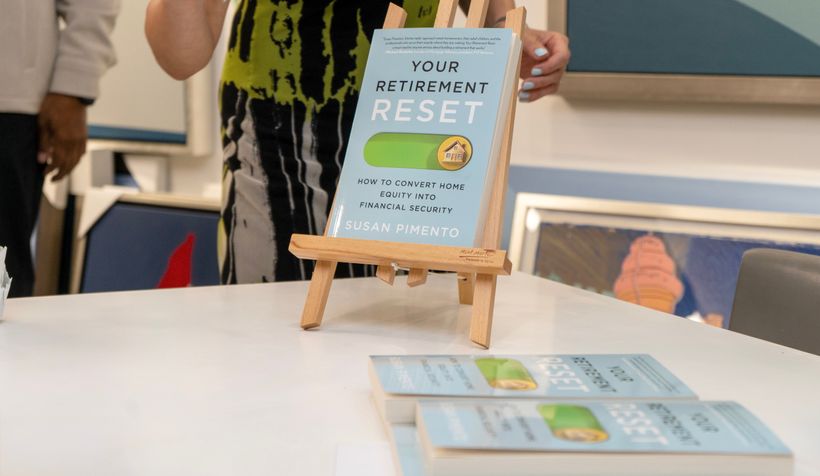
My Book is Available for Order: I hope you will consider ordering a copy of Your Retirement Reset for yourself, a friend, or someone you love. Published by ECW Press and is available through Indigo or Amazon and McNally Robinson. If you like supporting Canadian booksellers, check with your local independent bookstore too. Most can order it.