
U.S.-Iran Agreement May Be Easier to Sign Than Sustain, Says TCU Political Scientist

Recent negotiations highlight the political and diplomatic hurdles that remain between Washington and Tehran.

Jun 30, 2026

2 min

Ralph Carter

As reports emerge of a potential memorandum of understanding (MOU) between the United States and Iran, questions remain about whether any agreement can overcome decades of mistrust, competing national interests, and domestic political pressures.


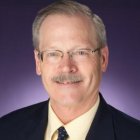
Ralph Carter is the Piper Professor of Political Science at Texas Christian University (TCU). focuses on Middle East conflicts, U.S. foreign trade and defense policy, with an emphasis on the roles played by Congress.


View his profile


According to Texas Christian University political scientist Ralph Carter, the details of the agreement and whether both sides ultimately accept those terms, will determine whether negotiations can move forward.


"We have to know what's in the MOU itself and whether both sides agree on that. If it's acceptable to both sides, then domestic politics on both sides enters the picture."


For the United States, Carter notes that President Trump is eager to secure a diplomatic victory while also maintaining his long-standing position on Iran's nuclear ambitions.


Carter says the administration faces competing pressures: demonstrating progress on national security, ensuring stability in global energy markets, and responding to economic concerns that matter most to American voters.


At the same time, Iran is unlikely to compromise on what it views as fundamental issues of sovereignty and national independence.


"Any Iranian regime, including this one, will insist on two things: Its territory is inviolate. It will not give it up. Its sovereignty is not negotiable."


While Tehran may be willing to accept inspections or limits on highly enriched uranium, Carter says Iran is unlikely to abandon its nuclear program entirely simply to satisfy U.S. demands. Economic sanctions and their impact on Iran's economy will also remain central to any negotiations.


The timeline may present another obstacle.


"A 60-day window after the MOU is signed probably isn't enough time to reconcile these differences."


As negotiations continue, Carter can provide expert analysis on U.S.-Iran relations, nuclear diplomacy, sanctions policy, Middle East security, international negotiations, and the domestic political considerations influencing both governments.


Ralph Carter is available to discuss U.S.-Iran relations, nuclear negotiations, international diplomacy, sanctions policy, and Middle East politics.

Connect with:
Ralph Carter

Ralph Carter

Piper Professor, Political Science

Professor Carter focuses on Middle East conflicts, U.S. foreign trade and defense policy, with an emphasis on the roles played by Congress.

Middle EastRussiaInternational RelationsWar & ConflictForeign Policy
Powered by

You might also like...

Check out some other posts from Texas Christian University

Fewer Essays, Fiercer Odds: The New College Application Math featured image

2 min

Fewer Essays, Fiercer Odds: The New College Application Math

A growing number of top colleges — including Tulane, Washington University in St. Louis, and UNC Chapel Hill — are trimming or eliminating supplemental essays, citing student stress and the rise of AI-assisted writing that makes it harder to tell who actually wrote an application. But the shift comes with a catch: fewer barriers to applying tend to mean more applications and lower admit rates. The Wall Street Journal explored the trend, and pointed to Texas Christian University as a case study already living the tradeoff. Heath Einstein is Vice Provost for Enrollment at Texas Christian University, now in his 13th year at TCU after previously serving as dean of admission and director of freshman admission. With more than two decades in admission and college counseling, he is a frequent speaker at national conferences and a voting delegate to the National Association for College Admission Counseling's Assembly, the governing body that sets national admissions-practice standards. He has chaired Texas ACAC's Government Relations and Advancement committees, received the association's Founders' Award, and served as Board Chair of ACCEPT: Admissions Community Cultivating Equity and Peace Today. His expertise spans cultural humility, shared governance, crisis management, staff development, and data analytics.  Einstein was recently featured in The Wall Street Journal article “Colleges Juice Application Numbers by Letting Students Write Fewer Essays” by Roshan Fernandez (July 10, 2026), which examines how cutting supplemental essays is reshaping admissions strategy nationally. “TCU said responses to the questions it cut—about its values and inclusivity—lacked originality. ‘You still see a narrowing to the mean,’ said Heath Einstein, vice provost of enrollment management. ‘Students are still going to respond in ways that they think we want to hear.’ Einstein said the school's aim in expanding application numbers is simply to increase enrollment, not lower its admit rate.” Einstein is available to speak with media on college admissions strategy, the impact of AI on application review, supplemental essays and holistic review, enrollment management, and higher-education leadership through crisis and change — all live issues as the 2026-27 application cycle takes shape. To arrange an interview or request a comment, click through to Heath Einstein's profile below.

The Truth About “Negative-Calorie” Cucumbers featured image

2 min

The Truth About “Negative-Calorie” Cucumbers

As summer temperatures climb, so does interest in cucumbers — crunchy, hydrating, and long rumored to be a “negative-calorie food” that burns more energy to digest than it provides. It's a claim that circulates every year in diet culture, but it isn't true. The New York Times recently set out to separate the nutrition science from the myth, and turned to registered dietitians for a clear-eyed answer. Dr. Gina Jarman Hill is a Professor and Chair of the Department of Nutritional Sciences at Texas Christian University. A Registered and Licensed Dietitian, she has worked as a clinical and consultant dietitian and is a member of the Hunger and Environmental Nutrition (HEN) and Dietitians in Integrative and Functional Medicine dietetic practice groups. Her teaching and research center on food and sustainability, nutrition ecology, community nutrition, and public health — with particular expertise in food security, urban agriculture, and hunger. She earned her BS, MS, and PhD in Food and Nutrition from Texas Tech University and was named the Texas Academy of Nutrition and Dietetics' Outstanding Nutrition Educator in 2017. Dr. Hill was recently featured in The New York Times article “How Healthy Are Cucumbers?” by Amanda Schupak (July 13, 2026), which examines what cucumbers do — and don't — offer nutritionally. Read the full article here. A 10.5-ounce unpeeled garden cucumber, for instance, contains just over one cup of water and 45 calories. Gina Jarman Hill, a professor of nutritional sciences at Texas Christian University, said there is a common misconception that cucumbers are “negative-calorie foods” — meaning they contain fewer calories than it takes to burn digesting them. “There’s no such thing as a ‘negative-calorie food,’” she said, but because the number of calories in cucumbers is so low, they’re about as close as you will get to one. As long as you’re mindful of what you pair them with, Dr. Hill said, there is no reason to curb your cucumber consumption. Dr. Hill is available to speak with media on nutrition myths, food security, sustainable and urban agriculture, community nutrition education, and healthy eating on a budget — timely topics as outlets continue to cover diet trends, food waste, and seasonal eating. To arrange an interview or request a comment, click through to Dr. Hill's profile below.

The Final Whistle: What Ronaldo’s World Cup
Exit Reveals About Letting Go featured image

2 min

The Final Whistle: What Ronaldo’s World Cup Exit Reveals About Letting Go

While the fans watched the final moments of Cristiano Ronaldo’s World Cup career, they were also witnessing something much deeper than the end of a match. They were seeing the psychological transition that every athlete eventually faces. Elite athletes spend decades developing an identity centered around training, competing, and performing at the highest level. When that chapter comes to an end, the challenge is no longer physical — it becomes psychological. It isn’t about walking away from the sport. It’s about redefining who they are without the game that has shaped so much of their life, and answering the question: who am I without sport? From a sport psychology perspective, successful retirement is defined by how well an athlete adapts to life after sport. Research shows that retirement is healthier when it is done proactively. Ideally, the athlete begins to develop interests outside of sport, builds a strong support system, and recognizes that their value extends beyond athletic performance. The goal is not to replace the identity of the “athlete” but to expand it. The skills that made them successful — discipline, leadership, and resilience — become the foundation for the next chapter. Retirement from elite sport is a process, not a single moment. For someone like Ronaldo, what makes this transition especially unique is that it happened on the world’s biggest stage. Elite athletes transition as millions watch, analyze every reaction, and say goodbye alongside them. It’s completely normal for athletes to experience mixed emotions— pride, gratitude, sadness, uncertainty, and even relief — all at the same time, as they reflect on the reality of closing a chapter that has defined much of their life. The end of an athlete’s elite career isn’t just about leaving competition. It’s about navigating a new sense of identity, discovering purpose beyond sport, and embracing a legacy that has impacted the sport and inspired generations. If you're covering stories on athlete retirement, identity, or the psychology behind the 2026 World Cup, connect with Robyn Trocchio. CONNECT WITH THE EXPERT Robyn Trocchio, Ph.D., CMPC Associate Professor and Graduate Program Director | Harris College of Nursing & Health Sciences, Kinesiology View Full Profile. Areas of expertise: Sport, exercise, and performance psychology · enhancing human performance from a psychophysiological perspective · attention allocation and perception of effort during physical activity · applied sport psychology research

View all posts