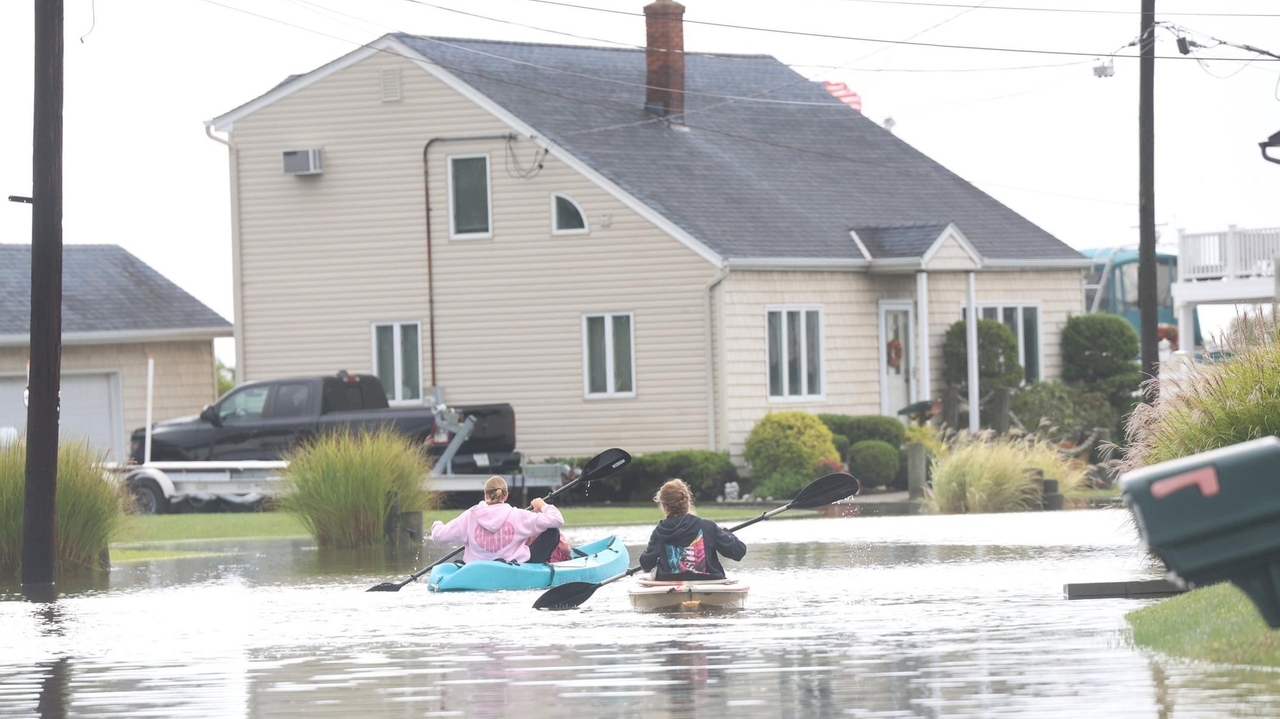
There are times when following your instincts in an emergency can put you in even greater danger. A swimmer caught in a rip current fights desperately toward shore, exhausting themselves when swimming parallel to the beach would carry them in seconds to safety. A driver caught in a sudden whiteout may instinctively slam on the brakes, turning a single dangerous moment into an multi-car pileup.
Jase Bernhardt, director of Hofstra's meteorology program and associate professor of geology, environment, and sustainability, is Hofstra's lead voice on rip current safety at Long Island beaches — what causes them, how to spot one before wading in, and the counterintuitive escape move that keeps swimmers from panicking themselves under. He's taken that safety mission past the beach-flag-and-pamphlet stage: Bernhardt builds virtual reality simulations that put students and the public inside a rip current, a Category 3 hurricane, a storm surge, and a snow squall, so the correct response is already muscle memory before anyone's actually in danger.
What he can speak to:
- Rip currents: how to identify one at a beach and why swimming parallel to shore (not against the current) is the move that saves lives
- Why VR training changes real-world behavior in a way a warning sign never does
- Hurricane risk — what his VR simulation teaches about wind and storm danger that a forecast graphic can't convey
- Snow squalls and storm surges: why "stay off the road" is the single best piece of advice, and why drivers still ignore it until conditions turn deadly
Reach Dr. Bernhardt through the Contact button on his profile below.