Cybersecurity Meets AI: Preparing the Next Generation for a New Kind of Digital Workforce

A $2 million NSF award will help Augusta University prepare students for careers at the increasingly important intersection of cybersecurity and artificial intelligence

Sep 10, 2026

3 min

Michael Nowatkowski, PhDAlexander Schwarzmann, PhD

Cybersecurity and artificial intelligence are rapidly becoming interconnected – creating new opportunities, new vulnerabilities and a growing need for professionals who understand both.


At Augusta University, a new $2 million grant from the National Science Foundation will help prepare the next generation of professionals to work at that intersection.


The School of Computer and Cyber Sciences received the award through the NSF’s Artificial Intelligence and Cybersecurity Education Innovation and Scholarship for Service Program. The funding will support Augusta University Government-Ready Experts in Resilient CyberAI, or AUGER CyberAI.


Michael Nowatkowski, PhD, professor and director of Augusta University’s Cyber Institute and head of Cyber Programs of Study, is the project’s principal investigator.


The program reflects a fundamental shift in cybersecurity education. AI can be used as a tool to strengthen cybersecurity, but AI technologies themselves must also be secured. Augusta University is responding by integrating more AI into its cybersecurity curriculum, rather than treating the two disciplines as entirely separate fields.


Participating undergraduate, master’s and doctoral students will take at least four cybersecurity courses and two artificial intelligence courses. Students can receive up to three years of funding covering tuition and fees, along with annual stipends of $27,000 for undergraduate students and $37,000 for graduate students.


In return, graduates will put those skills to work in public service, with participants required to work for a federal executive branch agency for the same number of years they receive funding. If federal employment is unavailable, the obligation can be fulfilled through state or local government employment.


“As cybersecurity and artificial intelligence become more interconnected, we have a responsibility to prepare students with the knowledge and experience needed to meet the evolving needs of the workforce.” – Alex Schwarzmann, PhD


Schwarzmann, dean of Augusta University’s School of Computer and Cyber Sciences, says AUGER CyberAI will allow the university to invest in students while mentoring a new generation of professionals prepared to serve the nation.


The first cohort will begin in fall 2026, with approximately seven students expected in the inaugural group and another seven anticipated in 2027.


Experts on Cybersecurity, AI and the Workforce


Michael Nowatkowski is a leading cybersecurity expert whose areas of expertise include defensive cyber operations, cyber operations education, control system security, medical device security and information assurance. He can provide insight into how AI is changing cybersecurity, the skills future cyber professionals will require and how universities can prepare students for an evolving threat environment. View his profile


Alex Schwarzmann is a nationally recognized expert in computer science, cybersecurity and distributed systems. His research has been supported by numerous grants from the National Science Foundation and other agencies, and he can provide perspective on computer science education, the changing technology workforce and the growing intersection between AI and cybersecurity. 

View his profile


For journalists covering artificial intelligence, cybersecurity, cyber threats, technology education, workforce development, government cybersecurity or the future of the technology workforce, Nowatkowski and Schwarzmann can provide expert analysis and perspective.


If you’re interested in speaking with Michael Nowatkowski, PhD, or Alex Schwarzmann, PhD, about cybersecurity, artificial intelligence and preparing the next generation of cyber professionals, click on their profiles below.

Connect with:
Michael Nowatkowski, PhD

Michael Nowatkowski, PhD

Professor; Director, AU Cyber Institute

A leading cybersecurity expert available to discuss online security, ransomware, and device security topics.

Hardware and Embedded SystemsCellular and Mobile TechnologyDefensive Cyber OperationsCyber Operations EducationTCP/IP Protocol Analysis
Alexander Schwarzmann, PhD

Alexander Schwarzmann, PhD

Dean of the School of Computer and Cyber Sciences

Dean Schwarzmann is a nationally-recognized expert in cybersecurity of voting technology, computer science, and distributed systems.

Cybersecurity of Voting TechnologyComputer Science Research and EducationDistributed Systems
Powered by

You might also like...

Check out some other posts from Augusta University

AI Can Do a Lot. But Can It Replace Your Dental Hygienist? featured image

1 min

AI Can Do a Lot. But Can It Replace Your Dental Hygienist?

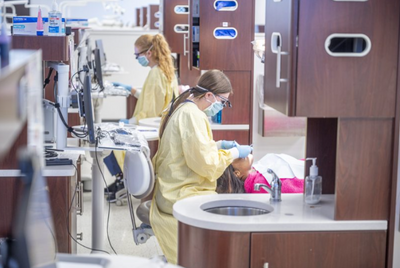
Artificial intelligence is transforming the workplace, including healthcare. But when it comes to dental hygiene, technology still cannot replicate the empathy, judgment and personal connection that patients depend on. Meghan Watkins, a dental hygiene instructor at Augusta University's Dental College of Georgia, believes the profession offers a compelling example of why human skills remain essential in an increasingly automated world. In a recent article, Watkins explains how dental hygienists do far more than clean teeth. They recognize subtle changes in oral health, assess potential risks, educate patients and develop relationships that often span years. “I don’t think a robot will take into consideration a patient’s feelings, or if something is uncomfortable or painful,” Watkins explains. “I will. I want them to come back and see me.” And the profession is growing. Federal projections anticipate 7% employment growth over the next decade, with a median annual salary of $90,670 in 2024. As AI raises questions about which jobs might disappear and which will endure, dental hygiene offers an interesting perspective on the future of work: technology can improve the tools, but it cannot replace the person providing compassionate, individualized care. For journalists exploring AI's impact on employment, the future of health care, or careers that depend on uniquely human skills, Meghan Watkins offers a valuable perspective on why dental hygiene remains essential. If you're interested in speaking with Meghan Watkins contact AU's External Communications Team mediarelations@augusta.edu to arrange an interview today.

Diabetes Awareness Month: Why Early Action Could Change Millions of Lives featured image

3 min

Diabetes Awareness Month: Why Early Action Could Change Millions of Lives

World Diabetes Day is Nov. 14 and the theme for 2026-2027 is Early Action. Worldwide, one out of nine adults are currently living with diabetes and in the United States, over 40 million people have diabetes. However, many people are undiagnosed and remain aware of their risk of diabetes. Currently, 635 million adults worldwide are at high-risk for diabetes and 12 million persons in the United States are undiagnosed. Undoubtedly, we have a lot of work to do. Early action and prevention are key in the fight against the epidemic of diabetes. Early action "accelerates care, reduces the risk of diabetes, and leads to better health for all." As a nurse for the past 40 years, I have provided care for countless people living with type 2 diabetes. I have witnessed the struggles of people living with diabetes and the many associated complications that can occur. Diabetes can be a very devastating disease, but I am hopeful that there are new emerging treatment options for diabetes, such as GLP-1 medications, and new user-friendly technologies, including the use of continuous glucose monitoring. Lynn Glenn's research and practice promotes high quality, equitable health care and enhanced outcomes in underserved, diverse communities. View her profile Since being at Augusta University, I have focused my efforts on diabetes prevention in younger adults and rural populations. I have developed an adaptation of the Diabetes Prevention Program that incorporates flexibility and socioecological needs amidst competing priorities in young adulthood. My objectives also include improving access to screening and early detection of diabetes which have been implemented in several community events and health fairs, as well as other non-traditional settings. I have addressed the need for enhanced access for persons at high-risk for diabetes, such as Hispanic populations, at the annual AU College of Nursing Costa Layman International Health Outreach Fair and diabetes screening of Hispanic adults at the Dental College of Georgia. Most recently, I am working in partnership with Georgia Center for Diabetes Translational Research at Emory University to advance the science of diabetes prevention research. For Diabetes Month in November, TAKE ACTION and consider the following: Increase awareness of diabetes risk with friends and family members. Know your risk factors for diabetes and take the diabetes risk test. Approximately 115 million people and more than 42% of adults 18 years and older have prediabetes and at high for developing diabetes in the future. Encourage others to get diabetes screening. Almost one-third of adults with diabetes are undiagnosed or unaware of their condition. With the latest recommendations, more than 11 million adults are now eligible for diabetes screening. All adults aged 35 years and older should undergo screening for prediabetes and diabetes annually. Regardless of age, adults should undergo screening for prediabetes and diabetes if they have risk factors such as being overweight/obese, family history of diabetes, history of gestational diabetes (diabetes in pregnancy), or history of high blood pressure or hear disease. Participate in or organize a community-based screening for diabetes. Local events are an easy, non-threatening alternative to traditional health care office visits to receive preventive screenings. Advocate for increased awareness, screening, and early detection of diabetes in your local community. Increase equitable access to healthy food and physical activity at home and work. There is strong evidence that a healthy lifestyle has numerous benefits, such as prevention of cancer, diabetes, and other chronic conditions. We spend a large proportion of time outside the home, yet our workplace environments may not be conducive to our health, such as prolonged sitting time, inadequate time or access to healthy meals, and a high burden of stress. Try to make healthier choices, such as less sitting time, eating healthier meals and snacks, and having quick exercise "snacks" at work. More research is needed to understand how healthy workplace environments can have a positive impact on health outcomes. Please help support people at risk or living with diabetes and TAKE ACTION! Connect with an Expert Dr. Lynn Glenn, PhD, MSN, of Augusta University's College of Nursing, is available to speak with media about diabetes prevention, early detection, emerging treatments and the importance of expanding access to screening, particularly among younger adults, rural communities and underserved populations. To arrange an interview or learn more about her research, click Dr. Lynn Glenn's ExpertFile profile below.

Cuba Opens the Door to Tourism Investment - But Will Anyone Walk Through? featured image

2 min

Cuba Opens the Door to Tourism Investment - But Will Anyone Walk Through?

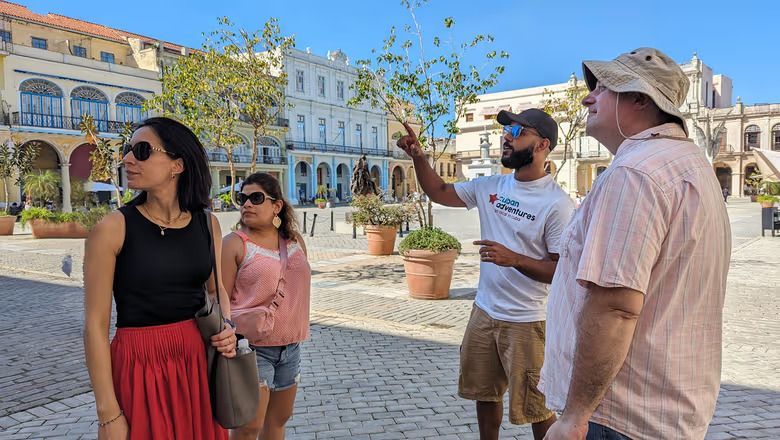
Cuba is making a significant move to revive its struggling tourism industry, opening the door to foreign investment, private hotel ownership and greater participation by independent businesses. But will these changes be enough to bring tourists and investors back to the island? That's the question being examined by Dr. Paolo Spadoni, associate professor of political science at Augusta University, in a recent Travel Weekly article titled Experts laud Cuba reforms but don't see quick travel rebound, published Oct. 26. The reforms would allow hotels to become fully foreign-owned and private businesses to operate travel agencies, tour companies and car rental services. While the changes represent a departure from Cuba's traditionally state-controlled tourism model, Spadoni cautions that the economic and political environment remains a major obstacle. Paolo Spadoni, a recognized authority on Cuba's political economy and co-author of the 2025 book The Cuban Tourism Industry: Evolution, Challenges and Prospects, told Travel Weekly that the reforms are necessary but arrive at a particularly difficult moment. View his profile They want to change the model, which is, I think, a good thing to do, but the conditions are not there now to actually reap the benefits,” Spadoni told Travel Weekly. He also warned that attracting substantial foreign investment remains unlikely under current conditions, pointing to the departure of international hotel operators, declining visitor numbers and continuing U.S. economic restrictions. Spadoni noted that U.S. tourist arrivals between January and August were just 9.9% of their levels during the same period in 2019. He also explained that Cuba's state-controlled tourism model was showing signs of exhaustion even before the pandemic. His analysis raises important questions about the future of one of Cuba's most important industries, the potential for private-sector growth and whether economic reforms can succeed without broader changes in U.S.-Cuba relations. For journalists covering international tourism, foreign investment, economic reform or U.S.-Cuba relations, Dr. Spadoni offers timely insight into the challenges facing Cuba and what it will take to rebuild its tourism economy. An internationally recognized expert on Cuba, Spadoni specializes in Latin American political economies, international relations, foreign investment and U.S.-Cuba relations. To arrange an interview or connect with Dr. Paolo Spadoni, visit his ExpertFile profile below.

View all posts