You might also like...
Check out some other posts from Rensselaer Polytechnic Institute

When you're running up stairs or out on a jog, your muscles eventually start to feel heavy and weak. That's fatigue setting in, a sign that the muscles’ energy reserves are becoming depleted. But a team of researchers led by Rensselaer Polytechnic Institute (RPI) biology professor Doug Swank, Ph.D., have discovered something surprising: certain muscle fibers have a built-in backup system that fights back against fatigue, potentially helping us keep going when we'd otherwise have to stop.
The secret lies in a phenomenon called "stretch activation": when a muscle is stretched just before it contracts, it can produce a short burst of extra force. Stretch activation has been studied extensively in the context of insect flight muscle and heart muscle contraction in mammals, but its effects have long been assumed to be physiologically irrelevant for the big skeletal muscles we use for day-to-day activities like walking around.
The new study, published in the Journal of General Physiology, shows that assumption was wrong, at least when it comes to certain fast-twitch muscle fibers used to produce quick, powerful movements.
“For decades, stretch activation in skeletal muscle was considered physiologically insignificant because it contributes a relatively small amount of force under normal conditions," Swank said. "But we realized no one had tested what happens during fatigue, when the chemical environment inside muscle fibers changes significantly." The researchers tested individual muscle fibers from mice under three conditions: normal, early fatigue (with chemical changes that mimic the state of tired muscles), and severe fatigue. They found that while the fibers' normal force production dropped dramatically as expected, in certain fibers the stretch-activated force stayed the same or even increased.
In the most fatigued state, stretch activation contributed up to 30% of the total force these fast-twitch fibers were generating.
“What was dismissed as too small to matter may actually be an important fatigue-fighting mechanism that's been hiding in plain sight,” Swank said. The effect was specific to fast-twitch fibers, which are used to generate rapid, powerful movements like sprinting and jumping. Slow-twitch fibers, which are used during endurance tasks like long-distance running or cycling, are more fatigue-resistant to begin with, and showed almost no stretch activation response.
Understanding how muscles naturally combat fatigue could eventually inform strategies for improving strength and endurance, whether for athletes, people with muscular disorders, or patients recovering from injury.
Swank and his colleagues are following up on their findings by conducting more detailed explorations of how stretch activation contributes to force generation in both low-intensity and high-intensity exercise. The research is funded by a five-year, $2.7 million National Institutes of Health grant to Professor Swank.
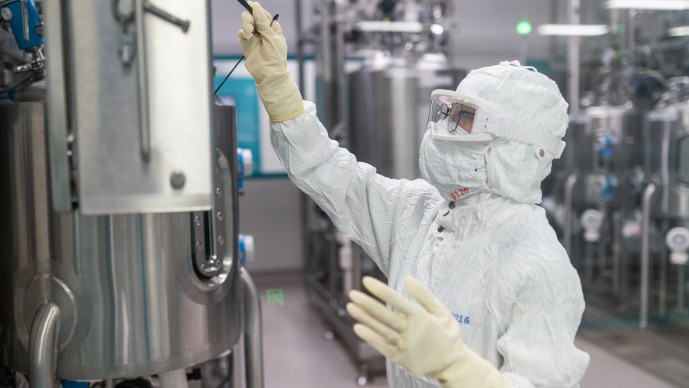
Professor Todd Przybycien, Ph.D., head of RPI’s Department of Chemical and Biological Engineering, has been awarded a $3.1 million share of a Gates Foundation Global Grand Challenge grant to advance exceptionally low-cost monoclonal antibody (mAb) manufacturing.
Monoclonal antibodies have proven effective at treating a wide range of conditions, including infectious diseases like COVID-19, autoimmune disorders, and certain types of cancer. But they are expensive to produce, and current market prices of $50 to $100 per gram put them effectively out-of-reach for millions of people around the world.
The goal of the Gates Grand Challenge is to reduce the price of mAbs to just $10 per gram. Last month, the Gates Foundation announced $10.5 million in funding to a team led by the National Institute for Innovation in Manufacturing Biopharmaceuticals (NIIMBL) in order to achieve that goal. Professor Przybycien’s group is part of that team and will focus on improving the process of purifying monoclonal antibodies after they have been produced by engineered cells.
“Optimization and intensification of the downstream purification process offer the exciting possibility of breaking through to the $10/g overall target,” Przybycien said. “We are excited to advance the precipitation-based process we have developed with our collaborator at Penn State as part of the manufacturing solution to sustainably meet the global need for monoclonal antibodies.” Przybycien is an internationally recognized researcher in biomanufacturing and applied biophysics, focusing on developing processes to manufacture recombinant proteins, mRNA, and viral vectors. He has won numerous awards including the NSF CAREER Award and the Camille Dreyfus Teacher-Scholar Award. He is also a fellow of the American Chemical Society, AIChE, and AIMBE.
“This grant is a testament to the years of work Todd Przybycien and his team have done to optimize and improve biopharmaceutical manufacturing processes,” said Shekhar Garde, Ph.D., the Thomas R. Farino, Jr. ’67 and Patricia E. Farino Dean of the School of Engineering. “It will pave the way for affordable access to lifesaving medications for millions of people who desperately need them.” “We are excited by the opportunity to demonstrate that there are existing solutions developed by industry and academic partners that can significantly reduce cost of goods and accelerate timelines,” said Kelvin Lee, NIIMBL Institute Director. “We are honored to receive this grant from the Gates Foundation, which will enable this exceptional team to deliver meaningful advances to antibody production efficiency.” This Gates Grand Challenge was established in honor of Dr. Steve Hadley, who championed the reduction of mAbs costs to make them affordable in low- and middle-income countries.
The team’s first target will be a monoclonal antibody to treat malaria, an infectious disease which kills more than half a million people each year, primarily in Africa.

The School of Science at Rensselaer Polytechnic Institute (RPI) has launched a new minor in quantum computing, positioning students at the forefront of one of the most rapidly developing fields in technology. The minor leverages RPI's unique status as the first university in the world to house an IBM Quantum System One on campus, providing students with unprecedented access to utility-scale quantum computing technology.
The minor, which is now available to all currently enrolled students, requires four courses drawn from physics, computer science, mathematics, and engineering. The curriculum provides both theoretical foundations and practical exposure to quantum hardware and software, and gives students a leg up in a field rapidly approaching quantum advantage — the point at which quantum systems outperform classical computing approaches on meaningful tasks.
"The quantum computing minor will augment the training of RPI students with insight into an emerging technology that will reshape industries from pharmaceuticals to artificial intelligence," said Steven Tait, Ph.D., Dean of the School of Science. "With direct access to the IBM Quantum System One, our students will gain hands-on experience with cutting-edge tools that are not yet widely available. This minor equips them with the interdisciplinary foundation needed to understand and contribute to quantum-enabled innovation." The minor arrives at a pivotal moment in quantum computing's evolution. IBM's demonstration of quantum utility in 2023 marked the beginning of an era in which quantum systems serve as scientific tools to explore complex problems in chemistry, physics, and materials science — areas where quantum advantage offers transformative potential.
Hannah Xiuying Fried, graduating this December, is one of the first students to declare the minor. “I'm not a physics or computer science major, so it allows me an accredited way to prove a relevant background to future employers,” she said. “It prepares me for graduate school where I plan to continue pursuing quantum hardware research.” Currently enrolled students may declare the minor now and pursue it alongside their established degree programs. Interested students should contact Chad Christensen at sciencehub@rpi.edu.



