Researchers urge: Learn from (someone else’s) experience

Oct 29, 2020

3 min

Kristy Towry

Measuring your performance as a business is critical. If you want to grow and be successful, you need to understand what you do well—and not so well. To paraphrase a couple of old adages, we all learn from our mistakes and our experience.


But in today’s bumpy and fast-changing business landscape, measuring performance can be tough; tougher still if yours is a complex organization or industry.

Whatever you’re looking at to gauge your firm’s performance—whether it’s customer satisfaction, say, or repeat purchases—your measures might well be less than perfect. And that’s because of noise—abstruse or unreliable data that makes it hard to unpack key metrics accurately and to learn from them.


How successful a firm is in negotiating this performance measure noise depends on how that firm learns, said Kristy Towry, John and Lucy Cook Chair and professor of accounting at Goizueta Business School.


She has led a study that looks at the way organizations and the people in them manage their learning. And she finds that we’re way more adept at cutting through the noise when we learn from each other, rather than basing our learning on our own firsthand experience.


What the study found:


What Towry and her colleagues found was that when there’s a lot of noise in the data we’re working with, our strategic learning is considerably improved when our learning is vicarious—that’s to say, when we learn from each other.


This is down to how much of the big picture we see, said Towry. And experiential learning can make us myopic.


“We know from psychology and from the results of this study that experiential learning—basing what we learn mainly off our own firsthand experience—can limit us. Experience tends to make us over-focus on what is happening in the here and now or what has just happened. We forget what happened before and don’t build that into our decision-making.”


Vicarious learning, on the other hand, helps us to see the bigger picture. “When we’re learning from each other, it’s also experiential, but the learning is augmented by other people’s experience, meaning that we have a broadened perspective," said Towry. "We’re better able to see the big-picture patterns and trends.”


When there’s a lot of noise and complexity to negotiate, vicarious learning helps us make better decisions. And this has huge implications for businesses operating in today’s environment.


“Our world is not cut and dried at the best of times. Right now we are dealing with the COVID-19 crisis and the fallout on world economies and trade. The business context for most firms operating in this context is very far from stable, so we can assume there’s a lot of complexity and noise affecting our performance indicators. And with so much change afoot, the experiences we are all having in the workplace are what I would call fairly idiosyncratic,” said Towry. “Business leaders should be very aware of this.”


To optimize strategic learning and thrive in complexity, firms need to find ways to allow vicarious learning to happen, she said.


That means thinking about how to break down barriers to knowledge sharing, be they organizational silos or emerging challenges associated with things like remote working. Sharing information, insight, and understanding is essential.


Kristy L. Towry is John and Lucy Cook Chair and Professor of Accounting at Emory University's Goizueta Business School. To learn more about this research or to talk with Kristy – simply click on her icon now to arrange an interview today.


Connect with:
Kristy Towry

Kristy Towry

Professor Emerita of Accounting
Managerial AccountingInternal AuditBehavioral Economics
Powered by

You might also like...

Check out some other posts from Emory University, Goizueta Business School

GTA VI Isn't Just a Video Game. It's a Cultural and Economic Juggernaut. featured image

2 min

GTA VI Isn't Just a Video Game. It's a Cultural and Economic Juggernaut.

After more than a decade of anticipation, Grand Theft Auto VI has finally arrived, and gamers around the world are celebrating one of the biggest entertainment launches in history. As media across the planet are reporting, fans across the globe are diving into the latest installment of the enormously popular franchise, turning its release into an international cultural event. But the real story may be much bigger than the game itself. Michael Lewis, Professor of Marketing at Emory University's Goizueta Business School, studies fandom, consumer behaviour and the economics of entertainment. He believes the GTA VI launch offers a remarkable illustration of how video games are transforming both the entertainment business and the cultural experiences that connect generations. View his profile Covering? We can help. Lewis offers several compelling perspectives for journalists covering the launch: A multibillion-dollar opening act: Estimates for GTA VI's first-week revenue range from approximately $3 billion to more than $5 billion, placing the launch among the most significant commercial events in entertainment history. Rivaling the world's biggest entertainment properties: Projections of approximately $15 billion in lifetime revenue put GTA VI in extraordinary company. Lewis compares that potential with estimated revenues of $9 billion to $11 billion associated with the 2026 FIFA World Cup, illustrating the enormous commercial scale gaming has achieved. The changing face of fandom: Sports, movies and music have traditionally dominated popular culture. Gaming is increasingly competing for that same attention, loyalty and emotional investment, particularly among younger generations. A new cultural language for Gen Z: Understanding today's youth culture may require greater familiarity with Minecraft and Fortnite than with the latest Hollywood blockbuster. Gaming experiences are becoming central to how younger audiences connect, communicate and identify with popular culture. When entertainment worlds transcend categories: Lewis sees the rise of shared narrative universes, where characters and fictional settings move between video games, scripted entertainment and consumer products. In this evolving cultural landscape, GTA characters Lucia Caminos and Jason Duval could become recognizable reference points alongside Spider-Man, Darth Vader, Indiana Jones and Taylor Swift. The bigger question is no longer whether video games can compete with Hollywood or professional sports. It's whether gaming is becoming one of the defining cultural forces of a generation. For journalists exploring GTA VI's economic impact, the changing nature of fandom, Gen Z consumer behavior or the future of entertainment, Lewis offers a research-driven perspective on a story that extends well beyond the gaming industry. To arrange an interview or connect with Michael Lewis, see his ExpertFile profile below.

Inside the Holiday Season: Goizueta Experts on Spending, AI and Scams featured image

1 min

Inside the Holiday Season: Goizueta Experts on Spending, AI and Scams

As the holiday season ramps up, Emory University’s Goizueta Business School experts are available to help media unpack the stories behind the shopping, from tariffs and Black Friday pricing to AI gift guides and the psychology of giving. Goizueta’s Holiday Experts Hub brings together economists, marketers and consumer psychology researchers who can provide timely insight into the economic, behavioral and technological forces shaping how consumers spend and how retailers respond. Featured Topics The Holiday Economy: Spending, Prices and Retail Expectations How tariffs, affordability and consumer confidence are shaping holiday budgets, Black Friday deals and retailers’ fourth-quarter expectations. The Psychology of Holiday Shopping: Gifts, Pressure and Purpose Why we spend more than we intend, what makes a gift meaningful, and how stress, scarcity and promotional pressure shape what ends up in the cart. AI and the Future of Holiday Shopping How AI shopping assistants and gift guides are changing the way consumers find products and retailers personalize the experience, and how much those recommendations can be trusted. The Hidden Risks and Costs of Holiday Shopping Why AI-powered scams are getting harder to spot, and how the surge in online returns is creating costly challenges for retailers. Media can visit Goizueta’s Holiday Experts Hub to explore available experts and connect directly with the right source for their story.

Why Negative Political Ads Work -  And When They Backfire featured image

2 min

Why Negative Political Ads Work - And When They Backfire

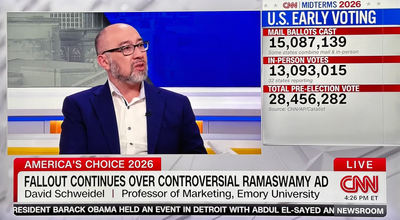
With the U.S. midterm elections approaching, political campaigns are increasingly turning to negative advertising, emotional appeals and artificial intelligence to influence voters. But how effective are these tactics, and when might they do more harm than good? David Schweidel, Professor of Marketing and Roberto C. Goizueta Professor in Business Technology at Emory University's Goizueta Business School, joined CNN Newsroom anchor Fredricka Whitfield on October 25 to examine the psychology behind political attack ads and the growing influence of AI-generated campaign content. View his profile Schweidel, whose research includes political marketing, consumer behaviour and digital advertising, explained why negative messages often have a greater impact on voters than positive campaign advertising. The Power of Negative Advertising Research suggests that advertisements designed to provoke fear or anger can be particularly effective at capturing attention, influencing voter preferences and motivating people to cast their ballots. As Schweidel explained during the CNN interview: "That's what the research has shown, that negative ads tend to stick with people longer than positive ads, getting them more likely to show up at the polls. So increasing voter turnout and moving the needle when it comes to share of the vote." However, the effectiveness of negative advertising comes with risks. Campaigns that push emotional messaging too far may alienate the very voters they hope to persuade. Schweidel noted that economic frustrations, including rising costs for groceries, health care and gasoline, have created an environment in which political campaigns are eager to capitalize on voter anger. AI Adds a New Dimension The conversation also explored the increasing use of artificial intelligence in political advertising, particularly the ability to create realistic images and messages that may mislead audiences. Schweidel warned that voters who encounter these advertisements casually may not take the time to verify their accuracy. Even brief exposure to misleading content can leave a lasting impression, particularly when subsequent advertisements reinforce the same message. The emergence of AI-generated political advertising raises important questions about transparency, authenticity and the ability of voters to distinguish legitimate campaign messages from manipulated content. An Expert Perspective for Election Coverage As campaigns intensify ahead of Election Day, Schweidel's research offers valuable insight into why political advertisements resonate with voters, how emotional appeals influence political behaviour and the implications of AI for election communications. His expertise spans political marketing, artificial intelligence, social media analytics and consumer behaviour, making him a valuable resource for journalists examining the changing landscape of political advertising. David Schweidel is available to speak with media about negative political advertising, voter psychology, AI-generated campaign content and the effectiveness of political messaging. To arrange an interview or connect with David Schweidel, click on his profile below.

View all posts