Aston University Pathway to Healthcare programmes shortlisted in Student Social Mobility Awards

May 17, 2022

2 min


  • Pathway to Healthcare programmes shortlisted for University Access Initiative in the 2022 Student Social Mobility Awards
  • University Access Initiative of the Year Award judged by student vote and panel
  • Aston University Pathway to Healthcare programmes were shortlisted from more than 250 nominations.


The Aston University Pathway to Healthcare programmes have been shortlisted for the University Access Initiative of the Year Award in the 2022 Student Social Mobility Awards.


The Pathway to Healthcare programmes which launched in 2016 are designed to raise students’ aspirations, support their attainment, improve progression and provide experiences to enhance UCAS applications when applying for medical and other healthcare courses.


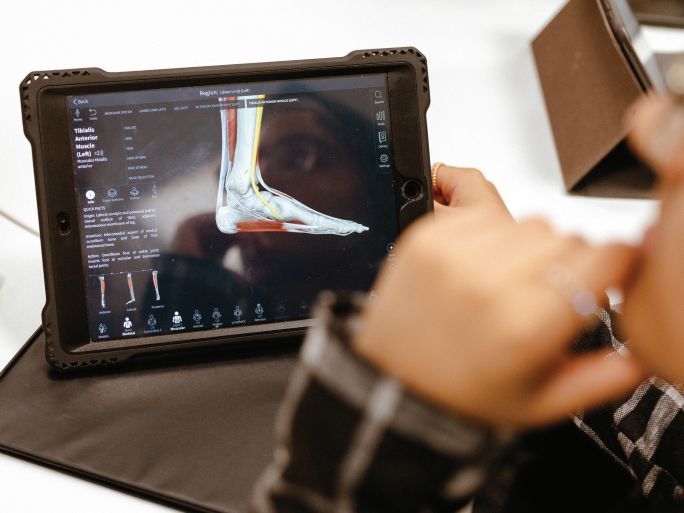
During the 18-month programme, students are given the opportunity to take part in healthcare subject taster days, work experience in various healthcare settings and A level revision boot camps.


Following the success of the first pathway programme for Year 12/13, the Keith Bradshaw Introduction to Healthcare programme was launched in 2019 to work with key stage three to key stage four students across the West Midlands.


The University Access Initiative of the Year Award will be decided by a combination of the Judging Panel’s scores (50%) and the Student Vote (50%).


The Aston University Pathway to Healthcare programmes were shortlisted from more than 250 nominations.


Sarah Fullwood, pathways manager at Aston University, said: “We are delighted we have been shortlisted for this prestigious award.


“Our pathway programmes are going from strength to strength, despite a sector-wide dip in engagement for widening participation programmes during the pandemic, which is why we were so thrilled to experience an increase in attendance at our pathway events.”

“By breaking down barriers for access for disadvantaged students, the programmes play a vital role in building a future workforce that is representative of the community it serves.”


The Student Social Mobility Awards are organised by upReach to showcase the achievements of undergraduates from lower socio-economic backgrounds from across the UK.


The awards seek to recognise students who have excelled in their studies and beyond and shown great potential to excel as they launch their careers.


The focus of the awards is on students who have demonstrated great resilience, determination or initiative, or boosted their employability in innovative ways. They are also a chance to showcase up-and-coming talent and identify rising stars.


Award winners and nominees overcome significant socioeconomic barriers and mitigating circumstances, serving as inspiring role models for those from similar backgrounds.


The ceremony is due to take place on 21 July at the House of Lords, where the winners will be announced.


For more information about the Pathway to Healthcare programmes at Aston University please visit our webpages.

Powered by

You might also like...

Check out some other posts from Aston University

2 min

Medication adherence: Why it matters and how we can improve it – public lecture by Professor Ian Maidment

Professor Ian Maidment is a professor in clinical pharmacy at Aston Pharmacy School His inaugural lecture will explain why patients struggle with taking medication and present possible solutions to the problem Professor Maidment is a former practising pharmacist and an expert in medication optimisation and management in mental health and dementia. Professor Ian Maidment, professor in clinical pharmacy at Aston Pharmacy School, will give a public lecture about his life’s work on 5 February 2025. In his inaugural lecture, Professor Maidment will reflect on his journey from a childhood in Kent to becoming a leading researcher in clinical pharmacy. After more than two decades working in the NHS, in community pharmacy, mental health, dementia care, and leadership roles, he joined Aston University in 2012. His research focuses on the real-world challenges of medication optimisation for patients, carers, and healthcare professionals. The title of Professor Maidment’s lecture is ‘Medication adherence: Why it matters and how we can improve it’. Every year, the UK spends nearly £21 billion on medicines. Yet up to half of people with long-term conditions do not take their medication as prescribed—a problem known as non-adherence. This has profound clinical consequences and significant financial implications for the NHS. Professor Maidment will draw on his experience to explore how factors such as medication burden and side-effects influence adherence, the challenges posed by conditions such as dementia and severe mental illness, the role of pharmacy in supporting adherence and why tackling non-adherence requires a system-wide approach. He will also offer practical solutions to one of healthcare’s most persistent problems. Professor Maidment said: “We need to understand why patients struggle to take their medication and then develop and test solutions that work well.” The lecture on Thursday 5 February 2026 will take place at Aston Business School. In-person tickets are available from Eventbrite. The public lecture will begin at 18:00 GMT with refreshments served from 17:30 GMT. It is free of charge and will be followed by a drinks reception. The lecture will also be streamed online.

3 min

New research partnership to develop biodegradable gloves from food waste for healthcare sector

Knowledge Transfer Partnership between Aston University and PFE Medical to develop a biodegradable clinical glove from food waste The gloves will provide a low-cost, convenient and sustainable alternative to the 1.4bn disposable gloves used in the NHS each year The innovation will reduce clinical waste and costs and help the NHS reach its net zero goals. Aston University and Midlands-based company PFE Medical are teaming up to create biodegradable gloves made from food waste for use in the NHS. They will offer a low-cost, convenient alternative to disposable gloves without compromising patient safety. More than 1.4bn disposable gloves are used by the NHS each year. They create large volumes of clinical waste which has both an environmental and economic cost. The Knowledge Transfer Partnership (KTP) project will develop a more sustainable alternative made from polymers derived from food waste such as orange peel, able to degrade naturally. The gloves will initially be for use during low-risk tasks such as ultrasound scans, rather than in more critical situations such as operating theatres. The gloves would be designed to not only reduce clinical waste and costs in the NHS, but also carbon emissions, helping the NHS reach its goal to be the world’s first net-zero health service. With most personal protective equipment (PPE) currently sourced from Chinese manufacturers, the goal is to develop a biodegradable glove that can be manufactured using a UK supply chain. The challenging project draws on Aston University’s expertise in sustainable polymer chemistry, centred at Aston Institute for Membrane Excellence (AIME). Aston University has one of the largest research groups of polymer chemists in the UK. The project will be led at the University by Professor Paul Topham, director of AIME, and Dr James Wilson, AIME associate member. The research team have chosen to focus on polymers from food waste in order to ensure that the final product can be manufactured sustainably. Most polymers are currently made from petroleum. Polymers made from food waste, ranging from fruit waste to corn or dairy products, have the potential for antioxidant and antibacterial properties if designed appropriately. The team will manipulate the polymer molecules so that they include the right monomers (the smaller units which make up the molecules) in the right location to achieve the properties they require. Critical to the success of the project will be PFE Medical’s commercial and clinical experience of taking new innovations into medical use. It will be the third KTP between Aston University and PFE, following on from successful projects to develop an automated endoscope cleaner, now in use across University Hospitals Birmingham NHS Foundation Trust (UHB). Professor Topham said: “At Aston University, we have a long history of working with industry, of translating fundamental research into solutions for real world problems. This project with PFE Medical provides us with that route, to take our science and engineering and make a difference to peoples’ lives. That’s exactly where, as researchers, we want to be.” Rob Hartley, CEO of PFE Medical, said: “Our previous KTP with Aston University was a phenomenal success, thanks to the brilliant team we had on board. I’m just as excited by this project, which is looking to solve an equally long-standing problem. If we can achieve our goal, then the implications are huge, going far beyond the NHS to all the other situations where people are wearing disposable gloves.” KTPs, funded by Innovate UK, are collaborations between a business, a university and a highly qualified research associate. The UK-wide programme helps businesses to improve their competitiveness and productivity through the better use of knowledge, technology and skills. Aston University is a sector-leading KTP provider, ranked first for project quality, and joint first for the volume of active projects. For further details about this KTP, visit the webpage: www.aston.ac.uk/business/collaborate-with-us/knowledge-transfer-partnership/at-work/pfe-medical.

2 min

Aston University’s Professor Gina Rippon wins British Psychological Society book award for The Lost Girls of Autism

Gina Rippon, professor emeritus of cognitive neuroimaging at Aston University, has won an award for her book, The Lost Girls of Autism The book won the 2025 British Psychological Society Popular Science Award It explores the emerging science of female autism, and examines why it has been systematically ignored and misunderstood for so long. The Lost Girls of Autism, the latest book from Gina Rippon, professor emeritus of cognitive neuroimaging at Aston University Institute of Health and Neurodevelopment (IHN), has won the 2025 British Psychological Society (BPS) Popular Science Award. The annual BPS Book Awards recognise exceptional published works in the field of psychology. There are four categories – popular science, textbook, academic monograph and practitioner text. With the subtitle ‘How Science Failed Autistic Women and the New Research that’s Changing the Story’, The Lost Girls of Autism explores the emerging science of female autism, and examines why it has been systematically ignored and misunderstood for so long. Historically, clinicians believed that autism was a male condition, and simply did not look for it in girls and women. This has meant that autistic girls visiting a doctor have been misdiagnosed with anxiety, depression or personality disorders, or are missed altogether. Many women only discover they have the condition when they are much older. Professor Rippon said: “It's such a pleasure and an honour to receive this award from the BPS. It’s obviously flattering to join the great company of previous winners, but I’m also extremely grateful for the attention drawn to the issues raised in the book. “Over many decades, due to autism’s ‘male spotlight’ problem, autistic girls and women have been overlooked, deprived of the help they needed, and even denied access to the very research studies that could widen our understanding of autism. This book tells the stories of these girls and women, and I’m thrilled to accept this prize on their behalf.”

View all posts