
Villa Vision receives £20K from Wesleyan to measure impact of child eye health project

May 17, 2022

3 min

Leon Davies


  • Villa Vision programmes provide access to eye health care for children from deprived areas of Birmingham. 5,500 children have been reached so far.
  • The Wesleyan Foundation and Aston University’s five-year partnership is valued at over £250K
  • The findings of the evaluation will be shared with the Villa Vision team and all partners including participating schools, parents and children.


Villa Vision, a project that delivers eye health care to children from deprived areas of Birmingham, has received £20,000 from the Wesleyan Foundation. The money will help evaluate the impact of the project to date which has reached approximately 5,500 children across the West Midlands.


Villa Vision programmes are designed to increase access to eye health education, eye screening, eye examinations and to dispense glasses to children who need them with the aim of providing them with the visual foundation to succeed. The Villa Vision project is a collaboration between the Aston Villa Foundation, Aston University and optical lens supplier Essilor Vision For Life.


The money donated by Birmingham based Wesleyan, alongside the Aston University funding of almost £15,000, will pay for research assistants to evaluate the first three years of the project.


The objectives of the impact evaluation are to:

• Review how many children have been screened, detail the coverage of the programme and its reach within the city

• Analyse Villa Vision’s data recording children’s eye screening tests and eye examinations

• Examine the potential impact on student’s performance on tasks that require attention to detail after being given glasses

• Work with children to explore their experience of the Villa Vision programme to help develop the educational part of the programme

• Work with teachers to examine the potential impact of corrected vision on children’s classroom behaviour (their integration into class, their reading at distance and close-up, their English and maths)

• Work with parents to understand the impact of Villa Vision on their eye health knowledge and the quality of life of the children involved in the programme and the family more generally.

The findings of the evaluation will be shared with the Villa Vision team and all collaborating partners as well as participating schools, teachers, parents and children. The findings will also be published in peer-reviewed journals, online and in newsletters to reach interested audiences.


Dr Rachel Shaw, a health psychologist in Aston Institute for Health & Neurodevelopment, and project lead, said:


“Villa Vision is an inspirational project offering children eye care in their schools. Not only that, Nik Sonpal and Zak El Khalifi from the Villa Vision team, have created an educational, entertaining, and imaginative workshop helping children to understand the importance of eye health, bringing it to life with the help of Aston Villa and a footballing theme.”


Leon Davies, professor of optometry and physiological optics in the School of Optometry at Aston University and Vice President of the College of Optometrists said:


“The team led by Dr Rachel Shaw with support from Dr Laura Shapiro, Esra Yeter, Sidratul Kazi and myself will provide robust evidence to demonstrate the impact and value of Villa Vision on children’s eye health and education in Birmingham, which we believe will help secure Villa Vision’s long-term future.”


Nathan Wallis, Chief of Staff at Wesleyan said:


“We are proud to be supporting Villa Vision and its research, they are making a huge difference to the lives of so many primary school children across the West Midlands. It is vital for all children to be given access to good eye care, not just to improve engagement in the classroom but for their overall quality of life and self-confidence.


“As a financial service mutual for teachers and doctors it is important to us that we support the things that matter most to our customers and supporting Villa Vision is a great example of this.”


Nikhil Sonpal, Villa Vision Project Manager and optometrist at Aston Villa Foundation, said:


“Villa Vision and the Aston Villa Foundation are incredibly excited to have the support of both the Wesleyan Foundation and Aston University in helping to establish a deeper understanding of our eye health project.


"Not only will this evaluation help unearth the level of impact our intervention is having within the community, but it will also allow us to discover ways to develop our provision further and strengthen our reach when trying to address local inequalities in eye care.”

Connect with:
Leon Davies

Leon Davies

Professor of Optometry & Physiological Optics

Professor Davies's research is focused on presbyopia and the restoration of ocular accommodation to the ageing eye.

PresbyopiaMyopiaOcular AccommodationOcular BiometryOphthalmic Instrumentation
Powered by

You might also like...

Check out some other posts from Aston University

Twin earthquakes in Venezuela raise serious concerns over humanitarian, health and infrastructure impacts featured image

3 min

Twin earthquakes in Venezuela raise serious concerns over humanitarian, health and infrastructure impacts

Dr Komal Raj Aryal, lecturer in crisis and disaster management at Aston Business School, has expressed serious concern following the powerful twin earthquakes that struck northern Venezuela on 24 June 2026. "The back-to-back earthquakes, measuring magnitude 7.2 and 7.5 and occurring within less than a minute of each other at an approximate depth of 22 km, represent an exceptionally severe seismic event," said Dr Aryal, who has more than 26 years of international research experience in earthquakes, landslides, extreme weather events and disaster risk governance. "The combination of two major earthquakes occurring in rapid succession, their relatively shallow depths, and the repeated strong ground shaking is likely to have substantially increased damage to buildings, transport networks and other critical infrastructure. Scientifically, a magnitude 7.5 earthquake releases approximately three times more energy than a magnitude 7.2 event. Experiencing both events within seconds creates an extremely complex emergency response situation." Dr Aryal highlighted particular concern for San Felipe, an important industrial, commercial and transportation centre with a population of more than 300,000 people. Built across hilly terrain, with steep streets and dense urban development, the city could face significant challenges for emergency access, search and rescue operations, evacuation and humanitarian assistance. Around 10% of the city's population is aged 65 or older, making older adults particularly vulnerable during prolonged emergency situations. "If widespread power outages occur while temperatures remain between 32°C and 35°C, communities will face compounded risks including heat stress, disruption to healthcare services, shortages of clean water, communication failures and interruptions to essential public services. These cascading impacts often become as significant as the direct earthquake damage itself." Based on the available seismic information and preliminary footage shared on social media, Dr Aryal noted that it will likely take days or even weeks before authorities fully understand the extent of structural damage across northern Venezuela. "Initial seismic information suggests a rupture along a major fault system parallel to Venezuela's northern coastline, with areas experiencing extremely intense ground shaking. If confirmed, significant cascading impacts may extend well beyond the epicentral area, affecting multiple urban centres, transport corridors and regional supply chains." Dr Aryal also expressed concern about the resilience of Venezuela's healthcare system. "Northern Venezuela contains a large concentration of hospitals and healthcare facilities. At present, it remains unclear how many medical facilities have been affected by the earthquakes. Any disruption to hospitals, combined with existing pressures on healthcare capacity, medicine supplies and emergency logistics, could significantly affect the delivery of healthcare services for both acute injuries and patients with chronic illnesses." He added that damage to airports, major highways, bridges and other transport infrastructure could delay humanitarian assistance, emergency logistics and economic recovery. "The humanitarian consequences of this disaster will depend not only on the severity of the ground shaking, but also on the resilience of critical infrastructure, the effectiveness of emergency coordination, the availability of healthcare services and the country's broader socioeconomic capacity to recover." Dr Aryal further warned that the immediate earthquake sequence is unlikely to mark the end of the crisis. "Strong aftershocks are highly likely following earthquakes of this magnitude. These may continue for months, and some could themselves be damaging. They increase risks to already weakened buildings, complicate search and rescue operations, trigger additional landslides in mountainous areas, and prolong humanitarian needs." He concluded that while casualty figures and the full extent of the damage remain uncertain, the event has the potential to become one of the most significant seismic disasters in the region in recent years, requiring sustained national and international humanitarian support.
The world is burning useful waste, and cleaner alternatives are needed featured image

4 min

The world is burning useful waste, and cleaner alternatives are needed

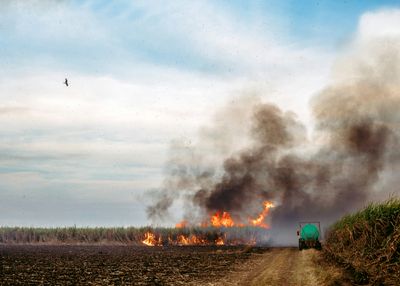
When we talk about clean air, the conversation usually turns to traffic: exhaust fumes, congestion, school runs and the air people breathe on busy streets. That focus is understandable because road transport remains one of the most visible sources of poor air quality in everyday life. But Clean Air Day should also draw attention to a less visible question: why are useful materials still being burned as waste? Clean air is about more than traffic Around the world, huge quantities of leftover straw are still treated as waste to be cleared quickly, with rice straw one of the clearest examples. More than 700 million tonnes of rice straw are produced globally every year, and around 80% is burned. That contributes directly to air pollution and greenhouse gas emissions, while also destroying material that could have value. At Aston University’s Energy and Bioproducts Research Institute, researchers are exploring alternatives to open burning of crop residues, including whether materials often treated as waste could instead become useful sources of energy, fuels or bioproducts. This matters because the clean air debate needs to look beyond transport. How we manage waste, land and energy also plays a part, and agricultural residues should not automatically be seen as rubbish to be burned. In many cases, they could be resources with real value. Why burning crop waste matters The World Health Organization describes air pollution as one of the greatest environmental risks to health, estimating that ambient outdoor air pollution caused 4.2 million premature deaths globally in 2019. Much of that risk comes from exposure to fine particulate matter, which is linked to cardiovascular and respiratory disease and cancers. That is particularly relevant when residues are burned in the open, as smoke and fine particles can travel beyond the field where burning takes place, affecting nearby communities and wider air quality. There is a practical issue as well as an environmental one. If burning is the fastest and cheapest way to clear land, it can easily become the default, which is why any cleaner alternative has to work for farmers and communities in practice. It is not enough to tell people to stop burning; they need practical alternatives that make sense economically and locally. Turning waste into cleaner alternatives Biochar and bioenergy are two examples of how waste crop material can be treated differently. Instead of being burned in the open, residues can be converted into useful products or sources of renewable energy. Biochar can also offer practical benefits for farmers when it is produced and applied appropriately. Studies have shown that addition of biochar to the soil can improve its structure, help retain nutrients and, in some cases, reduce the need for synthetic fertilisers, which will lower associated emissions and economic demands. The water-holding capacity of biochar can also support crops during dry periods, potentially reducing irrigation demand in drought-prone seasons. Work connected to rice straw has shown that cleaner alternatives to burning can produce measurable environmental benefits while supporting local economies. Community-scale rice straw bioenergy systems, for example, can avoid 2.7–3.5 tonnes of CO₂ equivalent emissions per hectare each year, while creating fuel savings and reducing post-harvest losses for rice farming communities. Research and interviews have shown that farmers and local stakeholders are willing to participate in these transitions when alternatives are designed around their needs and priorities. During community engagement activities, participants consistently highlighted cleaner air as an important benefit, not only for environmental reasons but also because of concerns about the health impacts of smoke and the financial burden of illness. For many households, avoiding respiratory problems and expensive hospital bills was seen as just as important as generating additional income from agricultural residues. That matters because cleaner air is linked to more than one policy area. Transport is important, but so are farming, energy and waste. Research can help identify what works, where the trade-offs are, and how promising ideas can move beyond the lab. It can also support industry, policymakers and local partners to develop alternatives that are practical rather than theoretical. For policymakers, the lesson is that air quality cannot be improved by focusing only on the most visible sources of pollution. Transport matters, but so do homes, industry, farming, waste and energy systems. There is no single answer. Agricultural residues vary, local conditions vary, and technologies need to be assessed carefully, but cleaner air will require better options than burning. Clean Air Day should prompt us to ask why useful materials are still being burned in the first place. If we want cleaner air, we need to reduce what we burn and get smarter about what we waste. This article was written by Dr Samuel Sogbesan and Thea Mae Baltazar from Aston University’s Energy and Bioproducts Research Institute. (Photo by Sandie Peters on Unsplash)

Major trial shows increasing bone density fails to cut fracture risk in brittle bone disease featured image

3 min

Major trial shows increasing bone density fails to cut fracture risk in brittle bone disease

An international clinical trial involving Aston University researchers has challenged long held assumptions about how brittle bone disease is treated in adults, after finding that substantially increasing bone density did not reduce the risk of fractures. The study, published in the Journal of the American Medical Association (JAMA), examined whether a two stage treatment using the bone building drug teriparatide followed by the bone preserving drug zoledronic acid could reduce fractures in adults with osteogenesis imperfecta, often referred to as brittle bone disease, a rare genetic condition that causes bones to break easily throughout life. Researchers followed 349 adults treated at 27 specialist centres across the UK and Europe. While the treatment led to clear increases in bone density in the spine and hip, fracture rates were no lower than among patients receiving standard care, suggesting that bone quality may matter more than bone density alone in preventing fractures in people with the condition. The findings underline a key distinction between brittle bone disease and more common bone conditions such as osteoporosis, where increasing bone density is known to reduce fracture risk. In osteogenesis imperfecta, the study suggests that bones can become denser without becoming less likely to break, indicating that the underlying quality and structure of bone tissue may play a greater role in fracture risk than density alone. Dr Zaki Hassan Smith, an endocrinologist at Aston Medical School who contributed to the research, said: “This study shows that in osteogenesis imperfecta, simply increasing bone density doesn’t necessarily translate into fewer fractures. That’s important, because it tells us that the disease is more complex than what we see on a scan. The findings help shift the focus towards understanding bone quality and how bones behave in real life, which is essential if we are to develop more effective treatments that genuinely reduce harm for patients.” Osteogenesis imperfecta is a genetic condition that affects collagen, leaving bones fragile and prone to fracture throughout life. There is currently no licensed treatment specifically approved to prevent fractures in adults with the condition, and patients often experience repeated fractures, chronic pain and long term disability. The trial tested a sequential treatment strategy commonly used in osteoporosis, where a bone building drug is followed by a treatment designed to preserve gains in bone strength. Although this approach successfully increased bone density in people with osteogenesis imperfecta, it did not reduce fracture rates, suggesting that treatment strategies effective in osteoporosis may not directly translate to rare bone diseases. Researchers did observe improvements in some quality of life measures among participants receiving the treatment, including reduced pain interference and improved mobility. However, fracture prevention remained unchanged, reinforcing the need for new approaches that target the fundamental properties of bone in osteogenesis imperfecta rather than density alone. The study was led by the University of Edinburgh and funded by the Medical Research Council and the National Institute for Health and Care Research. Aston University contributed clinical and academic expertise through Aston Medical School as part of the large international collaboration, which involved specialist centres across the UK and Europe. The study was led by the University of Edinburgh, with Aston University contributing clinical and academic expertise as part of a wider international collaboration involving multiple specialist centres across the UK and Europe. The research was funded by the Medical Research Council and the National Institute for Health and Care Research. Researchers say the findings provide important guidance for future research, helping to steer efforts towards treatments that focus on bone quality, strength and resilience in everyday life. They also highlight the value of large scale clinical trials in rare diseases, where learning what does not reduce harm is an essential step towards better care. The paper, Teriparatide Plus Zoledronic Acid for Osteogenesis Imperfecta, is published in JAMA. https://doi.org/10.1001/jama.2026.6889

View all posts