You might also like...
Check out some other posts from Augusta University
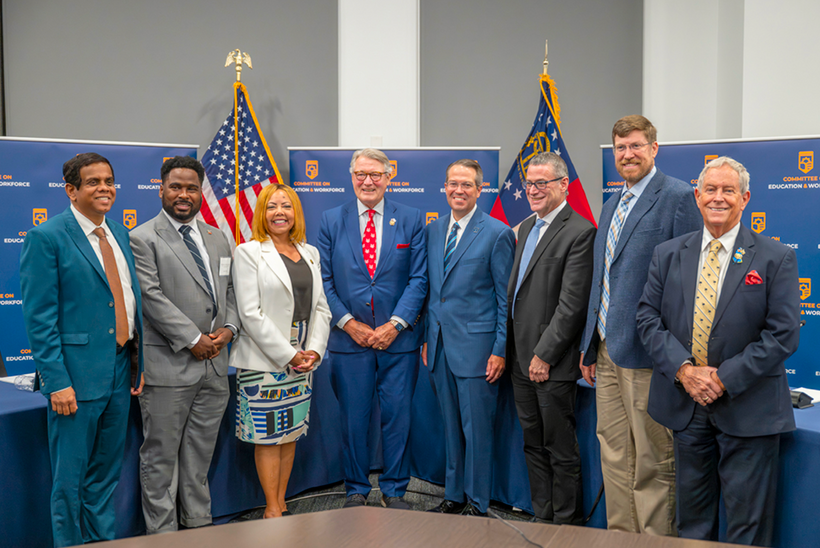
The U.S. House Committee on Education and Workforce held its first artificial intelligence field hearing of the year, titled "Building an AI-Ready America: How AI Is Creating Opportunities Across America's Workforce," at the Georgia Cyber Center at Augusta University on July 24.
U.S. Rep. Rick W. Allen, who represents Georgia's 12th District and chairs the committee's Subcommittee on Health, Employment, Labor, and Pensions, chaired the hearing. He was joined by U.S. Rep. Joe Wilson of South Carolina and U.S. Rep. Lucy McBath of Georgia.
Jeffery Talbert, PhD, chair of Augusta University's Department of Artificial Intelligence and Health at the Medical College of Georgia and a Georgia Research Alliance Eminent Scholar, served as one of four witnesses at the hearing.
"Today, we examine how artificial intelligence, AI, is creating economic opportunities for American workers, job creators and our communities," Allen told the committee. "There's no better place to hold this hearing than right here in Augusta." Allen said the combination of the Georgia Cyber Center and Fort Gordon provides the expertise needed to discuss AI. "Fort Gordon is just a short 30-minute drive from where we currently sit," he said. "It hosts the Army Cyber Center of Excellence and is home to Army Cyber School, which trains, educates and develops the Army's Cyberspace and Electronic Warfare workforce. Every year, thousands of people leave Fort Gordon looking for work."
He added that the Georgia Cyber Center "was created to meet this growing demand and drive collaboration between academia, government and industry stakeholders to equip a superior cybersecurity workforce with the skills they need."
Augusta University President Russell T. Keen told the committee it was an honor for AU's Georgia Cyber Center to host the hearing.
"Congressman Allen has long recognized the important role that education, innovation and workforce development play in strengthening our state and our nation," Keen said. He added that AI "will continue to change how we live, how we learn, how we work and how we solve problems," and that Augusta University "intends to lead in that transformation in ways that strengthen our workforce, advance discovery, improve lives, change lives and save lives."
Talbert, who has more than 30 years of experience in biomedical informatics, has published approximately 260 times and has led more than 100 funded research projects totaling more than $130 million. He told the committee that in health care, AI is demonstrating its greatest value through augmentation, helping professionals "work more effectively, reducing administrative burdens, improving patient outcomes and expanding workforce capacity."
He pointed to ambient documentation technology, which converts clinical conversations into draft notes clinicians review and approve, as one of the industry's most successful AI applications. "Multiple studies show these tools reduce documentation burden, after-hours work and burnout," Talbert said. "One multisystem implementation found clinician burnout fell from approximately 52 percent to 39 percent." He also cited studies showing AI-assisted breast cancer screening detecting approximately 29 percent higher cancer rates, "helping more patients benefit from earlier diagnosis and treatment."
America's opportunity, Talbert said, "is not simply to adopt AI, but to lead its responsible development, education and implementation." He pointed to Augusta University's Department of AI and Health, the first of its kind in Georgia, as an example of that approach. Allen closed the hearing by cautioning against a one-size-fits-all approach to AI policy. "The needs of a family farm are not the same as those of a hospital, a manufacturing plant or a small business," he said. "Congress must pursue flexible policies that allow businesses to adopt AI in ways that best suit their industry and workforce."
JagWire has the full recap of the hearing and the Augusta Chronicle, Innovation & Entrepreneurs News and Traders Union also covered the field hearing.
Augusta University experts in artificial intelligence, healthcare innovation and workforce development are available for interviews. If you're covering similar stories, reach out to schedule time.
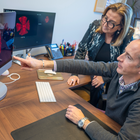
It’s often said that “teamwork makes the dream work,” and scientists from different disciplines at Augusta University are a perfect example of that. Manuela Bartoli, PhD, research director and professor of ophthalmology at AU’s Medical College of Georgia, has joined forces with Eric Belin de Chantemèle, PhD, a physiologist in MCG’s Vascular Biology Center, to explore the link between HIV and retinopathy.
The pair was recently awarded a two-year $275,000 grant from the National Eye Institute that will allow them to test different variables on a transgenic mouse model and assess how they impact the development of retinopathy.
The project began with Bartoli and Belin de Chantemèle examining transgenic mice that expressed viral proteins linked to HIV. They found that the blood vessels supplying oxygen and nutrients to the mice’s retinas were not functioning properly.
“So, we developed the idea that people living with HIV may be more prone to or progress more rapidly when they get one of the ischemic retinopathies that are very common, particularly diabetic retinopathy and age-related macular degeneration,” Bartoli said. “I think this is important because we’ll basically define a chronic HIV infection as a risk factor for the development of the most severe ocular disease.” Bartoli’s work focuses on ischemic retinopathies, which are conditions that reduce blood flow, oxygen and nutrients to the retina – the part of the eye responsible for vision. These disorders are the leading cause of blindness around the world. Different types include retinopathy of prematurity, diabetic retinopathy and age-related macular degeneration.
Several factors contribute to ischemic retinopathies, such as oxidative stress and inflammatory processes. Bartoli infers HIV might be another risk factor, but it’s tough to confirm as antiretroviral therapies make the virus nearly undetectable.
“The number of people living with HIV is growing in terms of age, so most likely they will develop, at some point, a disease like age-related macular degeneration, which is really common in the elderly population,” Bartoli said. “We knew the individual has the acute infection, and because of the immunosuppression, they develop a number of infections that lead to retinal dysfunction. There was also reported what is called retinitis due to HIV. But with medication, these acute events disappear, and we don’t know, when you get older and develop one of these diseases, how is it going to progress?”
While cART therapies can manage HIV, Bartoli noted they don’t fix the defective blood vessels in the retina.
And it’s not just the retina. The big picture is that HIV alters blood vessels throughout the human body, therefore elevating blood pressure and causing cardiovascular disease.
“We have blood vessels in every single organ, whether this is the heart, the lungs, the kidneys, the brain, the eyes, they are everywhere,” Belin de Chantemèle said. “As HIV is damaging the vessel, that would lead to dysfunctions in all those different organs.” “On top of that, people who have HIV usually have additional comorbidities. Very often people become obese, have diabetes,” he continued.
The researchers plan to eventually move beyond mouse models and include human subjects in their study.
“I’m already working with people around to try to get information,” Bartoli said. “For example, in the VA system.”
The ultimate goal is to establish how HIV contributes to the progression of eye diseases, which will hopefully lead to a better understanding of why it happens and how to treat it.
“If this individual who progresses more rapidly goes to the doctor when they are blind already or semi-blind, it’s too late for anything,” Bartoli said. “Blindness is the primary fear in people, so we’re going to combat the cause to prevent this side effect.”
Discoveries at Augusta University are changing and improving the lives of people in Georgia and beyond. Your partnership and support are invaluable as we work to expand our impact. See more experts at Augusta University → Click here
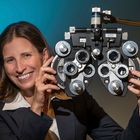
Amy Estes, MD, a cornea specialist, educator and long‑time faculty leader, has been named chair of the Department of Ophthalmology at the Medical College of Georgia at Augusta University, effective July 1.
Pending approval of the University System of Georgia Board of Regents, she will also hold the Knights Templar Educational Foundation of Georgia/Fleetwood Maddox Chair in Ophthalmology.
Estes joined MCG in 2013 and currently serves as director of the Cornea Service. She is a highly respected clinician who cares for patients from across Georgia who require advanced medical and surgical management of complex corneal disease.
A dedicated educator, Estes has played a central role in training the next generation. She has advised numerous medical students pursuing careers in ophthalmology, served on multiple PhD committees and contributed extensively to resident education. She previously served as associate director of the Ophthalmology Residency Program and has led the residency program as director since 2020. Her leadership has strengthened the visibility and reputation of the department’s educational programs across the state.
She also brings significant leadership experience at both the state and national levels. She has served on the council of the Georgia Society of Ophthalmology, ultimately becoming its president, and as the Georgia representative at the American Academy of Ophthalmology. Her research collaborations with the James and Jean Culver Vision Discovery Institute have contributed to six R01 grants and 19 peer-reviewed publications, advancing both basic science and translational vision research at MCG.
“Dr. Estes has demonstrated exceptional commitment to patient care, education, and research throughout her career at MCG,” said MCG Dean David C. Hess, MD. “Her vision for the department, combined with her deep understanding of our institution and the needs of patients across Georgia, makes her an outstanding choice to lead the department into its next chapter.
“I also want to express my sincere appreciation to Steve Brooks, MD, who has served as chair of the department since 2020 and will return to his faculty role as a pediatric ophthalmologist. Dr. Brooks has guided the department through significant transitions with steadiness, compassion, and a deep commitment to learners and patients. I’m thankful that he will continue to share his expertise with our students, residents, and the children and families he serves, and that he will continue his important work in patient care, research, and education.”
As chair, Estes plans to prioritize faculty recruitment and retention, support continued growth in research and education, and pursue opportunities to expand clinical services, including exploring satellite locations to improve patient access and accommodate increasing demand for eye care across the state.
She completed her undergraduate education at Davidson College before earning her medical degree from The Ohio State University College of Medicine. She completed both her ophthalmology residency and a fellowship in cornea and refractive surgery at Wake Forest Baptist Medical Center.
See more experts at Augusta University → Click here




