Expert explainer - Storm Daniel and the Libya flooding

Sep 13, 2023

3 min


Expert: Dr Kiran Tota-Maharaj

Reader in Civil & Environmental Engineering (Water and Environmental Engineering)

College of Engineering and Physical Sciences, Aston University


1/ Do we have any basic measures on the volume of precipitation that triggered the collapse of the two dams that flooded Derna? How much rain over what period of time? Are there adequate records to put that in historical context? Were any records broken?


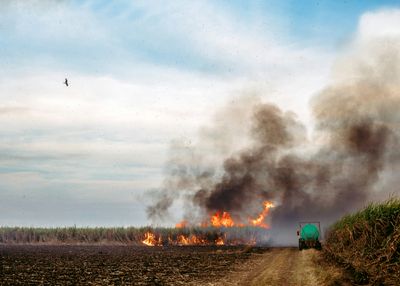
Storm Daniel has the characteristics of a tropical depression, approximately 170 millimetres (6.7 inches) of rainfall occurred fell in Libya. Torrential rains of between 150 - 240 mm caused flash floods in several cities, including Al-Bayda, which recorded the highest rainfall rate of 414.1 mm.


2/ Do we know anything about the dams that failed? Where they old, near the end of their expected lifespan? Were they known to be fragile in any way? To what extent, in other words, might this have been a disaster waiting to happen?


Flash floods, which is considered as one of the worst weather-related natural disasters are highly unpredictable following brief spells of heavy rain. This region in Libya is subjected to flash floods, where floods from the mountains causing heavy damage to hydraulic structures and features of Dams. These floods are made up of sudden, unexpected and heavy rains or a strong surge of water, which usually hit the steep sloped mountainous catchments and have inundated many regions in Libya. The sweeping flash floods also led to the death of many residents and great losses of property. Entire neighborhoods in Derna disappeared, along with their residents swept away by water after two ageing dams collapsed making the situation catastrophic and out of control, the city of Derna is surrounded by mountains, so the flash flooding occurred quite rapidly, taking over with surface-water levels rising as high as 3 metres (10 feet). Engineers have previously issued warnings about the risks of these dams bursting and the urgent need to strengthen their defenses, which unfortunately didn’t occur. Early Warning Systems (EWS)- which are effective ways to reduce the risks of flash floods have not been properly implemented. When EWS are issued before a flash flood event, additional time is created to take action and save lives and infrastructure. The unexpected arrival of a flash flood in Libya, combination with its force, limited understanding of the risks and small space-time scales provide explicit challenges for the development and implementation of an EWS system for flash floods.


3/ There is speculation about many thousands of deaths. Is this attributable almost entirely to the failed dams? Or was there massive and deadly flooding beside that?


Thousands of people’s lives have been sadly lost after the massive flood ripped through the city of Derna as a result from the heave storm conditions and excessive rainfall. There have been several areas severely affected by widespread flooding, damage to infrastructure, and loss of life. The disastrous flooding event is likely the cause of the two dams’ collapses, making thousands of residents of the valley and the city of Derna, Libya vulnerable as a result of the storm. Entire neighbourhoods of Derna by the bank of the swollen river had been ravaged and washed away.


For further details or to interview Dr Tota-Maharaj, contact Nicola Jones

Press and Communications Manager, Aston University, Birmingham, UK


n.jones6@aston.ac.uk or Mobile: (+44)7825 342091


Powered by

You might also like...

Check out some other posts from Aston University

3 min

New research partnership to develop biodegradable gloves from food waste for healthcare sector

Knowledge Transfer Partnership between Aston University and PFE Medical to develop a biodegradable clinical glove from food waste The gloves will provide a low-cost, convenient and sustainable alternative to the 1.4bn disposable gloves used in the NHS each year The innovation will reduce clinical waste and costs and help the NHS reach its net zero goals. Aston University and Midlands-based company PFE Medical are teaming up to create biodegradable gloves made from food waste for use in the NHS. They will offer a low-cost, convenient alternative to disposable gloves without compromising patient safety. More than 1.4bn disposable gloves are used by the NHS each year. They create large volumes of clinical waste which has both an environmental and economic cost. The Knowledge Transfer Partnership (KTP) project will develop a more sustainable alternative made from polymers derived from food waste such as orange peel, able to degrade naturally. The gloves will initially be for use during low-risk tasks such as ultrasound scans, rather than in more critical situations such as operating theatres. The gloves would be designed to not only reduce clinical waste and costs in the NHS, but also carbon emissions, helping the NHS reach its goal to be the world’s first net-zero health service. With most personal protective equipment (PPE) currently sourced from Chinese manufacturers, the goal is to develop a biodegradable glove that can be manufactured using a UK supply chain. The challenging project draws on Aston University’s expertise in sustainable polymer chemistry, centred at Aston Institute for Membrane Excellence (AIME). Aston University has one of the largest research groups of polymer chemists in the UK. The project will be led at the University by Professor Paul Topham, director of AIME, and Dr James Wilson, AIME associate member. The research team have chosen to focus on polymers from food waste in order to ensure that the final product can be manufactured sustainably. Most polymers are currently made from petroleum. Polymers made from food waste, ranging from fruit waste to corn or dairy products, have the potential for antioxidant and antibacterial properties if designed appropriately. The team will manipulate the polymer molecules so that they include the right monomers (the smaller units which make up the molecules) in the right location to achieve the properties they require. Critical to the success of the project will be PFE Medical’s commercial and clinical experience of taking new innovations into medical use. It will be the third KTP between Aston University and PFE, following on from successful projects to develop an automated endoscope cleaner, now in use across University Hospitals Birmingham NHS Foundation Trust (UHB). Professor Topham said: “At Aston University, we have a long history of working with industry, of translating fundamental research into solutions for real world problems. This project with PFE Medical provides us with that route, to take our science and engineering and make a difference to peoples’ lives. That’s exactly where, as researchers, we want to be.” Rob Hartley, CEO of PFE Medical, said: “Our previous KTP with Aston University was a phenomenal success, thanks to the brilliant team we had on board. I’m just as excited by this project, which is looking to solve an equally long-standing problem. If we can achieve our goal, then the implications are huge, going far beyond the NHS to all the other situations where people are wearing disposable gloves.” KTPs, funded by Innovate UK, are collaborations between a business, a university and a highly qualified research associate. The UK-wide programme helps businesses to improve their competitiveness and productivity through the better use of knowledge, technology and skills. Aston University is a sector-leading KTP provider, ranked first for project quality, and joint first for the volume of active projects. For further details about this KTP, visit the webpage: www.aston.ac.uk/business/collaborate-with-us/knowledge-transfer-partnership/at-work/pfe-medical.

2 min

Aston University’s Professor Gina Rippon wins British Psychological Society book award for The Lost Girls of Autism

Gina Rippon, professor emeritus of cognitive neuroimaging at Aston University, has won an award for her book, The Lost Girls of Autism The book won the 2025 British Psychological Society Popular Science Award It explores the emerging science of female autism, and examines why it has been systematically ignored and misunderstood for so long. The Lost Girls of Autism, the latest book from Gina Rippon, professor emeritus of cognitive neuroimaging at Aston University Institute of Health and Neurodevelopment (IHN), has won the 2025 British Psychological Society (BPS) Popular Science Award. The annual BPS Book Awards recognise exceptional published works in the field of psychology. There are four categories – popular science, textbook, academic monograph and practitioner text. With the subtitle ‘How Science Failed Autistic Women and the New Research that’s Changing the Story’, The Lost Girls of Autism explores the emerging science of female autism, and examines why it has been systematically ignored and misunderstood for so long. Historically, clinicians believed that autism was a male condition, and simply did not look for it in girls and women. This has meant that autistic girls visiting a doctor have been misdiagnosed with anxiety, depression or personality disorders, or are missed altogether. Many women only discover they have the condition when they are much older. Professor Rippon said: “It's such a pleasure and an honour to receive this award from the BPS. It’s obviously flattering to join the great company of previous winners, but I’m also extremely grateful for the attention drawn to the issues raised in the book. “Over many decades, due to autism’s ‘male spotlight’ problem, autistic girls and women have been overlooked, deprived of the help they needed, and even denied access to the very research studies that could widen our understanding of autism. This book tells the stories of these girls and women, and I’m thrilled to accept this prize on their behalf.”

3 min

New book from Aston University academic shows that Christmas tasks mostly fall on women

New book by Dr Emily Christopher shows differences in how household tasks are divided by men and women Book highlights that women tend to buy the Christmas presents and send cards Men often see women as being more thoughtful or having better knowledge of what people would like. A new book from Aston University’s Dr Emily Christopher reveals that when it comes to sending Christmas cards and buying Christmas presents, women are still mostly doing the work as they are perceived to have better knowledge of what people would like. Dr Emily Christopher, a lecturer in sociology and policy at Aston School of Law and Social Sciences, has recently published her book Couples at Work: Negotiating Paid Employment, Housework and Childcare, which look at how household tasks are divided by men and women and the reasons behind these divisions. The data for the book has been collated over an eight-year period with couples being interviewed twice to provide a robust set of results. It looks at how different sex parent couples combined paid work, housework and childcare. The research revealed how gender norms continue to shape how certain daily household jobs are divided. Women were more likely than men to clean the house, especially bathrooms, wash clothes and put clothes away. Men still tend to do tasks like mowing the lawn and DIY but now are also more likely to do the cooking and the grocery shopping. The research shows that the key to understanding how household tasks are divided lies in the meaning they hold for partners. With the festive season upon us, the book reveals that woman are largely responsible for the Christmas present buying and sending cards with 100% of those taking part in the research saying that women mostly carried out these tasks. This also included buying for the male partner's relatives. In instances where men had a 'helping' role in these tasks, this included being involved in the discussion or consulting on choice of presents, especially for children, with only a small minority buying presents for their own family. The data revealed that where women didn't choose and buy presents for their partners family, they were still involved in reminding their partners that this needed to be done or advising on choice of gifts, showing that women were still taking on the mental load of planning for the festive season. The book reveals that when men were questioned about why they didn't get involved in present buying, they drew on gender norms. Women were often described, by the men, as being more thoughtful or having better knowledge of what people would like. Men often described how family members wouldn’t receive presents at all if it relied on them. Although much of the gift giving and organising represented love and affection for the women, which many found enjoyable, many still saw it as work and expressed that they would like their partners' to be more involved. Dr Christopher said: “This book takes an in-depth look at the way in which everyday roles around the household are divided between men and women. “The research shows that over a period of eight years fathers increased their role in childcare tasks but this did not always extend to housework. “The pandemic was an opportunity to change how couples share housework but women were still more likely to carry out tasks like cleaning, washing clothes and putting clothes away and overwhelmingly remained responsible for the mental orchestration of family work.”

View all posts