MEDIA RELEASE: 18th Street in Brandon Named CAA's Worst Road in Manitoba

May 22, 2024

2 min

Ewald Friesen

Potholes and Crumbling Pavement Along 18th Street in Brandon, Manitoba. (Submitted: March 27, 2024)


The nominations have been tallied, and the 2024 CAA Worst Road is 18th Street in Brandon. 18th Street's issues with potholes and severe alligator cracking in the pavement have led to this dubious distinction. The road first appeared on the top 10 list in 2022 and has steadily climbed its way to the top.


The second and third place spots are also taken by repeat offenders on the top 10 list are Leila Avenue in Winnipeg and Provincial Road 307 in Whiteshell. According to the voter insights, Leila Avenue's unavoidable potholes have damaged many vehicles, costing local drivers thousands of dollars in repairs. Voters also expressed concern over Provincial Road 307 regarding poor pedestrian infrastructure and road maintenance.


"The 2024 CAA Worst Roads campaign provides a valuable snapshot of the roads that the public perceives as pain points," says Ewald Friesen, manager of government and community relations for CAA Manitoba, "For 13 years, this campaign has served as a powerful advocacy tool, initiating dialogue with decision-makers and driving positive change for safer roads across the province."


CAA's most recent survey data shows that while 78 per cent of Manitobans do not appreciate road maintenance efforts, however, 88 per cent are willing to put up with the inconvenience of construction if that means they get a good road at the end of the repairs.


The campaign received 486 road nominations from thousands of local voters across 71 municipalities.


"Manitobans' frustration about the state of our roads is clear," says Friesen. “We know they voice their concerns to neighbours, friends, or mechanics; this campaign helps bring awareness to decision-makers, providing valuable insights on our preferences for how to prioritize road repair and maintenance."


Half of the roads on the top 10 list have debuted this year. These include Highway 26, Pandora Avenue, Richmond Avenue, Grant Avenue, and Munroe Avenue, which are tied for ninth place.


Manitoba's Top 10 Worst Roads for 2024

1. 18th Street, Brandon

2. Leila Avenue, Winnipeg

3. Provincial Road 307, Whiteshell

4. Kenaston Boulevard, Winnipeg

5. Provincial Highway 26, Saint François Xavier

6. Empress Street, Winnipeg

7. Pandora Avenue, Winnipeg

8. Saskatchewan Avenue, Winnipeg

9. Grant Avenue and Munroe Avenue, Winnipeg

10. Inkster Boulevard, Winnipeg and Richmond Avenue, Brandon


"Municipalities are responsible for thousands of kilometres of roads across the province. Roads, sidewalks, and bike paths are only some of the things that municipal governments fund with limited revenue sources," adds Friesen. "It's important for communities to share their view on what and where investments should be made. CAA Worst Roads is a forum to do that."


For more information and historical results, please visit:

https://www.caamanitoba.com/advocacy/government-relations/worst-roads


Connect with:
Ewald Friesen

Ewald Friesen

Manager, Government and Community Relations

Ewald manages CAA's advocacy and community relations efforts in Manitoba.

Congestion ManagementSchool Zone SafetyRoad SafetyGovernment & Community RelationsPolicy Advocacy
Powered by

You might also like...

Check out some other posts from CAA Club Group

MEDIA RELEASE: CAA brings road safety partners and first responders together to urge drivers to slow down and move over featured image

5 min

MEDIA RELEASE: CAA brings road safety partners and first responders together to urge drivers to slow down and move over

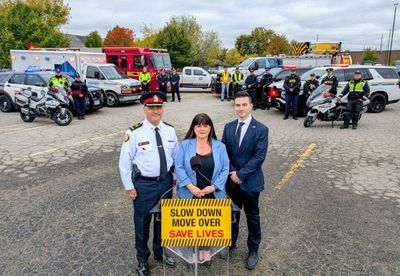
Ahead of National Slow Down, Move Over (SDMO) Day, CAA South Central Ontario, in partnership with the Ministry of Transportation, Canadian Towing Association, Toronto Police Service (TPS), Ontario Provincial Police (OPP), Toronto Fire, Toronto Paramedic Services, and 407 ETR, have joined forces to remind Ontario drivers that slowing down and moving over is one of the simplest actions they can take to help protect tow operators, first responders and other roadside workers. “For tow operators and first responders, the roadside is their workplace,” says Teresa Di Felice, assistant vice-president of government and community relations at CAA South Central Ontario. “When drivers see flashing lights, we need them to recognize that there is a trained professional helping someone at the roadside. Slowing down and moving over gives those workers the space they need to do their jobs more safely.” While most Ontario drivers are familiar with the law, that awareness does not always translate into consistent action on the road. “Every day, the men and women who respond to emergencies, assist stranded drivers and maintain our highways put themselves at risk to keep others safe,” said Prabmeet Sarkaria, Minister of Transportation. “That’s why, beginning January 1, 2027, we’re expanding Ontario’s Slow Down, Move Over law to protect more roadside workers on the job because something as simple as slowing down and moving over can save lives and help ensure those who keep our roads safe make it home to their families.” Toronto Police Service says those protections are critical for officers and other roadside workers who routinely work alongside moving traffic. "Many police officers have found themselves in situations where they are stopped on the side of the road doing their job, only to have vehicles pass dangerously close by," says Robert Johnson, Deputy Chief, Toronto Police Service. "When first responders or tow truck drivers have their lights flashing, drivers are legally required to slow down safely below the speed limit and leave space for emergency vehicles." As part of its continuing road safety work, CAA is piloting Variable Message Signs (VMS) technology on tow trucks across Ontario to determine whether enhanced visibility and directional messaging can help motorists recognize roadside incidents sooner and respond safely. Research from the AAA Foundation for Traffic Safety found drivers were 95 per cent more likely to change lanes when a VMS was active. CAA’s pilot will assess whether the technology can help motorists identify a roadside response earlier and encourage them to slow down and move over. “Drivers are processing a lot of information when they approach a roadside incident,” said Di Felice. “A clear, visible message may help them understand what is happening sooner and give them more time to slow down, check surrounding traffic and move over safely.” Putting drivers in the worker’s shoes Technology is one part of the solution. CAA is also using public education to help drivers understand the people Ontario’s SDMO law is intended to protect. CAA’s SDMO public service announcement puts motorists in the shoes of the people who assist stranded drivers every day. Rather than focusing only on the rules of the road, it highlights the individuals behind the flashing lights and the risks they face while working just feet from live traffic. Watch the PSA here. Ontario expanding slow down move over law to protect more workers Starting January 1, 2027, drivers must also slow down and move over for certain work vehicles stopped at roadside with flashing amber lights activated. Work vehicles under the expanded law include highway maintenance vehicles, public utility vehicles (such as electricity, water, natural gas, telecommunications), waste collection vehicles (such as garbage, recycling or organic waste trucks) and roadside assistance vehicles (like CAA or other providers). CN Tower to shine for roadside safety On Saturday, October 17, the CN Tower will be illuminated in yellow and black to mark National Slow Down, Move Over Day, commemorated by all the CAA clubs across the country, and in honour of the tow operators, emergency responders and other roadside workers who assist motorists every day. A standard light show will run for 5 minutes at the top of every hour, followed by another light show on the half hour. To learn more about SDMO laws, please visit: www.caasco.com/SDMO Quick Facts CAA research shows that Ontario drivers report slowing down and moving over for emergency vehicles more than 90 per cent of the time, but only 49 per cent of the time for tow trucks. Nearly 4 in 5 Ontario drivers have heard of the SDMO law, but only 55 per cent knew they were required to slow down and move over for stopped tow trucks with flashing lights. The same study found that 93 per cent of Ontarians support the use of Variable Message Signs. Respondents also said the signs would encourage drivers to slow down and move over, improving safety for roadside workers and stranded motorists. Quotes “Tow operators are often called to the roadside when someone needs help. Everyday members of our industry are available 24-hours in all kinds of weather. Doing the work safely depends in part on the actions of passing drivers. When motorists slow down and move over, they give tow operators the room they need to assist stranded drivers and clear vehicles safely. It is a small action behind the wheel that can make a big difference at the roadside.” – Joey Gagne, President, Canadian Towing Association "First responders are there to help those in crisis and keep our roads safe, but we can’t do it alone. When approaching a stopped emergency vehicle with its flashing lights activated, slow down and, where possible, move over. The Slow Down, Move Over law helps create a safer environment for emergency personnel working on our roads. It’s the law. Road safety is a shared responsibility, and a simple action can make a meaningful difference for everyone on our roads.” - Deputy Commissioner Bryan MacKillop, Ontario Provincial Police "Toronto Fire Services is proud to support CAA's Slow Down, Move Over campaign. Every day, emergency responders work in and around live traffic to keep our communities safe. Slowing down and moving over when approaching emergency scenes helps protect firefighters, paramedics, police officers, tow operators, and all roadside workers who put themselves at risk to serve others. This simple action can save lives." - Fire Chief Jim Jessop, Toronto Fire Services "Every day, emergency responders, tow truck operators and highway patrollers put themselves at risk to help keep people moving safely. At 407 ETR, we see this firsthand through the work of our patrollers, OPP officers and first responders who assist drivers and respond to incidents around the clock. That's why we're proud to support CAA's Slow Down, Move Over campaign. Slowing down and moving over isn't just the law, it's a simple action that helps protect the people working roadside and can prevent tragedies on our roads.” -Jose Espinosa, President & CEO, 407 ETR “Paramedics work in dynamic environments, including at the roadside alongside live traffic. When drivers slow down and move over, they help create a safer space for all emergency responders to do their jobs and care for those in need. Road safety is a shared responsibility.” - Chief Bikram Chawla, Toronto Paramedic Services

MEDIA RELEASE: CAA Manitoba calls for truck-mounted warning signs to improve roadside safety ahead of Slow Down, Move Over Day featured image

2 min

MEDIA RELEASE: CAA Manitoba calls for truck-mounted warning signs to improve roadside safety ahead of Slow Down, Move Over Day

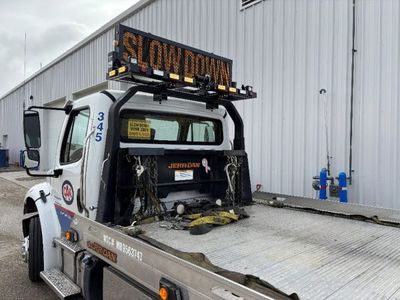
Ahead of National Slow Down Move Over (SDMO) Day, acknowledged on October 17, CAA Manitoba is calling for regulatory changes that would allow tow trucks to use vehicle-mounted electronic warning signs, known as Variable Message Signs (VMS), to give approaching drivers an earlier warning of roadside incidents. Every day, tow truck operators work alongside live traffic to help stranded motorists, but many drivers still do not give them the same space and protection they provide emergency vehicles such as police, fire and ambulances. "For tow operators and first responders, the roadside is their workplace," said Teresa Di Felice, assistant vice president, government and community relations, CAA Manitoba. "Slowing down and moving over is a simple action drivers can take to make a meaningful difference to protect the people who assist Manitobans every day." Variable Message Signs (VMS) provide drivers with advance warning of roadside incidents, giving them more time to react safely. The technology is already authorized in over 40 U.S. states, as well as in Australia and across the European Union. Research from the AAA Foundation for Traffic Safety found drivers were more likely to slow down and move over when a VMS was active, with the odds of a vehicle moving over increasing by 95 per cent. CAA Manitoba continues to discuss the use of truck-mounted VMS technology with government and industry stakeholders as part of broader efforts to improve roadside safety. A pilot project underway in Ontario is testing how the technology can help protect roadside workers, including tow operators. Despite growing awareness of SDMO laws, compliance around tow trucks continues to lag behind other emergency vehicles. CAA research found members were less likely to move over for tow trucks than for police, ambulances or fire trucks. Among those who did not move over for a tow truck, nearly half said they did not know it was required by law. "Tow truck operators are often among the first people to arrive when someone needs help," says Di Felice. "They deserve the same care and protection we give other emergency responders." To help address the issue, CAA has launched a new public service announcement that puts motorists in the shoes of the roadside workers who assist drivers every day. Rather than focusing solely on the rules of the road, the campaign highlights the people those rules are designed to protect. Watch the PSA here. CAA research also found that while eight in 10 members understand the core Slow Down, Move Over message, some remain unclear about the exact action required when approaching a roadside incident. The campaign aims to close that gap through education and awareness. To learn more about SDMO laws, please visit: https://www.caamanitoba.com/SDMO

MEDIA RELEASE: New CAA Travel Insurance benefits provide travellers with enhanced coverage that better reflects today’s travel reality featured image

2 min

MEDIA RELEASE: New CAA Travel Insurance benefits provide travellers with enhanced coverage that better reflects today’s travel reality

Ahead of the busy winter travel season, CAA Travel Insurance, a product of Orion Travel Insurance, is introducing several important coverage enhancements to provide broader protection, clearer benefits, and more support when travel plans are disrupted. Key coverage enhancements include: • Emergency medical coverage increased from $5 million to $10 million. • Expanded coverage for climate events and extreme weather. • A new CAA Flight Delay Benefit, to provide cash or lounge passes to travellers delayed two or more hours. • Broader Trip Cancellation and Interruption coverage for major travel disruptions and unexpected personal circumstances. These updates reflect the changing travel realities that Canadians continue to navigate, including the rising costs of medical care. “Today’s travellers face a broad range of risks, from flight disruptions and extreme weather to unexpected medical emergencies and events at home,” says Elliott Silverstein, director, government relations, insurance, CAA South Central Ontario. “These updates deliver clearer benefits, broader protection and new forms of support to travellers when plans change unexpectedly.” The increase in emergency medical coverage reflects the continually rising cost of medical care while travelling abroad. Costs associated with everything from routine treatment to emergency transportation and air ambulance services have increased approximately 14 to 15 per cent annually since 2019. CAA’s expanded climate-related coverage introduces explicit policy language that clearly explains what coverage is available if a natural disaster impacts your destination accommodation, or if weather-related property damage at home disrupts your travel plans. In addition, eligible trip cancellation policies now include a new Flight Delay Benefit, providing an automatic benefit if your flight is delayed. Unlike a traditional expense-based reimbursement process, insured travellers will automatically receive a benefit when their insured flight is delayed by two or more hours, in the form of immediate payment or a lounge pass. CAA’s new Major Travel Disruption coverage addresses eligible flight cancellations or unannounced strikes, which are increasingly impacting travellers. New travel document protection covers stolen documents before departure, as well as documents that are lost or stolen at a destination. Other new covered situations include a stolen private vehicle, possible damage to a home or business, and additional occupancy costs when a travel companion interrupts their trip and the insured traveller continues as planned. “These updates are part of the ongoing optimization of CAA Travel Insurance coverage; intended to provide clearer benefits, broader protection and more support when travel plans change,” says Silverstein. “Travel insurance is not only about responding to major emergencies, it can also provide practical support during the more common situations travellers may experience while they are away from home.” CAA encourages travellers to review their policy, including its eligibility requirements, terms, conditions, limitations and exclusions, before departure. For more information about CAA Travel Insurance and coverage updates, visit: www.caasco.com/travelinsurance

View all posts