
Approximately 4,200 degrees conferred during Georgia Southern’s 2024 Spring Commencement ceremonies

Jun 3, 2024

4 min

In May, approximately 4,200 graduates from Georgia Southern University’s Statesboro, Armstrong and Liberty campuses received associate, baccalaureate, masters, specialist and doctoral degrees in five Spring 2024 Commencement ceremonies.


Georgia Southern President Kyle Marrero welcomed the graduates and their guests to the ceremonies, held at the Allen E. Paulson Stadium in Statesboro on May 7, 8 and 9, and at the EnMarket Arena in Savannah on May 11.


“Graduates, I don’t need to tell you about your unique college journey, which has been challenging,” said Marrero to the crowds. “I am very proud of how, together, we have persevered allowing us to have a successful semester and today, our commencement ceremony. This graduation is a momentous occasion for Georgia Southern University, as well as for all of you. Today, you are part of history at Georgia Southern.”


Speakers included:


  • Mackenzie Anderson (’07), global director of Corporate Communications at Nike
  • Alton M. Standifer, Ph.D. (’12, ’14), vice provost for Inclusive Excellence and chief of staff to the provost at the University of Georgia (UGA)
  • Kim Greene, chairman, president and chief executive officer of Georgia Power
  • Chris Ahearn (’09), director of research and trade development for the World Trade Center Savannah
  • Candicee Childs, M.D., (’19) an emerging beacon of inspiration in the fields of medicine and literature. At present, she is a resident physician at Massachusetts General Hospital, the largest teaching hospital of Harvard Medical School, with a focus on child and adolescent psychiatry


Anderson opened the graduation ceremonies in Statesboro, following a warm introduction from Marrero, who described her leadership role at Nike.


“I’m sure you probably expected me to get up here and say something like, ‘Class of 2024, go out into the world and ‘Just Do It,’” Anderson mused. “But here’s the deal. I don’t have to tell you to just do it because you just did it. You did the impossible by making it through the pandemic.

“Today you aren’t just graduating with a degree in whatever is written on your diploma. You’re also graduating with a degree in doing hard things. And today we celebrate you.”


She continued, saying that earning a degree in “doing hard things” has no doubt been a challenge, but the graduates will soon find out that this is also their superpower. They produced their own playbook, as unique and rare as they are. How they use the playbook moving forward is up to them — to wit, be curious, be wrong while giving yourself permission to make mistakes, be humble and be persistent.


“Launch into the world,” Anderson concluded. “And whether you land just across the street, across the country like me or somewhere around the world, remember where you came from.


Today you are etching your name alongside a proud Eagle alumni network of more than 147,000 strong.


“It is my honor to be the first to say, ‘Georgia Southern University graduating Class of 2024, welcome to the alumni family.'”


Standifer shared his own story as a young man, undecided about going to college while he worked as a cashier. A regular customer, Mr. Paul, continuously asked Standifer about whether he’d attend college, until one day Standifer told him he was going to attend Georgia Southern University. With a wide grin, Mr. Paul congratulated him and handed him a $100 bill.


Incredulous, Standifer asked why he’d given him such a large tip. Mr. Paul told him it wasn’t a tip. It was an investment, and he’d continue to mentor Standifer in the following years, and remain a profound influence in his life.


“I want to encourage you all to think of the Mr. Paul’s in your life,” Standifer said. “Think of the people who have helped you get to today. And then when you leave here, make the conscious effort that you will be Mr. Paul for someone else.”


In Savannah, Ahearn shared his journey of discovery in Georgia Southern’s classrooms where he explored Irish film, an introduction to the United Nations, abnormal psychology, Celtic identity and conflict, psychology and law, and gangs, drugs and criminal justice.


“There’s a whole menu of choices for you and experiences for you to choose from to really help you discover who you are, where you fit, what drives you, what gets your creative juices flowing, and what options are out there when you graduate from these key interactions,” Ahearn said.


Following, he pursued a master’s in international relations in Ireland that gave him a deeper perspective on how the world operates and how interconnected we all are. Ensuing professional roles in higher education, international networking and fundraising, culminated in his current role at World Trade Center, Savannah.


From the stage, Ahearn stressed his key takeaways: network, stay in touch with your classmates, be authentic and perhaps, most importantly, travel.


“Go outside your comfort zone,” he encouraged. “Try things you’d never try. Expand your horizons. This is your opportunity to learn about different cultures, to embrace the differences and similarities we share with our fellow global citizens and find common ground.”


In closing: “Many of you may stay in the region to leave your impact as this community continues to expand,” Ahearn said. “There are plenty of great employment opportunities at your fingertips. Many of you will leave to follow your careers wherever they take you. But please know that you’re part of this institution’s history. You’ll always be an Eagle, and Georgia Southern will always welcome you home."


Interested in learning more about Georgia Southern University? Contact Georgia Southern's Director of Communications Jennifer Wise at jwise@georgiasouthern.edu to arrange an interview today.

Powered by

You might also like...

Check out some other posts from Georgia Southern University

Georgia Southern collection curator works with Yale University on uncovering the rich story behind a rare American artifact featured image

4 min

Georgia Southern collection curator works with Yale University on uncovering the rich story behind a rare American artifact

Gretsch Collection Curator Matthew Hill, Ph.D., is accustomed to handling, researching and presenting iconic guitars and drums from the Fred and Dinah Gretsch Collection of Musical Instruments, offering insight into musical artifacts that have shaped contemporary culture. However, discovering a lost story of American Revolutionary history is a new development in his career at Georgia Southern University. Hill had taken on a complex project, collecting and presenting information on the history of the American drumset through the analysis of French and American drums, when his friend and fellow curator, Christina Linsenmeyer, Ph.D., at Yale University’s Morris Steinert Collection of Musical Instruments brought to his attention an American Revolutionary War drum in Yale’s collection. Together, they discussed what might be learned through closer study of the instrument to better understand its place in American history. “I removed the tensioning ropes and we saw that the inscription read ‘Benjamin Clark. Royalton, Mass. 1781’ and that immediately started ringing bells with me,” Hill said. “1781 was a super important year in the American Revolution as it was essentially the time the hostilities began to wind down before it officially ended in 1783.” The drum originally came from the Belle Skinner collection of musical instruments in Massachusetts. Skinner, a wealthy heiress and philanthropist, acquired her extensive collection of instruments in the 1920s and 1930s and displayed them in a specially constructed arcaded gallery at her mansion, Wistariahurst. Yale would later obtain her collection in 1960, more than two decades after her death. Until now, the true rarity and unusual nature of the drum had not yet been fully realized. “There are very few authenticated American Revolutionary War drums,” Hill said. “Aaron Philips, our special collections curator, photographed the instrument, and Dr. Brent Tharp aided in the historical research of Benjamin Clark. And we found evidence of the person behind the name inscribed on the drum.” Hill says Clark is the most noteworthy musician of the American Revolution. He can be placed at the major battles of Trenton and Saratoga and also likely participated in the Battle of Bunker Hill. However, Clark’s involvement in historic American combat isn’t the only fascinating aspect of the man’s life. He’s also important because he was one of two musicians who wrote down what the drumbeat cadences of the Revolutionary War sounded like. “Clark’s drum book of 1797 is probably the most important,” Hill explained. “By way of writing his manuscript, Clark is one of the main sources for our understanding of Revolutionary War drumming. He is a significant figure, just on his own.” American drum sets during this period focused heavily on practicality, according to Hill. However, Clark’s drum was highly decorated, which was very unusual and included a notable, highly recognizable American adage. “‘E Pluribus Unum’ is written on the drum. It was an official American motto very early on,” Hill said. “But in 1781, it wasn’t that common and would not become more common until later. So this is a noteworthy prominent early use of ‘E Pluribus Unum.’” Hill, alongside other curators at higher education institutions, is working to share this unique discovery with public audiences. In order to best preserve and honor the legacy of the instrument and the drummer who carried it throughout America’s battle for independence, Hill reached out to the Massachusetts Historical Society so that Georgia Southern and Yale Universities can collaborate on a joint publication reproducing Clark’s manuscript, the drum itself and the music that would have carried soldiers across the battlefield. The first and only edition of Clark’s manuscript was privately produced in the 1970s. More recently, Hill and Tharp also presented an essay on this drum at the American Musical Instrument Society’s conference in Vermillion, South Dakota, “A Different Drummer (and His Drum): Benjamin Clark’s Revolutionary War Drum of 1781 and His Drum Book of 1797.” For Hill and fellow historians, this new discovery is not only interesting but also remarkable. “It was like Howard Carter finding the tomb of King Tut, for me. I understood his excitement when I realized what an incredible artifact I had come across that had been so well-preserved from the American Revolution,” Hill said. “But what’s most exciting to me is what will come from all of this work and what we will contribute to the greater body of knowledge surrounding the development, implementation and history of the American drum.” As the United States of America celebrates its 250th anniversary, scholars like Hill continue to unearth hidden artifacts that illuminate the origins of an enduring nation. Want to talk to Dr. Hill about this discovery? Contact Georgia Southern's Chief Communications Officer Jennifer Wise at jwise@georgiasouthern.edu to arrange an interview.

World Cup 2026: Georgia Southern University Experts on the Game Behind the Game featured image

2 min

World Cup 2026: Georgia Southern University Experts on the Game Behind the Game

Atlanta is one of the World Cup's biggest host cities. Georgia Southern faculty across economics, health sciences and international studies are ready to speak to the stories behind the tournament. Featured Topic The Atlanta Advantage: Regional Economics of Hosting the World Cup What it means for local businesses, tourism, and the long-term economic legacy of a host city Atlanta's World Cup moment is as much an economic story as a sporting one. Georgia Southern University economics professors Michael Toma, Ph.D., and Anthony Barilla, Ph.D., can speak to tourism revenue, infrastructure investment and what host cities actually gain — and manage —- when the world comes to town. Experts Michael Toma, Ph.D. - Regional Economics and Development Anthony Barilla, Ph.D. - Economics and Public Policy Featured Topic Playing Across a Continent: The Physical Demands of a 48-Team Tournament What elite athletes face competing across climates, time zones and a month-long schedule 48 teams. Multiple cities. Almost no recovery time. Georgia Southern health sciences and kinesiology professor Samuel Wilson, Ph.D., and sports psychologist Brandonn Harris, Ph.D., can explain how a World Cup schedule affects the human body and how elite teams prepare for it. Experts Samuel Wilson, Ph.D. - Health Sciences and Athletic Performance Brandonn Harris, Ph.D. - Kinesiology and Exercise Science Featured Topic More Than a Match: The World Cup as Cultural and Political Exchange How the world's biggest sporting event becomes a stage for diplomacy, identity, and soft power When 48 nations converge on American soil, the game is only part of the story. Political science and international studies expert Christopher M. Brown, Ph.D., can speak to the geopolitical dimensions — national identity, soft power and what it means for the U.S. to host global soccer for the first time in a generation. Experts Christopher M. Brown, Ph.D. - Political Science and International Studies

National Tick Collection Provides Front-Line Defense Against Emerging Health Threats featured image

2 min

National Tick Collection Provides Front-Line Defense Against Emerging Health Threats

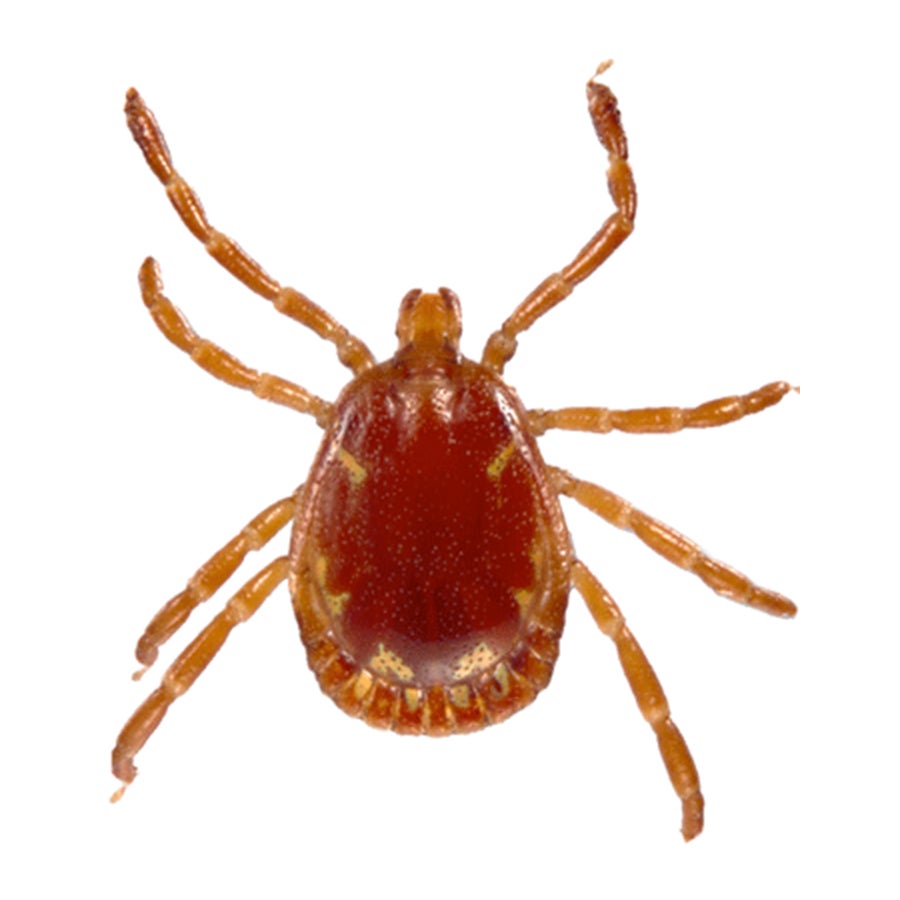
A recently published article in Grice Connect highlighted the national importance of the U.S. National Tick Collection, housed at Georgia Southern University's Statesboro Campus. Home to more than one million specimens representing nearly every known tick species, the collection serves as a critical resource for researchers, public health agencies, and disease surveillance efforts studying the spread of tick-borne illnesses. The collection, owned by the Smithsonian Institution and curated at Georgia Southern University, is one of the largest and most comprehensive tick collections in the world. Researchers use it to identify emerging threats, track changes in tick populations, and better understand the diseases these parasites can carry. As concerns about Lyme disease and other tick-borne illnesses continue to grow, the collection provides scientists with an invaluable resource for monitoring species distribution, studying disease vectors, and supporting public health preparedness. It also plays an important role in training future researchers in a field where specialized expertise is increasingly needed. Lorenza Beati, Ph.D., is curator of the U.S. National Tick Collection and associate professor at Georgia Southern University.  Her research focuses on tick taxonomy, genetics, evolutionary relationships, and the role ticks play in transmitting diseases that affect both humans and animals. View her profile The article underscores the collection's growing importance as researchers work to better understand the complex relationships between ticks, pathogens, wildlife, and human health. As environmental conditions change and tick populations expand into new regions, resources like the U.S. National Tick Collection are helping scientists stay ahead of emerging public health challenges. The collection has been entrusted to Georgia Southern since 1990 and includes more than 1 million specimens and more than 125,000 accessioned lots. Beati said the collection is probably the largest curated tick collection in the world. While she said there may be a larger collection elsewhere, she said Georgia Southern’s collection remains especially important because it is active, used for research, and supported by curatorial work. “By having two curators here, we really keep the collection very active,” Beati said. “We publish a lot, we do a lot of research on our samples. We have visitors coming from all over the world to work with us.”  June 13 - Grice Connect Covering? We can help! Lorenza Beati is available to speak with media about tick-borne diseases, tick identification, vector ecology, disease surveillance and the critical role scientific collections play in protecting public health. Her expertise can help audiences better understand the growing impact of ticks on human and animal health, as well as the research efforts underway to address these challenges.

View all posts