Recent Expert Placement: GOP-Led LI Towns Challenge Moving Elections to Even-Numbered Years

Jun 12, 2024

1 min

Lawrence Levy

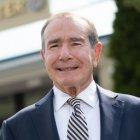
Lawrence Levy, associate vice president and executive dean of the National Center for Suburban Studies, spoke to Newsday about five GOP-led towns in Nassau and Suffolk that are challenging a new state law to move most local elections to even-numbered years.


Levy called the law “a mixed bag” for political parties and candidates. He said the candidate at the top of the ticket could impact many of the results.


“There is the risk that local issues will be drowned out … but it’s also an opportunity for a lot of people, who never bothered to pay attention to local races, to maybe do so if they don’t want to click a lever for just any old person without knowing something,” he said.


Lawrence Levy is the Executive Dean of the National Center for Suburban Studies at Hofstra University. He's available to speak with media - simply click on his icon now to arrange an interview today.

Connect with:
Lawrence Levy

Lawrence Levy

Associate Vice President and Executive Dean of the National Center for Surburban

Dean Levy works close with Hofstra’s academic community to shape an innovative agenda for suburban study

Suburban Spaces and DevelopmentSuburbsEducationTaxationPolitics of the Suburbs
Powered by

You might also like...

Check out some other posts from Hofstra University

Levy on Bipartisan Success to Protect the WTC Health Program; DiNapoli’s Primary Opponents featured image

1 min

Levy on Bipartisan Success to Protect the WTC Health Program; DiNapoli’s Primary Opponents

Lawrence Levy, associate vice president and executive dean of the National Center for Suburban Studies, talked to Newsday about successful bipartisan efforts to protect the World Trade Center Health Program from attempts by the White House to reduce the federal workforce. Levy explained to Newsday that advocates and New York lawmakers from both sides of the aisle have found success protecting the program from cuts this past year underscored “the power to get things done, not only when Republicans and Democrats come together, but through urban-suburban coalitions.” Levy also spoke to Newsday about New York State Comptroller Tom DiNapoli facing several primary opponents this year. Levy said that DiNapoli is seen as an establishment figure within the Democratic Party who is more cautious than the progressive wing would like. He also has deep ties to the state’s politically powerful unions. “In a close race, he’s going to count on them to get out the vote,” Levy said.

Remembering the Ludlow Massacre of 1914 featured image

1 min

Remembering the Ludlow Massacre of 1914

Mary Anne Trasciatti, Hofstra University’s director of the Labor Studies Program and professor of rhetoric, is referenced in an article on the website Counter Punch about how a dispute for fair wages and safer working conditions led to the 1914 massacre of 25 miners and family members in Ludlow, Colorado. The author, Robert Forrant, notes that he and Dr. Trasciatti co-edited “Where Are the Workers,” a collection of essays written by labor historians and archivists that explore nationwide efforts to bring the history of labor and working people into mainstream narratives of U.S. history. The Ludlow Massacre, he says, is one of the most dramatic and deadly of those stories.

Professor James Sample Provides National Commentary on Voting Rights, Key Supreme Court Cases featured image

1 min

Professor James Sample Provides National Commentary on Voting Rights, Key Supreme Court Cases

Professor James Sample of the Maurice A. Deane School of Law at Hofstra University continued to serve as a prominent national commentator this month, appearing across ABC News, MS NOW (formerly MSNBC), SiriusXM, and Newsday to analyze fast-moving developments in election law, constitutional doctrine, and executive power. Across these appearances, Professor Sample focused on the evolving legal and practical implications of the SAVE America Act, including its potential burdens on married voters and broader access concerns. He also examined a series of high-stakes Supreme Court matters, including disputes over mail-in ballot deadlines and the constitutional debate surrounding birthright citizenship, offering insight into how the Court’s rulings could reshape election administration and individual rights. In addition, Professor Sample provided analysis of expanding presidential authority following the Court’s immunity ruling, situating current developments within a broader conversation about the scope and limits of executive power.

View all posts