As wars, geopolitical tensions and questions about international accountability challenge the global order, an important debate is emerging: Does international law still matter when powerful countries can choose to ignore it?
That question was at the center of a recent episode of Doha Debates, which brought together international experts to examine the effectiveness, legitimacy and future of international law.
Among the featured panelists was Charli Carpenter, Professor of Political Science at the University of Massachusetts Amherst, who offered a perspective on why international law remains important, even when its rules are violated.
The discussion also featured Balakrishnan Rajagopal of the Massachusetts Institute of Technology, Victor Gao of the Center for China and Globalization and political philosopher Curtis Yarvin.
Carpenter challenged the notion that violations of international law necessarily demonstrate its failure. She pointed to the international agreements that make everyday global cooperation possible, from aviation safety to diplomacy, and argued that international legal frameworks have helped establish expectations for how countries conduct themselves.
Charli Carpenter is a scholar of international relations whose research examines international law, human security, global norms and the role of advocacy networks in shaping international policy. View her profile She also emphasized that violations can sometimes strengthen international norms by prompting other countries and institutions to reaffirm their importance.
"And I think it is a common myth that if an actor breaks a rule that necessarily weakens the rule. Sometimes that can be an impetus for others to defend and reaffirm the rule. And it's often the case that rule breakers don't undermine rules, they undermine themselves and their social standing in a community." The debate explored the role of the United Nations, the Geneva Conventions, the International Criminal Court and the challenges of holding powerful countries accountable.
Carpenter also discussed research into international treaties and public attitudes toward nuclear weapons, explaining how international agreements can influence expectations and behavior even when major powers are not parties to them.
As global conflicts continue to test international institutions, the discussion offers a timely examination of whether the international legal system needs reform, stronger enforcement or renewed political commitment.
Watch the full Doha Debates discussion on YouTube to hear Carpenter and her fellow panelists explore the future of international law and the consequences of weakening global institutions.
If you're interested in speaking with Charli Carpenter about international law, global governance, international security, human rights and the future of international institutions, simply click on her profile to arrange an interview today.
·
6 min
This article is republished from The Conversation under a Creative Commons license. Read the original article here. With his Aug. 11, 2025, announcement that he was sending the National Guard – along with federal law enforcement – into Washington, D.C. to fight crime, President Donald Trump edged U.S. troops closer to the kind of military-civilian confrontations that can cross ethical and legal lines.
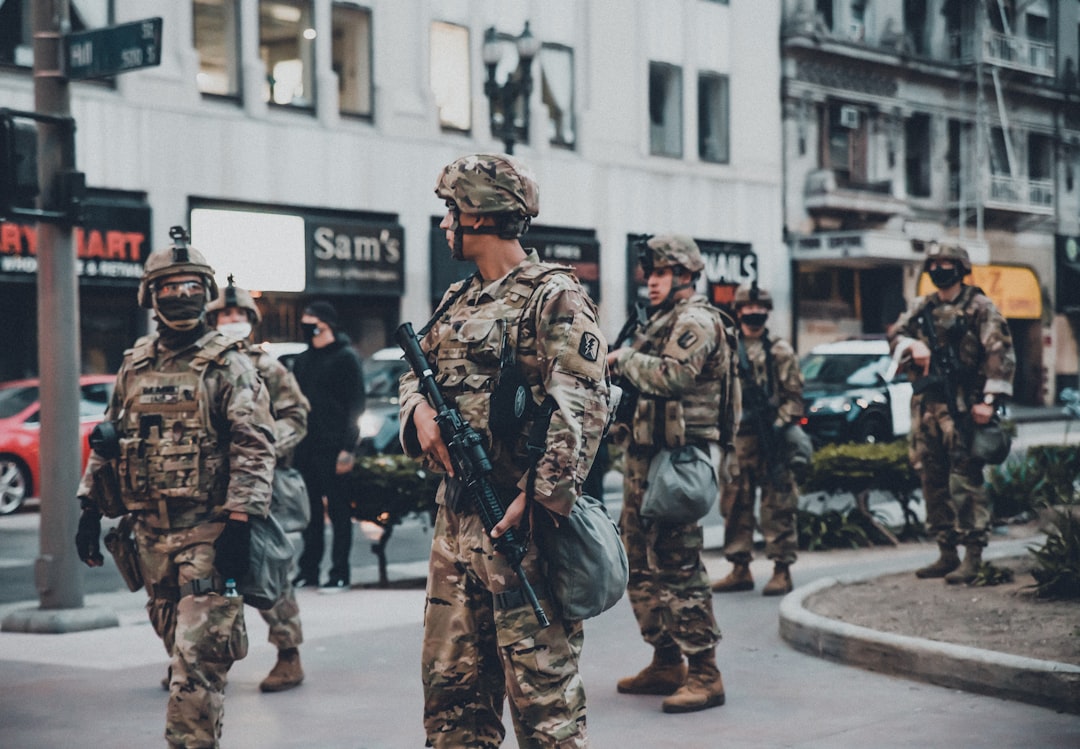
Indeed, since Trump returned to office, many of his actions have alarmed international human rights observers. His administration has deported immigrants without due process, held detainees in inhumane conditions, threatened the forcible removal of Palestinians from the Gaza Strip and deployed both the National Guard and federal military troops to Los Angeles to quell largely peaceful protests.
When a sitting commander in chief authorizes acts like these, which many assert are clear violations of the law, men and women in uniform face an ethical dilemma: How should they respond to an order they believe is illegal?
The question may already be affecting troop morale. “The moral injuries of this operation, I think, will be enduring,” a National Guard member who had been deployed to quell public unrest over immigration arrests in Los Angeles told The New York Times. “This is not what the military of our country was designed to do, at all.”
Troops who are ordered to do something illegal are put in a bind – so much so that some argue that troops themselves are harmed when given such orders. They are not trained in legal nuances, and they are conditioned to obey. Yet if they obey “manifestly unlawful” orders, they can be prosecuted. Some analysts fear that U.S. troops are ill-equipped to recognize this threshold.
We are scholars of international relations and international law. We conducted survey research at the University of Massachusetts Amherst’s Human Security Lab and discovered that many service members do understand the distinction between legal and illegal orders, the duty to disobey certain orders, and when they should do so.
Compelled to disobey U.S. service members take an oath to uphold the Constitution. In addition, under Article 92 of the Uniform Code of Military Justice and the U.S. Manual for Courts-Martial, service members must obey lawful orders and disobey unlawful orders. Unlawful orders are those that clearly violate the U.S. Constitution, international human rights standards or the Geneva Conventions.
Service members who follow an illegal order can be held liable and court-martialed or subject to prosecution by international tribunals. Following orders from a superior is no defense.
Our poll, fielded between June 13 and June 30, 2025, shows that service members understand these rules. Of the 818 active-duty troops we surveyed, just 9% stated that they would “obey any order.” Only 9% “didn’t know,” and only 2% had “no comment.”
When asked to describe unlawful orders in their own words, about 25% of respondents wrote about their duty to disobey orders that were “obviously wrong,” “obviously criminal” or “obviously unconstitutional.”
Another 8% spoke of immoral orders. One respondent wrote that “orders that clearly break international law, such as targeting non-combatants, are not just illegal — they’re immoral. As military personnel, we have a duty to uphold the law and refuse commands that betray that duty.”
Just over 40% of respondents listed specific examples of orders they would feel compelled to disobey.
The most common unprompted response, cited by 26% of those surveyed, was “harming civilians,” while another 15% of respondents gave a variety of other examples of violations of duty and law, such as “torturing prisoners” and “harming U.S. troops.”
One wrote that “an order would be obviously unlawful if it involved harming civilians, using torture, targeting people based on identity, or punishing others without legal process.”
Soldiers, not lawyers But the open-ended answers pointed to another struggle troops face: Some no longer trust U.S. law as useful guidance.
Writing in their own words about how they would know an illegal order when they saw it, more troops emphasized international law as a standard of illegality than emphasized U.S. law.
Others implied that acts that are illegal under international law might become legal in the U.S.
“Trump will issue illegal orders,” wrote one respondent. “The new laws will allow it,” wrote another. A third wrote, “We are not required to obey such laws.”
Several emphasized the U.S. political situation directly in their remarks, stating they’d disobey “oppression or harming U.S. civilians that clearly goes against the Constitution” or an order for “use of the military to carry out deportations.”
Still, the percentage of respondents who said they would disobey specific orders – such as torture – is lower than the percentage of respondents who recognized the responsibility to disobey in general.
This is not surprising: Troops are trained to obey and face numerous social, psychological and institutional pressures to do so. By contrast, most troops receive relatively little training in the laws of war or human rights law.
Political scientists have found, however, that having information on international law affects attitudes about the use of force among the general public. It can also affect decision-making by military personnel.
This finding was also borne out in our survey.
When we explicitly reminded troops that shooting civilians was a violation of international law, their willingness to disobey increased 8 percentage points.
Drawing the line As my research with another scholar showed in 2020, even thinking about law and morality can make a difference in opposition to certain war crimes.
The preliminary results from our survey led to a similar conclusion. Troops who answered questions on “manifestly unlawful orders” before they were asked questions on specific scenarios were much more likely to say they would refuse those specific illegal orders.
When asked if they would follow an order to drop a nuclear bomb on a civilian city, for example, 69% of troops who received that question first said they would obey the order.
But when the respondents were asked to think about and comment on the duty to disobey unlawful orders before being asked if they would follow the order to bomb, the percentage who would obey the order dropped 13 points to 56%.
While many troops said they might obey questionable orders, the large number who would not is remarkable.
Military culture makes disobedience difficult: Soldiers can be court-martialed for obeying an unlawful order, or for disobeying a lawful one.
Yet between one-third to half of the U.S. troops we surveyed would be willing to disobey if ordered to shoot or starve civilians, torture prisoners or drop a nuclear bomb on a city.
The service members described the methods they would use. Some would confront their superiors directly. Others imagined indirect methods: asking questions, creating diversions, going AWOL, “becoming violently ill.”
Criminologist Eva Whitehead researched actual cases of troop disobedience of illegal orders and found that when some troops disobey – even indirectly – others can more easily find the courage to do the same.
Whitehead’s research showed that those who refuse to follow illegal or immoral orders are most effective when they stand up for their actions openly.
The initial results of our survey – coupled with a recent spike in calls to the GI Rights Hotline – suggest American men and women in uniform don’t want to obey unlawful orders.
Some are standing up loudly. Many are thinking ahead to what they might do if confronted with unlawful orders. And those we surveyed are looking for guidance from the Constitution and international law to determine where they may have to draw that line.
Zahra Marashi, an undergraduate research assistant at the University of Massachusetts Amherst, contributed to the research for this article.
·
1 min
Charli Carpenter, professor of political science at the University of Massachusetts Amherst and director of the Human Security Lab, is available to discuss a recent survey she led of U.S. military members and veterans that found a real-time drop in their trust in the president’s nuclear launch authority that occurred during the recent Iran crisis.
Carpenter and colleagues Grace Bernheart, Joseph Mara and Zahra Marashi recently published an article on the Bulletin of the Atomic Scientists explaining what their findings mean and why they are important, and Carpenter also appeared on the podcast The Fire This Time to discuss the survey.
To speak with Carpenter about the survey, contact her via her ExpertFile profile here.
Expertise
International Relations
International Law
Laws of War
Human Rights and Humanitarian Law
Nuclear Weapons
Protection of Civilians
Biography
Charli Carpenter's teaching and research interests focus on the relationship between international law, global order and the protection of national and human security.
She has written extensively on the laws of war, norms against nuclear weapons use, the protection of civilians, human rights advocacy, and humanitarian affairs.
She is the author three books, numerous scholarly articles and media commentaries on international law and politics, has consulted for the United Nations, State Department, USAID and NGO community, writes a bi-weekly column on human security at World Politics Review, and directs Human Security Lab, where student-faculty teams analyze and amplify understudied voices on pressing human security problems.
‘I’d disobey’: 4 out of 5 US troops wouldn’t follow order they see as illegal, poll finds
MassLive online
2025-08-15
As many as four in five American troops would disobey an order they believe to be illegal, according to a new poll conducted by researchers at the University of Massachusetts Amherst.
The survey of active service members showed hesitancy to follow orders they believed to be wrong and revealed how troops might act if caught in a moral dilemma between their duty to obey orders and potential legal consequences for following an order that could violate the law.
A new study led by Charli Carpenter, professor of political science and director of the UMass Amherst Human Security Lab, shows that while most people in Afghanistan support human rights for Afghan women, fathers of single daughters are especially likely to support women’s rights when primed to think about the gender of their eldest child.
Warts and All, International Law Is Still Better Than No Law
Bloomberg online
2023-11-16
Charli Carpenter, director of the Human Security Lab and professor of political science, is quoted in a commentary on international law in the context of the Israel-Hamas war. However imperfect, international law helps to distinguish “between ‘civilized’ violence and outright barbarity,” Carpenter says.
‘It’s hard to conceive of this as anything other than like a death march’: Local experts decry forced displacement of Gazans
The Boston Globe print
2023-10-14
Charli Carpenter, political science and legal studies, is among the local experts commenting on risks from relocating Palestinians in Gaza. “It’s simply not possible to move 1 million people on foot in 24 hours. The attempt to do so will cause trampling, crowding, accidents, severe deprivation, exposure, and a crowding that will exacerbate risk of disease,” Carpenter said.
Ukraine’s Male Travel Ban and the Protection of Civilians in Wartime
War & Peace Podcast online
2023-07-12
This week on War & Peace, Olga Oliker and Elissa Jobson speak with Charli Carpenter, director of the Human Security Lab at the University of Massachusetts Amherst, about the perception and the gendered effects of Ukraine’s male travel ban and ways for better protecting civilians in wartime.
Ukrainians express worries over conscription following Russia's invasion
NPR radio
2022-08-15
Not only is conscription not voluntary, the exceptions have been suspended under martial law and a travel ban put in place that prevents most men between the ages of 18 and 60 from leaving the country, effectively trapping them inside Ukraine. Charli Carpenter is the head of the Human Security Lab at the University of Massachusetts Amherst, which recently surveyed thousands of Ukrainians about the travel ban. A majority said they do not support requiring men to stay.
The challenges to prosecuting rape as a war crime in Ukraine, as allegations arise against Russia
WBUR radio
2022-05-03
Ukraine's prosecutor general, Iryna Venediktova, claims that thousands of war crimes have been committed by Russian forces all over Ukraine, including acts of sexual violence. Charli Carpenter, professor of political science at the University of Massachusetts, Amherst, discusses the challenges of prosecuting rape and other sexual crimes used as weapons of war.
UMass Political Scientist Charli Carpenter Assists Ukrainian Refugees During Spring Break
UMass Amherst online
2022-03-31
Upon seeing the flood of refugees crossing into Poland following Russia’s invasion of Ukraine, the professor of political science made the decision to travel to the Polish-Ukrainian border to witness the situation first-hand, and report back on it in a series of essays for the magazine World Politics Review.
U.S. Troops Are Obligated to Disobey Unlawful Orders. Would They?
World Politics Review
Charli Carpenter
2025-08-26
Since returning to office in January 2025, President Donald Trump has taken numerous actions that have alarmed international human rights observers: deporting immigrants without due process, holding detainees in inhumane, overcrowded conditions, and deploying both the National Guard and federal military troops to Los Angeles to quell largely peaceful protests. In recent weeks, National Guard troops have deployed to Washington, ostensibly to move unhoused citizens off the streets and to fight crime. Now, with Trump announcing that he will send the National Guard from conservative states to other left-leaning cities like Chicago and New York, fears are rising of an uptick in political violence and human rights violations.
Even the troops themselves are questioning what they would do if asked to turn on their fellow Americans. According to new survey data from the Human Security Lab at UMass Amherst, which I direct, the vast majority of them recognize the duty to disobey an unlawful order and are able to imagine such scenarios. Whether they would actually disobey an order when push comes to shove, however, is a murkier question.
The Rules-Based Order Is Less Dependent on the U.S. Than Biden’s Critics Think
World Politics Review
Charli Carpenter
2025-01-14
Charli Carpenter, professor of political science, writes that international rules-based order is less dependent on the United States than critics of President Joe Biden believe.
A New Front Just Opened in the Campaign Against Nuclear Weapons
World Politics Review
Charli Carpenter
2024-06-18
"...It may seem contradictory that nuclear spending, nuclear saber-rattling and reassertive nuclear policies appear to be on the rise, just five years after the Treaty on the Prohibition of Nuclear Weapons came into force, banning the use or threatened use of such weapons. But in some respects this is to be expected. The “nuclear taboo” has always been a taboo on the use, not the possession, of nuclear weapons, and it has co-existed uneasily with the acceptance of a world in which the possession of nuclear weapons—at least by certain states—remains a reality."
"As 2023 drew to a close, it was easy to feel like the world was trending in the wrong direction. Climate change is getting worse, and world governments have done precious little to stop it. Refugee crises have proliferated, even as unfounded distrust of foreigners is also on the rise. Authoritarianism is on the march, with freedom indicators continuing to slide, while reproductive health is facing a global backlash and trust in political institutions is dangerously low. The war in Ukraine is rumbling on, while the outbreak of war in Gaza has taken such a human toll that Christmas in Bethlehem—seen as the birthplace of Jesus by the Christian faithful—was canceled entirely this year...."
Zelensky’s Travel Ban on Ukrainian Men Could Damage War Morale
Foreign Policy
2022-11-14
Shortly after Russia invaded Ukraine in February, Ukrainian President Volodymyr Zelensky declared martial law and submitted a notice to the United Nations announcing his intention to derogate from his country’s obligations under various human rights treaties for the necessity of national security. Among these derogations was the right to freedom of movement: Ukraine implemented a travel ban that restricts most men ages 18 to 60 from leaving the country.
On July 5, Ukrainian army generals issued a proclamation dramatically expanding the martial law prohibiting Ukrainian civilian men’s freedom of movement, calling on all those “liable for military service” to remain in their home districts.
When Foreign Policy Went Wrong: How to Spot a Bad Concept When You See It.
Foreign Policy
2021-01-12
In US foreign policy, it isn't always easy to suss out good ideas from bad. Some bad ideas masquerade as neutral fact, only to be exposed later on. Others worm their way into strategic doctrines, guiding a wide range of policies that long outlast the original thought. Good ideas, meanwhile, can have bad effects--and bad ideas can be used for good. Given this tangle, picking the worst foreign-policy ideas of the last 50 years may seem like knitting socks with fish line. But it's not impossible.
The U.S. Is Breaking the Law on the Southern Border
World Politics Review
Charli Carpenter
2021-07-23
Over the past few weeks, activists led by former border patrol agent turned refugee advocate Jenn Budd gathered at Fort Bliss military base outside El Paso, Texas, to protest the continued detention of children, many of them unaccompanied, in crowded conditions while they await asylum hearings. The protests are a continuation of direct action sparked off two summers ago by then-President Donald Trump’s draconian immigration policies, which included forcing immigrants to await asylum hearings in the dangerous city of Juarez, Mexico, rather than in El Paso; separating children from their parents or guardians upon detention, while deporting 1,400 parents back to their countries of origin without their children; and holding immigrants that made it across the border in crowded, inhumane conditions that fit the historical definition of “concentration camps”—internment centers where targeted groups are detained without trial or administrative proceedings.
Breaking bad? How survey experiments prime Americans for war crimes
Perspectives on Politics
2020-11-03
What affects Americans’ sensitivity to international laws and norms on the use of force? A wealth of recent IR literature tackles this question through experimental surveys using fictional scenarios and treatments to explore precisely when Americans would approve of government policies that would violate the laws of war. We test whether such survey experiments may themselves be affecting public sensitivity to these norms—or even Americans’ understanding of the content of the norms themselves.