With November's midterm elections approaching, Republicans may face a consequential decision: whether to confirm another conservative Supreme Court justice before potentially losing control of the Senate.
In a new piece published October 14 in The Conversation, Paul M. Collins Jr., professor of legal studies and political science at the University of Massachusetts Amherst, examines how such a move could reshape the Supreme Court and intensify political divisions over the judiciary.
Collins explains that if Democrats win control of the Senate, a retirement by conservative Justices Clarence Thomas or Samuel Alito before the new Congress takes office in January could give President Donald Trump an opportunity to appoint a fourth Supreme Court justice.
While Republicans could potentially secure another conservative appointment, Collins argues the political consequences could extend well beyond the immediate confirmation battle.
As Collins writes in The Conversation:
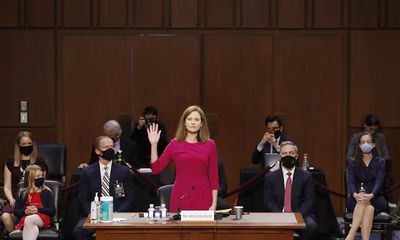
If Alito or Thomas announced their retirement after the midterms, Republicans would have enough time to confirm a successor. The Senate has four and a half work weeks scheduled between Election Day and Jan. 3. Justice Amy Coney Barrett was confirmed less than a month after her nomination, making the timeline tight but doable. His analysis draws parallels to the contentious Supreme Court confirmation battles of 2016 and 2020, when Republicans blocked Merrick Garland's nomination before subsequently confirming Amy Coney Barrett shortly before a presidential election.
Collins suggests another controversial confirmation could further undermine public confidence in the Supreme Court and strengthen calls for judicial reform, including expanding the number of justices.
The stakes are significant. With lifetime appointments shaping constitutional interpretation for decades, the outcome could influence not only the Court's ideological direction but also the future of judicial independence and the relationship between Congress and the judiciary.
Paul M. Collins, Jr. is a professor of legal studies and political science at the University of Massachusetts Amherst. His research focuses on understanding bias and inequality in the legal system, the selection and work of judges and social movement litigation. View his profile An established authority on Supreme Court nominations, Collins has researched judicial appointments, political influences on the courts and the confirmation process. He is co-author of Supreme Court Confirmation Hearings and Constitutional Change and Supreme Bias: Gender and Race in U.S. Supreme Court Confirmation Hearings.
As the midterm elections approach, Collins can provide journalists with expert analysis of Supreme Court vacancies, Senate confirmation procedures, judicial politics and the potential long-term consequences of another contentious appointment.
If you're interested in speaking with Paul M. Collins Jr. about Supreme Court nominations, judicial independence, Senate confirmation battles and the future of the U.S. judiciary, simply click on his profile to arrange an interview today.
·
1 min
UMass Amherst Supreme Court expert Paul Collins explains why the courts are a vital check on presidential power and how pending cases could shape how much power Trump can accrue.
In democratic systems, the courts are a vital check on a leader’s power. They have the ability to overturn laws and, in Donald Trump’s case, the executive orders he has relied on to achieve his goals.
Since taking office, Trump has targeted the judiciary with a vengeance. He has attacked what he has called “radical left judges” and is accused of ignoring or evading court orders.
The Supreme Court has already handed the Trump administration some key wins in his second term. But several cases now before the court will be pivotal in determining how much power Trump is able to accrue – and what he’ll be able to do with it.
As Paul Collins, a Supreme Court expert from the University of Massachusetts Amherst, explains in episode 4 of The Making of an Autocrat:
It’s all about presidential power. And that’s really significant because it’s going to enable the president to basically inject a level of politics into the federal bureaucracy that we frankly haven’t really seen before in the US. Listen to the interview with Collins at The Making of an Autocrat podcast, available at Spotify, Apple, or wherever you get your podcasts.
This article is republished from The Conversation under a Creative Commons license. Read the original article here.
·
5 min
UMass Amherst legal scholar Paul Collins explains how the criminal justice process can punish people even if they are never convicted, from legal fees to lost time and stress.
Former FBI Director James Comey pleaded not guilty to two criminal charges in a federal court in Alexandria, Virginia, on Oct. 8, 2025. The charges allege that Comey lied to Congress in September 2020 when he stood by earlier testimony that he did not authorize a leak of an FBI investigation involving Hillary Clinton. Numerous legal commentators on both the left and right have argued that Comey’s indictment is little more than the Trump administration seeking vengeance on one of the president’s perceived enemies. They allege that the president has it out for Comey, who investigated Russian interference in the 2016 presidential election and was fired by Trump in 2017.
The president’s own words support the idea that the Trump administration is targeting Comey. In a social media post on Sept. 20, 2025, Trump directed Attorney General Pam Bondi to move forward with prosecutions against Comey, Democratic U.S. Sen. Adam Schiff and New York Attorney General Letitia James: “They’re all guilty as hell, but nothing is going to be done. …JUSTICE MUST BE SERVED, NOW!!!”
If the case against Comey is exceedingly weak – and little more than a political prosecution – then, in my view as a scholar of the U.S. legal system, it should result in the dismissal of charges by the judge or a not guilty verdict by the jury.
But even when an individual is not convicted, the process of defending against charges can itself be a form of punishment, as renowned legal scholar Malcolm Feeley pointed out almost 50 years ago.
Here’s how the criminal justice process punishes even innocent people.
The criminal justice process The criminal justice process is complex. After a grand jury returns an indictment at the request of a prosecutor, the accused appears in court for their arraignment. They are informed of the charges against them and typically enter a plea. During what’s called “discovery,” the prosecution and defense investigate the evidence the other side plans to rely on. There are also pretrial motions in which the parties ask judges to dismiss charges and accept or exclude evidence.
The defense and prosecution may also meet to discuss a plea bargain, wherein the accused may plead guilty in exchange for a lesser sentence or reduced charges.
If there is no plea bargain, then the case moves to trial, which is itself a complicated process. If a defendant is found guilty, they can mount an appeal to higher courts in an attempt to have their conviction overturned.
To help navigate this process, criminal defendants typically hire a lawyer.
And good lawyers don’t come cheap.
Money and time Indigent defendants, who do not have the financial resources to pay their own legal fees, can rely on public defenders paid for by the government.
But individuals who can afford to pay for their own lawyer face a substantial financial burden for attorney services and court fees. An experienced criminal defense lawyer can charge more than US$1,000 per hour, with fees quickly adding up. This means that mounting a legal defense can easily cost tens of thousands of dollars.
On top of this, it takes a great deal of time to prepare for a criminal case. While lawyers and their staff do much of the legwork for trial preparation, a client works with their attorneys to help formulate a defense.
As a result, criminal defendants lose one of the most precious commodities in the world: their time.
And this time can come at a tangible cost in the form of lost wages, which harms their day-to-day lives. Put simply, every hour spent preparing for trial is an hour defendants could spend working or enjoying their lives.
Stress and embarrassment It’s not pleasant being charged with a crime.
The criminal process, which typically lasts months, takes a toll on one’s mental health. This is largely driven by the uncertainty surrounding the outcome of a criminal trial and the possibility of losing one’s freedom if convicted.
In addition, there is a social stigma that comes with being accused of a crime. This can result in reputational damage, anxiety and embarrassment.
The Trump administration appears to recognize this reality.
Several media outlets have reported that FBI leadership had planned a public perp walk for Comey.
According to a CBS News report, this was to have included “‘large, beefy’ agents … ‘in full kit,’ including Kevlar vests and exterior wear emblazoned with the FBI logo.” Apparently, the plan was aborted after several FBI supervisors refused to cooperate, viewing it as inappropriate. One agent was disciplined for insubordination after refusing to go along with the plan to embarrass Comey in this way.
Not all criminal defendants suffer the same The extent to which criminal defendants experience the criminal justice process as a form of punishment varies from person to person.
For high-status people like Comey, lost wages and attorneys’ and court fees may not be that big of a deal.
But these costs may be incredibly significant for other people who have been, or are likely to be, targeted by the Trump administration.
The high costs of lawyers’ fees are well known to the president. For instance, his political action committee spent millions of dollars on attorneys’ fees in an unsuccessful effort to defend Trump from criminal charges in New York.
In addition, people no doubt experience the psychological stress and stigma of a possible criminal conviction differently. But regardless of one’s wealth, the lost time spent preparing a criminal defense is something that cannot be replaced.
The recognition that the criminal process is itself a form of punishment is one of the reasons that the Department of Justice has maintained independence from the president. By violating the tradition of staying out of politics, the Justice Department in the Trump administration has opened the door for the president to seek retribution on his perceived political enemies.
The mere act of putting them through the criminal process ensures that they suffer, regardless of their guilt or innocence.
This article is republished from The Conversation under a Creative Commons license. Read the original article here.
Expertise
Bias in Judicial Appointments
Judicial Appointments
Public Law
Inequality in the Legal System
American Politics
Judicial Ethics
Judicial Elections
Supreme Court Confirmation Hearings
Biography
Paul M. Collins, Jr. is a Professor of Legal Studies and Political Science at the University of Massachusetts Amherst. His research focuses on understanding bias and inequality in the legal system, the selection and work of judges, and social movement litigation.
Collins is the author of Friends of the Supreme Court: Interest Groups and Judicial Decision Making (Oxford University Press), and coauthor of Supreme Court Confirmation Hearings and Constitutional Change (Cambridge University Press), The President and the Supreme Court: Going Public on Judicial Decisions from Washington to Trump (Cambridge University Press), and Supreme Bias: Gender and Race in U.S. Supreme Court Confirmation Hearings (Stanford University Press).
The recipient of numerous research awards, Collins has published dozens of journal articles and his research has been funded by grants from the Dirksen Congressional Center and the National Science Foundation. His research and commentary have appeared in a host of popular media outlets, including the New York Times, National Public Radio, and the Washington Post.
Collins is the founder and principal of Judicial Analytics, LLC, and has consulted with members of the United States Senate on Supreme Court nominations, as well as interest groups on their litigation strategies.
Elena Kagan Trashes Conservative SCOTUS Justices’ ‘Misconceived’ Theory
Newsweek online
2026-10-21
Supreme Court Justice Elena Kagan criticized originalism, a legal theory embraced by the High Court’s conservative justices, as “misconceived” and “not a very good match” during remarks to law students.
Originalism has “recently become influential across the ideological spectrum,” Paul Collins, professor of legal studies and political science at the University of Massachusetts Amherst, told Newsweek.
Trump defies US Constitution: From ending birthright citizenship to pardoning Capitol rioters
EL PAÍS online
2025-01-22
Paul M. Collins Jr. comments about President Donald Trump’s actions during the early days of his second term, including an executive order seeking to end birthright citizenship. “The idea that a president is authorized to unilaterally reinterpret an amendment [to the U.S. Constitution] is a crazy legal theory,” Collins says. “I think the courts will ultimately reject it, but I would not be surprised if some of Trump’s first-term justices support it.”
Paul Collins says that if former President Donald Trump wins the presidential election, it’s likely his administration will pressure Supreme Court Chief Justice John Roberts to retire and enable Trump to nominate a more conservative justice.
What would an impeachment of a U.S. Supreme Court Justice look
KNX News Podcast online
2024-05-23
Paul Collins, professor of legal studies at UMass Amherst, discusses what impeaching a Supreme Court justice might look like. “You need to have a majority in the House of Representatives move for impeachment and then that would get transferred to the Senate, and it would take two-thirds of the Senate to actually remove a judge or a Supreme Court Justice from office,” he explains.
Supreme Court Justice Asks If City Can Kill Homeless People
Newsweek online
2024-04-22
Paul Collins comments about a case before the U.S. Supreme Court challenging whether homeless people have a right to sleep outside. Collins says it is likely that the Court will split down ideological lines and uphold the policy in place in the case against the city of Grants Pass, Oregon.
Why Trump criminal trial is about more than hush money
The Christian Science Monitor online
2024-04-15
Paul Collins comments on the New York criminal trial of former president Donald Trump. “It’s a complex case and I think there hasn’t been enough attention on just how complex it’s going to be for the prosecution to prove,” he says.
Trump’s chances of returning to the White House rest in the hands of the Supreme Court
EL PAÍS
2023-12-21
Paul Collins comments on the Colorado Supreme Court’s decision barring former President Donald Trump from that state’s presidential primary ballot. “It’s almost impossible to believe that the [U.S.] Supreme Court will not accept this case,” Collins says. “It addresses a matter of exceptional importance, and the question of whether the 14th Amendment’s disqualification clause applies to presidents is a question that has not been answered by the Supreme Court before.”
Paul Collins, comments on the new code of ethics released by the U.S. Supreme Court on November 13. “The language in the Code of Conduct is exceedingly vague. Most importantly, there appears to be no enforcement mechanism. So, I read this code of conduct as an acknowledgement of the criticisms the Court is currently facing – which has resulted in historically low public approval – but not as a serious effort to address the ethical issues facing the Court,” Collins says.
“Witnesses lie, recordings don’t”: Ex-prosecutor pinpoints major problem for Trump in new indictment
Salon online
2023-07-29
Paul Collins, a legal studies and political science professor at the University of Massachusetts Amherst, told Salon that the new charges are "shocking" and add "further fuel" to the obstruction of justice charges. "If the government can prove this aspect of the case, it will be exceptionally difficult for the former president to mount a defense," Collins said.
Military interests parachute into Supreme Court cases on LGBTQ rights, elections
USA Today print
2022-12-13
Paul Collins, a professor of legal studies and political science at the University of Massachusetts Amherst, speculated that the influence of such briefs likely depends, in part, on whether they're offering a fresh perspective about how a seemingly unrelated issue might have national security implications.
Could Supreme Court Justices Be Impeached if They Lied Under Oath?
Newsweek online
2022-06-29
Lying under oath may seem like an obvious reason to bring impeachment charges against a Supreme Court justice but Paul Collins, a legal studies and political science professor at the University of Massachusetts, in Amherst, tells Newsweek that the grounds for impeachment were more of a political matter.
Confirmation Hearings, Once Focused on Law, Are Now Mired in Politics
The New York Times print
2022-03-23
Paul M. Collins Jr., a political scientist at the University of Massachusetts, Amherst, said Judge Jackson was no more responsive to questions on her legal views than earlier nominees had been. “Judge Jackson took very few solid positions on anything remotely controversial,” he said, adding that Justice Barrett, who was confirmed in 2020, may have served as her model.
Republicans can confirm a Supreme Court justice if Democrats take the Senate, but at what cost?
The Conversation
Paul M. Collins, Jr.
2026-10-14
As a Supreme Court scholar, I know that judicial appointments have real consequences. Look no further than Roe v. Wade: Within two years of securing a 6–3 conservative majority, the high court in 2022 eliminated the constitutional right to abortion that had existed for almost 50 years. If Democrats take over the Senate and a Republican-appointed justice retires before Jan. 3, this will trigger one of the most explosive confirmation battles in American history.
Joe Biden leaves a complicated legacy on the federal courts
The Conversation
Paul M. Collins, Jr.
2025-01-16
"As a leading scholar of the federal courts, I believe Biden’s judicial impact is most notable in three regards: his role in the 1991 confirmation of Clarence Thomas, his historic efforts during his presidency to diversify the federal bench, and his 2024 decision to veto legislation expanding the number of federal district court judgeships."
What to expect from federal judges appointed by Trump or Harris − based on what we’ve seen from Trump and Biden picks for the Supreme Court and lower courts
The Conversation
Paul M. Collins, Jr.
2024-10-03
Paul Collins writes about the judicial nominations of the Trump-Pence and Biden-Harris administrations. “The Trump-Pence administration emphasized the selection of very conservative jurists with deep ties to the conservative legal movement. In contrast, the Biden-Harris administration sought to diversify the federal bench, making it more closely reflect the America it represents,” Collins writes.
Donald Trump picks his targets carefully and seeks to undermine their legitimacy. AP Photo/Alex Brandon Trump pushes the limits of every restriction he faces
The Conversation
Paul M. Collins, Jr.
2023-04-10
Paul Collins, professor of legal studies and political science at UMass Amherst, writes that former President Donald Trump’s social media posts attacking the daughter of the judge presiding over his criminal trial in New York state are “just the latest in his long effort to undermine the rule of law.”
Supreme Bias Gender and Race in U.S. Supreme Court Confirmation Hearings (Book)
Stanford University Press
Christina L. Boyd, Paul M. Collins, Jr., and Lori A. Ringhand
2023-10-17
Paul M. Collins, Jr., and co-authors present for the first time a comprehensive analysis of the dynamics of race and gender at the Supreme Court confirmation hearings held before the Senate Judiciary Committee. Drawing on their deep knowledge of the confirmation hearings, as well as rich new qualitative and quantitative evidence, the authors highlight how the women and people of color who have sat before the Committee have faced a significantly different confirmation process than their white male colleagues.
Trump’s latest personal attacks on judges could further weaken people’s declining trust in American rule of law
The Conversation
Paul M. Collins, Jr. and Matthew Eshbaugh-Soha
2023-04-06
When former President Donald Trump was arraigned in a Manhattan criminal court on April 4, 2023, Judge Juan Merchan warned him to “refrain” from making social media posts that could incite violence or “jeopardize the rule of law.”
Stephen Breyer is set to retire – should his replacement on the Supreme Court have a term limit?
The Conversation
Paul M. Collins and Artemus Ward
2022-01-26
Collins and Ward write: "Our extensive research on the Supreme Court shows life tenure, while well-intended, has had unforeseen consequences. It skews how the confirmation process and judicial decision-making work, and causes justices who want to retire to behave like political operatives."
The President and the Supreme Court: Going Public on Judicial Decisions from Washington to Trump (BOOK)
Cambridge University Press
Paul M. Collins and Matthew Eshbaugh-Soha
2020-02-13
When presidents take positions on pending Supreme Court cases or criticize the Court's decisions, they are susceptible to being attacked for acting as bullies and violating the norm of judicial independence. Why then do presidents target Supreme Court decisions in their public appeals?
Supreme Court Confirmation Hearings and Constitutional Change (Book)
Cambridge University Press
Paul M. Collins and Lori H. Ringhand
2013-06-24
This book presents a contrarian view to the idea that the confirmation of Supreme Court nominees by the Senate Judiciary Committee is merely empty ritual and political grandstanding.