You might also like...
Check out some other posts from Louisiana State University

Markets function best when participants understand the rules of the road, investors have confidence in the integrity of the system, and regulators have clear authority to police misconduct. The crypto market structure legislation now advancing in Congress promises exactly this clarity. Yet it raises a more troubling question: what happens when legislation written to create clarity instead exempts large parts of the digital asset ecosystem from the very safeguards that make markets safe for everyday Americans?
Blockchain technology, tokenization, stablecoins and digital assets can improve efficiency, lower transaction costs, and widen access to financial products. Those opportunities are real. But sustainable innovation requires trust, and trust requires accountability. The legislation under consideration would create broad carve-outs for parts of the digital asset ecosystem, particularly within decentralized finance. Supporters call these provisions pro-innovation. Economically, they are regulatory arbitrage–the practice of avoiding rules and requirements that apply to similar financial activities elsewhere.
Regulatory arbitrage does not create better products or services. Instead, it allows some firms to operate with lower costs by avoiding obligations designed to protect consumers and maintain financial stability. When two companies provide the same financial service but follow different sets of rules, the company with fewer requirements will naturally have lower costs. Those savings are not necessarily the result of greater efficiency. They often come from avoiding safeguards that other firms are required to maintain.
Consider what the exemptions waive. A bank that holds customer assets must keep those assets separate from their own funds, maintain capital reserves, and fund a supervisory and compliance apparatus. An exempt digital platform performing the same custodial function carries none of these costs, so it can offer the service more cheaply while taking on risks that may not become apparent until problems arise. A bank that pays a return on deposits also pays deposit insurance premiums, holds regulatory capital, and absorbs the cost of anti-money-laundering compliance. An exempt platform passing through the yield on its reserves bears none of these and can therefore advertise a higher net rate on funds that are, economically, deposits. The activity is the same on both sides of the ledger. Only the rulebook differs, and the rulebook is the cost.
This asymmetry falls hardest on community banks. Their deposits are the raw material of local lending. When an exempt platform can out-price them on stablecoin yield without carrying the costs that yield is meant to cover, deposits migrate, funding costs rise, and lending capacity contracts. As a result, community banks have less money available to lend, which can make it harder for small businesses to access credit. Community banks are responsible for roughly 60% of small-business loans and 80% of agricultural lending nationwide[1]. In Louisiana, where local banks finance small businesses and family farms, that risk is especially acute. The lesson is straightforward: when economically similar activities–like stablecoin yield and interest payments–operate under very different rules, risk often becomes harder to see until it's too late.
History shows where this leads. Before the 2008 crisis, mortgage-related risk migrated out of regulated banks and into the “shadow banking” system–financial entities and investment vehicles that operated with less oversight. Those markets looked innovative and efficient. But because transparency and accountability were weaker, risk accumulated out of sight until it threatened the entire system. The lesson is not that the instruments were novel. It is that economically similar activities were governed by different rules, and risk flowed to the corner where it was hardest to see.
The same logic applies to investors. Markets succeed only when participants trust them, which is why registration requirements promote transparency, best-execution standards help ensure fair treatment, and anti-money-laundering tools deter illicit activity. The legislation would let certain digital asset developers operate outside many of these protections. Technology can change how an asset is recorded or transferred. It does not change the risks an investor bears, or the incentives a firm faces when no one is watching.
The United States does need a durable framework for digital assets, and regulatory uncertainty serves no one. Entrepreneurs need predictable rules, investors need confidence, and markets need consistency. But a framework built on exemptions delivers none of these. It delivers a two-tier market in which the regulated bear the costs and the exempt reap the advantages, until the risks they shed reassemble somewhere less visible. The most durable financial innovations in American history emerged within systems that paired opportunity with accountability. Digital assets should be no exception. Congress should reject this legislation and pursue a framework that applies the same rules to the same activities. Innovation matters. Trust is what makes it last.
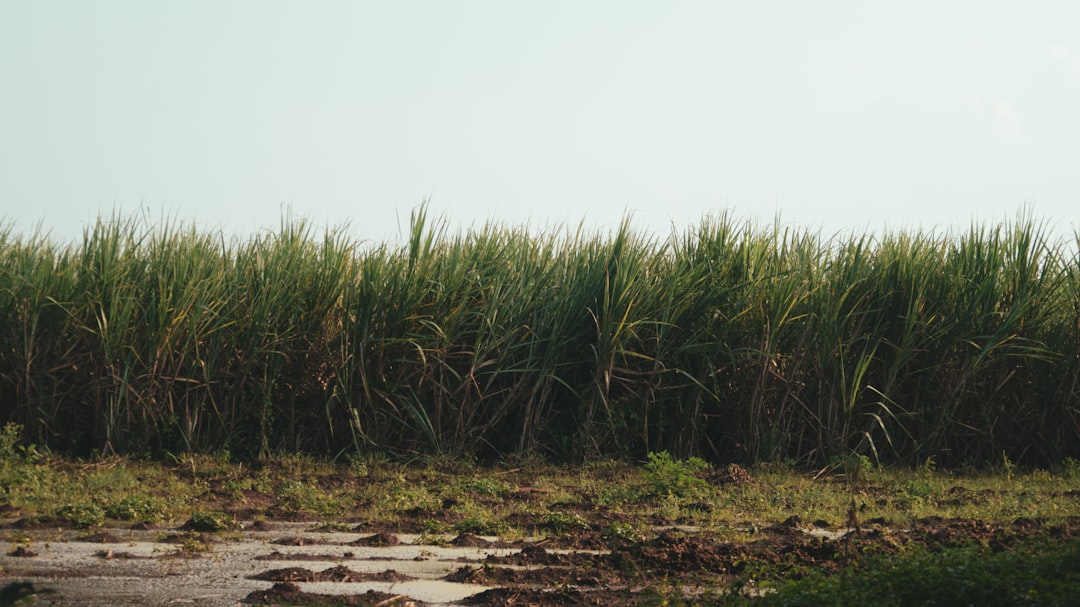
The predictions of a harvest increase over last year’s was undercut by the news of the arrival of a worrisome, invasive insect at the LSU AgCenter’s annual Sugar Research Station field day July 16.
At the outset of the day, AgCenter sugarcane specialist Kenneth Gravois said that the U.S. Department of Agriculture’s National Agriculture Statistics Services is indicating a 5,000-to-6,000-acre increase over last year’s crop, with a clearer focus coming into view in August.
“All in all, I think pretty much we have a big crop, a good crop, and people are excited about it,” Gravois said. “The big thing that is on everybody’s mind is we have to protect what’s out there. And so, with that, I’m sure a lot of people may have already heard about the pasture mealybug.”
For those who haven’t, the invasive pest threatening crops across the South, the pasture mealybug (Heliococcus summervillei), is an insect first detected in the U.S. last year. It travels via wind, storms and unclean mowing equipment. Adults are oval shaped and white and waxy in appearance. They can cause leaf yellowing, which can rapidly progress into crop dieback, thus significantly reducing yields for farmers.
AgCenter entomologist Blake Wilson said the pest has become more widespread in the past few weeks. It is on a destructive path that is likely to continue without proper vigilance.
“I think we’re up to 14 parishes where it’s been detected, including some of the biggest sugarcane-producing parishes like Iberia and Point Coupee, but we’ve now started to pick it up in the River Parishes as well,” Wilson said.
While the impact of the pest on crops isn’t entirely clear, Wilson said, observations indicate that even low densities of the insect can produce symptoms. A few fields where they are present have yellowing of 80% of the canopy.
“This is a very new problem,” Wilson said. “It doesn’t appear the pasture mealybug is a pest of sugarcane in its native Australia, so there’s no playbook to use in response to this.”
One weapon the industry does have to combat the pest is a Section 18, emergency use exemption from federal regulators to use the insecticides Sivanto Prime and Admire Pro to attempt to manage outbreaks.
“Hopefully, those two products together will help growers find some immediate solutions and keep this thing under control before it gets any worse,” Wilson said.
In less troubling news coming out of St. Gabriel, AgCenter researchers from across the scientific spectrum reported on the work they’ve been conducting on behalf of producers over the course of the past year.
Plant pathologist Andre Gama discussed the disease triangle, where for a disease to happen, three things must be in place simultaneously: a susceptible host, a favorable environment and a virulent pathogen. He said it was harder for weaker stalks with less resilient root systems to defend against soilborne pathogens like the lesion nematode.
“So, they’re going to suffer more by having something feeding off their root system,” he said. “We are collaborating with physiologists, pathologists and breeders to try and form some sort of solution to this issue.”
While breeders Collins Kimbeng and Michael Pontiff had no new varieties to introduce this year to compete with current champ L 01-299, Kimbeng did discuss various new technologies to incorporate into the AgCenter’s world-class breeding program.
“In the future, we’ll be working smarter rather than harder,” Kimbeng said. “Someday, we’ll just shine a light on the stalk and be able to determine brix and even sucrose. We start with 100,000 seedlings, so if we’re able to measure brix and sucrose very early, then that prevents us from selecting clones that have no sugar.”
Weed scientist Matt Foster discussed false ragweed, which he said can have a severe impact on ag production in general. He showed attendees the varied effects of the plant treated with different herbicides.
From the time the weed emerges, it can start flowering around two months later, Foster said. It is not currently a problem in Louisiana sugarcane, but it can cause allergies, dermatitis and asthma in humans.
The day concluded with a welcome video message from Senior Vice Chancellor for Agriculture and Dean of the College of Agriculture Matt Lee, who could not attend this year’s field day. Lee praised AgCenter researchers and producers working in unison to overcome adversity.
“Rising input costs, economic pressures and unpredictable weather conditions make farming more difficult than ever,” he said. “But what keeps this industry moving forward is innovation. The research, technology and best practices developed today are helping producers stay ahead.”
AgCenter Executive Associate Vice Chancellor Tara Smith was on hand to thank sugarcane researchers and field day event sponsors.
Jim Simon, general manager of the American Sugar Cane League; Craig McCain, state executive director of the USDA Farm Service Agency; and Mike Strain, commissioner of the Louisiana Department of Agriculture and Forestry, discussed work being done on the state and federal levels on behalf of the AgCenter and sugarcane producers.
Finally, AgCenter plant virologist Madison Flasco presented her research on sugarcane viruses like mosaic and how they can be spread through vectors like aphids. She asked the gathered producers to send samples of any seemingly infected plants to her for testing.
Aritcle origianlly posted here.
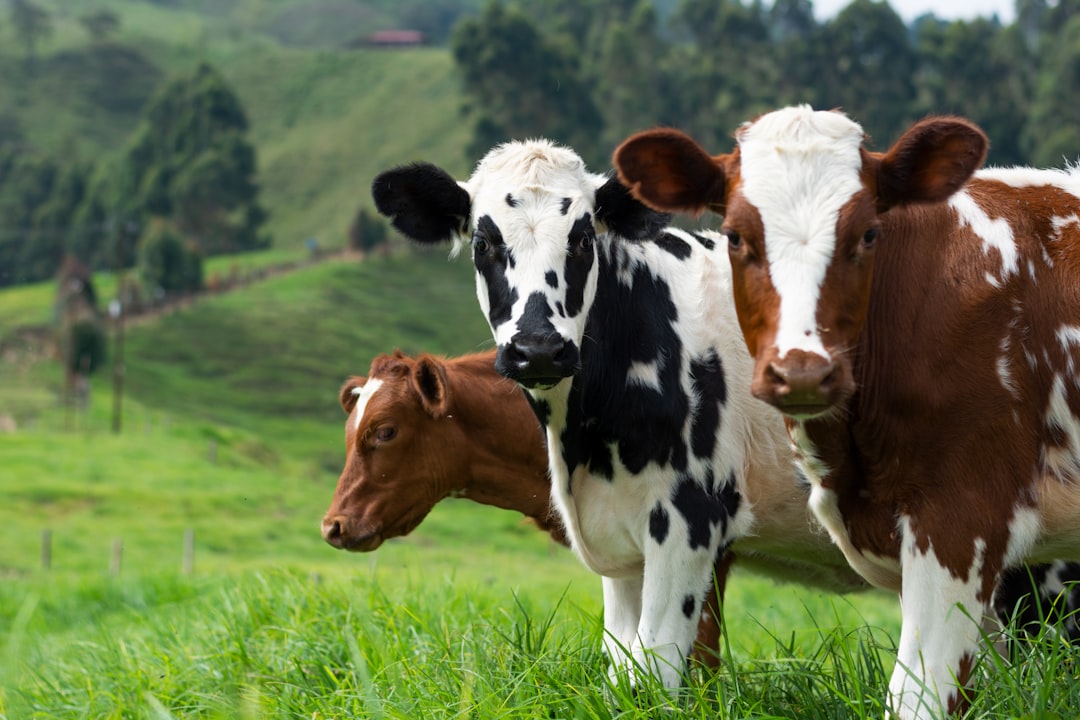
The LSU School of Veterinary Medicine is encouraging pet owners, livestock producers, horse owners, and veterinarians to remain vigilant following the recent detection of New World screwworm (NWS) confirmed cases in Texas and New Mexico.
What is NWS? New World screwworm is a parasitic fly whose larvae, commonly known as maggots, feed on the living tissue of warm-blooded animals. Unlike most maggots that feed on dead tissue, screwworm larvae burrow into healthy flesh, causing painful wounds, severe infections, and, if left untreated, death. The pest can affect livestock, horses, wildlife, dogs, cats, and, in rare cases, people.
Currently, there are no confirmed cases of New World screwworm in Louisiana, but awareness and early detection are critical. Animal owners should routinely inspect their animals for wounds and seek veterinary care immediately if they notice anything unusual.
Government Response The U.S. Department of Agriculture and Texas animal health officials are actively responding to the detection through quarantines, surveillance, movement controls, and the release of sterile male screwworm flies to help stop the pest's spread.
According to the Louisiana Department of Agriculture and Forestry, additional animal movement requirements are being implemented to reduce the risk of the pest entering Louisiana. These measures include enhanced health certificate requirements for certain animals entering the state from Texas, specifically lowering the validity of health certificates for animals entering Louisiana from 30 to seven days. Learn more at ldaf.la.gov. What to Look For Screwworm larvae most commonly enter through open wounds, surgical incisions, tick bites, the navels of newborn animals, or natural body openings such as the nose, ears, eyes, and genital regions.
Animal owners should watch for: Wounds that fail to heal Bloody or foul-smelling discharge from wounds Visible maggots or egg masses in wounds or body openings Excessive licking, chewing, or irritation around a wound Signs of discomfort, depression, or reduced appetite There are currently no vaccines available to prevent New World screwworm. Rapid detection and response remain the most effective tools for preventing its spread.
Diagnosis LSU Diagnostics (Louisiana Animal Disease Diagnostic Laboratory) is working with the Louisiana State Animal Health Officials (SAHO) for identification of all suspected cases. All confirmatory testing and reporting are being performed by the National Veterinary Services Laboratories, which will communicate results to the SAHO.
What to Do if You Suspect NWS Animal owners who suspect New World screwworm should contact their veterinarian and the State Animal Health Official (SAHO) immediately at vetreports@ldaf.state.la.us or 225-925-3980. In Louisiana, the SAHO is Louisiana State Veterinarian Dr. Daniel Myrick (LSU 2001) with the Louisiana Department of Agriculture and Forestry.
The public should be aware that New World screwworm does not affect the safety of the U.S. food supply. Federal inspection programs are designed to identify affected animals and prevent contaminated products from entering commerce.
For more information about New World screwworm, visit Screwworm.gov or the LSU AgCenter webpage on NWS.
About LSU Vet Med: Bettering lives through education, public service, and discovery The LSU School of Veterinary Medicine is one of only 33 veterinary schools in the U.S. and the only one in Louisiana. LSU Vet Med is dedicated to improving and protecting the lives of animals and people through superior education, transformational research, and compassionate care. We teach. We heal. We discover. We protect.