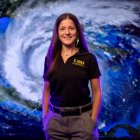


LSU Hurricane Expert Dr. Jill Trepanier Featured in TIME Magazine

Trepanier’s insights highlight LSU’s leadership in hurricane and climate research—providing vital context to understand weather trends that impact communities across Louisiana and beyond.

Oct 17, 2025

1 min

Jill Trepanier


For the first time in a decade, no hurricanes have made landfall in the United States through the end of September—a rare and welcome reprieve for coastal communities. But according to LSU hurricane climatologist Dr. Jill Trepanier, the season has been far from quiet.


In a recent TIME Magazine feature, Trepanier explains that while no major storms have struck land, powerful systems have still formed over the Atlantic. “There are storms,” she says. “They’re just not making landfall.”


Trepanier points to several atmospheric factors behind this pattern, including dry air moving in from the Sahara and a persistent high-pressure system over the Gulf of Mexico that has made conditions unfavorable for hurricane development near the U.S. coast.


Another key influence, she notes, is a pressure pattern called the North Atlantic Oscillation, which helps steer storm paths. “When that oscillation pattern shifts closer to Bermuda, it unfortunately drives them directly into the Gulf Coast and the eastern seaboard,” Trepanier says. “It changes over the course of a handful of years, and then back again. It’s this controlling mechanism that has shifted, thankfully, in the favor of those of us at the coast.”


Read the full article here:


Connect with:
Jill Trepanier

Jill Trepanier

Professor and Department Chair

Dr. Trepanier is a hurricane climatologist and geographer focusing on the statistical estimation of extreme weather risk.

ClimatologyHurricanesGeographyEnvironmental Science
Powered by

You might also like...

Check out some other posts from Louisiana State University

LSU Vet Med urges animal owners to be vigilant for New World screwworm featured image

3 min

LSU Vet Med urges animal owners to be vigilant for New World screwworm

The LSU School of Veterinary Medicine is encouraging pet owners, livestock producers, horse owners, and veterinarians to remain vigilant following the recent detection of New World screwworm (NWS) confirmed cases in Texas and New Mexico. What is NWS? New World screwworm is a parasitic fly whose larvae, commonly known as maggots, feed on the living tissue of warm-blooded animals. Unlike most maggots that feed on dead tissue, screwworm larvae burrow into healthy flesh, causing painful wounds, severe infections, and, if left untreated, death. The pest can affect livestock, horses, wildlife, dogs, cats, and, in rare cases, people. Currently, there are no confirmed cases of New World screwworm in Louisiana, but awareness and early detection are critical. Animal owners should routinely inspect their animals for wounds and seek veterinary care immediately if they notice anything unusual. Government Response The U.S. Department of Agriculture and Texas animal health officials are actively responding to the detection through quarantines, surveillance, movement controls, and the release of sterile male screwworm flies to help stop the pest's spread. According to the Louisiana Department of Agriculture and Forestry, additional animal movement requirements are being implemented to reduce the risk of the pest entering Louisiana. These measures include enhanced health certificate requirements for certain animals entering the state from Texas, specifically lowering the validity of health certificates for animals entering Louisiana from 30 to seven days. Learn more at ldaf.la.gov. What to Look For Screwworm larvae most commonly enter through open wounds, surgical incisions, tick bites, the navels of newborn animals, or natural body openings such as the nose, ears, eyes, and genital regions. Animal owners should watch for: Wounds that fail to heal Bloody or foul-smelling discharge from wounds Visible maggots or egg masses in wounds or body openings Excessive licking, chewing, or irritation around a wound Signs of discomfort, depression, or reduced appetite There are currently no vaccines available to prevent New World screwworm. Rapid detection and response remain the most effective tools for preventing its spread. Diagnosis LSU Diagnostics (Louisiana Animal Disease Diagnostic Laboratory) is working with the Louisiana State Animal Health Officials (SAHO) for identification of all suspected cases. All confirmatory testing and reporting are being performed by the National Veterinary Services Laboratories, which will communicate results to the SAHO. What to Do if You Suspect NWS Animal owners who suspect New World screwworm should contact their veterinarian and the State Animal Health Official (SAHO) immediately at vetreports@ldaf.state.la.us or 225-925-3980. In Louisiana, the SAHO is Louisiana State Veterinarian Dr. Daniel Myrick (LSU 2001) with the Louisiana Department of Agriculture and Forestry. The public should be aware that New World screwworm does not affect the safety of the U.S. food supply. Federal inspection programs are designed to identify affected animals and prevent contaminated products from entering commerce. For more information about New World screwworm, visit Screwworm.gov or the LSU AgCenter webpage on NWS. About LSU Vet Med: Bettering lives through education, public service, and discovery The LSU School of Veterinary Medicine is one of only 33 veterinary schools in the U.S. and the only one in Louisiana. LSU Vet Med is dedicated to improving and protecting the lives of animals and people through superior education, transformational research, and compassionate care. We teach. We heal. We discover. We protect.


AI In Action Symposium featured image

1 min

AI In Action Symposium

The AI In Action Symposium, hosted by the LSU E. J. Ourso College of Business, brings together expert voices at the heart of the AI revolution to explore how they have successfully navigated this evolving landscape. The 2026 symposium focuses on the practical implications of AI in business, including hiring AI-ready talent, ensuring responsible and ethical use, and exploring the challenges of implementing AI across both large enterprises and small startups. Speakers Attendees will hear from Louisiana leaders and national AI experts, including… Secretary Bruce Greenstein of the Louisiana Department of Health April Wiley, Senior Vice President at Community Coffee Robert Veit and Julian Tandler from Scale Team Six, a San Francisco-based business accelerator Dr. Tonya Jagneaux, who leads medical analytics at the Franciscan Missionaries of Our Lady Health System (FMOLHS) Hunter Thevis, president and co-founder of Lafayette-based S1 Technology …and many more! Details March 20, 2026, 8:00 a.m. – 1:00 p.m. Registration deadline is March 15. Held on the LSU A&M Campus, in the LSU Student Union Register at lsu.edu/business/ai-symposium Discount available for LSU System employees

War in Iran: Impact on Oil Prices featured image

2 min

War in Iran: Impact on Oil Prices

As global markets respond to escalating tensions in Iran, energy prices are once again at the center of international concern. For insight into what this conflict could mean for oil markets, consumers and the broader economy, media can turn to Greg Upton, executive director and associate research professor at the LSU Center for Energy Studies. An expert at the intersection of energy and environmental economics, Upton studies how geopolitical disruptions, supply constraints and policy decisions influence oil prices and downstream economic impacts. As instability in the Middle East threatens global supply chains, he can provide context on potential price volatility, implications for Louisiana’s energy sector and what higher crude prices may mean for gasoline costs and inflation in the United States. Upton has contributed to more than 40 academic publications and has presented his research to over 200 industry, government and academic audiences. He has testified before committees in both chambers of the Louisiana Legislature and a subcommittee of the U.S. House of Representatives. A frequent voice in national and local media, Upton has been quoted or cited more than 250 times, including by the The Wall Street Journal, The New York Times, USA Today and NPR. In addition to his research, Upton teaches in LSU’s MBA program and in the Department of Economics and Environmental Sciences, helping prepare the next generation of leaders to navigate complex energy and environmental challenges. For timely, data-driven analysis on the impact of oil price fluctuations amid the ongoing conflict in Iran, Dr. Greg Upton is available for interviews and expert commentary.

View all posts