Sleep Is the First Casualty of Your Screen Habit

Offline.now experts say your phone is quietly wrecking your circadian rhythm long before you notice anxiety or burnout and that fixing sleep starts with how and when you scroll.

Jan 13, 2026

3 min

Eli SingerHarshi Sritharan

Everyone says they want to “sleep better” in the new year. Most start with new pillows, supplements or blackout curtains while the biggest sleep disruptor in the room is still glowing inches from their face.


Digital wellness platform Offline.now, founded by author and strategist Eli Singer, has found that we now spend about 10 of our 16 waking hours on screens, roughly 63% of our day. Psychotherapist Harshi Sritharan, MSW, RSW, who specializes in ADHD and modern anxiety, says sleep is often the first system to collapse under that load.


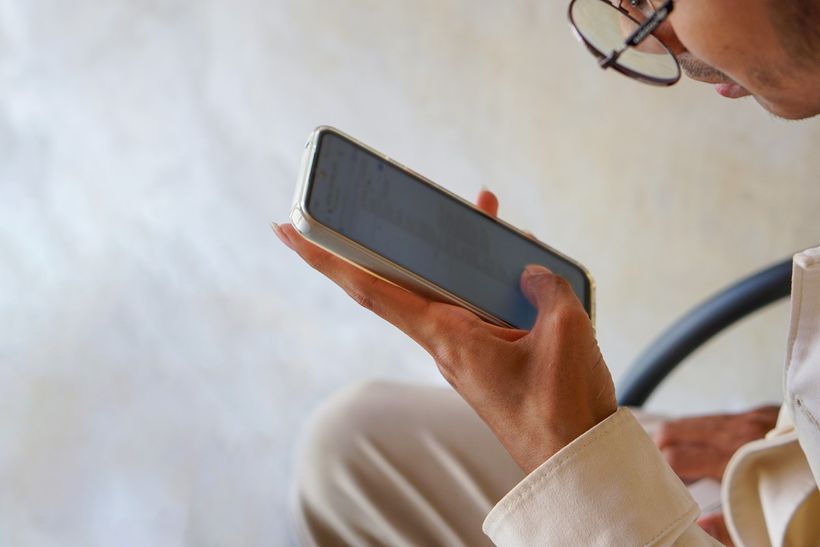
Harshi explains that phones and screens emit blue light that hits the retinal ganglion cells in our eyes and tells the brain it’s time to be alert, the opposite of what we need at night:


“When we’re leaning towards using our phones right before bed, that blue light hits our system and says, ‘We should be awake.’ It disrupts our circadian rhythm. For people with ADHD or other neurodiversity, whose rhythms are already fragile, adding late-night screen exposure completely throws things off.”


She notes that exposure between roughly 11 p.m. and 4 a.m. is particularly damaging for stress and sleep regulation, leaving people “tired all the time throughout the day.”


Morning habits can be just as destructive. Sritharan warns that checking your phone first thing essentially programs your brain to chase distraction:


“Don’t be on your phone first thing in the morning — it hijacks your attention and your dopamine for the rest of the day. After that kind of stimulation, everything else feels harder and less interesting.”


She also calls the snooze button “a pattern that’s making us more tired,” because it fragments REM sleep instead of helping us feel rested.


The good news: the data suggests you don’t need a perfect digital detox to see real benefits. A JAMA Network Open study on young adults found that reducing social media use for just one week, not quitting entirely; led to about a 24.8% drop in depression, 16.1% drop in anxiety, and 14.5% improvement in insomnia symptoms.


Singer argues that the real barrier isn’t willpower, it’s confidence. Offline.now’s research shows 8 in 10 people want a healthier relationship with tech, but more than half feel too overwhelmed to know where to start.


“When people tell us they feel overwhelmed, it’s not laziness. It’s a crisis of confidence,” says Singer. “Lasting change doesn’t require deleting Instagram or TikTok tomorrow. You need to win one personal victory today, and then another tomorrow. That’s how confidence rebuilds.”


For journalists covering sleep, mental health, or digital dependency, this story connects the dots between phones, dopamine and insomnia and offers a realistic alternative to the all-or-nothing “digital detox.”


Featured Experts

  • Harshi Sritharan, MSW, RSW – Psychotherapist specializing in ADHD, anxiety, insomnia and digital dependency. She explains how blue light, dopamine cycles and “doomscrolling before bed” undermine sleep, especially for neurodivergent clients.
  • Eli Singer – Founder of Offline.now and author of Offline.now: A Practical Guide to Healthy Digital Balance. He speaks to the behavioral data behind digital overwhelm, the confidence gap, and the Offline.now Matrix that turns vague resolutions into actionable micro-steps.


Expert interviews can be arranged through the Offline.now media team.


Connect with:
Eli Singer

Eli Singer

CEO

Mentor Coach for Neurodivergent Leaders & Technology Entrepreneurs

Coaching & LeadershipBoard AdvisorInnovation & CommercializationThought LeadershipLeadership Entreprenership Startups
Harshi Sritharan

Harshi Sritharan

Registered Social Worker (RSW)

Expert in child development, human behaviour, and behaviour modification

Human BehaviourLearning Strategies‎Behavior TherapyLearning DisabilitiesAttention-Deficit Hyperactivity Disorder (ADHD)
Powered by

You might also like...

Check out some other posts from Offline.now

2 min

Australia’s Under-16 Social Media Ban Isn’t a Finish Line - It’s a Reality Check

Australia’s move to restrict social media accounts for kids under 16 has become a global lightning rod - and it’s forcing the right conversation: what do we do when a technology is too powerful for a developing brain? But here’s what I think journalists should focus on next: “A ban is a speed bump, not a seatbelt. It might slow kids down - but it won’t teach them how to drive their attention.” That’s the part that gets lost in the headlines. Because even if you can reduce access, you still have to deal with the why behind the behavior: boredom, social pressure, loneliness, stress, sleep debt. “The headlines make it sound like the problem is solved. But the real question is: what happens in the living room on day three?” Offline.now’s early data shows something important: most people genuinely want to change their screen habits, but many feel overwhelmed and don’t know where to start. That’s why we begin with a quick self-assessment and map people into four Types - Overwhelmed, Ready, Stuck, Unconcerned - so the advice matches the person. “We keep treating social media like a self-control test. It’s not. It’s a confidence problem - people don’t know where to start, so they start with shame.” What I’d tell policymakers considering similar bans 1. Pair friction with skills. “If the only plan is ‘block the app,’ you’re betting against the internet. Workarounds aren’t a bug - they’re the default.” 2. Don’t outsource responsibility entirely to families. “If policy turns parents into full-time bouncers and kids into part-time hackers, we’ve built a system that’s guaranteed to fail.” 3. Ask what gets protected, not just what gets restricted. “The real target isn’t ‘screen time.’ It’s the moments screens replace.” What parents need to know that headlines aren't telling them This is a process, not a switch. The best “first phone / first social” plans are adjustable. Modeling beats monitoring. The rules collapse if adults don’t follow them too. Have a handoff plan. If a child’s mood, sleep, school performance, or withdrawal is deteriorating, it may be bigger than habits. Why this is a late December / January story “The holidays are the perfect storm: more free time, more family friction, more devices, less sleep. January is when the bill comes due.” Journalist angles Bans vs. behavior change: what policy can’t solve The workarounds economy: age gates, bypass culture, privacy tension The four Types: why one-size fits all screen-time advice fails families New Year resets for families: simple, shame-free agreements that stick Available for interviews Eli Singer - CEO of Offline.now; author of Offline.now: A Practical Guide to Healthy Digital Balance. I speak about practical behavior change, non-judgmental family agreements, and confidence-based starting points - and I can direct people to licensed professionals via the Offline.now Directory when needs go beyond coaching.

2 min

Holiday Phones, Real Kids: “Don’t Give a 10-Year-Old a 24/7 Device Without a Plan”

Smartphones and tablets are among the hottest holiday gifts for tweens and teens. They’re also one of the biggest sources of parental anxiety. “We’re giving 9, 10, 11-year-olds a pocket device with the power to nuke their sleep, social life and self-esteem — and we’re doing it with almost no training,” says Eli Singer, founder and CEO of Offline.now. “The question isn’t ‘Should kids have phones?’ It’s ‘What’s the plan for this incredibly powerful tool?’” Singer, a coach and parent who lives with ADHD himself, takes a non-judgmental, shame-free approach with families. He’s blunt about the risks — social comparison, late-night scrolling, drama at school that now comes home in their pocket — but equally blunt that guilt doesn’t help. “Parents are overwhelmed and scared. They’ve seen the headlines linking social media to anxiety and depression, and they feel like they’re already behind,” he says. “My job isn’t to scare them; it’s to help them write the first draft of a family agreement they can actually live with.” Singer recommends three simple starting points over the holidays: Bedrooms are sacred. Phones charge overnight outside kids’ rooms and ideally outside parents’ rooms, too. Meals are for humans, not phones. A bowl or basket at the table becomes the visual reminder: we’re here together. Model what you ask. If parents scroll through dinner or answer work emails at fireworks, kids get the message long before any rule is written. Offline.now’s Digital Wellness Directory includes professionals who specialize in families, ADHD, and youth mental health; Singer positions Offline.now as the bridge between overwhelmed parents and the right expert help. Why now Late December is “first phone” season. January brings the real-world consequences: blown bedtimes, drama in group chats, school exhaustion. Singer can give reporters a nuanced, practical angle on holiday devices — beyond “phones are bad” vs. “phones are fine” — and concrete questions families can ask before they unwrap the box. Available for interviews Eli Singer - CEO of Offline.now; author of Offline.now: A Practical Guide to Healthy Digital Balance. I speak about practical behavior change, non-judgmental family agreements, and confidence-based starting points - and I can direct people to licensed professionals via the Offline.now Directory when needs go beyond coaching.

2 min

Changing Phone Habits Isn’t a Willpower Problem. It’s a Confidence Problem.

Every January, millions of people swear they’ll “spend less time on my phone.” By February, they’re right back where they started, only now they feel worse about themselves. Eli Singer, founder and CEO of Offline.now and author of Offline.now: A Practical Guide to Healthy Digital Balance, thinks we’re telling the wrong story. “Most people don’t need another productivity hack or a harsher version of ‘just put your phone down,’” Singer says. “They need one tiny experience that proves, ‘I can actually change this.’ That’s confidence. Without it, willpower doesn’t stand a chance.” Drawing on early data from Offline.now’s self-assessment tool, Singer sees a pattern: people are highly motivated to change, but don’t believe they can stick to anything. His framework sorts users into four Types — Overwhelmed, Ready, Stuck and Unconcerned — based on motivation and confidence. Each Type gets different starting moves, all designed to be done in under 20 minutes. “Telling an overwhelmed parent or burned-out executive to do a 30-day social media fast is like asking someone who’s never run to start with a marathon,” he says. “We focus on micro-wins — one phone-free dinner, ten minutes of swapping doomscrolling for something you actually enjoy — because that’s what rebuilds trust in yourself.” Singer is a coach, not a therapist, but Offline.now’s Digital Wellness Directory connects people with licensed therapists, social workers, coaches and dietitians when deeper clinical support is needed. He positions Offline.now as the “front door” for people who know their relationship with screens isn’t working, but don’t know where to start. Why now January is peak “resolution season” and peak disappointment season. Singer can speak to why traditional “digital detox” narratives don’t work, how confidence and micro-steps change the story, and what a realistic New Year phone reset looks like for real people with jobs, kids and ADHD. Featured Expert Eli Singer – Founder of Offline.now and author of Offline.now: A Practical Guide to Healthy Digital Balance. Singer can speak to the platform’s behavioral data on digital overwhelm, the confidence gap, the Offline.now Matrix, and how 20-minute micro-steps outperform all-or-nothing digital detoxes in the real world. Expert interviews can be arranged through the Offline.now media team.

View all posts