MEDIA RELEASE: CAA Survey Reveals Canadians Remain Eager to Travel, but Rising Costs, Global Instability, and Shifting U.S. Attitudes Are Reshaping How and Where They Travel

Mar 10, 2026

3 min

Kaitlynn Furse

Canadians remain passionate about exploring new destinations, but changing global dynamics are reshaping how and where they travel.


According to CAA’s Travel Wise survey, more than half of Canadians (51 per cent) now say geopolitical and economic factors, such as instability abroad, a perception of the U.S. as being less welcoming, and rising travel costs, are influencing where Canadians choose to travel. 


Shifting Destinations and Attitudes


Travel patterns are evolving. The survey conducted in 2025 shows that only 22 per cent of Canadians planned to visit the U.S., an 11 per cent drop from 2024. Instead, many are opting to stay within Canada (40 per cent) or explore international destinations. The perception of the U.S. as less welcoming, coupled with rising travel costs and global instability, is prompting Canadians to reconsider their travel plans. 


"Canadians are adventurous by nature, but today’s travellers are having to make thoughtful decisions," says Kaitlynn Furse, Director of Corporate Communications. "We’re seeing a clear trend toward exploring closer to home and seeking out new international experiences, all while keeping an eye on safety and value."


Travel Insurance: A Critical, Yet Overlooked, Safeguard


While Canadians feel confident travelling within their own country, many assume “home turf” means low risk. This misconception leaves millions exposed to unexpected costs when trips don’t go as planned. The survey found that 64 per cent did not have travel insurance on their most recent trip when travelling within Canada. 


“Recent stories have highlighted Canadians facing unexpected medical bills, trip interruptions, and emergency expenses while travelling within Canada, often because they didn’t realize their regular provincial health coverage or credit card benefits had limits,” says Furse. “If something were to happen, provincial healthcare only partially covers you outside of your home, and sometimes, not at all, covering only basic emergency medical services when travelling in another province.”  


Among those who travelled uninsured, 44 per cent believed coverage wasn’t needed, and 29 per cent thought their provincial government’s health plan would suffice. However, provincial healthcare only partially covers emergency medical services in other provinces, and sometimes not at all. 


“One of the biggest misconceptions we see is the idea that travelling within Canada comes with less risk,” says Furse. “Unexpected medical costs, trip interruptions and emergencies can happen anywhere, and many travellers are surprised to learn they’re not fully covered.”


With recent geopolitical incidents in Cuba, Mexico and the Middle East, Travel Wise is focused on helping Canadians understand risk, avoid misinformation, and make decisions grounded in facts rather than fear or speculation. Here are some tips: 


  1. Understand what an “avoid non-essential travel” advisory really means: Travel advisories reflect real-time safety risks, and an “avoid non-essential travel” signal indicates rapidly changing conditions that may change quickly, and support may be limited. 
  2. Know that advisories can affect your insurance and your exit options: Travelling against government advice can limit your travel insurance, including medical care or emergency evacuation. Coverage must be in place before conditions deteriorate. 
  3. Flexibility is essential; review cancellation and change policies now: Travellers should proactively confirm cancellation deadlines, refund eligibility, rebooking options for all reservations and understand the limits of credit card protections, employee benefits, and pension coverage benefits.  
  4. Stay connected to Canada while abroad: Canadians should monitor official updates from Global Affairs Canada and register with the Registration of Canadians Abroad service before departure or while on location if something arises. 
  5. Rely on reputable sources and be cautious of misinformation online: Canadians should rely on official government sources, established travel organizations, and verified news outlets for travel guidance. 


For many travellers, cancelled or delayed flights remain a top concern. CAA’s Air Passenger Help Guide offers a straightforward resource for travellers facing disruptions.


The online survey was conducted by DIG Insights from September 29 – October 8, 2025, with 2,0210 Canadian travellers aged 25 to 64 who have travelled outside their province of residence in the past three years and plan to travel again in the next five years. Based on the sample size of n=2,021 and with a confidence level of 95%, the margin of error for this research is +/- 2%.)

Connect with:
Kaitlynn Furse

Kaitlynn Furse

Director, Corporate Communications

Media spokesperson and subject matter expert on winter driving, road trips and travel.

Winter DrivingTravel and TourismStrategic CommunicationsRoad Trips
Powered by

You might also like...

Check out some other posts from CAA Club Group

Provincial Trunk Highway 34 is Named the Worst Road in Manitoba for the Second Year in a Row featured image

2 min

Provincial Trunk Highway 34 is Named the Worst Road in Manitoba for the Second Year in a Row

Provincial Trunk Highway 34 (PTH 34) has been named Manitoba’s worst road for the second year in a row, according to the results of the 2026 CAA Worst Roads campaign. The Pembina Valley highway, located west of Winnipeg, has previously appeared on the provincial top ten list seven times, and this is the second consecutive year it has claimed the top spot. Manitobans who nominated PTH 34 did so because of potholes, poor maintenance, and uneven road surfaces. “The roads on this list reflect what Manitobans experience every day,” says Ewald Friesen, manager of government and community relations for CAA Manitoba. “Manitobans want roads that are safe, reliable and properly maintained, whether they live in Winnipeg or in a rural community. This year, 711 roads across 69 municipalities were nominated for the top spot. The most common concerns cited were potholes, poor maintenance and uneven road surfaces. “This year’s list shows that road issues are not just a Winnipeg problem or a rural problem, they’re a Manitoba problem,” Friesen said. “There is an even split between rural and urban roads on the provincial list.” Many of the roads identified are major commuter, trade and connector routes relied on by families and businesses. As governments focus on inter-provincial trade, congestion in Winnipeg and critical road safety issues, investments in the roads and highways are more important than ever. “When key routes fall into disrepair, it affects more than just convenience,” Friesen said. “Vehicle repair costs go up, fuel efficiency goes down, and delays increase. That adds pressure to already stretched household budgets and affects our economy.” Repeated nominations often signal that communities want long-term solutions, not temporary fixes. Several roads that have appeared on past lists are now under construction, resurfaced or scheduled for rehabilitation. “We’ve seen that sustained public input makes a difference,” Friesen said. “The CAA Worst Roads campaign gives governments a clear snapshot of where funding and attention are wanted most.” CAA Manitoba is urging provincial and municipal governments to continue prioritizing predictable, year-over-year investment in road maintenance and safety. “Stable funding allows governments to plan ahead, address safety concerns earlier and avoid higher costs later,” Friesen said. “It’s about keeping people safe and keeping Manitoba moving.” Top 10 worst roads in Manitoba for 2026 Provincial Trunk Highway 34 — Central Plains/Pembina Valley Provincial Road 307 — Whiteshell Kenaston Boulevard/Route 90 — Winnipeg Saskatchewan Avenue — Winnipeg Richmond Avenue — Brandon Gateway Road — Winnipeg Leila Avenue — Winnipeg 1st Street — Brandon Provincial Road 422 — Pembina Valley St. Mary’s Road — Winnipeg For more information and historical results, please visit: https://www.caamanitoba.com/advocacy/government-relations/worst-roads

CAA warns drivers of emerging auto theft tactics that prey on the goodwill of drivers featured image

2 min

CAA warns drivers of emerging auto theft tactics that prey on the goodwill of drivers

CAA South Central Ontario (CAA SCO) is warning that car theft is becoming more sophisticated and more personal, with criminals now targeting drivers directly using a mix of distraction tactics and high-tech tools. Police services across Canada have recently warned of an increase in “distraction thefts” occurring in parking lots, shopping centres, and other busy areas. At the same time, thieves are continuing to use relay attacks and key-fob signal-interception technology to unlock and steal vehicles without physical force. CAA cautions that these tactics are now being used together, creating new risks for drivers. A New Combination of Tactics This emerging method involves criminals engaging drivers in brief interactions near their vehicle while simultaneously using electronic devices to capture or amplify key fob signals. As a result, key fob-related auto theft is no longer limited to driveways or overnight incidents. Close physical proximity between drivers, their key fobs, and their vehicles can be exploited. These thefts can occur quickly and subtly, often without the driver immediately realizing anything has happened. In some cases, drivers may later notice an alert that their vehicle key is missing. This is an early sign that something is wrong. “Today vehicle thieves are becoming increasingly calculated, using distraction tactics alongside electronic tools designed to intercept or relay key fob signals,” says Elliott Silverstein, director, government relations, CAA South Central Ontario. “A brief interaction in a parking lot can quickly become an opportunity for organized criminals to target both drivers and their vehicles. Public awareness and simple preventative measures remain some of the strongest tools drivers have to protect themselves.” How Drivers Can Protect Themselves With these evolving risks, CAA is encouraging drivers to stay alert and take proactive steps to reduce their vulnerability: Park in well-lit, high-traffic areas. Be cautious of unsolicited interactions near your vehicle, including: Persistent or unusual requests for help Offers of gifts or incentives. Requests that require you to stay near your vehicle or move closer to another vehicle. Trust your instincts—if something feels suspicious, disengage and move to a safer area. Lock your vehicle immediately after exiting and confirm it is secure. Store key fobs in RFID-blocking or Faraday pouches to prevent signal interception. Keep key fobs on your person; avoid leaving them in carts, purses, or exposed areas. Consider visible anti-theft devices like steering wheel locks or two-factor authentication such as after-market engine immobilizers. Remove personal information from vehicles and clear saved home addresses in GPS systems. Report suspicious behaviour to local police. Raising Awareness Is Key CAA emphasizes that as auto theft tactics continue to evolve, awareness and vigilance are essential to reduce risk. Drivers are encouraged to remain mindful of their surroundings, particularly in public spaces, and to take simple precautions that can significantly reduce the likelihood of becoming a target of auto theft.

MEDIA RELEASE: Survey finds Ontarians are concerned about road conditions as CAA launches 2026 Worst Roads campaign featured image

3 min

MEDIA RELEASE: Survey finds Ontarians are concerned about road conditions as CAA launches 2026 Worst Roads campaign

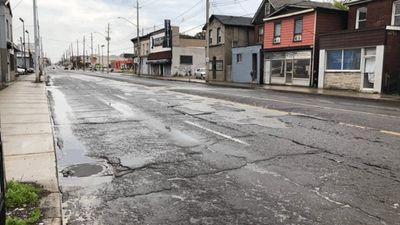
User-submitted photo of Barton Street in Hamilton, which placed second on Ontario’s 2025 top ten list. Concern about road conditions continues to be top of mind for Ontarians, with eight in 10 CAA members worried about the state of the province’s roads, according to new survey data released as CAA South Central Ontario (CAA SCO) launches the 2026 CAA Worst Roads campaign. The survey also found that nearly 70 per cent of CAA members don’t believe enough is being done to maintain Ontario’s roads, up five per cent from last year, reinforcing what many road users experience daily. Cracks in pavement remain the most common issue (88 per cent) identified by respondents, followed closely by potholes (87 per cent), uneven or bumpy road surfaces (81 per cent) and congestion (80 per cent). “Ontarians are telling us loud and clear that road conditions are not keeping pace with expectations,” says Teresa Di Felice, Assistant Vice President, Government and Community Relations for CAA South Central Ontario. “The Worst Roads campaign gives Ontarians a direct way to raise their concerns and helps decision-makers understand what roads need attention according to their constituents.” Despite widespread frustration, the survey suggests most concerns are not reaching decision-makers. It found that nearly 80 per cent of Ontarians commonly complain about road conditions to a spouse, co-worker or mechanic rather than to the governments responsible for road maintenance. CAA calls on Ontarians to nominate roads in urgent need of repair “We know this campaign works,” says Di Felice. “When Ontarians speak up and nominate roads they want to see repaired, we consistently see action.” Many nominated roads are critical trade and supply‑chain corridors, linking the CAA Worst Roads campaign to community growth and economic strength. “Growing population pressures in Ontario, particularly in the GTA, are driving the need for improved infrastructure to mitigate congestion issues, and the rapid wear and tear of our roads,” adds Di Felice. Poor road conditions contribute to vehicle damage, congestion, and safety risks for all road users, including pedestrians and cyclists. With the cost of living already high, the added expense of repairs caused by potholes and deteriorating roads is placing further strain on household budgets. The survey found that 80 per cent of Ontarians are paying out of pocket for those repairs, while ten per cent are forgoing repairs altogether. For more than two decades, the CAA Worst Roads campaign has influenced infrastructure decisions across the province. Roads that appear on the annual Worst Roads list often see repairs prioritized or moved up, as governments respond to public feedback. In the last five campaigns, over 10 roads have received attention due to their appearance on the CAA Worst Roads list. Most recently, County Road 49 in Prince Edward County received a large provincial investment supporting the repair of over 18 kilometres of the road. County Road 49 has been a popular road on the CAA Worst Roads Campaign’s top 10 list for some time. Ontarians can nominate any road for issues, including potholes, congestion, faded road markings, poor signage, traffic light timing, and pedestrian or cycling infrastructure. CAA SCO is encouraging all road users to participate. Nominations for the 2026 CAA Worst Roads campaign are open now and can be submitted online at www.caaworstroads.com until April 17. Once nominations close, CAA will compile and release Ontario’s Top 10 Worst Roads later this year, as well as regional top five lists. CAA conducted an online survey with 2,718 CAA SCO Members between January 6 to 14, 2026. Based on the sample size and the confidence level (95 per cent), the margin of error for this study was +/- 2 per cent.

View all posts