
Tight-Wad or Spend-Thrift?

Your brain is aging. So is your wallet. They are not aging gracefully.

Jun 10, 2026

6 min

Sue Pimento

My friend, Linda, retired at 66 after 35 years as a school principal. She had done everything right. Pension. Savings. No debt. A financial plan so airtight that her advisor framed it. On her first Monday of retirement, she drove to the grocery store, stood in front of the fancy olive oil, and put the $23 bottle back on the shelf. She grabbed the $10 one instead. That night, she called me, genuinely distressed. "Sue," she said, "I don't know how to spend the money."


Linda is not alone. Her problem is not a math problem. It is a brain problem.


Welcome to the neuroscience of aging and money, where biology is ageist, your prefrontal cortex is quietly retiring before you do, and the financial industry has somehow spent decades teaching you to save without ever explaining how to stop.


What Is Actually Happening in That Brain of Yours


As we age, the prefrontal cortex, the part of your brain responsible for planning, decision-making, and impulse regulation, starts to lose its edge. Meanwhile, the amygdala, the emotional centre, gains more influence. The result? Decisions that feel more emotional, more risk-averse, and sometimes more impulsive, depending on which way your wiring maps.


Research published by Agarwal, S., Driscoll, J. C., Gabaix, X., & Laibson, D. found that financial decision-making peaks around age 53 and then declines steadily. This is not because older adults are less intelligent, but because the cognitive systems that weigh risk and reward begin to operate differently. Biology is ageist, as evidenced by the fact that your brain begins to change its relationship with money before you have even figured out what to do with it.


A recent study from the National Bureau of Economic Research found that older adults are significantly more likely to make financial mistakes on both ends of the spectrum: excessive caution and excessive spending. The brain does not uniformly tighten the purse strings. It amplifies whatever pattern was already there. If you were a careful saver, you would become an Olympic penny-pincher. If you were a spender, you would become a one-person economic stimulus package.


You become an exaggerated version of your younger self. Which is charming in theory and occasionally catastrophic in practice.


Team Tight-Wad: All Chips, No Salsa


You know the type. Actually, you might be the type. These are the people who still have their first chequebook, who compare per-unit prices for paper towels with the focus of a neurosurgeon, and who have not eaten at a restaurant without a coupon since the second Harper government. They are not cheap. They are terrified.


As the prefrontal cortex loosens its grip on rational future planning, the fear of running out, what I call FORO (Fear of Running Out), takes the driver's seat. It whispers things like: what if the market crashes, what if I get sick, what if I live to 102 and run out of money at 99? And so the tight-wad doubles down. The $23 olive oil goes back on the shelf. The vacation gets postponed. The grandchildren's birthday gifts get slightly less grand.


All chips, no salsa. You have built a pile of financial security and are sitting on it, stiff, virtuous, and mildly hungry, while the dip goes untouched.


The tight-wad's greatest risk is not poverty. It is regret. Researchers at Cornell University found that people in the final chapters of their lives consistently reported regretting what they did not do far more than what they did. That trip not taken. That renovation not done. That bottle of good olive oil not purchased. FORO kept them safe and small, and the memory of that smallness stings.


Team Spend-Thrift: All Salsa, No Chips


On the other side of the spectrum, we have the spend-thrifts. As the emotional centres become more active and impulse regulation less reliable, some people lean into the "you only live once" philosophy. They book the trip to Portugal. They buy the golf club they do not need. They pick up the tab for dinner for eight people they met three hours ago. They are generous, spontaneous, and occasionally mystified by their bank statements.


Research from Harvard Business School confirms that spending money on experiences and on others generates a meaningful boost in wellbeing. Spend-thrifts are onto something. The problem is sustainability. If the prefrontal cortex is not doing its job by asking "do we actually need this," the credit card bill arrives, and this is why we can't have nice things.


Spend-thrifts also tend to underestimate longevity. A 65-year-old Canadian woman today can expect to live, on average, past 87. That is more than two decades of retirement to fund. All salsa, no chips is a delicious way to start a party and a terrible way to sustain it.


The Gap Nobody Talks About: Permission to Spend


Here is where I want to say something that gets almost no airtime in the financial services industry.

We have an enormous education gap on this side of retirement. The entire financial industry, including the advisors, the institutions, the calculators, the seminars, and the books, has spent decades teaching people how to accumulate money. How to save. How to invest. How to sacrifice the latte. The message has been so relentless that it has rewired the way people feel about spending.


And then retirement arrives. And nobody says: Okay, you can stop now. You can actually use this. This is what it was for.


Switching from accumulation to decumulation requires real support, real education, and genuine permission. It is not a switch you flip. It is a gear shift that many people never make successfully. They arrive at retirement financially prepared but psychologically stuck.


Honestly? The mother of all eye rolls is reserved for the financial institution that still calls it a savings account when you are 72. You are not saving anymore. You are managing a spending pool. Here is my modest proposal: once you turn 65, your savings account becomes your spending account. Not a radical rebranding. A psychological one. Words matter. Framing matters. Every time you log in and see the word "spending," your brain starts to normalize the idea that this money has a purpose, and that purpose is your life.


Clients need financial therapists as much as they need financial planners. They need someone to look them in the eye and say: you earned this, you saved this, and spending it wisely and joyfully is not a failure of discipline. It is the entire point.


Self-Awareness Is the Cheapest Investment You Will Ever Make


Recognizing your pattern is step one. If you have not bought anything for yourself that was not on sale in the past calendar year, that is data. If you cannot remember the last time you checked your balance before a purchase, that is also data. Neither is a character flaw. Your brain is doing what it is supposed to do.


Step two is to get the right support and give yourself explicit permission. A good retirement income specialist asks what you want your money to do for you now, not just how long it needs to last. A financial therapist helps you untangle your emotional history with money. At some point, you write it down: I am allowed to spend on things that bring me joy, keep me healthy, and connect me to the people I love. Post it somewhere you will see it when you are standing in front of the fancy olive oil.


The Punchline


Linda eventually bought the $23 olive oil. It took four months, a conversation with her advisor, and an honest chat with her daughter, who pointed out that Linda had about 90 jars of tomato sauce in her basement and no good reason to be rationing condiments.


The brain changes that come with ageing are real. They are not personal failures. They are biology doing biology things, loudly and without your consent. But brains are also remarkably responsive to information, reframing, and the occasional kick in the pants from someone who loves you.


You spent decades building financial security. The goal was never to die with the most money. It was a good life. All chips AND salsa. The full spread. The $23 olive oil on the good bread, with the people you love.


Your spending account is waiting. Honestly, it has been waiting long enough.


Because nobody wins a prize for being the richest person in the graveyard.


Don’t Retire…Re-Wire!


Sue


My Book is Now Available for Pre-Order

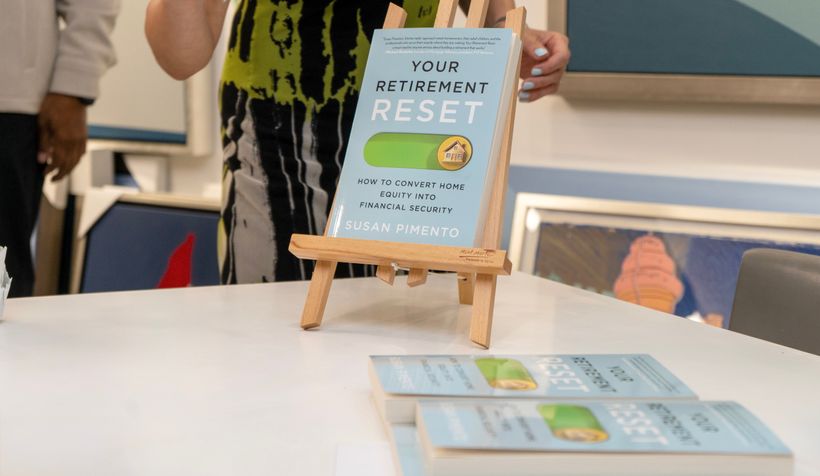
I hope you will consider pre-ordering a copy of Your Retirement Reset for you, a friend or loved one. It's available September 8, 2026 published by ECW Press - You can now order at Indigo or Amazon. And if you love supporting Canadian booksellers, please also check with your local independent bookstore. Most can easily order it for you.


Connect with:
Sue Pimento

Sue Pimento

Founder | CEO

Writer, author & presenter focused on financial literacy and retirement strategies. I advocate for the health, wealth & purpose for retirees

Pension ReformInterest RatesHome EquityMortgagesReverse Mortgages
Powered by

You might also like...

Check out some other posts from Retire with Equity

Parenting Your Parents: When Did I Become the Adult? featured image

8 min

Parenting Your Parents: When Did I Become the Adult?

My mother used to take her cordless phone with her when she went out for lunch. One day I finally asked why. “Well, I might need to make a phone call,” she explained. I said it was a cordless phone, not a cell phone, and that it only worked in her house. She looked at me with a completely blank expression. I tried again. She listened politely, though I’m still not entirely convinced she believed me. Her smile never reached her eyes. Then there were the calls for technical support. Mom would phone because she couldn’t get the television to work, and I would patiently walk her through using the remote. Press the button at the top. Nothing. The red button. I don’t have a red button. Twenty minutes later, it finally occurred to me to ask what she was holding. Her cell phone. We laughed about these things, and they were funny. They still are. But something else was happening that neither of us wanted to acknowledge. Slowly, I was becoming the person who worried about my mother, checked on things, and occasionally told her what she should or shouldn’t do. In other words, I was parenting my parent, though I’m quite sure she would have objected to that job description. This stage of life brings plenty of drama and absolutely no instructions. No pre-retirement class, no baby shower, and, disappointingly, no one arrives with useful equipment. You just wake up one day and realize you are telling the woman who once taught you to cross the street that she might not be safe driving at night. The Driving Dilemma Few conversations test family diplomacy quite like asking a parent whether they should still be driving, and I sometimes wish my MBA program offered a course on it. They will tell you they are excellent drivers. The garbage cans, curbs, garage door and passenger-side mirror may tell a slightly different story. Driving means independence: spontaneous trips to the grocery store, visits with friends, appointments, and the simple freedom to go somewhere without asking anyone. I learned that there is a difference between what makes me nervous or impatient and what is actually unsafe. Getting lost in a familiar neighbourhood, repeatedly hitting things, missing signals, or becoming confused behind the wheel are very different. Canadian Automobile Association (CAA) offers a useful senior driving resource and assessment toolkit that can help older drivers and their families assess driving ability, changing skills, and ways to adapt. I like the idea of introducing objective information into the discussion. It may go over better than announcing that the children have held a meeting and voted Mom or Dad off the highway. Technology: Funny Until It Wasn’t Technology gave my mother and I some of our funniest moments. The cordless phone going to lunch and the cell phone masquerading as the television remote were classics. Often, my first instinct was to grab the device causing the problem and fix it myself. That solved the problem quickly, but it didn’t help her the next time. Writing down a few steps, simplifying them, and repeating them, sometimes many times, worked better. A checklist taped beside the television could save both of us a lot of grief. Confusion about phones, email, texting and social media could leave her vulnerable to fraud, too. Today’s scams are sophisticated enough that none of us should be too smug about spotting them. I tried to establish a simple habit with Mom: if something looks strange, urgent, frightening or too good to be true, stop and check with someone before clicking, paying or sharing information. I wanted Mom to enjoy technology and stay connected, not be afraid of it. The trick was adding a few guardrails without wrapping the entire Internet in yellow caution tape. The Great Grocery Store Standoff I am a bit of a health nut, which made counselling my mother about nutrition particularly ironic, since I come by it honestly. Mom was the original health-food nut. We called her the wheat-germ fanatic. Wheat germ came onto the scene in the 70s, and as far as Mom was concerned, there was no food that couldn’t be improved with a generous helping. There were four of us kids, and we tolerated a lot in the name of good health, but we finally drew the line when the spaghetti sauce became so chewy from wheat germ that we couldn’t eat it. Then there was powdered milk. We didn’t always have a blender, so it didn’t mix particularly well. We called it clumpy milk. Fast-forward a few decades, and there I was, the daughter of the wheat germ fanatic, lecturing my mother on fruits, vegetables, protein and regular meals. She had her own standards too. Anyone caught buttering bread in her kitchen got a quick lesson in technique, right to the crust, she would say, watching closely until you got every corner. Mom understood healthy eating just fine. What had changed was her ability to manage it, and keeping food safe had become harder. Her freezer became so full that she eventually secured the door with bungee cords. Bungee cords have many legitimate uses, but appliance repair isn’t one of them. The door sometimes didn’t close properly, and food would spoil. Mom periodically complained about what she called her “morning flu,” and I began to wonder whether it had less to do with a virus and more to do with whatever archaeological specimen she had defrosted for dinner. The comedy had a serious side too. Health Canada’s food-safety guidance for adults 60 and over explains that older adults may be more vulnerable to serious complications from foodborne illness and offers practical advice on storage, leftovers and safer food choices (Health Canada, 2025). It also notes that you can’t always tell whether food is safe by its look, smell or taste. Mom’s standard was somewhat simpler: “It looks fine.” She also loved giving food away. I would leave her house carrying freezer-burned shrimp, a grey object that may once have been beef, and mystery packages from an unknown decade. Eventually, I told my brothers to stop arguing and accept everything Mom offered. Smile, say thank you, and take it home. What happened between her front door and our dinner plates was our business. I didn’t have to win every argument. Sometimes a workaround did more than another lecture and helped Mom keep some control over her own life. Then There Was Dad My dad presented a different set of challenges. He had a stroke at 66 that left him with no mobility on his left side and very limited speech. His understanding was fine, but getting words out was difficult. However, there were two words he could say particularly well: “beer” and “Susie.” I’m not sure what it says about me that I made the shortlist, but I’ve always taken it as a compliment. Communication could be frustrating for both of us because Dad knew exactly what he wanted to say, even when he couldn’t express it. He liked wearing the same clothes repeatedly, sometimes long after the stains on the front suggested it was time to change. Telling your father that he needs a clean shirt or a bath requires a particular kind of diplomacy that even graduate school does not teach. Helping the man who once looked after you with something as personal as bathing is strange and tender in equal measure. You want to protect his dignity, but you also can’t pretend hygiene doesn’t matter. I found it worked better when I didn’t turn it into a debate. I could make it part of the day, help where he needed it, and move on. It wasn’t always graceful. Sometimes he was annoyed. Sometimes I was. We figured it out, and his toenails were trimmed. Dad also developed a dessert philosophy I have never been able to disprove. He insisted on eating dessert first. When I suggested he might want to eat his dinner before dessert, his reasoning was simple: “Well, I can’t be sure I’ll make it to dessert, so I’m going to eat it first.” Fair enough, Dad. Have the pie. When the Funny Stuff Stops Being Funny This is the uncomfortable part of parenting your parents. One forgotten lunch may mean nothing. Regularly forgetting to eat is different. One confused encounter with a television remote is hilarious. Increasing confusion across several areas of daily life deserves attention. I found it more useful to look for patterns than to panic over every incident. With Mom, we tried using checklists on the fridge and Meals on Wheels. Then I would arrive to find six or seven meals sitting uneaten in the refrigerator, starting to spoil. Getting help didn’t mean I could stop paying attention. We had solved one problem, but not necessarily the whole problem. It helps to know you are not the only family trying to figure this out. It is easy to assume that if Mom or Dad won’t listen to our brilliant advice, we must be doing something wrong. Our parents are still adults. They don’t suddenly become compliant just because they reach a certain age. I had to learn when to push, when to seek help, when to quietly remove the questionable shrimp, and, perhaps hardest of all, when to keep my mouth shut. I Would Take It All Back Both of my parents are gone now, and time has reshaped how I remember those years. There were days when I was exasperated and frustrated, sometimes to tears. I worried. We argued. I wondered why they wouldn’t listen and whether I was helping or simply making everyone miserable. Watching the people you love lose pieces of their independence is hard, and trying to help without taking over can be even harder. Now I would give almost anything to have some of those moments back. I’d happily explain the television remote again. I’d take another package of freezer-burned shrimp without complaint. I’d negotiate another bath with Dad, let him wear the questionable shirt for one more day, and watch him eat his dessert first. If you are in the middle of parenting your own parents, I don’t have a perfect formula for you. Pay attention when something feels different, protect their safety without forgetting their dignity, and pick the battles that really matter enough to let the rest go. And laugh with them whenever you can, because some of this really is funny, even when it is also difficult and sad. At the time, I often thought I was dealing with problems that needed fixing. Looking back, I can see something else, too. Those frustrating, ridiculous, worrying little moments were also time spent with my mom and dad. I didn’t know how much I would miss them until there were no more remotes to explain, desserts to debate, or mystery packages to remove from the freezer. I’d take the whole messy job back in a heartbeat. Even the clumpy milk. Warmly,  Sue This is Part 1. I have a Part 2 that covers what nobody wants to talk about at dinner: who gets power of attorney, how you divide the work with siblings without a family blow-up, whether Mom or Dad should stay in their own home, and what all of this does to the person doing the parenting. I promise there is less shrimp in that one. My Book is Available for Pre-Order I hope you will consider pre-ordering a copy of Your Retirement Reset for you, a friend or loved one. It's available September 29, 2026 published by ECW Press - You can now order at Indigo or Amazon. And if you love supporting Canadian booksellers, please also check with your local independent bookstore. Most can easily order it for you.

The MBA Halftime Show featured image

8 min

The MBA Halftime Show

Every football game has a moment when the players jog off, the field goes dark, and everyone wants to see what the halftime show will bring. My version came without a marching band or a surprise appearance by Beyoncé. Apparently, at seventy years old and doing my MBA (Yes, this is part IV of a series, links to Part I, II and III), halftime entertainment means staring at your grades, reviewing the game film, and asking yourself one honest question: what have you actually learned? Twelve courses down. Twelve to go. I am at that exact point, catching my breath, and somewhere in the distance I can hear the crowd murmuring, "Is she going to slow down now?" Spoiler alert: no. But let me show you the film first. The first half taught me a few things I did not expect. Technology and I reached an uneasy truce. Brightspace, Carleton University’s online Learning Management system, no longer feels like a hostage negotiation. I can upload a file, format a citation, and navigate a discussion board without a quick prayer beforehand. I would not call us friends, but we can now be left alone in the same room. Group work stopped being terrifying, too, once I understood something I probably should have known after decades in business: most people, students very much included, want to do their best work with the least effort required to get there. It used to sound like an insult. Now it strikes me as the most honest description of how most of us move through life, and in a program with this much content to cover, it is less a character flaw and more a survival strategy everyone quietly agrees to. If I had to pick one night that captures the whole term, it would be the one at ten o'clock, alone in my office, wrestling with an IEEE-formatted statistics report. The references would not cooperate. The formatting seemed to have developed free will, moving when I did not ask it to and refusing to move when I did. My dog Dottie had already gone to bed, which, from her, is roughly the equivalent of a slammed door. What made that night worse was that I was still stinging from a C+ in Financial Accounting. I wish I could tell you I shrugged it off with the wisdom of a mature student. I did not. When the grade first posted, I sat with the portal open for a good ten minutes, refreshing it as though the university might suddenly announce, "Our mistake, Sue. Clearly an A." No such luck. The grade stung more than I expected, and I carried some of that venom into the next course. Somewhere between the misbehaving references and the formatting that refused to cooperate, I realized I was not actually angry at the report. I was doubting myself. That C+ had cracked open a little door I suspect we all carry somewhere inside us, the one self-doubt likes to slip through when nobody is watching. Funny how quickly one lousy grade and a badly behaved reference list can turn into a full existential crisis at 10pm on a Tuesday. Even C's get degrees I kept going anyway and eventually fixed the report. Not gracefully. Not quickly. But I fixed it, closed the laptop, and sat in the dark for a minute, oddly proud of myself over a reference list. That was when the mantra found me again. Even C's get degrees. A friend handed me that one over a year ago, and it has never let me down, mostly because it keeps reminding me that the goal was never a perfect transcript. The goal was to stay in the game. Here is the adjustment I did not see coming. Business school quietly rewired how I make decisions. Full stop. Every decision, including coursework. The MBA program has an annoying habit of asking for evidence. Apparently, "it felt like a good idea at the time" is not an accepted decision-making framework. Who knew? Decades in sales and business taught me to read people, situations, and opportunities quickly, and I still trust that instinct. I just make it work harder now. I review the evidence, clarify what I am trying to accomplish, and ask whether the decision moves me closer to it. I used to pick a vacation package the way most people do. I looked at the brochure, felt something, booked it, and occasionally arrived to discover the "ocean view" required a telescope and a great deal of optimism. I still let myself feel the brochure, but now I also run the numbers, location, reviews, and value relative to cost. Whether it fits what I am trying to accomplish on this trip, rather than the fantasy I had while sitting on my couch. It has also taught me the difference between fear and desire, which sounds very self-helpy for a business degree. Stay with me. Demons run faster than dreams. Fear is fast. Give it half a chance, and it will make the decision before desire has even found its shoes. It tells you not to take the course, introduce your self to a stranger, or book the trip. Not to have the hard conversation. Not to risk looking foolish. As we get older, fear gets clever. It learns to dress itself up as common sense: be careful, be realistic, maybe it's time to slow down, don’t risk. I am learning to ask which one is driving before I commit to anything. A trip. A course load. A conversation I have been avoiding. Somewhere in all of this, I picked up a rule I am borrowing for the rest of my life: know when to stub your toe and when to put on safety boots. Some decisions can survive a little recklessness, the kind where you bump into the coffee table, yelp, and carry on with your evening. Others need the boots laced up before you take a single step. I am also in no hurry to rush toward a tub that enters from the side, thank you very much. That purchase can wait a decade or two. Caution has its place; it just does not get to run my whole calendar yet. The competition for my attention did not step aside just because I enrolled in school. Family wants time. Travel wants planning. Fitness classes want me to learn near choreography. My retirement advocacy wants everything I have left after that, plus a little more it did not ask permission for. Juggling it all has required negotiation skills I learned from a ten-pound dog. Dottie never begs or nags. She picks the one thing she wants, plants herself by the door, and waits, calm and immovable, until it happens. Everything else in the house can carry on without her weighing in. I am trying to negotiate my own priorities the same way. Decide what matters this week. Plant myself there. Let the rest of the noise wait its turn at the door. There is a voice in me that insists I should be doing it all, all the time, at full volume. This new way of deciding has meant learning the difference between what I want and what simply keeps me busy and conveniently away from the things that matter more. If I am being truthful, some of that motion is me pushing back against getting older, trying to prove something, mostly to myself. I have not figured out the balance yet, but at least I am aware enough to keep asking the question. Retirement, as a word, comes loaded with baggage. For most people, retirement still means earned rest, a slower pace, the right to finally exhale. For me, it has meant speeding up. Saying yes to things I never had time for. Treating this next chapter like an accelerator somebody left floored. People ask me, gently and sometimes not so gently, whether I am planning to slow down. I think some of them are really asking whether it is acceptable for them to slow down, and they are hoping I will give them permission. Of course you can. But I suspect others are quietly wondering the opposite, whether they are still allowed to speed up. Again, absolutely. So here it is, freely given, however you need it. Slow down. Speed up. Do some of both and change your mind next Tuesday. Take up Pickleball, or refuse to pick up a paddle just because apparently everyone over sixty has been issued one. Retire your way, not the way the world has always been sold to you. The only permission that truly matters is the one you give yourself. I have more years behind me than ahead of me now, which strikes me as a particularly good reason not to let fear decide what I do with the ones I have left. Most of us compare ourselves to people in similar circumstances. It is useful until it convinces you there is only one correct way to do this. I have never been particularly good at conforming, and it has always clashed with most of my outfits. There is an elective I keep hoping to find in this MBA, the one that teaches that ambition and quiet contentment can share a syllabus. Have not found it yet. Would sign up in a heartbeat. So here is where I stand at the halfway mark. My average has settled at an A- (that’s a minus, not an em dash. Take that Pangram!) This grade still surprises me every time I refresh the grade portal, the same one that put me through those ten rough minutes in Financial Accounting. But the transcript is not really the story. I am not just learning finance, statistics, and marketing. I am getting better at deciding what truly deserves my time, my energy, and, increasingly, the years still ahead of me. Already using the playbook for vacations, for priorities, and for what earns a spot on my calendar and what gets quietly cut. If you are somewhere in your own halftime, take the ten minutes the C+ asked of me. Let the sting have its moment. Mine reminded me that self-doubt can show up at any age. Fortunately, so can the determination to tell it to get lost. Then get back to writing your second half. The halftime show is supposed to be the big spectacle everyone remembers, with fireworks, a surprise guest, the works. I used to think I was waiting for my own JLo and Shakira moment, a grand, glittering proof that all this effort adds up to something spectacular. I do not think that is coming, and I have made my peace with it. That spectacle belongs to somebody else's show. Mine is different. In the second half, I am just calling my own plays, one deliberate decision at a time, with a ten-pound dog refereeing from the sidelines and no patience for a false start. Not to be outdone by JLo, my MBA halftime show featured its own wardrobe malfunction. My costume never slipped on live television. Instead, I changed out of a sixty-nine-year-old outfit called Perfection and into something that fits: my own judgment, a mantra with some mileage on it, and whatever grade shows up next. All out in the open for anyone to see. Cameras can roll. So, second half. Still curious. Occasionally humbled. Considerably less afraid of a C+ than I was a few weeks ago. There is still time on the clock, and I intend to use every last minute. Don't Retire… ReWire! Sue My Book is Available for Pre-Order I hope you will consider pre-ordering a copy of Your Retirement Reset for you, a friend or loved one. It's available September 29, 2026 published by ECW Press - You can now order at Indigo or Amazon. And if you love supporting Canadian booksellers, please also check with your local independent bookstore. Most can easily order it for you.

The Tipping Point: How Gratitude Grew into a Guilt Trip (and How to Get Off It) featured image

9 min

The Tipping Point: How Gratitude Grew into a Guilt Trip (and How to Get Off It)

My dog Dottie is, and I say this with love, a con artist in a fur coat. She has trained me to hand over a treat every time she sits, spins, or simply exists in my general direction, those big brown eyes fixed on me. If I hesitate even three seconds, she tilts her head and stares at me as if I have personally bankrupted her. I always fold. It turns out that I am not the only sucker for this routine. These days, entire industries have figured out that if you make a person stand there long enough while a screen stares back at them, they will fold too. Except instead of a milk bone, they want eighteen to twenty-two percent of your bill, and instead of a good girl, you get a receipt. Welcome to modern tipping culture, where a simple thank-you has somehow become a math test administered under duress, with a cashier watching as you decide, and somewhere behind the screen, a very deliberate mind has already worked out exactly how to nudge your answer higher. A Short History of Guilt with Percentages Tipping began as a compliment, not a demand. Historians trace it to a Tudor England custom called a vail, in which a noble slipped an extra coin to a servant for going above and beyond (Blueprint Financial, 2024). North America initially wanted nothing to do with it, meeting tipping's arrival in the late 1800s with the kind of suspicion usually reserved for chain letters. Americans who travelled to Europe came home grumbling about being nickeled and dimed by porters and waitstaff, and in 1884 the New York Times ran an editorial calling English-style tipping downright un-American (Mentzer, 2013). Between 1909 and 1915, six American states banned tipping outright, but it did not work. Tipping also has a less charming cousin: bribery, extra money paid in advance for special treatment, a jump on the waitlist, or a better table, not a reward for service already rendered. That is also roughly where the phrase "nickel and dimed" comes from, back when tipping meant tossing a server the smallest coins in your pocket. These days, the phrase seems to describe the opposite, a whole system of small additions that always land in the business's favour. Researchers who study why people tip find that the reasons run deeper than economics. One ethnographic study of servers and diners in Vancouver found that people tip for good service, to follow the social norm, out of sympathy, to signal status, or to lock in a preference for next time. Tipping has never been just a transaction; it has always been part performance and part quiet social contract, which is probably why opting out feels so uncomfortable. Then Tipping Went on a Growth Spurt Fifteen percent used to be the polite standard and twenty percent was for showing off. That range has crept steadily upward. Canadians now commonly tip eighteen to twenty percent at restaurants, bars and at hair salons. Even coffee shops and fast-food counters are edging toward five to fifteen percent as digital prompts normalize the ask (Blueprint Financial, 2024). Nearly two thirds of Canadians say they feel pressured to tip more than they used to, and the share tipping twenty percent or higher has more than doubled in under a decade (Blueprint Financial, 2024). In the US food industry alone, tipping adds up to an estimated forty-seven billion dollars a year (Azar, 2011), proof that this habit is not shrinking on its own. The Power of Suggestion (and the Screen That Stares Back) Once you know the tactics at play, it becomes easier to push back without guilt. The first is plain old anchoring. When a screen offers eighteen, twenty, and twenty-five percent as your only real options, your brain quietly narrows its sense of what is normal to fit that range, even if fifteen felt generous a few years ago. The second is assumptive closing, a sales trick in which, instead of asking whether you would like to tip, the screen assumes you already said yes and only asks how much, with the highest number often listed first or made visually larger. The third is technology itself, which makes the ask frictionless in places it never used to be, a tap and a swivel where someone just handed you a bag. And the fourth is old-fashioned shaming, the discomfort of picking a lower number while the cashier watches your thumb hover over the screen. If this sounds suspiciously like how Dottie gets her treats, that is because it is the same playbook. Offer a limited set of flattering options, stand there expectantly, and let the silence do the persuading. Research shows this tip-screen genuinely works, boosting tips by fifteen to thirty percent compared with a plain jar on the counter, largely because people gravitate to the middle option and nobody wants to look cheap in front of an audience (GlobalTill, 2026). One Toronto bakery owner told CBC that customers get visibly upset just being asked, even with signs posted that tips are not expected (CBC, 2022). University of Saskatchewan professor Marc Mentzer called the whole system a human rights catastrophe we are simply stuck with (CBC, 2022). None of these four tactics are about rewarding good service. They are behavioural design, and once named, they lose a surprising amount of power over you. Then the Pandemic Showed Up and Ruined Math for Everyone It is worth remembering why this all accelerated, because the original impulse was genuinely kind. When the pandemic hit, restaurant workers were being laid off and dining rooms were closed. Tipping generously was in solidarity, meant as temporary help during a crisis. Except it did not stay temporary, and that part was not really an accident either. Once businesses saw customers would tolerate a higher default tip during a crisis, many kept it in place long after. What began as compassion got hardwired into the software as the new normal, with no memo ever announcing that the emergency measure was now permanent. And Then Delivery Apps Moved the Tip Jar to Before Dinner Even Arrives Just as the tip screen had already rewired one part of the routine, delivery apps quietly rewired another. With services like Uber Eats and Skip the Dishes, you are asked to tip before your food has even left the restaurant, a bit like tipping a movie based on the trailer. The gratuity is baked into checkout, so what used to be a reward for good service becomes a pre-negotiated cost of doing business from your couch. Drivers often rely on that upfront tip because base pay per delivery is thin, meaning customers are subsidizing wages before a single doorbell rings, tipping blind. Wait, What? Are We Tipping the Government Too? If the delivery app section left you feeling like every corner of a transaction has been quietly monetized, buckle up, because there is one more layer nobody warns you about. Tipping etiquette has always technically called for calculating your percentage on the pre-tax total, but the machine does not know or care about etiquette. It simply applies a percentage to whatever total is on the screen, tax already included. So, the moment you tap one of those preset percentage buttons, you are effectively handing your server a tip on the government's cut of the meal too, not just on your food. The good news is the money itself still goes straight to the server, not to the government (phew). A flat twenty percent tip, calculated the way the machine calculates it, works out closer to twenty-two percent in provinces with a combined sales tax around thirteen percent, a touch less where the tax rate is lower, once the tax already baked into that total gets factored in (ouch). Let that marinate for a second. You went in planning to leave twenty and walked out having left twenty-two. When There Was No Service to Begin With And then there is the increasingly common experience of being asked to tip somewhere where no actual service happened. The dry cleaners. Seriously? You hand over a bag of shirts, come back two days later, and someone hands you the same shirts on a hanger, and now there is a tip screen. Insert the mother of all eye rolls. Nobody brought anything to a table; nobody checked on you twice. The job was already priced into what you paid. This is the moment tipping stops being gratitude and starts being a business outsourcing payroll onto customers who never agreed to it. Let's Talk About What This Does to Seniors This part matters to me personally, since I spend my days helping retirees stretch every dollar with intention. Tipping fatigue hits seniors differently and being asked to add another eighteen to twenty-two percent to everyday errands can feel less like generosity and more like an unplanned pop quiz. I have heard from clients who now avoid certain errands or choose a drive-through, specifically to sidestep the awkward prompt. Seventy-three percent of Canadians already believe tipping lets employers get away with underpaying staff, and fifty-nine percent would rather see fair wages built into prices than keep gambling on tip guilt (Blueprint Financial, 2024). If tipping anxiety is nudging older adults toward staying home instead of enjoying a coffee with a friend, this so-called social norm is quietly chipping away at connection, not what any of us want for our golden years. This is not strictly a seniors’ problem either. Many people across every age group now quietly admit to choosing pickup over dine-in, skipping a small business altogether, or simply going out less, purely to avoid the awkward math of a screen and an audience. The difference for seniors is that the squeeze lands on top of a fixed income and a lifetime of budgeting habits that never had to account for an eighteen percent surcharge for saying yes to a friend's invitation. Maybe It Is Time for a Cash Tip Movement Here is an idea worth trying and sharing with your friends. The next time the screen swivels toward you, select no tip (usually tucked into the custom tip section rather than sitting out with the percentage buttons), pay the bill, and leave whatever cash tip you want directly on the table or in the jar afterward. To be clear, this is not about skipping the tip; it is about choosing how and when you deliver it. The server still gets paid fairly, just without a screen and an audience deciding for you. That one move sidesteps the anchoring, the assumptive question, the audience, and the algorithm quietly nudging the suggested amount upward. You decide the amount in private, hand it over with a genuine thank you, and walk out having tipped exactly what you meant to, power fully intact. If anyone asks why you skipped the prompt, just smile and say you do not tip machines; you tip people. This is also a great excuse to talk about it with your people. Ask your friends what they tip and why and figure out together where you all want to draw the line. Strength in numbers works on tipping the same way it works on everything else. Taking Back the Tipping Wheel A couple of practical notes before the cheat sheet below. Most screens that appear to offer only percentages hide a custom tip option that lets you enter zero or a flat dollar amount. It is worth finding, since a flat five dollars does not creep upward the way twenty percent does as prices rise. What to Tip, By Service Tipping Around the World Check Please! At the end of the day, tipping culture can feel like a money furnace, quietly burning through your paycheque, one percentage point at a time, while insisting the whole thing was your idea. And when the topic is your own money and your own life, also known around here as YMYL, letting action absorb anxiety beats letting anxiety run the show every time. Decide your numbers ahead of time, carry a bit of cash, ask a friend what they think, and stop apologizing for wanting a system that rewards real effort rather than clever design. Dottie has never apologized for expecting a treat, and to be fair, she earns hers. A screen swivelling toward you over a bagel has not. Tipping began as a genuine thank-you for genuine effort, so keep it simple. Decide your number before the screen decides it for you and save the big percentages for those who earned them. Next time that screen stares you down for twenty-two percent, channel your inner Dottie: sit, stay, and reward only the performance that deserves it. Don't Retire…ReWire! Sue My Book is Now Available for Pre-Order I hope you will consider pre-ordering a copy of Your Retirement Reset for you, a friend or loved one. It's available September 29, 2026 published by ECW Press - You can now order at Indigo or Amazon. And if you love supporting Canadian booksellers, please also check with your local independent bookstore. Most can easily order it for you.

View all posts