You might also like...
Check out some other posts from Emory University, Goizueta Business School

After more than a decade of anticipation, Grand Theft Auto VI has finally arrived, and gamers around the world are celebrating one of the biggest entertainment launches in history.
As media across the planet are reporting, fans across the globe are diving into the latest installment of the enormously popular franchise, turning its release into an international cultural event.
But the real story may be much bigger than the game itself.
Michael Lewis, Professor of Marketing at Emory University's Goizueta Business School, studies fandom, consumer behaviour and the economics of entertainment. He believes the GTA VI launch offers a remarkable illustration of how video games are transforming both the entertainment business and the cultural experiences that connect generations. View his profile Covering? We can help. Lewis offers several compelling perspectives for journalists covering the launch:
A multibillion-dollar opening act: Estimates for GTA VI's first-week revenue range from approximately $3 billion to more than $5 billion, placing the launch among the most significant commercial events in entertainment history. Rivaling the world's biggest entertainment properties: Projections of approximately $15 billion in lifetime revenue put GTA VI in extraordinary company. Lewis compares that potential with estimated revenues of $9 billion to $11 billion associated with the 2026 FIFA World Cup, illustrating the enormous commercial scale gaming has achieved. The changing face of fandom: Sports, movies and music have traditionally dominated popular culture. Gaming is increasingly competing for that same attention, loyalty and emotional investment, particularly among younger generations. A new cultural language for Gen Z: Understanding today's youth culture may require greater familiarity with Minecraft and Fortnite than with the latest Hollywood blockbuster. Gaming experiences are becoming central to how younger audiences connect, communicate and identify with popular culture. When entertainment worlds transcend categories: Lewis sees the rise of shared narrative universes, where characters and fictional settings move between video games, scripted entertainment and consumer products. In this evolving cultural landscape, GTA characters Lucia Caminos and Jason Duval could become recognizable reference points alongside Spider-Man, Darth Vader, Indiana Jones and Taylor Swift. The bigger question is no longer whether video games can compete with Hollywood or professional sports. It's whether gaming is becoming one of the defining cultural forces of a generation.
For journalists exploring GTA VI's economic impact, the changing nature of fandom, Gen Z consumer behavior or the future of entertainment, Lewis offers a research-driven perspective on a story that extends well beyond the gaming industry.
To arrange an interview or connect with Michael Lewis, see his ExpertFile profile below.

As the holiday season ramps up, Emory University’s Goizueta Business School experts are available to help media unpack the stories behind the shopping, from tariffs and Black Friday pricing to AI gift guides and the psychology of giving.
Goizueta’s Holiday Experts Hub brings together economists, marketers and consumer psychology researchers who can provide timely insight into the economic, behavioral and technological forces shaping how consumers spend and how retailers respond.
Featured Topics The Holiday Economy: Spending, Prices and Retail Expectations How tariffs, affordability and consumer confidence are shaping holiday budgets, Black Friday deals and retailers’ fourth-quarter expectations.
The Psychology of Holiday Shopping: Gifts, Pressure and Purpose Why we spend more than we intend, what makes a gift meaningful, and how stress, scarcity and promotional pressure shape what ends up in the cart.
AI and the Future of Holiday Shopping How AI shopping assistants and gift guides are changing the way consumers find products and retailers personalize the experience, and how much those recommendations can be trusted.
The Hidden Risks and Costs of Holiday Shopping Why AI-powered scams are getting harder to spot, and how the surge in online returns is creating costly challenges for retailers.
Media can visit Goizueta’s Holiday Experts Hub to explore available experts and connect directly with the right source for their story.
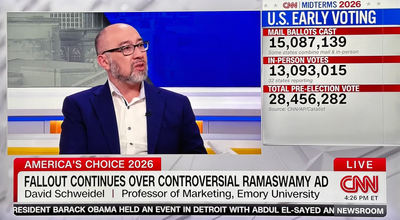
With the U.S. midterm elections approaching, political campaigns are increasingly turning to negative advertising, emotional appeals and artificial intelligence to influence voters. But how effective are these tactics, and when might they do more harm than good?
David Schweidel, Professor of Marketing and Roberto C. Goizueta Professor in Business Technology at Emory University's Goizueta Business School, joined CNN Newsroom anchor Fredricka Whitfield on October 25 to examine the psychology behind political attack ads and the growing influence of AI-generated campaign content. View his profile Schweidel, whose research includes political marketing, consumer behaviour and digital advertising, explained why negative messages often have a greater impact on voters than positive campaign advertising.
The Power of Negative Advertising
Research suggests that advertisements designed to provoke fear or anger can be particularly effective at capturing attention, influencing voter preferences and motivating people to cast their ballots.
As Schweidel explained during the CNN interview: "That's what the research has shown, that negative ads tend to stick with people longer than positive ads, getting them more likely to show up at the polls. So increasing voter turnout and moving the needle when it comes to share of the vote." However, the effectiveness of negative advertising comes with risks. Campaigns that push emotional messaging too far may alienate the very voters they hope to persuade.
Schweidel noted that economic frustrations, including rising costs for groceries, health care and gasoline, have created an environment in which political campaigns are eager to capitalize on voter anger.
AI Adds a New Dimension The conversation also explored the increasing use of artificial intelligence in political advertising, particularly the ability to create realistic images and messages that may mislead audiences.
Schweidel warned that voters who encounter these advertisements casually may not take the time to verify their accuracy. Even brief exposure to misleading content can leave a lasting impression, particularly when subsequent advertisements reinforce the same message.
The emergence of AI-generated political advertising raises important questions about transparency, authenticity and the ability of voters to distinguish legitimate campaign messages from manipulated content.
An Expert Perspective for Election Coverage As campaigns intensify ahead of Election Day, Schweidel's research offers valuable insight into why political advertisements resonate with voters, how emotional appeals influence political behaviour and the implications of AI for election communications.
His expertise spans political marketing, artificial intelligence, social media analytics and consumer behaviour, making him a valuable resource for journalists examining the changing landscape of political advertising.
David Schweidel is available to speak with media about negative political advertising, voter psychology, AI-generated campaign content and the effectiveness of political messaging.
To arrange an interview or connect with David Schweidel, click on his profile below.