#Expert Insight: Price Image Formation: When is HILO low?

Mar 7, 2023

4 min

Ryan HamiltonRamnath K Chellappa

When consumers choose where to shop, they often consider a store’s price image —does the store have a reputation for having lower or higher prices than its competitors? A store’s reputation for lower prices doesn’t happen by chance.


Choosing a pricing strategy is one of the biggest pricing decisions a retailer makes.


In “When is HILO Low? Price Image Formation Based on Frequency versus Depth Pricing Strategies,” a recently published paper in the Journal of Consumer Research, co-authors Ryan Hamilton, associate professor of marketing, Ramnath Chellappa, associate dean and Goizueta term professor of information systems and operations management, and Daniel Sheehan, associate professor of marketing and supply chain at the University of Kentucky’s Gatton College of Business and Economics, explore a gap in existing pricing strategy research. “Our research doesn’t threaten the validity of the previous research,” said Hamilton, “but what it does do is point to the limited generalizability of the previous research.”


This is because previous pricing strategy research used the same research paradigm: It emphasized consumers’ perspectives as they compared prices simultaneously across multiple stores. Hamilton, Chellappa, and Sheehan wondered what would happen if they studied consumers as they compared prices of products within a store, instead of across stores.


When they did so, the authors found that “many of the prominent findings of previous research are reversed,” they wrote. “We propose that when stores’ prices are evaluated one at a time, or in isolation, consumers will rely on the most salient contextual clues available—within-category price information—when forming a price image.” For example, rather than research the price of peanut butter across multiple grocery stores, shoppers often evaluate the price of peanut butter by comparing the prices of the brands on the shelf in front of them.


To illustrate their point, the authors explore two basic pricing strategies: a frequency pricing strategy and a depth pricing strategy. Every Day Low Pricing (EDLP) is a frequency strategy where stores offer small price advantages over their competitors on many items. Walmart employs an EDLP strategy. A common depth strategy is a high-low (HILO) pricing strategy. HILO offers infrequent, but deep, price advantages over competitors. Macy’s utilizes this strategy.


“The conventional wisdom is that EDLP equals low price,” explained Hamilton. But he and his co-authors argue that in a non-theoretical environment, the effectiveness of EDLP strategies is less clear. The trio hypothesized that the context in which consumers encounter prices has important implications. Specifically, that the frequency advantage of EDLP identified in earlier research was limited to those scenarios where customers were able to simultaneously compare prices across multiple stores. In contrast, they argue that a depth advantage, one resulting from HILO pricing, will be more likely when consumers evaluate store prices separately.


“Without simultaneous comparisons across stores, consumers shift from using across-store prices as reference points to using within-category reference prices. As a result of this shift, deep price advantages are easier to evaluate than frequent price advantages and therefore more influential on customers’ formation of price image,” they write.


“Because our theoretical account is based on within-category external reference prices, we predict that a depth store is likely to be evaluated as having a lower price image than a frequency store even when consumers are exposed to the prices of just one store,” they write.


The authors tested their hypothesis using six separate experiments. All but one of the experiments studied national brands commonly found in grocery stores. (The other experiment used televisions.) In the experiments where participants saw store prices simultaneously, the experiment replicated the frequency advantage noted in previous research. But when participants did not have simultaneous price information across stores, the previous findings didn’t hold


“What we found is that if you distance those prices comparisons even a little bit -showing a price on one webpage and then seeing a price on another webpage - that’s enough to completely reverse the findings,” explained Hamilton.


In an isolated setting, “a couple of really low prices” will better communicate a store’s low-price image, said Hamilton. “That’s the big story.”


While excited about the findings of their research, Hamilton is quick to point out the limits of their hypothesis, such as when pricing information isn’t readily available or when the consumer isn’t familiar with the brands of the product they wish to buy. “People want a simple answer that works everywhere, but it’s more nuanced than that,” said Hamilton. “This [hypothesis] is going to work better under certain set of circumstances than others because people process price information differently.”


The insights aren’t only useful for retailers. While using a store’s price image to shop can be efficient from a consumer standpoint, assuming that the prices are low solely because the store has a reputation for low prices isn’t always the case. A retailer’s price image has vulnerabilities. Not everything at Costco is cheaper than it is at Whole Foods. Southwest Airlines may not always be cheaper than Delta Air Lines. “If you’re shopping for things you really care about,” advised Hamilton, “it might be worth doing more across-store price comparisons.”


Chellappa is excited about how the paper addresses gaps in traditional economic models of pricing. “While much research in economics and information systems focuses on the availability of information for price comparison, the cognitive aspect of ‘how’ consumers compare and process such information is only explicated by studies such as ours. Looking at pricing through a behavioral lens, capturing consumers’ real shopping behavior reveals great insights that will be useful for firms,” he said.


Interested in learning more about consumer behavior and Price Image Formation Based on Frequency versus Depth Pricing Strategies? Then let us help with your coverage and questions.


Ryan Hamilton and Ramnath Chellappa are both available to speak regarding this important topic - simply click on either expert's icon now to arrange an interview today.

Connect with:
Ryan Hamilton

Ryan Hamilton

Associate Professor of Marketing
Customer PsychologyCustomer Decision MakingBrandingPrice and Price Image
Ramnath K Chellappa

Ramnath K Chellappa

Professor of Information Systems & Operations Management; Academic Director, MS in Business Analytics
Pricing Digital Product Pricing and PiracyEconomics of PrivacyElectronic Markets and US Airline PricingManagement of Information Security and Privacy
Powered by

You might also like...

Check out some other posts from Emory University, Goizueta Business School

Why Negative Political Ads Work -  And When They Backfire featured image

2 min

Why Negative Political Ads Work - And When They Backfire

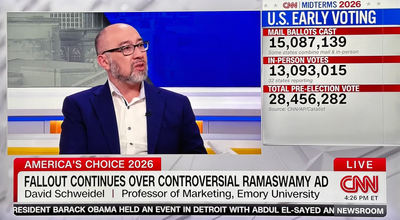
With the U.S. midterm elections approaching, political campaigns are increasingly turning to negative advertising, emotional appeals and artificial intelligence to influence voters. But how effective are these tactics, and when might they do more harm than good? David Schweidel, Professor of Marketing and Roberto C. Goizueta Professor in Business Technology at Emory University's Goizueta Business School, joined CNN Newsroom anchor Fredricka Whitfield on October 25 to examine the psychology behind political attack ads and the growing influence of AI-generated campaign content. View his profile Schweidel, whose research includes political marketing, consumer behaviour and digital advertising, explained why negative messages often have a greater impact on voters than positive campaign advertising. The Power of Negative Advertising Research suggests that advertisements designed to provoke fear or anger can be particularly effective at capturing attention, influencing voter preferences and motivating people to cast their ballots. As Schweidel explained during the CNN interview: "That's what the research has shown, that negative ads tend to stick with people longer than positive ads, getting them more likely to show up at the polls. So increasing voter turnout and moving the needle when it comes to share of the vote." However, the effectiveness of negative advertising comes with risks. Campaigns that push emotional messaging too far may alienate the very voters they hope to persuade. Schweidel noted that economic frustrations, including rising costs for groceries, health care and gasoline, have created an environment in which political campaigns are eager to capitalize on voter anger. AI Adds a New Dimension The conversation also explored the increasing use of artificial intelligence in political advertising, particularly the ability to create realistic images and messages that may mislead audiences. Schweidel warned that voters who encounter these advertisements casually may not take the time to verify their accuracy. Even brief exposure to misleading content can leave a lasting impression, particularly when subsequent advertisements reinforce the same message. The emergence of AI-generated political advertising raises important questions about transparency, authenticity and the ability of voters to distinguish legitimate campaign messages from manipulated content. An Expert Perspective for Election Coverage As campaigns intensify ahead of Election Day, Schweidel's research offers valuable insight into why political advertisements resonate with voters, how emotional appeals influence political behaviour and the implications of AI for election communications. His expertise spans political marketing, artificial intelligence, social media analytics and consumer behaviour, making him a valuable resource for journalists examining the changing landscape of political advertising. David Schweidel is available to speak with media about negative political advertising, voter psychology, AI-generated campaign content and the effectiveness of political messaging. To arrange an interview or connect with David Schweidel, click on his profile below.


Why Negative Campaign Ads Work: David Schweidel on the Psychology Driving This Election Cycle featured image

2 min

Why Negative Campaign Ads Work: David Schweidel on the Psychology Driving This Election Cycle

As the 2026 Senate races heat up, negative campaign ads are once again dominating the airwaves. David Schweidel, Professor of Marketing and the Roberto C. Goizueta Professor in Business Technology at Emory's Goizueta Business School, has researched political advertising for years and is currently tracking the 2026 Senate races. Asked why negative campaigns tend to outperform positive ones, Schweidel points to what sticks with voters: "It's those negative messages. It's those attack messages," often fear- or anger-based, that he says are "more arousing to us" and "tends to move the needle more so than positive advertising." Where an ad comes from matters too. Schweidel's research looks at whether messaging originates from the candidate directly or from third parties like PACs or political parties, and he's found that candidate-sourced messaging tends to be more believable, "coming from a human brand," in his words, rather than an unfamiliar political organization. His current research pushes this further, into how political advertising shapes what AI chatbots tell voters. Schweidel notes that where news coverage and social media once drove poll movement, more voters are now turning to AI chatbots for candidate information. Using Maine Senate candidate Graham Platner as an example, he explains that recent news coverage and online conversation about a candidate gets absorbed by these chatbots, ultimately shaping what's presented to a voter asking about that candidate. For campaigns and advertisers, Schweidel frames this as a new channel to understand, similar to how companies already monitor social media conversation, and predicts political campaigns will start actively tracking how their candidates are portrayed in AI responses, the same way many companies now treat AI presence the way they once treated search engine optimization: "What a lot of companies are trying to come up with now is what is the playbook to do the same thing for AI." Dr. Schweidel is an expert in marketing technology, AI, social media, political marketing, and customer analytics. He holds a PhD in Marketing from the Wharton School of the University of Pennsylvania and is the author of Social Media Intelligence and Profiting from the Data Economy. His research has appeared in the Journal of Marketing, Journal of Marketing Research, Marketing Science, and Management Science, and he has been recognized as a Marketing Science Institute Young Scholar and named to Poets & Quants' "Top 40 Under 40." Dr. Schweidel is available to discuss: Why are negative campaign ads more effective than positive ads? Why do negative emotions drive people to vote, donate, and campaign, more than positive emotions? The connection between AI and campaign ads How organizations make explicit decisions to exploit these trends Click on the connect button in his profile below. 

World Cup 2026: The Business Behind the Game featured image

1 min

World Cup 2026: The Business Behind the Game

As the 2026 FIFA World Cup unfolds across North America, Emory University’s Goizueta Business School experts are available to help media explore the business stories behind the world’s biggest sporting event, from the economics of hosting and ticket pricing to global sponsorship, player brands and the psychology of fandom. Goizueta’s World Cup 2026 Business Hub brings together faculty who can provide timely, research-backed commentary on the commercial, cultural and consumer forces shaping the tournament as it moves from match to match, city to city and story to story. Featured Topics The Economics of Hosting Infrastructure investment, tourism revenue, real estate, local labor markets and the broader financial impact of hosting World Cup matches. The Science of Fandom What drives global fan devotion, audience loyalty and engagement across stadiums, broadcasts and digital platforms. Ticket Pricing and Demand Dynamic pricing, hospitality packages, travel costs and how extraordinary demand shapes the fan experience at major global events. Brand Strategy and Global Sponsorship How companies evaluate World Cup sponsorships, build global campaigns and measure the return on major sports partnerships. The Rise of the Player Brand How star footballers build, extend and monetize personal brands that reach far beyond the pitch. Media can visit Goizueta’s World Cup 2026 Business Hub to explore available experts and connect directly with the right source for their story.

+1
View all posts