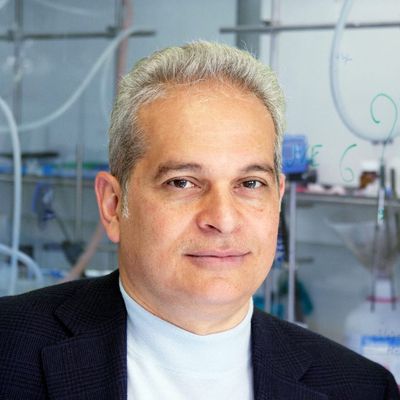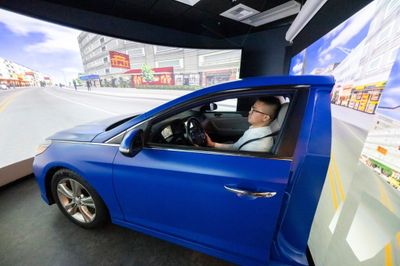

UC Irvine expert on metacognition: Megan Peters

Oct 25, 2023

3 min

How do our brains take in complex information from the world around us to help us make decisions? And what happens when there’s a mismatch between how well your brain thinks it’s performing this function and how well it’s actually doing? UC Irvine cognitive scientist Megan Peters takes a deep dive into metacognition - our ability to monitor our own cognitive processing. To reach Prof. Peters, contact Heather Ashbach at hashbach@uci.edu or 949-284-1577.


“Our brains are fantastically powerful information processing systems. They take in information from the world around us through our eyes, ears, and other senses, and they process or transform that sensory information into rich internal representations — representations that we can then use to make useful decisions, to navigate effectively without running into things, and ultimately, to stay alive. And interestingly, our brains also can tell us when they’re doing a good job with all this processing, through a process called metacognition, or our ability to monitor our own cognitive processing.


My name is Megan Peters, and I’m an associate professor in the department of Cognitive Sciences at UC Irvine. I’m also a Fellow in the Canadian Institute for Advanced Research Brain, Mind, & Consciousness program and I am president and chair of the board at Neuromatch.


My research seeks to understand metacognition — how it works in the brain, and how it works at a computational or algorithm level — and it also seeks to understand what this metacognitive processing might have to do with the conscious experiences we have of our environments, of each other, and of ourselves. So in our research group, we use a combination of behavioral experiments with humans, brain imaging (like MRI scans), and computational approaches like mathematical modeling and machine learning or Artificial Intelligence, to try to unravel these mysteries.


I think my favorite overall line of research right now has to do with cases where our brains’ self-monitoring sometimes seems to go wrong. So what I mean is, sometimes your brain “metacognitively” computes how well it thinks you’re doing at this “sensory information processing” task, but this ends up being completely different from how well you’re actually doing. Imagine it this way: you’re driving down a foggy road, at night in the dark. You probably can’t see very well, and you’d hope that your brain would also be able to tell you, “I can’t see super well right now, I should probably slow down.” And most of the time, your brain does this self-monitoring correctly, and you do slow down. But sometimes, under some kinds of conditions or visual information, your brain miscalculates, and it erroneously tells you, “Actually you can see just fine right now!”


So this is a sort of “metacognitive illusion”: your brain is telling you “you’re doing great, you can see very clearly!” when in reality, the quality of the information that it’s receiving, and the processing it’s doing, is really poor, really bad — in essence, that means that you can feel totally confident in your abilities to accurately process the world around you, when in fact you’re interpreting the world totally incorrectly.


Now normally, in everyday life, this doesn’t happen of course. But we can create conditions in the lab where this happens very robustly, which helps us understand when and how it might happen in the real world, too, and what the consequences might be. So this is fascinating both because it is a powerful tool for studying how your brain constructs that metacognitive feeling of confidence, and also because — in theory — it means that your subjective, conscious feeling of confidence might be doing something really different than just automatically or directly reading out how reliably you brain is processing information. And that could eventually provide a better way to investigate how our so-called phenomenological or conscious experiences can arise from activity patterns in your brain at all.”

To reach Prof. Peters, contact Heather Ashbach at hashbach@uci.edu or 949-284-1577.


Powered by

You might also like...

Check out some other posts from UC Irvine

The Biggest Study Yet on School Cellphone Bans Shows Results Aren’t So Simple featured image

2 min

The Biggest Study Yet on School Cellphone Bans Shows Results Aren’t So Simple

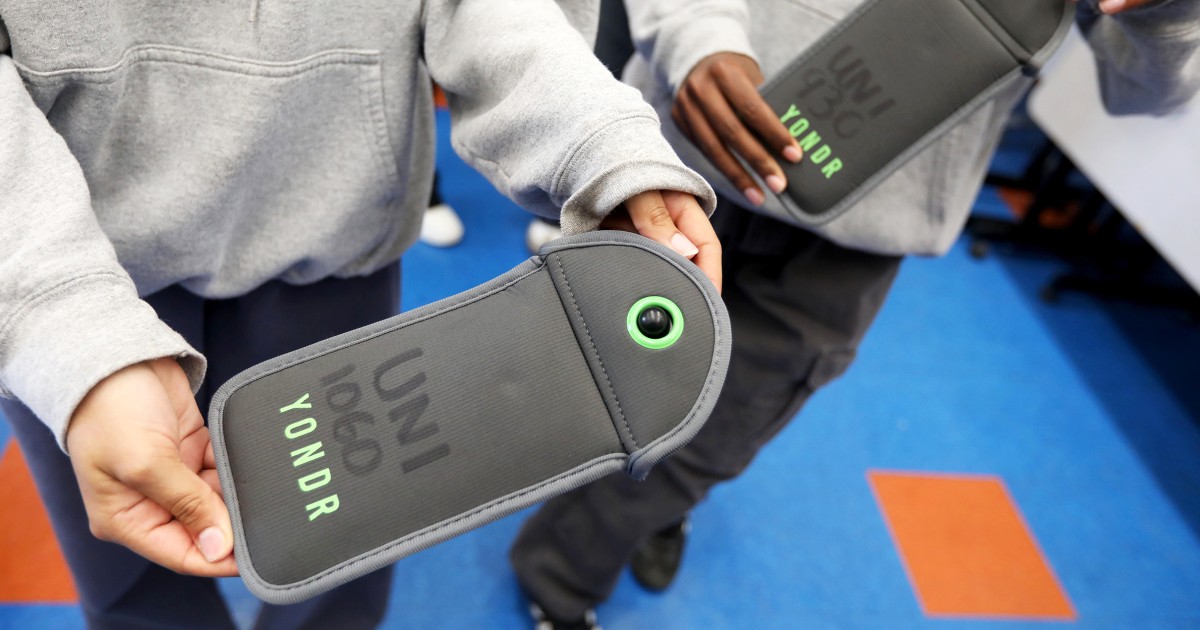
As more schools move to restrict or completely ban smartphones in classrooms, the largest study ever conducted on school cellphone bans is challenging assumptions about what these policies actually achieve. The new U.S. study, involving roughly 4,600 schools and researchers from institutions including Stanford, Duke, the University of Michigan, and the University of Pennsylvania, found that strict cellphone bans dramatically reduced phone use during the school day. In some schools, classroom phone use dropped from 61 percent to just 13 percent. It's a popular topic and media coverage of the results has been extensive. But the findings became more complicated from there. Researchers found little immediate evidence that phone bans significantly improved test scores, attendance, classroom attention, or bullying rates. Some schools even saw short-term increases in student discipline issues and declines in student well-being immediately after bans were introduced. Still, the study suggested that longer-term outcomes may improve as students adjust and schools refine enforcement strategies. Teachers consistently reported fewer classroom distractions and stronger learning environments. Mizuko Ito is a cultural anthropologist of technology use, focusing on children and youth's changing relationships to media and communications. She recently completed a research project supported by the MacArthur Foundation a three year ethnographic study of kid-initiated and peer-based forms of engagement with new media. View her profile The findings arrive as governments across North America continue expanding school cellphone restrictions amid growing concerns about distraction, screen addiction, anxiety, and the impact of social media on youth mental health. The study highlights a growing debate among educators, parents, and researchers: while limiting phone access may reduce distractions, the relationship between young people, technology, mental health, and learning is far more complex than simply removing devices from classrooms.

UC Irvine’s Daniele Piomelli provides expert view on federal reclassification of cannabis featured image

1 min

UC Irvine’s Daniele Piomelli provides expert view on federal reclassification of cannabis

As the White House moves to reclassify cannabis under federal law from a schedule I to a schedule III, questions remain about how the change could affect medical use, public health, research, and regulation. UC Irvine’s Daniele Piomelli, PhD, an internationally recognized cannabis researcher, is available to comment on the implications of the policy shift. Piomelli is a distinguished professor of anatomy and neurobiology at the University of California, Irvine, the Louise Turner Arnold Chair in the neurosciences, and director of the UCI Center for the Study of Cannabis. Piomelli has more than 30 years of experience studying cannabis, THC and the endocannabinoid system, with research spanning basic neuroscience, pharmacology and translational science. He is editor in chief of Cannabis and Cannabinoid Research and has testified before the U.S. Senate on cannabis-related research and policy. He can provide perspective on: • What federal reclassification may change for medical cannabis and scientific research • Differences between THC, CBD and other cannabinoids • Potential public health benefits and risks of cannabis legalization • Cannabis exposure and the developing brain, including adolescence • Regulatory and research challenges tied to cannabis policy Piomelli is available for interviews or background conversations. Email: piomelli@hs.uci.edu

Driving ambition featured image

4 min

Driving ambition

Motor vehicle crashes remain one of the leading causes of death among teenagers. For the youngest drivers, getting behind the wheel marks freedom but also comes with measurable risk. At the University of California, Irvine, Dr. Federico Vaca, professor and executive vice chair of emergency medicine, is determined to change that trajectory. “Driving licensure among our youngest drivers remains a major life milestone, and it allows for newfound freedom and opportunity for not only youth but their parents as well. At the same time, learning to drive and licensure come at a time when youth are rapidly moving through life with new transitions in school, with friends, and likely exposure to alcohol and drugs,” he says. “Our priority … is to examine the complexities of young driver behavior and to thoroughly understand crash injury risk and crash prevention among this special group of drivers.” Vaca’s work is at the intersection of health, transportation science and policy. A fellow of the Association for the Advancement of Automotive Medicine and a researcher at UC Irvine’s Institute of Transportation Studies, he previously served as a medical fellow at the U.S. Department of Transportation’s National Highway Traffic Safety Administration in Washington, D.C. His long-standing goal is to prevent the injuries he has seen and treated in emergency departments and trauma centers through rigorous research, using the findings to inform and advance evidence-based programs and policies that save lives on the road. Innovating safety science UC Irvine is home to a new hub for understanding and preventing crash injuries among young drivers, the Brain, Body & Behavior Driving Simulation Lab, founded by Vaca and his interdisciplinary team. At the heart of the B3DrivSim Lab is a high-fidelity, half-cab driving simulator capable of replicating real-world conditions with precision. It uses advanced software to design customized driving scenarios – from complex roadway environments to the inclusion of such human elements as distraction and fatigue – all while capturing real-time video and driving behavior as well as vehicle control metrics. This integration of medicine, behavioral science and engineering enables researchers to measure how developmental and socioecological factors shape driver decisions in unique and consequential ways. The B3DrivSim Lab also represents a growing mentorship ecosystem at UC Irvine. In mid-June, the facility welcomed Siwei Hu, a postdoctoral scholar who earned a Ph.D. in civil and environmental engineering, with a focus on transportation studies, at UC Irvine. Hu works closely with Vaca to combine engineering and modeling analytics with behavioral and crash risk insights. The half-cab driving simulator uses advanced software to replicate real-world conditions and design customized driving scenarios – from complex roadway environments to the inclusion of such human elements as distraction and fatigue – all while capturing real-time video and driving behavior as well as vehicle control metrics. Steve Zylius / UC Irvine From the lab to policy Beyond simulation, Vaca’s latest National Institutes of Health-funded study, separate from his lab’s work, takes this philosophy to the national level. His project, “Modeling a National Graduated-BAC Policy for 21- to 24-Year-Old Drivers,” explores whether lowering the legal blood alcohol limit for young adults could reduce alcohol-related crashes and deaths. “When you turn 21, at that very moment, the application of several alcohol-related prevention laws changes in the blink of an eye,” Vaca says. “Before that, the minimum legal drinking age and zero-tolerance laws are in place to protect young drivers from alcohol-impaired driving. Effectively, the second you turn 21, those prevention policies don’t apply, and you’re suddenly allowed to have a much higher blood alcohol concentration in your body that’s intimately tied to serious and fatal crash risk. It’s a very dangerous disconnect.” The study will use national crash data, behavioral surveys and system dynamics modeling to examine how a “graduated BAC policy” might bridge that gap, giving young adult drivers a safer transition into full legal responsibility and saving many more lives. Bridging science, education and prevention Earlier this year, Vaca and his B3DrivSim team joined prevention program educators, policymakers, engineers and law enforcement professionals in Anaheim at a Ford Driving Skills for Life event, part of a Ford Philanthropy-sponsored national effort teaching teens hands-on safe driving techniques – from hazard recognition to impaired-driving awareness. Speaking to more than 130 high school students and their parents from local and distant communities, Vaca emphasized the connection among driving, independence, opportunity and responsibility. That message aligns with his broader initiative, Youth Thriving in Life Transitions with Transportation, which introduces high school students to traffic safety and transportation science and their role in promoting health, education and employment in early adulthood. By linking research and real-world experience, the project empowers youth to see mobility as a foundation for opportunity with safety as its cornerstone. With overall young driver crash fatalities rising 25 percent nationally over the last decade and a 46 percent increase in fatal crashes where a young driver had a BAC of ≥ .01/dL, Vaca’s work represents a crucial step toward reversing that trend. Through a combination of clinical insight and prevention, transportation and data science underscored by community collaboration, he and his team are redefining how researchers and policymakers think about youth driver safety.

View all posts