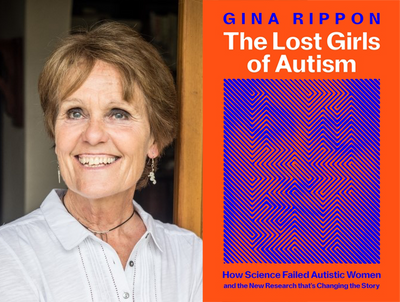
Gina Rippon, professor emeritus of cognitive neuroimaging at Aston University, has won an award for her book, The Lost Girls of Autism The book won the 2025 British Psychological Society Popular Science Award It explores the emerging science of female autism, and examines why it has been systematically ignored and misunderstood for so long. The Lost Girls of Autism, the latest book from Gina Rippon, professor emeritus of cognitive neuroimaging at Aston University Institute of Health and Neurodevelopment (IHN), has won the 2025 British Psychological Society (BPS) Popular Science Award.
The annual BPS Book Awards recognise exceptional published works in the field of psychology. There are four categories – popular science, textbook, academic monograph and practitioner text.
With the subtitle ‘How Science Failed Autistic Women and the New Research that’s Changing the Story’, The Lost Girls of Autism explores the emerging science of female autism, and examines why it has been systematically ignored and misunderstood for so long.
Historically, clinicians believed that autism was a male condition, and simply did not look for it in girls and women. This has meant that autistic girls visiting a doctor have been misdiagnosed with anxiety, depression or personality disorders, or are missed altogether. Many women only discover they have the condition when they are much older.
Professor Rippon said:
“It's such a pleasure and an honour to receive this award from the BPS. It’s obviously flattering to join the great company of previous winners, but I’m also extremely grateful for the attention drawn to the issues raised in the book. “Over many decades, due to autism’s ‘male spotlight’ problem, autistic girls and women have been overlooked, deprived of the help they needed, and even denied access to the very research studies that could widen our understanding of autism. This book tells the stories of these girls and women, and I’m thrilled to accept this prize on their behalf.”
·
4 min
Professor Gina Rippon signs a copy of The Lost Girls of Autism for talk attendee Dr Georgie Agar Professor Gina Rippon’s new book, The Lost Girls of Autism, investigates why autism was thought to be a male condition for so long She gave a public talk at Aston University on 6 May 2025 exploring the central themes of the book Women and girls with autism have long been overlooked as they are better at masking and camouflaging so ‘fail’ standard tests. Autism in women and girls has been overlooked for decades, and Gina Rippon, professor emeritus of cognitive neuroimaging at Aston University Institute of Health and Neurodevelopment (IHN), has given a talk about her new book on the topic at Aston University.
The book, The Lost Girls of Autism, was released on 3 April 2025, coinciding with Autism Acceptance Month, with the subtitle ‘How Science Failed Autistic Women and the New Research that’s Changing the Story’.
Autism is characterised by a number of now well-known traits, including social awkwardness, extreme obsessions, and unusual movements and coping mechanisms known as ‘stimming’. It was (allegedly) first described in the 1940s separately by Austrian psychiatrists Leo Kanner and Hans Asperger. Originally identified as a rare developmental condition, since the 1980s, there has been an 800% increase in diagnoses, leading to concerns about an ‘autism epidemic’. There is a strong and enduring belief that it is a condition much more prevalent in males.
Professor Rippon described her research as “looking at how brains get to be different and what that means for the owners of those brains”. This includes looking at the functions of different areas of the brain using scanners.
During research into a number of brain conditions and diseases with obvious differences between the sexes, including how the disease progresses, such as Alzheimer’s in women, or prevalence in one particular sex, such as Parkinson’s in men, Professor Rippon also became interested in autism, also assumed to be largely a condition in males. However, during a research review, she found that many autism studies made no reference to sex differences. Amalgamated data from autism studies found that 80% of participants were male, and 25% of testing centres only tested males with autism. By only looking at males, Professor Rippon explained, the notion that autism is a male disorder became self-fulfilling.
This does not just refer to scientific research. Even now, boys are ten times more likely to be referred for assessment for autism and twice as likely to be diagnosed than girls, even when they have exactly the same traits. 80% of autistic females have received multiple wrong diagnoses, including borderline personality disorder, social anxiety or obsessive-compulsive disorder (OCD). But why? The reason is the unchallenged belief that ‘autism is a “boy” thing’ causing a male spotlight problem in all aspects of the autism story. It could also be that females with autism express the condition differently.
Professor Rippon said:
“This took me back to [my previous book] The Gendered Brain when I was looking at the very clear view of what males should be like and what females should be like. If you look at the autistic population you have this clear idea that males are like this, but females, er, not so much? Females have poor social skills, but not as poor, or obsessive interests, but not as obsessive, so the trouble with females, is that they are not autistic enough.”
The gold standard tests for autism are the Autism Diagnostic Observation Schedule (ADOS) and the Autism Diagnostic Interview (ADI) tests. Professor Rippon believes these are heavily biased towards how the condition manifests itself in males, such as social awkwardness or extreme obsessions. For example, parents may well be asked if their son has an unusual interest in weather patterns or train timetables, but they are not asked if their daughter has an unusual interest in Barbie dolls, because dolls are seen as socially acceptable.
Research has shown that females with autism are more likely to ‘camouflage’ their symptoms, watching how ‘normal people’ behave, even practising social interactions, so they appear more normal. They are also more likely to ‘mask’ symptoms behind a persona, such as the ‘class clown’ or ‘star athlete’, in an effort to fit in. Autistic females describe this behaviour as a ‘survival strategy’ to avoid being spotted as different.
It is also the case that girls are more likely to have sensory processing problems, such as aversion to strong smells, which can be enough to affect their day-to-day lives. This has only recently been added to the diagnostic criteria for autism. If the camouflaging or masking collapses, rates of other conditions such as disordered eating or anorexia, self-harm and gender dysphoria are disproportionately high, and it is these which will become identified as the underlying difficulty, rather than autism itself.
Professor Rippon said:
“The next stage should be asking why this group of individuals persists in hiding their autism, especially when autism has been defined as a lack of interest in social connection. There’s what I call the ‘born to be mild’ effect, where little girls are trained to socialise more, to behave, not to make a fuss, if you feel uncomfortable, don’t tell anyone else about it. There’s a lovely comment from one late-diagnosed female who rues the fact that she was so well behaved and wishes that she had just burned more cars so that someone would have spotted her carefully camouflaged distress!”
The final slide in the presentation covered what Professor Rippon called “an ironic footnote”. While Leo Kanner and Hans Asperger are described as the fathers of autism, writing in the 1940s, it was in fact a Soviet female psychiatrist, Grunya Sukhareva, writing in the 1920s, who first described autism, even clearly examining the differences in the condition between boys and girls. Why her research was ignored for so long is unclear, but the male spotlight problem may well have been avoided.
For more information about The Lost Girls of Autism, visit https://www.panmacmillan.com/authors/gina-rippon/the-lost-girls-of-autism/9781035011629.
·
2 min
The Lost Girls of Autism is published on 3 April 2025, coinciding with Autism Awareness Month in April
In the book, Professor Rippon explores the ‘male’ history of autism, and why autism in women has been misunderstood and ignored
Professor Rippon will give a free public lecture on the book at Aston University on 6 May 2025.
Gina Rippon, professor emeritus of cognitive neuroimaging at Aston University Institute of Health and Neurodevelopment (IHN), has written a new book, entitled The Lost Girls of Autism.
The book will be released on 3 April 2025, coinciding with Autism Acceptance Month in April. It has the subtitle ‘How Science Failed Autistic Women and the New Research that’s Changing the Story’. Historically, doctors believed that autism was a male condition, and simply did not look for it in girls and women. This has meant that autistic girls visiting a doctor have been misdiagnosed with anxiety, depression or personality disorders, or are missed altogether. Many women only discover they have the condition when they are much older, missing decades of support.
In more recent years, it has become apparent that girls and women with autism have different traits and behaviours to boys and men, and are more likely to hide autistic traits to fit in – known as camouflaging.
In The Lost Girls of Autism, Professor Rippon explores the emerging science of female autism, and examines why it has been systematically ignored and misunderstood for so long.
Professor Rippon will give a free public lecture about her book on Tuesday 6 May 2025 at 18:00 BST at Aston Business School. Visit https://www.eventbrite.co.uk/e/the-lost-girls-of-autism-an-audience-with-author-gina-rippon-tickets-1304020734119 for more information and tickets. Copies of the book will be on sale at the event.
Professor Rippon said:
“This book reveals how a ‘male spotlight’ problem has biased many aspects of the autism story, from what autism is, to how we recognise it, and even how brain imagers like me search for answers. It shows how and why autistic women have been unrecognised, overlooked and unsupported. It shines a new light on how the story is changing and how we are now beginning to recognise the full spectrum of the autistic experience. It is for anyone with an interest in autism in all its presentations.”
Media
Social
Biography
Professor Gina Rippon is Emeritus Professor of Cognitive Neuroimaging at the Institute of Health and Neurodevelopment, Aston University.
Her research has involved state-of-the-art brain imaging techniques to investigate developmental disorders such as autism. Her current research interests focus on the under-recognition of autism in women and girls, especially in neuroscience research. Her new book on this topic: The Lost Girls of Autism (UK)/Off the Spectrum (US) was released in April 2025. This was awarded the British Psychology Society Prize for Best Science Book.
She also explores the use of neuroscience techniques to investigate social processes, especially those associated with the development of sex/gender differences in the human brain. She was a member of the Fawcett Society Commission on Gender Stereotypes in Early Childhood, contributing to the report “Unlimited Potential”.
She is an outspoken critic of ’neurotrash’, the populist (mis)use of neuroscience research to (mis)represent our understanding of brain-behaviour links, particularly on the topic of sex/gender differences. Her book on such topics, ‘The Gendered Brain’, published by Bodley Head and Penguin Random House, came out in the UK in 2019. She is a member of the international NeuroGenderings network and has co-authored many papers on sex/gender neuroscience. She is a passionate supporter of initiatives to address the under-representation of women in all spheres of influence, especially science. Under the heading “Mind the Gender Gap”, she has offered a neuroscience-informed approach to diversity and inclusivity initiatives to a wide range of business and political organisations, including the UK’s Cabinet Office and the EU.
Areas of Expertise
Cognitive Neuroimaging
Electroencephalography
Magnetoencephalography
Psychophysiology
Neuroscience
Cortical Signals
Accomplishments
Honorary Fellow of the British Science Association
A revolutionary new understanding of autism in girls
New Scientist online
2025-03-31
By studying the brains of autistic girls, we now know the condition presents differently in them than in boys, suggesting that huge numbers of women have gone undiagnosed
Why neuroscience is still searching for a gendered brain
Frontline online
2022-11-11
Gina Rippon says that could be due to age. Rippon is a neurobiologist from Aston University in the UK who has focussed much of her career on fighting what she calls “neurosexism” — gender bias in neurological studies.
The Gendered Brain - Gina Rippon and myth shattering neuroscience
ABC online
2020-05-24
In her book The Gendered Brain: The New Neuroscience that Shatters the Myth of the Female Brain, British cognitive neuroscientist Professor Gina Rippon, digs into the history of science’s efforts to pin sex differences on the brain.
Women's brains ARE built for science. Modern neuroscience explodes an old myth
CBC online
2019-09-20
Dr. Gina Rippon says there's no difference between boys and girls in terms of their aptitude for science, based on the large number of psychological skills surveys over the years.
Meet the neuroscientist shattering the myth of the gendered brain
The Guardian online
2019-02-24
After you arrive, explains cognitive neuroscientist Gina Rippon in her riveting new book, The Gendered Brain, the big reveal will be hidden within some novelty item, such as a white iced cake, and will be colour-coded. Cut the cake and you’ll see either blue or pink filling. If it is blue, it is a…
Differently different?: A commentary on the emerging social cognitive neuroscience of female autism
Biology of Sex Differences
2024
Autism is a neurodevelopmental condition, behaviourally identified, which is generally characterised by social communication differences, and restrictive and repetitive patterns of behaviour and interests. It has long been claimed that it is more common in males. This observed preponderance of males in autistic populations has served as a focussing framework in all spheres of autism-related issues, from recognition and diagnosis through to theoretical models and research agendas. One related issue is the near total absence of females in key research areas.
Mind the gender gap: The social neuroscience of belonging
Frontiers in Human Neuroscience
2023
Gender gaps persist in the 21st century, in many aspects of society and in many types of organisation. There are earnings gaps in almost all domains, reports of glass ceilings and the “missing middle” in business, finance, law and politics, and dramatic under-representation of women in many branches of science, even in the most “gender equal” countries. This is despite decades of effort to address them, including targeted legislation and many Diversity and Inclusion initiatives. Early essentialist, competence-based explanations for the existence of gender gaps have been largely discredited at the research level, although their persistence in the public consciousness and at the level of education and training can still negatively bias both individual self-belief and organisational processes.
Gender issues in fundamental physics: Strumia’s bibliometric analysis fails to account for key confounders and confuses correlation with causation
Quantitative Science Studies
2021
Alessandro Strumia recently published a survey of gender differences in publications and citations in high-energy physics (HEP). In addition to providing full access to the data, code, and methodology, Strumia (2021) systematically describes and accounts for gender differences in HEP citation networks. His analysis points both to ongoing difficulties in attracting women to HEP and an encouraging—though slow—trend in improvement.
Embracing diversity and inclusivity in an academic setting: Insights from the Organization for Human Brain Mapping
Neuroimage
2021
Scientific research aims to bring forward innovative ideas and constantly challenges existing knowledge structures and stereotypes. However, women, ethnic and cultural minorities, as well as individuals with disabilities, are systematically discriminated against or even excluded from promotions, publications, and general visibility. A more diverse workforce is more productive, and thus discrimination has a negative impact on science and the wider society, as well as on the education, careers, and well-being of individuals who are discriminated against. Moreover, the lack of diversity at scientific gatherings can lead to micro-aggressions or harassment, making such meetings unpleasant, or even unsafe environments for early career and underrepresented scientists.
How hype and hyperbole distort the neuroscience of sex differences
PLoS biology
2021
Sex/gender differences in the human brain attract attention far beyond the neuroscience community. Given the interest of nonspecialists, it is important that researchers studying human female–male brain difference assume greater responsibility for the accurate communication of their findings.