Glen Duerr, Ph.D. profile photo

Glen Duerr, Ph.D.

Professor of International Studies

  • Cedarville OH UNITED STATES

Dr. Deurr's research interests include nationalism and secession, comparative politics, and international relations theory

Contact

Spotlight

2 min

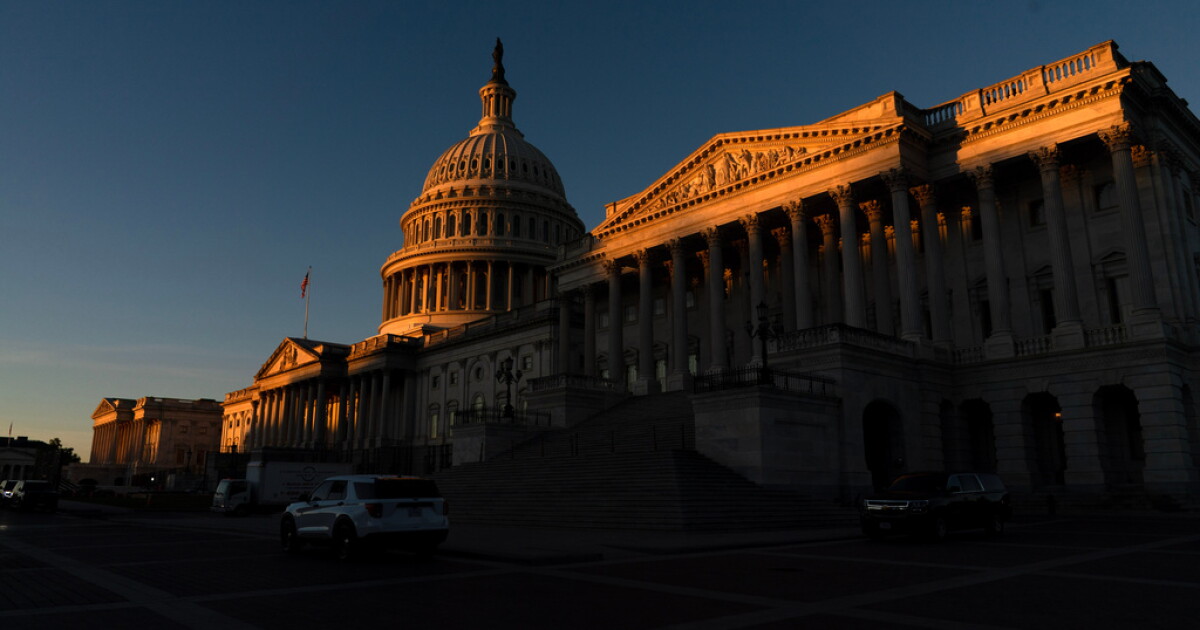
Congress faces a Dec. 11 deadline to keep federal agencies operating, but negotiations have become entangled in a larger struggle over the war in Iran. Some Democrats want the next spending agreement to restrict funding for the conflict, while President Donald Trump is seeking $350 billion in additional Pentagon spending. With no agreement reached, lawmakers must navigate competing demands over military operations and government services before the holiday season.  The dispute highlights Congress’s “power of the purse”—its authority to determine how federal money may be spent. Through spending legislation, lawmakers can provide funding, impose conditions or prohibit particular uses of money, giving them a powerful tool for influencing foreign policy. Those restrictions must become law to take effect, however, and disputes can arise over whether particular conditions infringe on the president’s constitutional authority. The wording of any proposed Iran restrictions would therefore matter as much as the political agreement behind them. Democrats are divided over how aggressively to use that leverage. Some favor withholding support for a temporary funding bill unless it limits war spending. Others, including House Appropriations Committee ranking member Rosa DeLauro, oppose a shutdown as a strategy for ending the conflict. Republicans warn that tying government funding to restrictions on military operations could derail an agreement. The disagreement raises a practical distinction: a government shutdown does not automatically halt every federal activity, making a funding lapse different from an enacted prohibition on specific military expenditures. As the deadline approaches, the negotiations raise questions about both constitutional authority and political effectiveness. How precisely can Congress limit military spending while maintaining other government operations? And can lawmakers turn spending leverage into a change in foreign policy without allowing the broader funding dispute to disrupt public services?

Glen Duerr, Ph.D.

2 min

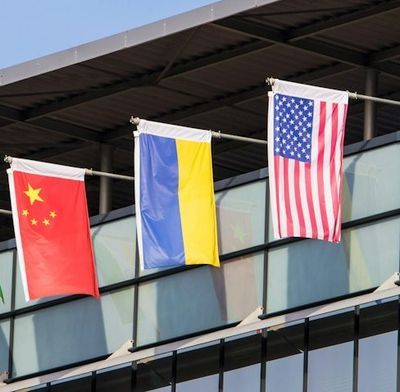
Chinese President Xi Jinping met President Donald Trump at the foot of Air Force One on Wednesday as Trump arrived in Shenzhen for the Asia-Pacific Economic Cooperation summit. The personal welcome returned a gesture Trump made when Xi visited Washington in September. On Thursday, Trump is scheduled to meet separately with Xi before the two sit down with Russian President Vladimir Putin for their first three-way meeting. Trade is one immediate test for Washington and Beijing. Xi used a speech in Shenzhen to call for more open trade, even as U.S. tariffs and restrictions on advanced American chips remain points of friction. For U.S. businesses, the two policies carry different stakes. Tariffs can raise the cost of importing goods, while chip restrictions limit what American companies can sell to Chinese customers. Any change in those policies could affect decisions about where businesses buy supplies, where they sell and how much they invest. The meeting with Putin brings a separate set of stakes. Trump has raised the prospect of discussing Russia’s war in Ukraine and limits on nuclear weapons. Putin, meanwhile, used his remarks in Shenzhen to criticize Western sanctions imposed after Russia’s full-scale invasion of Ukraine in 2022. The talks offer a chance to see whether the three governments can identify an issue on which they are prepared to keep negotiating. The most useful signs of progress may come after the meetings. On trade, businesses can look for specific changes to tariffs or export rules and a date for when they would take effect. On Ukraine, what role would Kyiv have in any talks that follow Shenzhen, and what commitments would Washington, Beijing and Moscow be prepared to make? 

Glen Duerr, Ph.D.

1 min

Reported threats against American personnel are prompting new precautions at U.S. diplomatic posts in the Middle East. The State Department is reducing staffing at embassies in Jordan, Lebanon, Qatar and the United Arab Emirates following intelligence warnings about increased Iranian efforts to target Americans. The embassies remain open under restricted operations, and the staffing changes differ from the ordered departure of nonessential personnel and families from Saudi Arabia. The precautions underscore the challenges of maintaining a diplomatic presence during a regional conflict. Embassies support communication with foreign governments, assist American citizens and provide information that helps guide U.S. policy. Reducing staff can limit personnel’s exposure to danger, but it also requires officials to reassess which activities can safely continue. Reported threats involving Iran-backed Houthi militants add another layer of complexity to those security decisions. The developments also raise questions about how Washington can protect its personnel while preserving channels for negotiation. U.S. officials have denied that the staffing reductions are connected to potential new American and Israeli strikes against Iran. The precautions nevertheless illustrate how intelligence warnings can affect diplomatic operations before an attack occurs—and how regional tensions can place Americans serving abroad at risk. 

Glen Duerr, Ph.D.

Media

Biography

Dr. Glen Duerr is a citizen of three countries. He was born in the United Kingdom, moved to Canada as a teenager, and then to the United States to obtain his Ph.D. His teaching and research interests include nationalism and secession, comparative politics, international relations theory, sports and politics, and Christianity and politics. He has published numerous refereed journal articles, book chapters, encyclopedia entries, and book reviews. He is the author of a book, Secessionism and the European Union, which was published by Lexington Books in 2015.

Industry Expertise

Research
Education/Learning

Areas of Expertise

International Terrorism
Domestic Terrorism
International Relations
Brexit

Education

University of Western Ontario

B.A.

History and Political Science

2003

University of Windsor

M.A.

Political Science (International Relations)

2005

Kent State University

Ph.D.

Political Science and Government

2012

Media Appearances

Trouble for Trump

WRGT TV  tv

2018-07-16

Trouble for Trump? Glenn Duerr discusses the Putin-Trump saga.

View More

Was the "Putin Summit" a Good Idea?

WRGT TV  tv

2018-07-16

Was the Putin Summit a good idea? Glenn Duerr joined WRGT TV to discuss.

View More

The "Most Contentious" NATO Summit in Decades

WDTN TV  tv

2018-07-12

Glenn Duerr joined WDTN TV to discuss the "Most Contentious" NATO summit in decades.

View More

Articles

Chrétien and the Commonwealth: Successes and failures in Canada's role as a middle power

Canadian Studies

2013

Jean Chrétien’s decade-long tenure as Canadian prime minister was marked with numerous overtures for Canada to pursue a path as a “middle power” in world affairs through leadership in multilateral institutions. Specifically, this paper investigates Chrétien’s position within the Commonwealth of Nations as part of this overarching strategy. This analysis finds that Chrétien’s government had a number of noteworthy successes in advancing Nigerian democracy, and garnering support for other international issues in the United Nations — such as the Anti-Personal Mine Ban Convention. However, Chrétien had a number of failures including an inability and unwillingness to press for meaningful reforms in Zimbabwe, stopping the genocide in Rwanda, and stopping civil wars throughout the Commonwealth.

View more

Sovereignty issues in the Caucasus: Contested ethnic and national identities in Chechnya, Abkhazia, and South Ossetia

Sprawy Narodowościowe (Issues of Nationality)

2016

The issue of sovereignty has been at the forefront of regional politics in the Caucasus since the dissolution of the USSR in 1991. In particular, the Russian government has approached various—seemingly similar cases—in very different ways. Although each specific region examined—Chechnya, Abkhazia, and South Ossetia—is unique, the nature of ethnic and national identity has been framed differently by the Russian government. In Chechnya, the Putin administration has framed any outstanding separatist claims in conjunction with terrorism and national security issues. In Abkhazia and South Ossetia, the Putin administration has instead noted the need for “liberation.” The outcome has been to stifle secessionist desires in Chechnya, while supporting those same secessionist desires outside of Russia’s borders, in Abkhazia and South Ossetia.

View more

Civic integration or ethnic segregation? Models of ethnic and civic nationalism in club football

Soccer & Society

2016

This essay evaluates the ways that soccer has been used by various actors in the promotion of both ethnic and civic forms of nationalism throughout the world. By focusing on domestic soccer, this paper further investigates the phenomenon of nationalism in the world and provides broader theoretical and practical answers to the questions of integration and ethnic identity. This essay starts by examining the issue of ethnicity in historic and contemporary football, provides a review of the academic literature on ethnic and civic nationalism and then discusses the role of ethnic and civic models of identity within club football. Most notable is a discussion of five categories, which best explain why ethnic nationalism persists, and why it was initially mobilized. The essay then moves to a discussion of why most soccer clubs in the world have made the transition to a more civic form of nationalism. Finally, conclusions are drawn on the issue of ethnic nationalism in domestic football.

View more