
Researchers seek to find new ways of building permanent magnets, reducing dependency on rare-earth elements

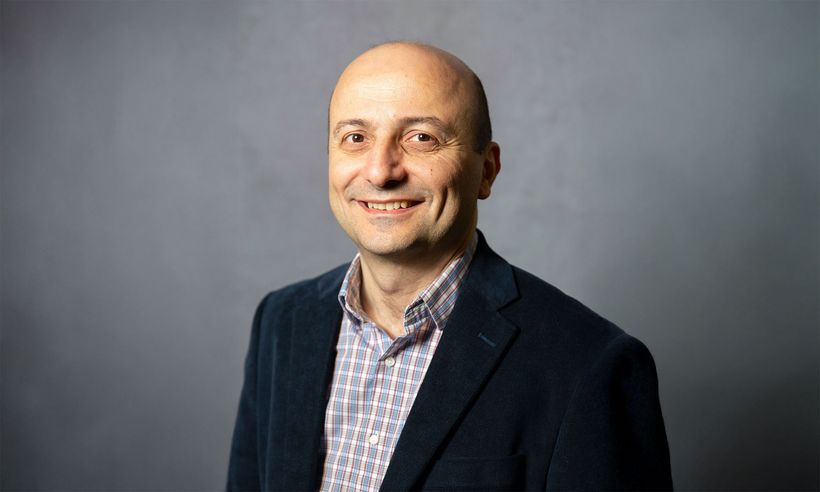
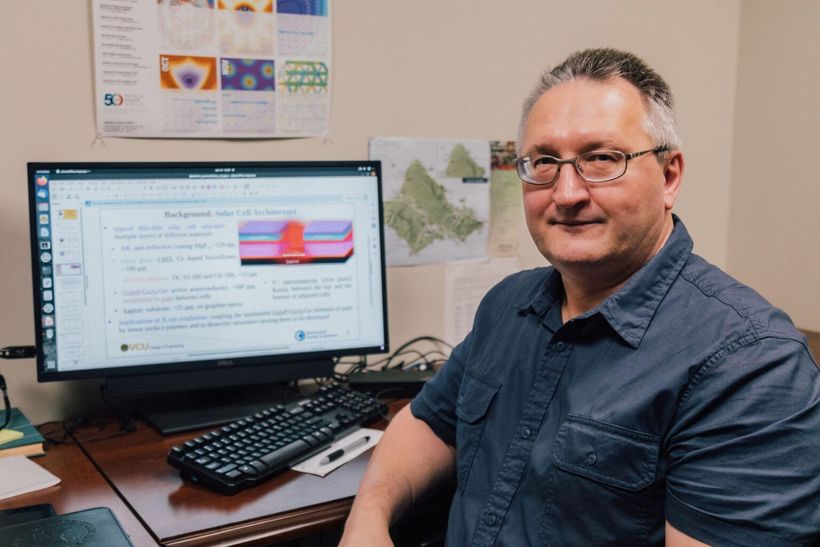
Radhika Barua, Ph.D. and fellow VCU professors Afroditi Filippas, Ph.D., and Everett Carpenter, Ph.D., are part of a team of VCU researchers working to create new types of magnets.

Nov 21, 2022

3 min

Radhika Barua, Ph.D.Afroditi V. Filippas, Ph.D.

Permanent magnets play an indispensable role in renewable energy technologies, including wind turbines, hydroelectric power generators and electric vehicles.


Ironically, the magnets used in these “clean energy” technologies are made from rare earth elements such as neodymium, dysprosium and samarium that entail environmentally hazardous mining practices and energy-intensive manufacturing processes, according to Radhika Barua, Ph.D., mechanical and nuclear engineering assistant professor. Access to these rare earth magnets is also heavily reliant on China and demand for them is expected to grow as the U.S. seeks to meet net-zero carbon emissions by 2050.


“That anticipated demand poses a challenge to U.S. decarbonization goals as the rare earth elements are characterized by substantial market volatility and geopolitical sensitivity,” Barua says. “This is where our project comes in.”


Barua and fellow VCU professors Afroditi Filippas, Ph.D., and Everett Carpenter, Ph.D., are part of a team of VCU researchers working to create new types of magnets. By using additive manufacturing, more commonly known as 3D printing, they hope to create replacements for those permanent magnets composed of rare earth elements that are made from materials readily available in the U.S.


China mines 58 percent of the global supply of rare earth elements used to make neodymium magnets that are widely used in consumer and industrial electronics, the U.S. Department of Energy (DOE) noted in a February 2022 report. That dominance grows throughout the manufacturing process with China accounting for 92 percent of global magnet production, the DOE estimates.


“It would be ideal if we could manufacture the same magnets with the same characteristics without using rare earth elements,” says Filippas, who teaches electromagnetics at VCU. “It would be even better if we could make these magnets using additive manufacturing techniques.”


VCU researchers are trying to do that in collaboration with the Commonwealth Center for Advanced Manufacturing (CCAM), which brings university, industry and government officials together to tackle manufacturing challenges. The professors are conducting much of their work at CCAM’s lab in Disputanta, Virginia.


“We have access to equipment that we would not have access to at VCU,” Filippas says of the benefits of the CCAM partnership. “They provide that level of expertise using the equipment and understanding the process.”


The project is funded by the VCU Breakthroughs Fund and CCAM.


Barua is working with Carpenter, a chemistry professor, on the materials science part of the project. Filippas is focusing on data analytics and is helping develop a monitoring process to ensure the newly-crafted replacement magnets are viable.


In addition to providing a more stable source of supply, Barua says the replacement magnets could also bring environmental benefits. Providing an alternative to rare earth magnets would involve less hazardous mining techniques while also reducing emissions and energy consumption.


The replacement magnets are made by filtering particles of iron, cobalt, nickel and manganese through a nozzle where a laser fuses them together through a process known as direct energy deposition. That metal 3D printing approach can make complex shapes while minimizing raw material use and manufacturing costs, Barua says.


“Right now, we’re printing straight lines just to see what we’re going to get and see if we can even print them,” Filippas says. “Are we getting the composition of the materials that we want? It’s a slow painstaking process towards freedom from reliance on rare earth materials.”


Barua says using additive manufacturing allows researchers to create a unique microstructure layer-by-layer instead of simply making magnets from a cast. Researchers do not expect their replacements to mimic the full strength of rare earth magnets, but they hope to produce mid-tier magnets that are as close as possible to current magnets.


Carpenter adds their new magnets could potentially be smaller and weigh less than rare earth magnets, which could lead to numerous benefits.


“This reduction would be a big savings to the automobile manufacturing industry, for example, where every ounce matters,” Carpenter says. “In an S-Class Mercedes, there are over 130 magnets used in sensors, actuators or motors. This approach could save pounds of weight which translates into fuel efficiency.”


Barua says the team is working to establish the feasibility of their new magnet-making process. They are trying to get the microstructure of the new magnets just right and are using additive manufacturing to fine-tune their magnetic properties, Barua says.


“When artificial diamonds, cubic zirconia, was synthetically produced in the lab, it changed the entire diamond industry,” Barua says. “That’s exactly what we’re trying to do. We’re trying to make synthetic magnets.”

Connect with:
Radhika Barua, Ph.D.

Radhika Barua, Ph.D.

Assistant Professor, Department of Mechanical and Nuclear Engineering

Dr. Barua specializes in developing multifunctional magnetic materials systems for diverse applications in the power & energy sector.

Afroditi V. Filippas, Ph.D.

Afroditi V. Filippas, Ph.D.

Professor

Professor Filippas is VCU’s representative to CCAM. Her research focuses on Smart Manufacturing, Data Analytics, and Modeling.

Electromagnetic Device ModelingData AnalyticsHigher Order Statistical AnalysisMultimodal Data AnalyticsExperimental Design

You might also like...

Check out some other posts from VCU College of Engineering

2 min

National Science Foundation funds research into quantum material-based computing architecture at the VCU College of Engineering

Supporting the development of advanced computing hardware, the National Science Foundation (NSF) awarded Supriyo Bandyopadhyay, Ph.D., Commonwealth Professor in the Department of Electrical and Computer Engineering at the Virginia Commonwealth University (VCU) College of Engineering with more than $300,000 to develop processor-in-memory architecture using quantum materials. “This is one of the first mainstream applications of quantum materials that have unusual and unique quantum mechanical properties,” Bandyopadhyay said. “Quantum materials have been researched for more than a decade and yet there is not a single mainstream product in the market that utilizes them. We want to change that.” The four-year project, titled “Collaborative Research, Foundations of Emerging Technologies: PRocessor In Memory Architecture based on Topological Electronics (PRIMATE),” aims to advance computing hardware and artificial intelligence by integrating topological insulators and magnetic materials. Topological insulators are a special material with an electrically conductive surface and an insulated interior. They have special quantum mechanical properties like “spin-momentum locking,” which ensures the quantum mechanical spin of an electron-conducting current on the surface of the material is always perpendicular to the direction of motion.This marks the first time such quantum materials will be used in a processor-in-memory system. “We place a magnet on top of a topological insulator,” Bandyopadhyay said. “We then change the magnetization of the magnet by applying mechanical strain on it. That changes the electrical properties of the topological insulator via a quantum mechanical interaction known as exchange interaction. This change in the electrical properties can be exploited to perform the functions of a processor-in-memory computer architecture. The advantage is that this process is fast and extremely energy-efficient.” If successful, this approach could reduce energy use and dramatically speed up computing by moving data processing into the memory itself. It addresses the longstanding “memory bottleneck,” the slowdown caused by computers constantly needing to move data back and forth between processor and memory. These efficiencies could make advanced AI more efficient and accessible, paving the way for the first commercially viable applications of quantum materials.. The research is a collaboration with University of Virginia professors Avik Ghosh and Joseph Poon. A VCU Ph.D. student will work on the project and receive training in fabrication, characterization and measurement techniques, preparing them to lead in the rapidly evolving field of computing hardware.

2 min

American Nuclear Society names Lane Carasik, Ph.D., as one of its “40 Under 40”

Recognized as an emerging leader in the nuclear science and engineering field, Lane Carasik, Ph.D., assistant professor in the Department of Mechanical and Nuclear Engineering, was recently acknowledged by the American Nuclear Society as one of its top “40 Under 40.” “It is a huge honor to receive this acknowledgement from my professional community,” said Carasik. “I feel it is a reflection of the amazing nuclear engineering activities I’ve gotten the opportunity to pursue before and during my time at the VCU College of Engineering.” The list, featured in the most recent issue of Nuclear News magazine, celebrates young professionals who are driving innovation and shaping the future of nuclear science and technology. Created to spotlight a new generation of nuclear professionals, the “40 Under 40” program highlights those who are advancing technical fields, from advanced reactor deployment to AI applications and national security, while actively engaging the public, mentoring peers and advocating for nuclear’s role to achieve energy independence and security. “Dr. Carasik’s research efforts, together with his support for students and their own research goals, exemplifies the best qualities of the VCU College of Engineering,” said Arvind Agarwal, Ph.D., chair of the Department of Mechanical and Nuclear Engineering, “integrating research and teaching at the core of everything he does, from classroom and lab work to community outreach.” Carasik was selected for the “40 Under 40” from hundreds of candidates across the United States. Mentoring his first three Ph.D. graduates, Arturo Cabral, Connor Donlan and James Vulcanoff, is one of Carasik’s proudest achievements. He was also honored by the American Society of Mechanical Engineers (ASME) as a rising star in mechanical engineering in 2024 This builds off Carasik receiving the highly competitive and prestigious Department of Energy (DOE) Early Career Research Award ($875k split over five years) in 2023 to support his work on molten salt based fusion energy systems similar to Commonwealth Fusion Systems’ ARC technology. Carasik’s Fluids in Advanced Systems and Technology (FAST) research group, is a computational and experimental thermal hydraulics group focused on enabling the development of advanced energy systems and critical isotope production methods. Legendary physicist Enrico Fermi was an early inspiration to Carasik during his undergraduate studies. Fermi’s expertise mirrored Carasik’s interests, and the physicist’s impact on the field of nuclear engineering was motivating. As an established nuclear engineering faculty member, Carasik seeks to make a lasting impact on the field and the people in it. His ’s long-term goal is earning membership in the National Academies of Sciences, Engineering and Medicine.

2 min

VCU College of Engineering’s Michael McClure, Ph.D., named chair of Orthopaedic Research Society’s Skeletal Muscle Section

Michael McClure, Ph.D., associate professor from the Department of Biomedical Engineering and affiliate faculty in the Department of Orthopaedic Surgery and in the Institute for Engineering and Medicine, has been named chair of the Orthopaedic Research Society’s (ORS) newly launched Skeletal Muscle Section. The section began in August 2025, building on research interest groups and symposia to create a dedicated home for skeletal muscle studies within ORS. Its mission is to advance collaboration, innovation, education and translation in this field. Skeletal muscle disorders cause disability, chronic pain and high health care costs. Severe injuries and degenerative diseases, such as muscular dystrophies, remain difficult to treat. The section will strengthen research in muscle development, aging, trauma, disuse and disease. This work will expand the basic understanding of and identify therapeutic targets to restore function. In its first year, the section will measure success through increased skeletal muscle abstracts at the 2027 ORS Annual Meeting, growth in ORS membership and active participation in section programs. “We are thrilled to launch the Skeletal Muscle Section,” McClure said. “This home for translational muscle research will build on ORS progress over the past 10 years, help recruit new members and foster an environment that connects multiple areas of orthopaedic science.” McClure’s commitment to this work is shaped by his family’s experience with neuromuscular diseases, witnessing the impact of war-related injuries on patients’ quality of life from the Richmond Veterans Affairs Medical Center, and the momentum of translational discovery. Learn more about the ORS Skeletal Muscle Section.

View all posts