history Experts
Connect for media, speaking, professional opportunities & more.

ExpertSpotlight: From Ancient Spirits to Modern Scares: The Fascinating History of Halloween!
Every October, neighborhoods transform into haunted landscapes, pumpkins glow on front porches, and children dress as everything from witches to superheroes. But behind the costumes, candy and spooky decorations lies a celebration with roots stretching back more than 2,000 years. Halloween's origins are commonly traced to Samhain, an ancient Celtic festival marking the transition from the harvest season into winter. It was a time associated with the supernatural, when the boundary between the living and the dead was believed to grow especially thin. Over the centuries, Celtic traditions intersected with Christian observances, including All Saints' Day and All Souls' Day. The evening before All Saints' Day became known as All Hallows' Eve — eventually shortened to Halloween. And those glowing jack-o'-lanterns? They weren't always pumpkins! In Ireland and Scotland, people traditionally carved turnips and other root vegetables. Pumpkins became the preferred choice as Halloween customs evolved in North America. Trick-or-treating, elaborate costumes and haunted attractions developed through a combination of older traditions and more recent community celebrations, transforming Halloween into the cultural phenomenon we know today. But Halloween is more than an excuse to eat too much chocolate. Its evolution offers a fascinating window into how societies understand death, preserve folklore, confront fear and pass traditions from one generation to the next. For journalists looking to explore the history, folklore, psychology or cultural significance of Halloween, university experts in history, anthropology, religious studies and popular culture can offer fascinating perspectives on why we love being scared — and how an ancient seasonal observance became a modern celebration. This Halloween, there's a lot more to uncover than what's hiding behind that haunted-house door! Looking for help to bring the history and mystery of Halloween to life? Connect with an ExpertFile expert today for interviews, commentary and a deeper look at the traditions behind the tricks and treats. Visit all of our experts www.expertfile.com


Alzheimer’s Disease and Related Dementias: Recognizing Early Signs and Preserving Independence
Alzheimer’s disease, the most common cause of dementia, is a progressive brain disorder associated with the buildup of abnormal amyloid and tau proteins that damage nerve cells. Alzheimer’s disease and related dementias (AD/ADRD) can affect memory, judgment, mobility, balance, and everyday independence, often beginning years before symptoms become noticeable. “One of the most important things to understand about AD/ADRD is that it affects more than memory,” explains Deborah Jehu, PhD. “It can change how someone plans, makes decisions, moves through their environment, and completes tasks they have performed independently for years.” Recognizing the Early Signs Early symptoms may include repeatedly asking the same questions, forgetting recently learned information, misplacing items, struggling to find words, or having difficulty managing finances and appointments. Someone may also become confused in familiar places, struggle to follow a recipe, or find it increasingly difficult to organize multistep activities. AD/ADRD progression is variable, and cognitive and functional abilities may fluctuate from day to day. Individuals may require intermittent reminders or assistance with tasks such as meal preparation and medication management. Persistent changes in daily functioning warrant clinical evaluation but do not necessarily indicate AD/ADRD. Diagnosis and Treatment Diagnosing AD/ADRD typically involves reviewing medical history, assessing memory and thinking, evaluating daily functioning and conducting physical and neurological examinations. Clinicians may order laboratory tests to identify other causes of cognitive changes, such as thyroid problems or vitamin deficiencies. Brain imaging and, when appropriate, blood-based biomarkers, cerebrospinal fluid testing, or amyloid PET scans can help clarify the diagnosis. There is currently no cure for AD/ADRD, but treatments can help manage symptoms or slow disease progression in some people. Medications such as donepezil and memantine may help manage cognitive symptoms, while certain anti-amyloid therapies may slow decline in eligible patients with early Alzheimer’s disease. Treatment decisions require individualized assessment of potential benefits, risks, and monitoring needs. Preserving Mobility and Independence Dr. Jehu emphasizes that comprehensive AD/ADRD care must address physical function alongside cognitive health. People with AD/ADRD can be up to twice as likely to fall as cognitively healthy older adults. As the condition progresses, changes in balance, gait, coordination, and judgment can increase fall risk, potentially leading to injuries, reduced mobility, and loss of independence. These challenges make routine mobility assessments and early rehabilitation particularly important. Physical and occupational therapists can recommend individualized strength and balance exercises, adapt activities, and identify environmental hazards. Caregivers can also support independence through consistent routines, familiar surroundings, simple instructions, medication reminders, and visual cues. “Supporting independence means recognizing what a person can still do and providing just enough assistance to help them succeed safely,” says Jehu. “The goal is not simply to prevent accidents, but to preserve dignity, autonomy, and opportunities for meaningful engagement.” Technology may also help through timely reminders, medication prompts and task-by- task guidance. However, these tools should complement, not replace, human connection, professional care and appropriate supervision. Looking Ahead Early recognition, personalized treatment, physical activity, and coordinated support can help people living with AD/ADRD maintain function and quality of life. Dr. Jehu underscores the need for research that evaluates practical, dementia-specific interventions to preserve mobility, prevent falls and reduce caregiver burden. Ultimately, successful AD/ADRD care should be measured not only by changes in memory, but also by a person’s ability to remain safe, active, connected, and as independent as possible throughout the course of the disease. If you're interested in speaking with Dr. Jehu about Alzheimer's Disease or Dementia and the research taking place at Augusta University – contact AU's External Communications Team mediarelations@augusta.edu to arrange an interview today.


For 90 years, generations of Manitoba students have stepped up to help their classmates get to and from school safely. This year, CAA Manitoba (CAA MB) is celebrating the 90th anniversary of the CAA School Safety Patrol® program and the thousands of young Manitobans who have been part of its history. The CAA School Safety Patrol program, CAA’s oldest traffic safety initiative, was developed to protect, educate and empower elementary school children on safe road-crossing practices. To mark the milestone, CAA School Safety Patrollers gathered today at the Manitoba Legislative Building for a special day-long itinerary that included a tour of the building, meetings with Ministers, participation in the Speaker's March, attendance at Question Period, and a commemorative 90th Anniversary photo on the steps of the building. This anniversary is about celebrating the generations of young Manitobans who have stepped up to help keep their classmates safe,” says Teresa Di Felice, assistant vice president, CAA Manitoba. “Today is a chance to recognize that legacy and the students who are carrying it forward.” From one Winnipeg school to 8,000 Patrollers The program began in Manitoba in 1936 at Greenway School in Winnipeg, where teacher Louise Staples organized Manitoba’s first CAA School Safety Patrol team. Within months, student Patrollers were introduced across the city to help promote pedestrian and road safety in school zones. Today, approximately 8,000 Patrollers at 250 schools participate in the program, working with police services to help deliver it. “For 90 years, this program has really been about students helping students,” says Di Felice. “Generations of young people have put on the patrol vest, learned about road safety and taken on the responsibility of helping their classmates get to and from school safely. That’s an incredible story, and it’s something worth celebrating.” Throughout 2026, CAA Manitoba has been marking the anniversary through activities that recognize current Patrollers and celebrate the program's history. The anniversary campaign includes Patroller recognition at sporting events and community engagement for the people who have been part of the program. Building student leadership and safer school communities CAA School Safety Patrollers receive annual training and are taught to model and encourage safe behaviour among their fellow students. The program also gives young people an opportunity to develop teamwork, volunteerism and leadership skills while playing an active role in their school community. Community partnerships have also been an important part of the program’s history. CAA works with schools, teachers and police, including Winnipeg Police, Brandon Police and Morden Police, to support the CAA School Safety Patrol program in Manitoba. “Our Patrollers may be young, but the contribution they make to their schools and communities is significant,” says Di Felice. “As we mark this achievement, we’re saying thank you to everyone who has been part of this program and especially to the students who continue that tradition today.” CAA School Safety Patrol by the numbers • 1936: Manitoba’s first CAA School Safety Patrol team was organized at Greenway School in Winnipeg. • 90 years: The milestone being celebrated by CAA Manitoba in 2026 • Approximately 8,000 Patrollers: Participate in Manitoba today. • Approximately 250 schools: Participate in the program across Manitoba. • Grades 5 to 8: The program is geared toward students in these grades. To learn more about the School Safety Patrol program, please visit: www.schoolpatrolmanitoba.com



Companies Are More Committed to Sustainability Than Ever. So What's Holding Them Back?
Corporate commitments to sustainability have reached record levels, but a new report from the Massachusetts Institute of Technology (MIT) suggests that turning those promises into meaningful action remains a significant challenge. The 2026 State of Supply Chain Sustainability Report, based on a survey of 1,810 supply chain professionals across 91 countries, found that 83 percent consider sustainability important or very important to long-term business success, the highest level recorded in the report's seven-year history. Yet the research reveals a troubling disconnect between corporate ambition and the structures needed to achieve measurable results. Dr. Sreedevi Rajagopalan, Director of the MIT Sustainable Supply Chain Lab and lead author of the report, says the challenge is no longer simply convincing companies that sustainability matters. "Commitment is strong, measurement is expanding, and AI is accelerating," says Dr. Sreedevi Rajagopalan, director of the MIT Sustainable Supply Chain Lab and lead author of the report. "What comes next is harder: converting commitment into accountability, operational integration into strategic decision making, and incremental decarbonization into genuine transition." Rajagopalan cautions that the next challenge involves turning those commitments into accountability, integrating sustainability into strategic decisions and achieving more substantial reductions in emissions. Dr. Sreedevi Rajagopalan is a Research Scientist at the MIT Center for Transportation & Logistics and Director of the MIT Sustainable Supply Chain Lab. Her research focuses on sustainable logistics, circular supply chains, Scope 3 emissions and helping organizations translate sustainability commitments into practical strategies. View her profile The report identifies several important findings: Corporate accountability is lagging: Only 51 percent of companies with publicly stated sustainability goals have formal cross-functional sustainability teams, while just 33 percent have board-level oversight. Tariffs are disrupting progress: Sixty-eight percent of respondents say tariff uncertainty has forced them to delay, reduce or abandon sustainability strategies. AI offers promise, but also challenges: While 87 percent of organizations adopting AI for sustainability report positive impacts, improvements in operational efficiency do not necessarily translate into lower overall emissions. Transportation remains a challenge: Forty-three percent of freight fleets still operate mostly or entirely on conventional diesel, while only eight percent have fully transitioned to low-emission energy. Collaboration is increasing: Participation in joint supplier engagement and decarbonization programs has climbed from 31 to 58 percent in just one year. Perhaps one of the report's most important findings concerns how sustainability is managed inside organizations. Companies with formal cross-functional teams report integrating sustainability into decisions far more frequently than those assigning responsibility to a single department. The findings raise important questions for business leaders. Are sustainability commitments being supported by meaningful governance? Can AI deliver measurable environmental improvements? And how can companies maintain progress when tariffs, geopolitical uncertainty and changing policies disrupt long-term plans? For Rajagopalan, the research points to a critical distinction: making sustainability a corporate priority is not the same as making it part of how a business operates. If you're interested in speaking with Dr. Rajagopalan about corporate sustainability, supply chain emissions, artificial intelligence, environmental accountability and the challenges facing global businesses, simply click on her profile to arrange an interview today.



What Marco Rubio's Speech on Ancient Greece Reveals About Leadership, Business and America's Future
What can ancient Greece teach modern America about leadership, economic success and the future of business? That question is at the center of a recent commentary by Rick Franza, PhD, professor at Augusta University's James M. Hull College of Business, published in Augusta Business Daily earlier this month. In his article, "Marco Rubio's Look Back to Move Us Forward: What He Nailed and What He Missed," Franza examines a speech delivered by U.S. Secretary of State Marco Rubio in Athens, Greece, and considers its implications for American businesses, leadership and international relations. Franza explores Rubio's emphasis on ambition, competition, innovation and risk-taking, connecting these themes to the characteristics that have historically contributed to economic development and business success. He also identifies two important considerations he believes deserved greater attention: the role of morality and ethics in leadership and the importance of international trade to economic prosperity. "I am not saying we should be driven by greed and vanity, but rather be willing to continue to strive rather than waiting for others to catch up." Franza's commentary offers a perspective on how lessons from history can inform contemporary discussions about business leadership, economic policy and America's relationships with its international partners. As political and economic debates continue, Franza can help journalists explore the intersection of government policy, business competitiveness, ethical leadership and international commerce. If you're interested in speaking with Dr. Rick Franza about business leadership, economic policy, international trade and the relationship between politics and business, simply click on his profile to arrange an interview today.

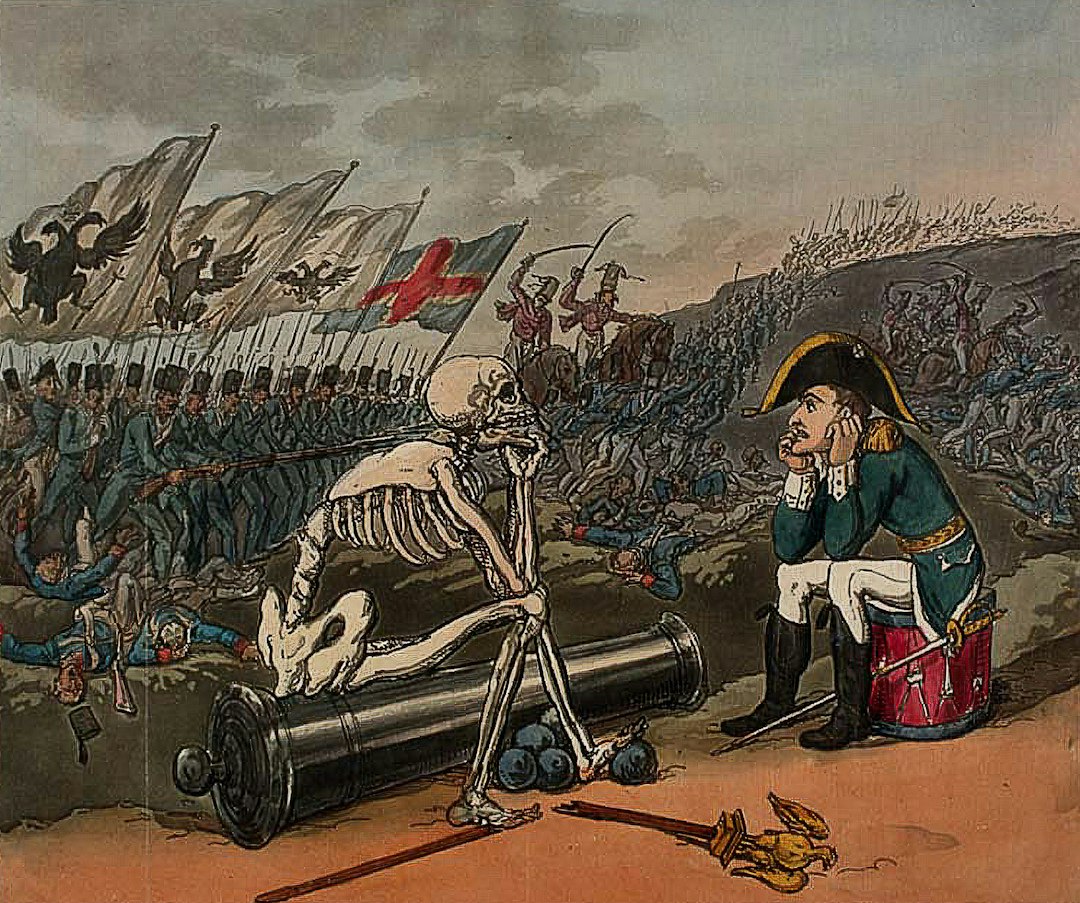
Pneumonic Plague: An Ancient Killer That Has Never Completely Disappeared
Few diseases carry the historical weight of plague. Caused by the bacterium Yersinia pestis, plague has been responsible for some of the deadliest disease outbreaks in recorded history. The most infamous was the Black Death of the 14th century, which swept through Europe, the Middle East and North Africa and killed tens of millions of people. The World Health Organization estimates that more than 50 million people died in Europe alone. But plague is not simply a disease of the past. The bacterium continues to circulate naturally among wild rodents and their fleas in parts of the world, and human cases still occur. The World Health Organization reports that most cases recorded between 2019 and 2025 occurred in the Democratic Republic of the Congo and Madagascar. What Is Pneumonic Plague? There are three primary forms of plague: bubonic, septicemic and pneumonic. Bubonic plague - historically the best-known form - usually develops following the bite of an infected flea and is characterized by painful, swollen lymph nodes known as “buboes.” Pneumonic plague occurs when Yersinia pestis infects the lungs. It can develop when untreated bubonic or septicemic plague spreads to the lungs, or when someone inhales infectious respiratory particles from a person or animal with pneumonic plague. That distinction is important: pneumonic plague is the only form of plague that can spread directly from person to person through respiratory particles. What Are the Symptoms? Pneumonic plague can progress remarkably quickly. According to the CDC, symptoms include fever, headache and weakness followed by rapidly developing pneumonia. Patients can experience shortness of breath, chest pain and coughing, sometimes producing bloody or watery mucus. Symptoms following inhalation can begin as soon as one day after exposure. Without treatment, pneumonic plague is extremely dangerous. The World Health Organization describes untreated pneumonic plague as invariably fatal, making rapid recognition and medical intervention critical. From Medieval Killer to Treatable Disease What separates plague today from the disease that devastated populations centuries ago is modern medicine. Plague is a bacterial infection and can be successfully treated with antibiotics. The CDC recommends beginning treatment as soon as plague is suspected rather than waiting for laboratory confirmation. Depending on the severity of the illness, treatment can involve intravenous or oral antibiotics, with gentamicin and fluoroquinolones among the first-line treatments used in the United States. Early detection matters enormously. Modern antibiotics, infection-control practices, surveillance and public-health responses mean that a disease once capable of devastating entire communities can now be identified, contained and treated. Yet its persistence also offers an important reminder: diseases that profoundly shaped human history do not necessarily disappear. Plague remains present in animal populations, continues to cause human infections and provides researchers with a remarkable window into the relationship between infectious disease, human behaviour, public health and even human evolution. Experts in infectious diseases, epidemiology, public health, microbiology, global health, medicine and the history of disease can help provide perspective on pneumonic plague, how it spreads, the risks it poses and what centuries of experience with plague can teach us about preventing and responding to outbreaks today. Connect with our experts today: View all of your experts here at www.expertfile.com

25 Years Later: How 9/11 Changed the World
On September 11, 2001, the world watched as nearly 3,000 people were killed in terrorist attacks that would become one of the defining moments of the 21st century. Twenty-five years later, 9/11 remains much more than a moment in history. Its consequences continue to shape the world we live in. The attacks transformed national security and intelligence, changed how people travel, reshaped airport and border security, and ushered in a new era of surveillance and counterterrorism. They also profoundly influenced American foreign policy, leading to wars in Afghanistan and Iraq and decades of debate about security, military intervention and America's role in the world. The effects were cultural as well as political. September 11 changed how a generation viewed safety, terrorism and global conflict. It also sparked difficult conversations about civil liberties, immigration, religious tolerance and the balance between individual freedoms and collective security. For younger generations, 9/11 is increasingly an event learned about rather than remembered. For millions of others, memories of where they were and what they saw that day remain remarkably vivid. A quarter-century later, the anniversary offers an opportunity to remember those who were lost, recognize the first responders and countless others affected by the attacks, and examine how the decisions made in their aftermath continue to influence our world. Experts in history, political science, international relations, national security, terrorism, public policy and sociology can help provide perspective on September 11, its legacy and how the world has changed 25 years later. Connect with our experts today: View all of your experts here at www.expertfile.com

More Than a Long Weekend: Why Labor Day Still Matters in America
For millions of Americans, Labor Day means the unofficial end of summer , a final long weekend before schools are back in full swing and the fall routine takes over. But behind the barbecues, travel and end-of-summer sales is a holiday rooted in the history of American workers and the transformation of the workplace. Observed on the first Monday in September, Labor Day recognizes the social and economic achievements of American workers. Its origins date to the labor movement of the late 19th century, with the first Labor Day celebration held in New York City on September 5, 1882. In 1894, it became a federal holiday. More than 130 years later, Labor Day remains an opportunity to look at the role work plays in American life, particularly at a time when the workplace itself is undergoing enormous change. Artificial intelligence and automation are reshaping jobs and industries. Remote and hybrid work have changed where and how millions of people work. Employers continue to navigate workforce shortages, recruitment and retention, while workers are reconsidering expectations around compensation, flexibility, benefits and work-life balance. Labor Day can also open the door to broader conversations about the American labor movement, organized labor, workplace protections, wages and the economic contribution of workers. For journalists, that makes the holiday much more than a date on the calendar. It's a timely opportunity to explore both how work in America has changed and where it is heading next. Experts across economics, business, labor relations, history, human resources, public policy and emerging technology can provide valuable perspective on Labor Day and the changing American workplace. Journalists covering Labor Day and looking for expert perspective on the history of the holiday, labor and employment, workplace trends, organized labor, artificial intelligence and the future of work can connect with experts directly through ExpertFile profiles below:

Who Decides Which Stories Children Get to Read?
As book bans surge nationwide, Jan Lacina — professor at Texas Christian University and Interim Director for Starpoint and KinderFrogs Schools — explores the benefits of diverse children's literature in her new textbook for educators, "Children's Literature to Read Our World: Text Selection and Strategies for Critical Reflection (Routledge, 2026). The research-grounded guide aims to help teachers intentionally select books for their students, centering age-appropriate books that present Black, Latinx and Asian culture as wellsprings of understanding. It also highlights titles that explore complex issues such as homelessness and poverty, and those that can help educators teach about historical topics like the Holocaust or the Civil Rights Movement. One chapter explores how scented books can be used as a vehicle for multisensory literacy development. Lacina's book arrives at a critical moment, in a critical state. Texas ranked second in the nation for school book bans during the 2024-25 school year, with 1,781 instances of censorship, according to PEN America's latest report. Jan was recently featured in The 74 article "Who Decides Which Stories Children Get to Read?" by Mark Swartz, which explores why access to diverse literature matters and how her new textbook helps educators respond to rising censorship. Read the full article here. We can look back through history and see that there's always been censorship, and I think books have historically been targeted over a long period of time for anti-intellectual censorship efforts. Books are primarily a source for people to learn new ideas and to critically think about a variety of topics within our society. "Books are powerful, and that's what scares people," Lacina said. Reading helps children identify with the protagonist — with their feelings, with their actions — and it's important to read about experiences that are similar to our own, whether they're positive experiences or challenges we might face in life, Lacina said. Lacina is available to speak with media on literacy leadership, children's literature, early childhood and elementary education, and teacher preparation — timely topics as school districts nationwide navigate rising challenges to classroom books. To arrange an interview or request a comment, click through to Jan Lacina's profile below.



The Tipping Point: How Gratitude Grew into a Guilt Trip (and How to Get Off It)
My dog Dottie is, and I say this with love, a con artist in a fur coat. She has trained me to hand over a treat every time she sits, spins, or simply exists in my general direction, those big brown eyes fixed on me. If I hesitate even three seconds, she tilts her head and stares at me as if I have personally bankrupted her. I always fold. It turns out that I am not the only sucker for this routine. These days, entire industries have figured out that if you make a person stand there long enough while a screen stares back at them, they will fold too. Except instead of a milk bone, they want eighteen to twenty-two percent of your bill, and instead of a good girl, you get a receipt. Welcome to modern tipping culture, where a simple thank-you has somehow become a math test administered under duress, with a cashier watching as you decide, and somewhere behind the screen, a very deliberate mind has already worked out exactly how to nudge your answer higher. A Short History of Guilt with Percentages Tipping began as a compliment, not a demand. Historians trace it to a Tudor England custom called a vail, in which a noble slipped an extra coin to a servant for going above and beyond (Blueprint Financial, 2024). North America initially wanted nothing to do with it, meeting tipping's arrival in the late 1800s with the kind of suspicion usually reserved for chain letters. Americans who travelled to Europe came home grumbling about being nickeled and dimed by porters and waitstaff, and in 1884 the New York Times ran an editorial calling English-style tipping downright un-American (Mentzer, 2013). Between 1909 and 1915, six American states banned tipping outright, but it did not work. Tipping also has a less charming cousin: bribery, extra money paid in advance for special treatment, a jump on the waitlist, or a better table, not a reward for service already rendered. That is also roughly where the phrase "nickel and dimed" comes from, back when tipping meant tossing a server the smallest coins in your pocket. These days, the phrase seems to describe the opposite, a whole system of small additions that always land in the business's favour. Researchers who study why people tip find that the reasons run deeper than economics. One ethnographic study of servers and diners in Vancouver found that people tip for good service, to follow the social norm, out of sympathy, to signal status, or to lock in a preference for next time. Tipping has never been just a transaction; it has always been part performance and part quiet social contract, which is probably why opting out feels so uncomfortable. Then Tipping Went on a Growth Spurt Fifteen percent used to be the polite standard and twenty percent was for showing off. That range has crept steadily upward. Canadians now commonly tip eighteen to twenty percent at restaurants, bars and at hair salons. Even coffee shops and fast-food counters are edging toward five to fifteen percent as digital prompts normalize the ask (Blueprint Financial, 2024). Nearly two thirds of Canadians say they feel pressured to tip more than they used to, and the share tipping twenty percent or higher has more than doubled in under a decade (Blueprint Financial, 2024). In the US food industry alone, tipping adds up to an estimated forty-seven billion dollars a year (Azar, 2011), proof that this habit is not shrinking on its own. The Power of Suggestion (and the Screen That Stares Back) Once you know the tactics at play, it becomes easier to push back without guilt. The first is plain old anchoring. When a screen offers eighteen, twenty, and twenty-five percent as your only real options, your brain quietly narrows its sense of what is normal to fit that range, even if fifteen felt generous a few years ago. The second is assumptive closing, a sales trick in which, instead of asking whether you would like to tip, the screen assumes you already said yes and only asks how much, with the highest number often listed first or made visually larger. The third is technology itself, which makes the ask frictionless in places it never used to be, a tap and a swivel where someone just handed you a bag. And the fourth is old-fashioned shaming, the discomfort of picking a lower number while the cashier watches your thumb hover over the screen. If this sounds suspiciously like how Dottie gets her treats, that is because it is the same playbook. Offer a limited set of flattering options, stand there expectantly, and let the silence do the persuading. Research shows this tip-screen genuinely works, boosting tips by fifteen to thirty percent compared with a plain jar on the counter, largely because people gravitate to the middle option and nobody wants to look cheap in front of an audience (GlobalTill, 2026). One Toronto bakery owner told CBC that customers get visibly upset just being asked, even with signs posted that tips are not expected (CBC, 2022). University of Saskatchewan professor Marc Mentzer called the whole system a human rights catastrophe we are simply stuck with (CBC, 2022). None of these four tactics are about rewarding good service. They are behavioural design, and once named, they lose a surprising amount of power over you. Then the Pandemic Showed Up and Ruined Math for Everyone It is worth remembering why this all accelerated, because the original impulse was genuinely kind. When the pandemic hit, restaurant workers were being laid off and dining rooms were closed. Tipping generously was in solidarity, meant as temporary help during a crisis. Except it did not stay temporary, and that part was not really an accident either. Once businesses saw customers would tolerate a higher default tip during a crisis, many kept it in place long after. What began as compassion got hardwired into the software as the new normal, with no memo ever announcing that the emergency measure was now permanent. And Then Delivery Apps Moved the Tip Jar to Before Dinner Even Arrives Just as the tip screen had already rewired one part of the routine, delivery apps quietly rewired another. With services like Uber Eats and Skip the Dishes, you are asked to tip before your food has even left the restaurant, a bit like tipping a movie based on the trailer. The gratuity is baked into checkout, so what used to be a reward for good service becomes a pre-negotiated cost of doing business from your couch. Drivers often rely on that upfront tip because base pay per delivery is thin, meaning customers are subsidizing wages before a single doorbell rings, tipping blind. Wait, What? Are We Tipping the Government Too? If the delivery app section left you feeling like every corner of a transaction has been quietly monetized, buckle up, because there is one more layer nobody warns you about. Tipping etiquette has always technically called for calculating your percentage on the pre-tax total, but the machine does not know or care about etiquette. It simply applies a percentage to whatever total is on the screen, tax already included. So, the moment you tap one of those preset percentage buttons, you are effectively handing your server a tip on the government's cut of the meal too, not just on your food. The good news is the money itself still goes straight to the server, not to the government (phew). A flat twenty percent tip, calculated the way the machine calculates it, works out closer to twenty-two percent in provinces with a combined sales tax around thirteen percent, a touch less where the tax rate is lower, once the tax already baked into that total gets factored in (ouch). Let that marinate for a second. You went in planning to leave twenty and walked out having left twenty-two. When There Was No Service to Begin With And then there is the increasingly common experience of being asked to tip somewhere where no actual service happened. The dry cleaners. Seriously? You hand over a bag of shirts, come back two days later, and someone hands you the same shirts on a hanger, and now there is a tip screen. Insert the mother of all eye rolls. Nobody brought anything to a table; nobody checked on you twice. The job was already priced into what you paid. This is the moment tipping stops being gratitude and starts being a business outsourcing payroll onto customers who never agreed to it. Let's Talk About What This Does to Seniors This part matters to me personally, since I spend my days helping retirees stretch every dollar with intention. Tipping fatigue hits seniors differently and being asked to add another eighteen to twenty-two percent to everyday errands can feel less like generosity and more like an unplanned pop quiz. I have heard from clients who now avoid certain errands or choose a drive-through, specifically to sidestep the awkward prompt. Seventy-three percent of Canadians already believe tipping lets employers get away with underpaying staff, and fifty-nine percent would rather see fair wages built into prices than keep gambling on tip guilt (Blueprint Financial, 2024). If tipping anxiety is nudging older adults toward staying home instead of enjoying a coffee with a friend, this so-called social norm is quietly chipping away at connection, not what any of us want for our golden years. This is not strictly a seniors’ problem either. Many people across every age group now quietly admit to choosing pickup over dine-in, skipping a small business altogether, or simply going out less, purely to avoid the awkward math of a screen and an audience. The difference for seniors is that the squeeze lands on top of a fixed income and a lifetime of budgeting habits that never had to account for an eighteen percent surcharge for saying yes to a friend's invitation. Maybe It Is Time for a Cash Tip Movement Here is an idea worth trying and sharing with your friends. The next time the screen swivels toward you, select no tip (usually tucked into the custom tip section rather than sitting out with the percentage buttons), pay the bill, and leave whatever cash tip you want directly on the table or in the jar afterward. To be clear, this is not about skipping the tip; it is about choosing how and when you deliver it. The server still gets paid fairly, just without a screen and an audience deciding for you. That one move sidesteps the anchoring, the assumptive question, the audience, and the algorithm quietly nudging the suggested amount upward. You decide the amount in private, hand it over with a genuine thank you, and walk out having tipped exactly what you meant to, power fully intact. If anyone asks why you skipped the prompt, just smile and say you do not tip machines; you tip people. This is also a great excuse to talk about it with your people. Ask your friends what they tip and why and figure out together where you all want to draw the line. Strength in numbers works on tipping the same way it works on everything else. Taking Back the Tipping Wheel A couple of practical notes before the cheat sheet below. Most screens that appear to offer only percentages hide a custom tip option that lets you enter zero or a flat dollar amount. It is worth finding, since a flat five dollars does not creep upward the way twenty percent does as prices rise. What to Tip, By Service Tipping Around the World Check Please! At the end of the day, tipping culture can feel like a money furnace, quietly burning through your paycheque, one percentage point at a time, while insisting the whole thing was your idea. And when the topic is your own money and your own life, also known around here as YMYL, letting action absorb anxiety beats letting anxiety run the show every time. Decide your numbers ahead of time, carry a bit of cash, ask a friend what they think, and stop apologizing for wanting a system that rewards real effort rather than clever design. Dottie has never apologized for expecting a treat, and to be fair, she earns hers. A screen swivelling toward you over a bagel has not. Tipping began as a genuine thank-you for genuine effort, so keep it simple. Decide your number before the screen decides it for you and save the big percentages for those who earned them. Next time that screen stares you down for twenty-two percent, channel your inner Dottie: sit, stay, and reward only the performance that deserves it. Don't Retire…ReWire! Sue My Book is Now Available for Pre-Order I hope you will consider pre-ordering a copy of Your Retirement Reset for you, a friend or loved one. It's available September 29, 2026 published by ECW Press - You can now order at Indigo or Amazon. And if you love supporting Canadian booksellers, please also check with your local independent bookstore. Most can easily order it for you.