
science Experts
Connect for media, speaking, professional opportunities & more.

Are Small-Dollar Political Donations Making American Politics More Divisive?
Small-dollar political donations have long been celebrated as a way to reduce the influence of wealthy contributors and give ordinary Americans a greater voice in elections. But new research suggests that the growing influence of these donors may also be contributing to political polarization and rewarding candidates who generate attention rather than build consensus. In an article published in The Atlantic, titled Small-Dollar Campaign Donors Are Hurting the Political System, journalist Idrees Kahloon examines how the explosion of grassroots political fundraising has changed American campaigns, drawing attention to research challenging the assumption that small donations necessarily produce healthier democratic outcomes. Among the researchers examining this trend is Ray La Raja, professor of political science and co-director of the UMass Amherst Poll at the University of Massachusetts Amherst. View his profile La Raja is co-author, with Zachary Albert of Brandeis University, of the 2026 book Small Donors in US Politics: Myth and Reality, which examines who contributes to political campaigns, what motivates their donations and how their growing influence affects elections and political representation. Their research finds that small-dollar donors are often more politically engaged, more partisan and more ideologically committed than the average voter. While these contributions can broaden participation in campaign financing, they can also encourage candidates to pursue national attention and emotionally charged fundraising appeals rather than focus on local concerns or legislative compromise. The findings raise important questions about whether the growing influence of small donors is strengthening political representation or creating new incentives for polarization. The issue is particularly relevant ahead of the 2026 midterm elections, as candidates and political parties compete for campaign contributions in an increasingly nationalized fundraising environment. La Raja's work also examines the role of political parties in campaign finance and whether reforms designed to reduce the influence of large donors have produced unintended consequences. With campaign fundraising, political polarization and democratic accountability increasingly connected, La Raja offers journalists a research-based perspective on one of the less understood forces shaping American elections. If you're interested in speaking with Ray La Raja about campaign finance, small-dollar political donations, political polarization, election reform and the influence of money on American democracy, simply click on his profile to arrange an interview today.


From Baseball to Business: The Science of Team Success
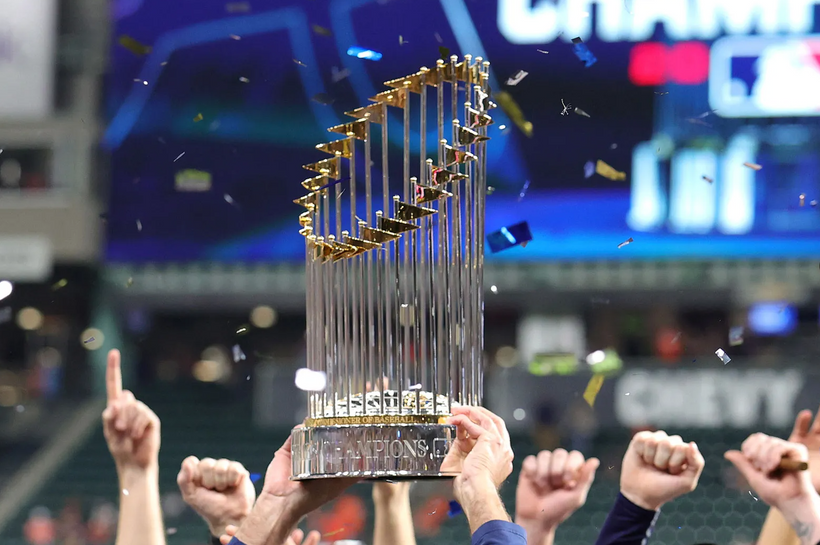
The ingredients that create a World Series team often mirrors how units achieve success in business. How did they get there? The University of Delaware's Kyle Emich says the answer goes beyond assembling a roster of star players. Emich, a professor of management, says that how players combine their strengths, respond to opponents and create opportunities together can be just as important as individual talent. The same is true in business, where a collection of talented employees doesn’t automatically translate into a high-performing team, he said. One example is the approach that the 2026 Milwaukee Brewers’ took during their postseason run. Rather than relying exclusively on home runs and individual star power, the team created opportunities through a combination of speed, patience at the plate, timely hitting and pressure on opposing defenses. A stolen base, a walk or a defensive mistake might seem like a small event on its own, but the effects can build as players’ actions interact. These interactions matter, he says, because teams are not simply collections of individuals; their performance emerges from how people and their activities affect one another within a larger environment. The same is true in business as well as baseball. Businesses may recruit exceptional employees or invest in promising technologies such as artificial intelligence, yet fail to realize their potential if their processes, team structures and working practices don’t support those strengths. Emich can discuss: • Beyond Moneyball: What baseball’s emphasis on statistics and individual talent reveals about the limits of evaluating people in isolation. • Building better teams: How coordination, complementary strengths and the interaction among team members contribute to performance. • Strategy and competition: What baseball teams’ adjustments to opponents can teach business leaders about responding to competitors and changing conditions. • Technology and the future of work: Why adopting artificial intelligence or other new technologies is not enough without considering how people, processes and technology work together. To reach Emich directly and arrange an interview, visit his profile page and click on the "contact" button. Interested reporters can also send an email to MediaRelations@udel.edu.



Does International Law Still Matter? UMass Amherst Expert Weighs In on Doha Debates
As wars, geopolitical tensions and questions about international accountability challenge the global order, an important debate is emerging: Does international law still matter when powerful countries can choose to ignore it? That question was at the center of a recent episode of Doha Debates, which brought together international experts to examine the effectiveness, legitimacy and future of international law. Among the featured panelists was Charli Carpenter, Professor of Political Science at the University of Massachusetts Amherst, who offered a perspective on why international law remains important, even when its rules are violated. The discussion also featured Balakrishnan Rajagopal of the Massachusetts Institute of Technology, Victor Gao of the Center for China and Globalization and political philosopher Curtis Yarvin. Carpenter challenged the notion that violations of international law necessarily demonstrate its failure. She pointed to the international agreements that make everyday global cooperation possible, from aviation safety to diplomacy, and argued that international legal frameworks have helped establish expectations for how countries conduct themselves. Charli Carpenter is a scholar of international relations whose research examines international law, human security, global norms and the role of advocacy networks in shaping international policy. View her profile She also emphasized that violations can sometimes strengthen international norms by prompting other countries and institutions to reaffirm their importance. "And I think it is a common myth that if an actor breaks a rule that necessarily weakens the rule. Sometimes that can be an impetus for others to defend and reaffirm the rule. And it's often the case that rule breakers don't undermine rules, they undermine themselves and their social standing in a community." The debate explored the role of the United Nations, the Geneva Conventions, the International Criminal Court and the challenges of holding powerful countries accountable. Carpenter also discussed research into international treaties and public attitudes toward nuclear weapons, explaining how international agreements can influence expectations and behavior even when major powers are not parties to them. As global conflicts continue to test international institutions, the discussion offers a timely examination of whether the international legal system needs reform, stronger enforcement or renewed political commitment. Watch the full Doha Debates discussion on YouTube to hear Carpenter and her fellow panelists explore the future of international law and the consequences of weakening global institutions. If you're interested in speaking with Charli Carpenter about international law, global governance, international security, human rights and the future of international institutions, simply click on her profile to arrange an interview today.

Could a Supreme Court Power Play Backfire on Republicans?
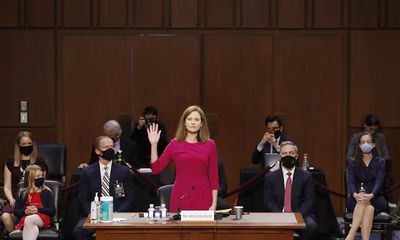
With November's midterm elections approaching, Republicans may face a consequential decision: whether to confirm another conservative Supreme Court justice before potentially losing control of the Senate. In a new piece published October 14 in The Conversation, Paul M. Collins Jr., professor of legal studies and political science at the University of Massachusetts Amherst, examines how such a move could reshape the Supreme Court and intensify political divisions over the judiciary. Collins explains that if Democrats win control of the Senate, a retirement by conservative Justices Clarence Thomas or Samuel Alito before the new Congress takes office in January could give President Donald Trump an opportunity to appoint a fourth Supreme Court justice. While Republicans could potentially secure another conservative appointment, Collins argues the political consequences could extend well beyond the immediate confirmation battle. As Collins writes in The Conversation: If Alito or Thomas announced their retirement after the midterms, Republicans would have enough time to confirm a successor. The Senate has four and a half work weeks scheduled between Election Day and Jan. 3. Justice Amy Coney Barrett was confirmed less than a month after her nomination, making the timeline tight but doable. His analysis draws parallels to the contentious Supreme Court confirmation battles of 2016 and 2020, when Republicans blocked Merrick Garland's nomination before subsequently confirming Amy Coney Barrett shortly before a presidential election. Collins suggests another controversial confirmation could further undermine public confidence in the Supreme Court and strengthen calls for judicial reform, including expanding the number of justices. The stakes are significant. With lifetime appointments shaping constitutional interpretation for decades, the outcome could influence not only the Court's ideological direction but also the future of judicial independence and the relationship between Congress and the judiciary. Paul M. Collins, Jr. is a professor of legal studies and political science at the University of Massachusetts Amherst. His research focuses on understanding bias and inequality in the legal system, the selection and work of judges and social movement litigation. View his profile An established authority on Supreme Court nominations, Collins has researched judicial appointments, political influences on the courts and the confirmation process. He is co-author of Supreme Court Confirmation Hearings and Constitutional Change and Supreme Bias: Gender and Race in U.S. Supreme Court Confirmation Hearings. As the midterm elections approach, Collins can provide journalists with expert analysis of Supreme Court vacancies, Senate confirmation procedures, judicial politics and the potential long-term consequences of another contentious appointment. If you're interested in speaking with Paul M. Collins Jr. about Supreme Court nominations, judicial independence, Senate confirmation battles and the future of the U.S. judiciary, simply click on his profile to arrange an interview today.


When Seeing Is No Longer Believing: AI Deepfakes Are Changing Political Advertising
As artificial intelligence becomes increasingly sophisticated, distinguishing authentic political messages from fabricated content is becoming a growing challenge for voters, journalists and election officials. AI-generated videos, images and audio can now convincingly portray political candidates saying or doing things that never happened. With the November midterm elections approaching, the technology is raising important questions about misinformation, political persuasion and public trust. The issue was recently highlighted in an Oct. 13 WRDW News report, Real or Fake? Deepfakes Flood Georgia Political Ads, featuring Augusta University's Lance Hunter, PhD. The report examined the growing presence of AI-generated political advertising, including a fabricated video involving Georgia Senator Jon Ossoff, and the challenges associated with identifying and regulating this material. A New Challenge for Political Communication Hunter explained how artificial intelligence is fundamentally changing the way political content can be created and distributed. "Artificial intelligence can really increase the persuasiveness, the amount of content it can create." Unlike traditional political advertising, AI-generated content can create seemingly authentic footage of events that never occurred. "What makes this different is the ability to actually show someone doing something that they did not do." The technology raises important questions about how voters evaluate political information, whether existing regulations provide adequate protections and how campaigns may use artificial intelligence in future elections. Lance Hunter, PhD, is a political science professor at Augusta University whose expertise in political behaviour, elections and political communication makes him a valuable resource for journalists covering the growing influence of artificial intelligence on American politics. View his profile An Emerging Story With National Implications While the WRDW report focused on Georgia, the implications extend well beyond one state or election. As AI-generated political content becomes more accessible and convincing, journalists are increasingly examining several important questions: How can voters distinguish authentic political content from AI-generated misinformation? What influence could deepfakes have on public opinion and voter confidence? Should political campaigns be required to disclose their use of artificial intelligence? How can election officials and policymakers respond as the technology evolves? These are emerging issues at the intersection of political science, technology, public policy and democratic participation. As news organizations continue examining AI-generated campaign advertising, election misinformation and the future of political communication, Hunter can provide expert analysis of the challenges facing voters and the broader implications for democracy. If you're interested in speaking with Dr. Lance Hunter about AI deepfakes, political advertising, election misinformation, voter behaviour and the impact of emerging technologies on democracy, simply click on his profile to arrange an interview today.


Measles Makes a Dangerous Comeback as Pennsylvania Outbreak Tops 1,000 Cases
Measles was declared eliminated in the United States in 2000. More than 25 years later, the highly contagious disease is making a troubling comeback, with Pennsylvania now confronting an outbreak that has surpassed 1,000 confirmed cases. According to an October 7 update from the Pennsylvania Department of Health, the state has recorded 1,078 confirmed cases across 41 counties, including 207 hospitalizations and five measles-associated deaths. The figures underscore the serious public health consequences of a disease that can largely be prevented through vaccination. The outbreak is also raising important questions about declining vaccination rates, community immunity and whether other states could experience similar outbreaks. Measles spreads through the air when an infected person breathes, coughs or sneezes. The virus can remain infectious in the air for up to two hours after an infected person leaves an area. Early symptoms include fever, coughing, a runny nose and red, watery eyes, followed by a distinctive rash that typically begins on the face and spreads downward. While many people recover, measles can cause serious complications, including pneumonia, brain swelling and, in rare cases, death. Two doses of the measles, mumps and rubella (MMR) vaccine are approximately 97% effective at preventing the disease. Understanding the Outbreak and What Comes Next Dr. Lynn O. Lewis, a Professor of Biological Sciences at the University of Mary Washington, brings extensive expertise in microbiology, virology and infectious diseases. Lewis also directs the university's Irene Piscopo Rodgers School of Science and helped provide scientific guidance during the COVID-19 pandemic. View her profile With measles cases continuing to mount, Lewis can provide valuable perspective on how the virus spreads, why vaccination remains critical and what public health officials can do to contain outbreaks. She is available to help journalists explore several important questions: Why is a disease once eliminated in the United States returning? What makes measles so contagious? How do vaccination gaps contribute to outbreaks? And what lessons from the COVID-19 pandemic can help communities respond more effectively? As Pennsylvania continues its response, the outbreak is a reminder that infectious diseases once considered under control can re-emerge when the conditions that prevented their spread begin to change. If you're interested in speaking with Dr. Lynn Lewis about the Pennsylvania measles outbreak, infectious disease transmission, vaccination and public health preparedness, simply click on her profile below to arrange an interview today.


The House passed the Sunshine Protection Act on July 14, 2026, reviving the national debate over whether the U.S. should adopt permanent daylight saving time, return to permanent standard time, or keep the twice-yearly clock change altogether. The bill now heads to the Senate. At the University of Mary Washington, Dr. Hilary Stebbins, Associate Professor of Psychological Science, studies the chronobiology and sleep patterns of college students, research that can help inform exactly this debate: how does shifting the clock affect cognitive performance and behavior, no matter which system we land on? Dr. Hilary Stebbins is an Associate Professor in the Department of Psychological Science at the University of Mary Washington. She is an expert on sleep deprivation, circadian rhythms, and dopamine function, and how each affects cognitive performance and behavior. View her profile Stebbins doesn't take a side in the policy debate. Her focus is chronobiology, how sleep patterns and circadian rhythms affect college students' cognitive performance and behavior. But that science speaks directly to the choice lawmakers are weighing: any shift, whether it's permanent daylight saving time, permanent standard time, or sticking with the current system, creates a temporary mismatch between our internal clock and the outside world, and it takes the body time to catch up. "One of my past teams found that as people report higher levels of sleepiness, they show higher dopamine function and also have more difficulty controlling impulsive actions." — Dr. Hilary Stebbins, Associate Professor of Psychological Science, University of Mary Washington Stebbins leads a year-long undergraduate research team (PSYC 491/492) each year, and in 2018 a team of her students won the Virginia Association for Psychological Science's award for best undergraduate paper for their research on sleep deprivation. Interested in discussing chronobiology, sleep patterns, or the science behind the debate over permanent daylight saving time, permanent standard time, or dopamine and behavior? Click on the icon below and connect with Dr. Hilary Stebbins, Associate Professor of Psychological Science at the University of Mary Washington, for expert insight into sleep research and its real-world stakes.

Experts in the Media: How competitive are Georgia’s political races this November?
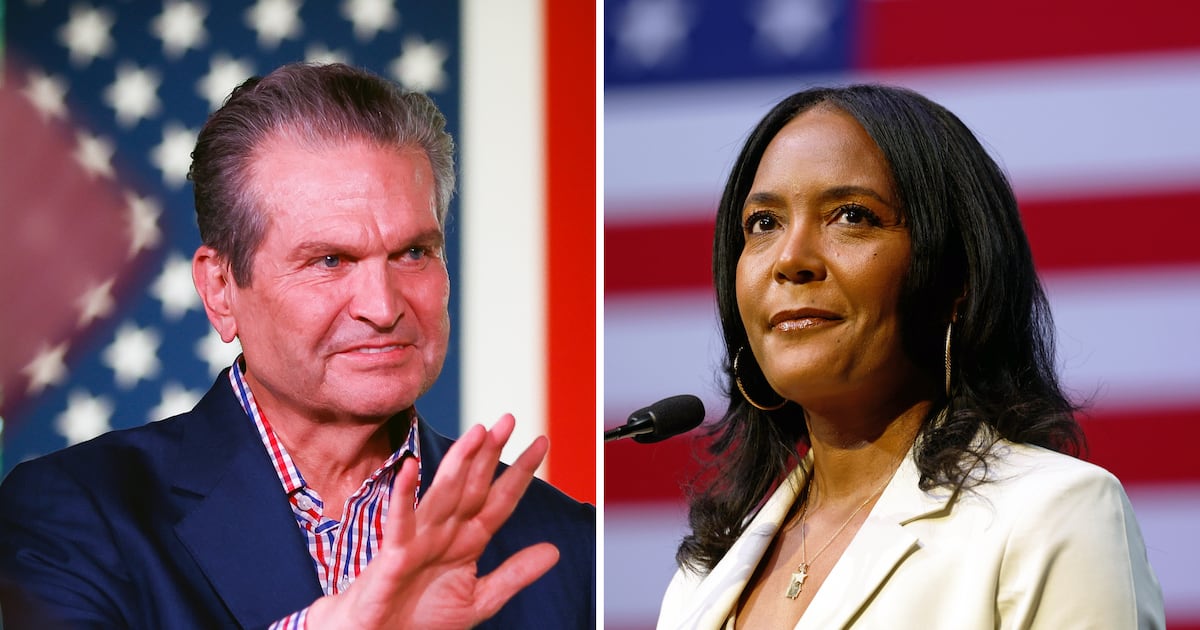
This November marks the first time in over a generation that there are so many competitive statewide elections in Georgia. Voters in the state will have the opportunity to cast their ballot in multiple federal, state and local elections, including a competitive race for the governor’s mansion and a U.S. senate election. Control of the Senate is key for most administrations, and with a razor-thin edge favoring the Republicans, any pickup to keep control of the Senate after the mid-term elections is a priority. But it appears so far that the incumbent Senator Jon Ossoff (D) has a lead in the polls over the challenger, U.S. House Representative Mike Collins (R). Still, the election will be a close one. For the state’s gubernatorial election, what is turning out to be an even closer election, the Democrat Keisha Lance Bottoms is mounting a strong campaign against the Republican Rick Jackson. A Democrat has not won the Georgia’s governorship since 1998. These competitive elections put Georgia firmly in the camp of states to watch in November. This has political watchers and media trying to cover and figure out as parties enter the final weeks of the 2026 campaigns. It's also why journalists and news outlets like Newsweek are connecting with experts like William Hatcher, PhD, for expert opinion and perspective. An award-winning scholar, Hatcher is the chair of the Department of Social Sciences and a professor of political science. His research focuses on the connection between public administration and the development of local communities. Last year, Brian Kemp (R), the state’s popular governor, decided not to challenge Ossoff in the state's 2026 Senate race, which led to a competitive primary on the Republican side and most likely contributed to the election being more competitive. Polls suggested Kemp would have been the strongest candidate against Ossoff. Recent polling from the Atlanta Journal-Constitution has Ossoff with a four-point lead over Collins. When it comes to the state’s gubernatorial race, recent polling by Rasmussen shows Jackson with a three-point lead over Bottoms. Election predicators, such as Nate Silver, have forecasted that the Democrats are likely to win the Senate election and are very competitive in the gubernatorial contest. Hatcher said that “This November’s election marks the first time in over a generation that there are so many competitive statewide elections in Georgia." May 06 - Newsweek The races in Georgia will have significant impact on politics in the state and the nation. If you're a journalist looking to cover Georgia politics, let us help. William Hatcher, PhD, is available to speak with media – simply click on his icon now to arrange an interview today.


Texas Senate Rematch Puts Tarrant County Back in the Political Spotlight
Less than a year after Democrats flipped a Texas Senate seat in Tarrant County, the two candidates are preparing for a November rematch — this time under very different electoral circumstances. Democratic State Sen. Taylor Rehmet defeated Republican Leigh Wambsganss by 14 percentage points in a January special-election runoff for Senate District 9, a district Donald Trump carried by 17 points in the 2024 presidential election. Now Rehmet and Wambsganss will face each other again on Nov. 3, with the winner securing a full four-year term. In a recent Fort Worth Report article examining the race, Adam Schiffer, professor of political science at Texas Christian University, explains why the dynamics of a regular midterm election could be significantly different from those surrounding January's special election. Special elections typically attract lower turnout, and January's runoff featured only Rehmet and Wambsganss. This fall, Tarrant County voters will see more than 70 races on the ballot, creating a much different political environment. “Democrats are extremely energized and motivated to vote right now, and Republicans are a bit dispirited,” Schiffer told the Fort Worth Report. “So that’s the kind of thing that then can work to Rehmet’s advantage.” Professor Schiffer studies American politics, with an emphasis on the news media, elections, and public opinion. His recent work has covered the hot topics of media bias and presidential primary elections. View his profile Schiffer also points to competing forces that could influence the contest. A larger electorate and greater partisan attention could change the makeup of the voters who participate, while Democratic enthusiasm could continue to benefit Rehmet. The race provides a timely opportunity to examine broader questions about voter turnout, partisan loyalty, candidate positioning and whether the political conditions that produce a special-election upset can carry over into a midterm election. Schiffer can provide expert perspective on the Senate District 9 rematch, Tarrant County's changing political landscape, voter behavior and the role that turnout and partisan enthusiasm can play in closely watched elections. To arrange an interview today, simply click on his profile below.



Twice a year, Americans are made to gain or lose one hour of sleep to accommodate an age-old custom of dubious origins. But that may soon change. On July 14, 2026, Democrats and Republicans in the U.S. House of Representatives joined together to approve the Sunshine Protection Act, a bill that would effectively eliminate seasonal clock adjustments and institute permanent daylight saving time. Currently, this legislation is stalled in the Senate, but pressure is steadily mounting for the act’s passage before clocks once again “fall back” at the beginning of November. Amid the push, many researchers who specialize in sleep science and medicine hope Congressional lawmakers continue biding their time—and time in general—and weigh a different approach to the nation’s wakeup call conundrum. “Both the general public and the medical and scientific communities seem to largely support eliminating the practice of changing the clocks twice a year,” says Elizabeth Pantesco, PhD, assistant professor of Psychological and Brain Sciences and head of the Sleep and Heart Health Lab at Villanova University. “However, while political and public opinion often seem to slightly favor permanent daylight saving time, the sleep medicine and circadian science communities generally support permanent standard time.” As Dr. Pantesco explains, this support largely stems from experts’ understanding of circadian health. Permanent standard time would produce earlier morning light and earlier evening darkness, which is generally considered more favorable for optimizing the body’s 24-hour internal rhythms, than permanent daylight saving time. “Under permanent daylight saving time, reduced morning light and increased evening light exposure could shift the circadian clock later, while work, school and other social schedules remain fixed,” says Dr. Pantesco. “This can result in more difficulty falling asleep at night while still needing to get up at the same time in the morning, increasing the likelihood of circadian misalignment, poorer-quality sleep and shorter sleep.” Based on research and historical evidence, the consequences of this restlessness could extend far beyond bleary eyes and midday yawns. While permanent daylight saving time has never been analyzed in controlled trials, the existing literature on sleep restriction and circadian misalignment indicates that the policy change could have significant health and safety ramifications over an extended period. “Circadian misalignment and insufficient sleep have been associated with increased risks for cardiovascular and metabolic disease, as well as depression and other psychiatric outcomes. Long-term circadian disruption, particularly in research on shift work, has also been linked with certain cancers. More immediate consequences can include daytime sleepiness, impaired attention, reduced productivity and an increased risk of errors and motor vehicle crashes.” Dr. Pantesco also notes the possibility of some drawbacks with permanent standard time, which would shift an hour of daylight from evening to morning during the months currently on daylight saving time. Among the resultant pitfalls are that it could limit “opportunities for outdoor and social activities after work, affect businesses that benefit from evening activity and potentially increase risks for certain types of crime and for evening pedestrian or cyclist accidents.” Still, while the communal and societal effects of a permanent standard time have yet to be fully understood, the health benefits are strongly supported by circadian biology. As the American Academy of Sleep Medicine (AASM) contends, its institution could eliminate the chronic sleep disruption caused by seasonal clock changes while creating a “natural synchrony [optimal] for health, mood, performance and safety.” Among U.S. lawmakers, there is a contingent that wholeheartedly agrees, working to enshrine permanent standard time through a Sunshine Protection Act alternative—the Sunshine for Our Kids Act. Whether they will be able to convince their Congressional cohorts of the benefits of permanently “springing forward” over permanently “falling back” remains to be seen, however. As with most things, only time will tell.
