science Experts
Connect for media, speaking, professional opportunities & more.
Diabetes Awareness Month: Why Early Action Could Change Millions of Lives
World Diabetes Day is Nov. 14 and the theme for 2026-2027 is Early Action. Worldwide, one out of nine adults are currently living with diabetes and in the United States, over 40 million people have diabetes. However, many people are undiagnosed and remain aware of their risk of diabetes. Currently, 635 million adults worldwide are at high-risk for diabetes and 12 million persons in the United States are undiagnosed. Undoubtedly, we have a lot of work to do. Early action and prevention are key in the fight against the epidemic of diabetes. Early action "accelerates care, reduces the risk of diabetes, and leads to better health for all." As a nurse for the past 40 years, I have provided care for countless people living with type 2 diabetes. I have witnessed the struggles of people living with diabetes and the many associated complications that can occur. Diabetes can be a very devastating disease, but I am hopeful that there are new emerging treatment options for diabetes, such as GLP-1 medications, and new user-friendly technologies, including the use of continuous glucose monitoring. Lynn Glenn's research and practice promotes high quality, equitable health care and enhanced outcomes in underserved, diverse communities. View her profile Since being at Augusta University, I have focused my efforts on diabetes prevention in younger adults and rural populations. I have developed an adaptation of the Diabetes Prevention Program that incorporates flexibility and socioecological needs amidst competing priorities in young adulthood. My objectives also include improving access to screening and early detection of diabetes which have been implemented in several community events and health fairs, as well as other non-traditional settings. I have addressed the need for enhanced access for persons at high-risk for diabetes, such as Hispanic populations, at the annual AU College of Nursing Costa Layman International Health Outreach Fair and diabetes screening of Hispanic adults at the Dental College of Georgia. Most recently, I am working in partnership with Georgia Center for Diabetes Translational Research at Emory University to advance the science of diabetes prevention research. For Diabetes Month in November, TAKE ACTION and consider the following: Increase awareness of diabetes risk with friends and family members. Know your risk factors for diabetes and take the diabetes risk test. Approximately 115 million people and more than 42% of adults 18 years and older have prediabetes and at high for developing diabetes in the future. Encourage others to get diabetes screening. Almost one-third of adults with diabetes are undiagnosed or unaware of their condition. With the latest recommendations, more than 11 million adults are now eligible for diabetes screening. All adults aged 35 years and older should undergo screening for prediabetes and diabetes annually. Regardless of age, adults should undergo screening for prediabetes and diabetes if they have risk factors such as being overweight/obese, family history of diabetes, history of gestational diabetes (diabetes in pregnancy), or history of high blood pressure or hear disease. Participate in or organize a community-based screening for diabetes. Local events are an easy, non-threatening alternative to traditional health care office visits to receive preventive screenings. Advocate for increased awareness, screening, and early detection of diabetes in your local community. Increase equitable access to healthy food and physical activity at home and work. There is strong evidence that a healthy lifestyle has numerous benefits, such as prevention of cancer, diabetes, and other chronic conditions. We spend a large proportion of time outside the home, yet our workplace environments may not be conducive to our health, such as prolonged sitting time, inadequate time or access to healthy meals, and a high burden of stress. Try to make healthier choices, such as less sitting time, eating healthier meals and snacks, and having quick exercise "snacks" at work. More research is needed to understand how healthy workplace environments can have a positive impact on health outcomes. Please help support people at risk or living with diabetes and TAKE ACTION! Connect with an Expert Dr. Lynn Glenn, PhD, MSN, of Augusta University's College of Nursing, is available to speak with media about diabetes prevention, early detection, emerging treatments and the importance of expanding access to screening, particularly among younger adults, rural communities and underserved populations. To arrange an interview or learn more about her research, click Dr. Lynn Glenn's ExpertFile profile below.


Is Government Corruption Becoming a Defining Issue in the Midterm Elections?
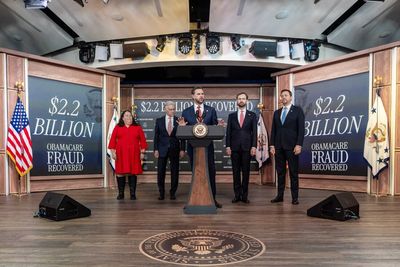
With the U.S. midterm elections just days away, concerns about government corruption are emerging as an important issue for voters, raising questions about how Americans define corruption, whom they hold responsible and how those perceptions could influence their decisions at the ballot box. In an Oct. 26 interview featured on NPR's All Things Considered, Ray La Raja, professor of political science at the University of Massachusetts Amherst and co-director of the UMass Amherst Poll, discussed growing public concern about corruption and the competing political narratives surrounding the Trump administration's efforts to combat fraud. The segment, The Trump Administration Is Taking on Fraud Ahead of the Midterm Elections, reported by NPR's Emily Feng, examined President Donald Trump and Vice President JD Vance's efforts to make government fraud and abuse a central policy focus ahead of the elections. La Raja, who surveyed Americans about corruption in September, found widespread concern about the issue, consistent with other national polling showing that nearly nine in ten Americans are worried about government corruption. "I believe this is pretty much off the charts," La Raja told NPR, emphasizing the extent of public concern. He also highlighted the connection between corruption and the economic issues that traditionally motivate voters."But it's especially powerful when people are already upset about the issue that usually motivates voters, and that's the economy." View his profile His research reveals important differences in how Democrats and Republicans perceive the problem. While Democrats overwhelmingly identify the presidency as a source of corruption, Republicans tend to view corruption as a more systemic problem involving government bureaucracy and fraudulent claims against federal programs. His research offers valuable insight into how political messaging, public trust, economic anxiety and partisan perceptions intersect during a consequential election. An expert in American politics, elections, polling, political parties, campaign finance and political reform, La Raja brings extensive research experience to questions about voter attitudes, democratic accountability and the forces influencing political participation. With the midterm elections approaching on Tuesday, Nov. 3, Ray La Raja is available to speak with journalists seeking expert analysis of government corruption, voter concerns, political messaging, public opinion and the issues shaping the 2026 elections. To arrange an interview with La Raja, click on his ExpertFile profile below.



Could Artificial Intelligence Improve a Country's Credit Rating? New Research Says Yes
Artificial intelligence is already transforming industries, reshaping labour markets and changing how governments deliver services. Now, new research suggests AI development may also influence something far less obvious: a country's ability to secure favourable credit ratings and access lower-cost capital. A study co-authored by Lance Y. Hunter, PhD, a professor at Augusta University, and Glen Biglaiser, PhD, Regents Professor at the University of North Texas, finds a significant positive relationship between national AI development and sovereign bond ratings. Published in the International Area Studies Review, the research examines sovereign bond ratings across 101 countries between 2020 and 2023, using ratings from Moody's and Standard & Poor's alongside measures of national AI readiness. Lance Hunter, PhD, is a political science professor at Augusta University whose expertise in political behavior, elections and political communication makes him a valuable resource for journalists covering the growing influence of artificial intelligence on American politics. View his profile AI and Economic Confidence The researchers found that countries with more advanced AI capabilities generally received higher sovereign bond ratings, even after accounting for a range of economic, political and social factors. Their analysis suggests AI development may strengthen national economies by increasing productivity, improving government efficiency and supporting economic growth. These improvements can contribute to stronger public finances and greater confidence in a government's ability to repay its debts. The findings have potentially significant implications for governments seeking to attract investment, finance infrastructure and reduce borrowing costs. Government Efficiency Matters One of the study's most notable findings concerns the relationship between AI development and government effectiveness. Using statistical mediation analysis, the researchers found that government effectiveness accounted for 32.2% of the relationship between AI development and Standard & Poor's ratings and 26.1% of the relationship with Moody's ratings. The research also identified national income and gross savings as contributing factors, reinforcing the connection between technological development, economic performance and sovereign creditworthiness. The findings suggest that national AI strategies may have financial implications extending beyond innovation and industrial competitiveness. Opportunities and Risks The researchers also caution that AI's economic benefits are not guaranteed. While greater adoption can increase productivity and improve public services, poorly managed implementation could contribute to job displacement, inequality and economic instability. Their findings underscore the importance of responsible AI development, particularly policies that support workers while encouraging technological innovation. The study, Artificial Intelligence Development and Sovereign Bond Ratings, offers a new perspective on how emerging technologies may influence international finance and government borrowing. As governments worldwide increase investments in artificial intelligence, Hunter's research raises important questions about whether technological readiness could become an increasingly influential consideration in assessments of national economic strength. Lance Y. Hunter, PhD, is available to provide expert insight into the relationship between artificial intelligence, government effectiveness, sovereign debt, international political economy and the economic implications of emerging technologies. To connect with Dr. Hunter for an interview or learn more about his research, visit his profile below.

Augusta University Researchers Uncover New Clues to Dangerous Pregnancy Complication
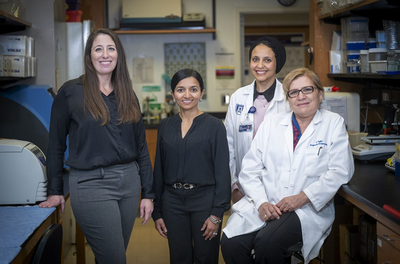
(From left) Jessica Faulkner, PhD, Champa Woodham, MD, Mona Elgazzaz, PhD, and Safia Ogbi (research manager in Faulkner’s lab) A significant discovery by researchers at Augusta University's Medical College of Georgia is shedding new light on preeclampsia, a potentially life-threatening pregnancy complication affecting an estimated 2% to 8% of pregnancies worldwide. Published in Arteriosclerosis, Thrombosis, and Vascular Biology, the research reveals that a protein commonly used to assess preeclampsia risk may also contribute directly to the disease by triggering excess production of the hormone leptin. The discovery establishes a previously unknown connection between two biological markers long associated with preeclampsia and could help researchers identify new approaches to treatment. Jessica L. Faulkner, PhD, associate professor in the Department of Physiology at the Medical College of Georgia and the study's lead author, explained the importance of the findings. “Preeclampsia patients have elevated levels of both sFlt-1 and leptin, but the relationship between those two factors has remained unclear. Our findings show that sFlt-1 directly increases leptin production and suggest that leptin may be an important link between placental dysfunction and the cardiovascular complications of the disease.” Using human placental tissue, cultured cells and animal models, the research team demonstrated that elevated levels of sFlt-1 increase leptin production, contributing to the blood vessel dysfunction characteristic of preeclampsia. When researchers blocked leptin signaling in pregnant mice, much of that dysfunction was reversed. The research was made possible through collaboration between Faulkner's laboratory and the Medical College of Georgia's Maternal-Fetal Medicine program, led by Champa Woodham, MD. Woodham emphasized the importance of connecting laboratory discoveries with clinical care. “Preeclampsia remains one of the most challenging conditions we manage in maternal-fetal medicine because patients can progress from appearing clinically stable to becoming critically ill very quickly. What makes this research particularly exciting is that it takes sFlt-1, a biomarker we are already using clinically to help assess a patient’s risk and gives us a deeper understanding of how it may actually contribute to the disease process.” Mona Elgazzaz, MD, PhD, a postdoctoral fellow in Faulkner's laboratory and the study's first author, highlighted the potential treatment implications. “Uncovering the crosstalk between sFlt-1 and leptin is crucial because it introduces new potential targets for treating preeclampsia by modulating the proteins that regulate leptin production.” The findings are especially significant because current treatment options remain limited, with delivery of the placenta remaining the only definitive cure. Although additional research is needed before these discoveries can translate into clinical treatments, the findings offer a promising new direction for understanding and potentially treating a condition that continues to threaten maternal and infant health worldwide. The study was supported by the National Institutes of Health and the American Heart Association. For journalists covering maternal health, pregnancy complications, cardiovascular disease and emerging medical research, Augusta University's research team offers important expertise on the science behind preeclampsia and the potential implications of this discovery. To learn more or arrange an interview with the researchers, contact AU's External Communications Team mediarelations@augusta.edu to arrange an interview today.

Are Small-Dollar Political Donations Making American Politics More Divisive?
Small-dollar political donations have long been celebrated as a way to reduce the influence of wealthy contributors and give ordinary Americans a greater voice in elections. But new research suggests that the growing influence of these donors may also be contributing to political polarization and rewarding candidates who generate attention rather than build consensus. In an article published in The Atlantic, titled Small-Dollar Campaign Donors Are Hurting the Political System, journalist Idrees Kahloon examines how the explosion of grassroots political fundraising has changed American campaigns, drawing attention to research challenging the assumption that small donations necessarily produce healthier democratic outcomes. Among the researchers examining this trend is Ray La Raja, professor of political science and co-director of the UMass Amherst Poll at the University of Massachusetts Amherst. View his profile La Raja is co-author, with Zachary Albert of Brandeis University, of the 2026 book Small Donors in US Politics: Myth and Reality, which examines who contributes to political campaigns, what motivates their donations and how their growing influence affects elections and political representation. Their research finds that small-dollar donors are often more politically engaged, more partisan and more ideologically committed than the average voter. While these contributions can broaden participation in campaign financing, they can also encourage candidates to pursue national attention and emotionally charged fundraising appeals rather than focus on local concerns or legislative compromise. The findings raise important questions about whether the growing influence of small donors is strengthening political representation or creating new incentives for polarization. The issue is particularly relevant ahead of the 2026 midterm elections, as candidates and political parties compete for campaign contributions in an increasingly nationalized fundraising environment. La Raja's work also examines the role of political parties in campaign finance and whether reforms designed to reduce the influence of large donors have produced unintended consequences. With campaign fundraising, political polarization and democratic accountability increasingly connected, La Raja offers journalists a research-based perspective on one of the less understood forces shaping American elections. If you're interested in speaking with Ray La Raja about campaign finance, small-dollar political donations, political polarization, election reform and the influence of money on American democracy, simply click on his profile to arrange an interview today.

From Baseball to Business: The Science of Team Success
The ingredients that create a World Series team often mirrors how units achieve success in business. How did they get there? The University of Delaware's Kyle Emich says the answer goes beyond assembling a roster of star players. Emich, a professor of management, says that how players combine their strengths, respond to opponents and create opportunities together can be just as important as individual talent. The same is true in business, where a collection of talented employees doesn’t automatically translate into a high-performing team, he said. One example is the approach that the 2026 Milwaukee Brewers’ took during their postseason run. Rather than relying exclusively on home runs and individual star power, the team created opportunities through a combination of speed, patience at the plate, timely hitting and pressure on opposing defenses. A stolen base, a walk or a defensive mistake might seem like a small event on its own, but the effects can build as players’ actions interact. These interactions matter, he says, because teams are not simply collections of individuals; their performance emerges from how people and their activities affect one another within a larger environment. The same is true in business as well as baseball. Businesses may recruit exceptional employees or invest in promising technologies such as artificial intelligence, yet fail to realize their potential if their processes, team structures and working practices don’t support those strengths. Emich can discuss: • Beyond Moneyball: What baseball’s emphasis on statistics and individual talent reveals about the limits of evaluating people in isolation. • Building better teams: How coordination, complementary strengths and the interaction among team members contribute to performance. • Strategy and competition: What baseball teams’ adjustments to opponents can teach business leaders about responding to competitors and changing conditions. • Technology and the future of work: Why adopting artificial intelligence or other new technologies is not enough without considering how people, processes and technology work together. To reach Emich directly and arrange an interview, visit his profile page and click on the "contact" button. Interested reporters can also send an email to MediaRelations@udel.edu.



Does International Law Still Matter? UMass Amherst Expert Weighs In on Doha Debates
As wars, geopolitical tensions and questions about international accountability challenge the global order, an important debate is emerging: Does international law still matter when powerful countries can choose to ignore it? That question was at the center of a recent episode of Doha Debates, which brought together international experts to examine the effectiveness, legitimacy and future of international law. Among the featured panelists was Charli Carpenter, Professor of Political Science at the University of Massachusetts Amherst, who offered a perspective on why international law remains important, even when its rules are violated. The discussion also featured Balakrishnan Rajagopal of the Massachusetts Institute of Technology, Victor Gao of the Center for China and Globalization and political philosopher Curtis Yarvin. Carpenter challenged the notion that violations of international law necessarily demonstrate its failure. She pointed to the international agreements that make everyday global cooperation possible, from aviation safety to diplomacy, and argued that international legal frameworks have helped establish expectations for how countries conduct themselves. Charli Carpenter is a scholar of international relations whose research examines international law, human security, global norms and the role of advocacy networks in shaping international policy. View her profile She also emphasized that violations can sometimes strengthen international norms by prompting other countries and institutions to reaffirm their importance. "And I think it is a common myth that if an actor breaks a rule that necessarily weakens the rule. Sometimes that can be an impetus for others to defend and reaffirm the rule. And it's often the case that rule breakers don't undermine rules, they undermine themselves and their social standing in a community." The debate explored the role of the United Nations, the Geneva Conventions, the International Criminal Court and the challenges of holding powerful countries accountable. Carpenter also discussed research into international treaties and public attitudes toward nuclear weapons, explaining how international agreements can influence expectations and behavior even when major powers are not parties to them. As global conflicts continue to test international institutions, the discussion offers a timely examination of whether the international legal system needs reform, stronger enforcement or renewed political commitment. Watch the full Doha Debates discussion on YouTube to hear Carpenter and her fellow panelists explore the future of international law and the consequences of weakening global institutions. If you're interested in speaking with Charli Carpenter about international law, global governance, international security, human rights and the future of international institutions, simply click on her profile to arrange an interview today.

Could a Supreme Court Power Play Backfire on Republicans?
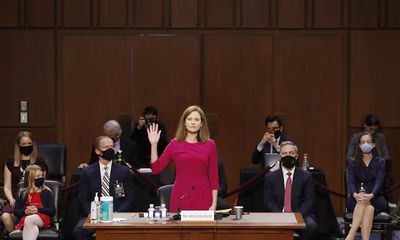
With November's midterm elections approaching, Republicans may face a consequential decision: whether to confirm another conservative Supreme Court justice before potentially losing control of the Senate. In a new piece published October 14 in The Conversation, Paul M. Collins Jr., professor of legal studies and political science at the University of Massachusetts Amherst, examines how such a move could reshape the Supreme Court and intensify political divisions over the judiciary. Collins explains that if Democrats win control of the Senate, a retirement by conservative Justices Clarence Thomas or Samuel Alito before the new Congress takes office in January could give President Donald Trump an opportunity to appoint a fourth Supreme Court justice. While Republicans could potentially secure another conservative appointment, Collins argues the political consequences could extend well beyond the immediate confirmation battle. As Collins writes in The Conversation: If Alito or Thomas announced their retirement after the midterms, Republicans would have enough time to confirm a successor. The Senate has four and a half work weeks scheduled between Election Day and Jan. 3. Justice Amy Coney Barrett was confirmed less than a month after her nomination, making the timeline tight but doable. His analysis draws parallels to the contentious Supreme Court confirmation battles of 2016 and 2020, when Republicans blocked Merrick Garland's nomination before subsequently confirming Amy Coney Barrett shortly before a presidential election. Collins suggests another controversial confirmation could further undermine public confidence in the Supreme Court and strengthen calls for judicial reform, including expanding the number of justices. The stakes are significant. With lifetime appointments shaping constitutional interpretation for decades, the outcome could influence not only the Court's ideological direction but also the future of judicial independence and the relationship between Congress and the judiciary. Paul M. Collins, Jr. is a professor of legal studies and political science at the University of Massachusetts Amherst. His research focuses on understanding bias and inequality in the legal system, the selection and work of judges and social movement litigation. View his profile An established authority on Supreme Court nominations, Collins has researched judicial appointments, political influences on the courts and the confirmation process. He is co-author of Supreme Court Confirmation Hearings and Constitutional Change and Supreme Bias: Gender and Race in U.S. Supreme Court Confirmation Hearings. As the midterm elections approach, Collins can provide journalists with expert analysis of Supreme Court vacancies, Senate confirmation procedures, judicial politics and the potential long-term consequences of another contentious appointment. If you're interested in speaking with Paul M. Collins Jr. about Supreme Court nominations, judicial independence, Senate confirmation battles and the future of the U.S. judiciary, simply click on his profile to arrange an interview today.


When Seeing Is No Longer Believing: AI Deepfakes Are Changing Political Advertising
As artificial intelligence becomes increasingly sophisticated, distinguishing authentic political messages from fabricated content is becoming a growing challenge for voters, journalists and election officials. AI-generated videos, images and audio can now convincingly portray political candidates saying or doing things that never happened. With the November midterm elections approaching, the technology is raising important questions about misinformation, political persuasion and public trust. The issue was recently highlighted in an Oct. 13 WRDW News report, Real or Fake? Deepfakes Flood Georgia Political Ads, featuring Augusta University's Lance Hunter, PhD. The report examined the growing presence of AI-generated political advertising, including a fabricated video involving Georgia Senator Jon Ossoff, and the challenges associated with identifying and regulating this material. A New Challenge for Political Communication Hunter explained how artificial intelligence is fundamentally changing the way political content can be created and distributed. "Artificial intelligence can really increase the persuasiveness, the amount of content it can create." Unlike traditional political advertising, AI-generated content can create seemingly authentic footage of events that never occurred. "What makes this different is the ability to actually show someone doing something that they did not do." The technology raises important questions about how voters evaluate political information, whether existing regulations provide adequate protections and how campaigns may use artificial intelligence in future elections. Lance Hunter, PhD, is a political science professor at Augusta University whose expertise in political behaviour, elections and political communication makes him a valuable resource for journalists covering the growing influence of artificial intelligence on American politics. View his profile An Emerging Story With National Implications While the WRDW report focused on Georgia, the implications extend well beyond one state or election. As AI-generated political content becomes more accessible and convincing, journalists are increasingly examining several important questions: How can voters distinguish authentic political content from AI-generated misinformation? What influence could deepfakes have on public opinion and voter confidence? Should political campaigns be required to disclose their use of artificial intelligence? How can election officials and policymakers respond as the technology evolves? These are emerging issues at the intersection of political science, technology, public policy and democratic participation. As news organizations continue examining AI-generated campaign advertising, election misinformation and the future of political communication, Hunter can provide expert analysis of the challenges facing voters and the broader implications for democracy. If you're interested in speaking with Dr. Lance Hunter about AI deepfakes, political advertising, election misinformation, voter behaviour and the impact of emerging technologies on democracy, simply click on his profile to arrange an interview today.

Measles Makes a Dangerous Comeback as Pennsylvania Outbreak Tops 1,000 Cases
Measles was declared eliminated in the United States in 2000. More than 25 years later, the highly contagious disease is making a troubling comeback, with Pennsylvania now confronting an outbreak that has surpassed 1,000 confirmed cases. According to an October 7 update from the Pennsylvania Department of Health, the state has recorded 1,078 confirmed cases across 41 counties, including 207 hospitalizations and five measles-associated deaths. The figures underscore the serious public health consequences of a disease that can largely be prevented through vaccination. The outbreak is also raising important questions about declining vaccination rates, community immunity and whether other states could experience similar outbreaks. Measles spreads through the air when an infected person breathes, coughs or sneezes. The virus can remain infectious in the air for up to two hours after an infected person leaves an area. Early symptoms include fever, coughing, a runny nose and red, watery eyes, followed by a distinctive rash that typically begins on the face and spreads downward. While many people recover, measles can cause serious complications, including pneumonia, brain swelling and, in rare cases, death. Two doses of the measles, mumps and rubella (MMR) vaccine are approximately 97% effective at preventing the disease. Understanding the Outbreak and What Comes Next Dr. Lynn O. Lewis, a Professor of Biological Sciences at the University of Mary Washington, brings extensive expertise in microbiology, virology and infectious diseases. Lewis also directs the university's Irene Piscopo Rodgers School of Science and helped provide scientific guidance during the COVID-19 pandemic. View her profile With measles cases continuing to mount, Lewis can provide valuable perspective on how the virus spreads, why vaccination remains critical and what public health officials can do to contain outbreaks. She is available to help journalists explore several important questions: Why is a disease once eliminated in the United States returning? What makes measles so contagious? How do vaccination gaps contribute to outbreaks? And what lessons from the COVID-19 pandemic can help communities respond more effectively? As Pennsylvania continues its response, the outbreak is a reminder that infectious diseases once considered under control can re-emerge when the conditions that prevented their spread begin to change. If you're interested in speaking with Dr. Lynn Lewis about the Pennsylvania measles outbreak, infectious disease transmission, vaccination and public health preparedness, simply click on her profile below to arrange an interview today.