
university Experts
Connect for media, speaking, professional opportunities & more.
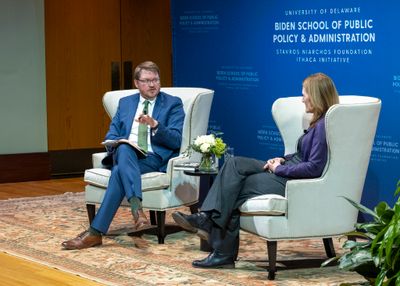
Two years after the 2024 election, where does civil discourse stand?
Election season has brought the expected vicious political campaign ads, heated online disagreements and difficult dinner table conversations with family and friends. But the University of Delaware’s Timothy Shaffer says there’s still room for civil discourse. Shaffer, UD’s inaugural Stavros Niarchos Foundation (SNF) Chair of Civil Discourse, studies how people can engage across significant differences while maintaining the relationships and democratic institutions that make disagreement possible. As chair of UD's SNF Ithaca Initiative, Shaffer works with students, educators and civic leaders to develop and practice constructive engagement across differences. He can comment on the following through the lens of the first midterm election since the vitriolic 2024 general elections. • What has changed since 2024: How have the past two years affected the way Americans talk about politics, disagreement and democracy? • Polarization and dialogue: Is political disagreement itself the problem, or is the greater challenge engaging constructively across differences? • The role of disagreement: Why civil discourse doesn't require consensus and how listening to competing perspectives can strengthen democratic engagement. • Politics and personal relationships: How to navigate political differences with family, friends, neighbors and colleagues without letting disagreements become personal. • Social media and the 2026 election: How online environments shape political conversations, what Shaffer expects as Election Day approaches, and how people can engage more constructively across differences. To reach Shaffer and arrange an interview, visit his profile page and click on the "contact" button. Interested reporters can also send an email to MediaRelations@udel.edu.

Augusta University Researchers Uncover New Clues to Dangerous Pregnancy Complication
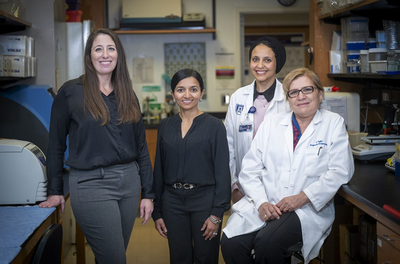
(From left) Jessica Faulkner, PhD, Champa Woodham, MD, Mona Elgazzaz, PhD, and Safia Ogbi (research manager in Faulkner’s lab) A significant discovery by researchers at Augusta University's Medical College of Georgia is shedding new light on preeclampsia, a potentially life-threatening pregnancy complication affecting an estimated 2% to 8% of pregnancies worldwide. Published in Arteriosclerosis, Thrombosis, and Vascular Biology, the research reveals that a protein commonly used to assess preeclampsia risk may also contribute directly to the disease by triggering excess production of the hormone leptin. The discovery establishes a previously unknown connection between two biological markers long associated with preeclampsia and could help researchers identify new approaches to treatment. Jessica L. Faulkner, PhD, associate professor in the Department of Physiology at the Medical College of Georgia and the study's lead author, explained the importance of the findings. “Preeclampsia patients have elevated levels of both sFlt-1 and leptin, but the relationship between those two factors has remained unclear. Our findings show that sFlt-1 directly increases leptin production and suggest that leptin may be an important link between placental dysfunction and the cardiovascular complications of the disease.” Using human placental tissue, cultured cells and animal models, the research team demonstrated that elevated levels of sFlt-1 increase leptin production, contributing to the blood vessel dysfunction characteristic of preeclampsia. When researchers blocked leptin signaling in pregnant mice, much of that dysfunction was reversed. The research was made possible through collaboration between Faulkner's laboratory and the Medical College of Georgia's Maternal-Fetal Medicine program, led by Champa Woodham, MD. Woodham emphasized the importance of connecting laboratory discoveries with clinical care. “Preeclampsia remains one of the most challenging conditions we manage in maternal-fetal medicine because patients can progress from appearing clinically stable to becoming critically ill very quickly. What makes this research particularly exciting is that it takes sFlt-1, a biomarker we are already using clinically to help assess a patient’s risk and gives us a deeper understanding of how it may actually contribute to the disease process.” Mona Elgazzaz, MD, PhD, a postdoctoral fellow in Faulkner's laboratory and the study's first author, highlighted the potential treatment implications. “Uncovering the crosstalk between sFlt-1 and leptin is crucial because it introduces new potential targets for treating preeclampsia by modulating the proteins that regulate leptin production.” The findings are especially significant because current treatment options remain limited, with delivery of the placenta remaining the only definitive cure. Although additional research is needed before these discoveries can translate into clinical treatments, the findings offer a promising new direction for understanding and potentially treating a condition that continues to threaten maternal and infant health worldwide. The study was supported by the National Institutes of Health and the American Heart Association. For journalists covering maternal health, pregnancy complications, cardiovascular disease and emerging medical research, Augusta University's research team offers important expertise on the science behind preeclampsia and the potential implications of this discovery. To learn more or arrange an interview with the researchers, contact AU's External Communications Team mediarelations@augusta.edu to arrange an interview today.


GLP-1 medications such as Ozempic, Wegovy and Zepbound are transforming treatment for obesity and diabetes, with some now being used to treat obstructive sleep apnea. But could these increasingly popular medications also affect your teeth and gums? A researcher at Augusta University's Dental College of Georgia is investigating that question, highlighting a potential connection between GLP-1 medications, sleep apnea treatment and oral health. John C. Comisi, DDS, DMD, interim chair and professor in the Department of General Dentistry, recently published a review in Clinical Oral Investigations examining how obstructive sleep apnea and GLP-1 medications may influence the oral microbiome — the complex community of bacteria that helps maintain healthy teeth and gums. A New Question About GLP-1 Medications Obstructive sleep apnea can affect oral health through repeated oxygen disruptions, inflammation, mouth breathing and dry mouth. Treating the condition could improve some of these problems, but GLP-1 medications may introduce additional considerations. “OSA affects much more than sleep,” Comisi said. “The changes that occur throughout the body can also change the environment in the mouth. As we increasingly use medications to treat OSA, we need to understand what those treatments may mean for oral health.” Comisi's review suggests that successful treatment of sleep apnea could improve the oral environment by reducing mouth breathing, acid reflux and other contributing factors. However, reports involving semaglutide have also raised questions about dry mouth and changes in saliva, which plays an important role in protecting against tooth decay and gum disease. “There are potentially competing effects happening at the same time,” Comisi said. “Treating sleep apnea could improve several conditions that contribute to an unhealthy oral environment, while the medication itself could potentially affect salivary function. We simply do not have the prospective human studies yet to know what the overall effect will be.” The review, featured in an Oct. 6 Augusta University Jagwire article, calls for additional research tracking patients using GLP-1 medications, including changes in saliva, oral bacteria, cavities and gum disease. It also highlights the importance of communication between dentists and other health care providers, particularly when patients taking GLP-1 medications require dental procedures involving sedation or general anesthesia. With GLP-1 medications becoming increasingly common, understanding their broader effects on oral health is an emerging area of research with important implications for patients and dental professionals. John C. Comisi, DDS, DMD, is interim chair and professor in the Department of General Dentistry at Augusta University's Dental College of Georgia. His expertise provides a valuable perspective on the intersection of dental health, medication use and emerging approaches to patient care. If you're interested in speaking with Dr. John Comisi about GLP-1 medications, sleep apnea, dry mouth, oral health and the implications of these treatments for dental care, contact AU's External Communications Team mediarelations@augusta.edu to arrange an interview today.

Expert Insight: Tariff Turmoil Is Changing How Businesses Price Their Products
Tariffs are no longer simply a trade policy issue. They are becoming a significant challenge for businesses trying to manage costs, protect profits and remain competitive in an increasingly unpredictable global marketplace. A recent Reuters Plus feature, Why Tariff Volatility Makes Pricing a Forever Process, produced for global consultancy Simon-Kucher, examines how rapidly changing tariffs are forcing companies to continuously reassess their pricing strategies and supply chains. Among the experts featured is Anna Nagurney, Eugene M. Isenberg Chair in Integrative Studies at the Isenberg School of Management at the University of Massachusetts Amherst. View her profile Nagurney, an internationally recognized expert in supply chain networks and disruption management, points to the extraordinary pace of trade policy changes. She estimates that U.S. tariff regulations changed approximately 50 times during 2025, creating uncertainty for manufacturers, wholesalers, retailers and consumers. "The speed and uncertainty created a great deal of challenges for manufacturers, wholesalers, retailers and, of course, consumers." Why Even Domestic Businesses Are Vulnerable One of the article's central messages is that businesses do not have to import products directly to feel the impact of tariffs. Higher costs can spread throughout interconnected supply chains, affecting suppliers, transportation networks and ultimately consumers. Nagurney emphasizes the importance of viewing supply chains as networks rather than simple, linear systems. By identifying critical suppliers, examining vulnerabilities and preparing for potential disruptions, businesses can make better decisions before costs escalate. She also cautions that smaller companies may struggle to absorb tariff-related increases without jeopardizing their financial stability. As businesses face continued uncertainty, Nagurney can provide valuable perspective on how tariffs influence supply chains, consumer prices, business competitiveness and the broader economy. An experienced commentator on global supply chain disruptions, Nagurney has provided analysis to major news organizations, including The New York Times, Associated Press, NPR, The Washington Post, The Boston Globe and The Wall Street Journal. If you're interested in speaking with Anna Nagurney about tariffs, supply chain disruptions, pricing pressures, international trade and economic uncertainty, simply click on her profile to arrange an interview today.



Blood Clots Can Sideline Elite Athletes. Could Microrobots Offer a New Approach?
Blood clots have sidelined or ended the careers of several elite athletes, drawing attention to a potentially life-threatening condition. The University of Delaware's Sambeeta Das is part of a team that has developed tiny, magnetically guided robots that could offer a new approach to removing such blockages. The list of athletes affected by blood clots includes NBA champion Chris Bosh, whose career ended after recurring clots; tennis great Serena Williams, who survived two life-threatening pulmonary embolisms; San Antonio Spurs center Victor Wembanyama, who was shut down in February 2025 when deep vein thrombosis was discovered in his right shoulder; and Philadelphia Eagles quarterback Jalen Hurts, whose recent diagnosis of blood clots in his lungs has drawn national attention. In a published study, Das and her colleagues demonstrated that magnetic microrobots could mechanically break apart clusters of human liver cancer cells and clear them from narrow channels designed to model blood vessels. The robots used mechanical forces rather than drugs or chemicals to disperse the clusters. The research offers an early proof of concept for using microrobots to remove unwanted cellular material in confined spaces. Das can discuss how the technology works, its potential application to blood-clot removal, the challenges of targeting blockages inside the body, and what further research is needed to explore its use in patients. To contact Das and arrange an interview, visit her profile and click the “Contact” button. Reporters can also email MediaRelations@udel.edu.

Are Small-Dollar Political Donations Making American Politics More Divisive?
Small-dollar political donations have long been celebrated as a way to reduce the influence of wealthy contributors and give ordinary Americans a greater voice in elections. But new research suggests that the growing influence of these donors may also be contributing to political polarization and rewarding candidates who generate attention rather than build consensus. In an article published in The Atlantic, titled Small-Dollar Campaign Donors Are Hurting the Political System, journalist Idrees Kahloon examines how the explosion of grassroots political fundraising has changed American campaigns, drawing attention to research challenging the assumption that small donations necessarily produce healthier democratic outcomes. Among the researchers examining this trend is Ray La Raja, professor of political science and co-director of the UMass Amherst Poll at the University of Massachusetts Amherst. View his profile La Raja is co-author, with Zachary Albert of Brandeis University, of the 2026 book Small Donors in US Politics: Myth and Reality, which examines who contributes to political campaigns, what motivates their donations and how their growing influence affects elections and political representation. Their research finds that small-dollar donors are often more politically engaged, more partisan and more ideologically committed than the average voter. While these contributions can broaden participation in campaign financing, they can also encourage candidates to pursue national attention and emotionally charged fundraising appeals rather than focus on local concerns or legislative compromise. The findings raise important questions about whether the growing influence of small donors is strengthening political representation or creating new incentives for polarization. The issue is particularly relevant ahead of the 2026 midterm elections, as candidates and political parties compete for campaign contributions in an increasingly nationalized fundraising environment. La Raja's work also examines the role of political parties in campaign finance and whether reforms designed to reduce the influence of large donors have produced unintended consequences. With campaign fundraising, political polarization and democratic accountability increasingly connected, La Raja offers journalists a research-based perspective on one of the less understood forces shaping American elections. If you're interested in speaking with Ray La Raja about campaign finance, small-dollar political donations, political polarization, election reform and the influence of money on American democracy, simply click on his profile to arrange an interview today.


From Baseball to Business: The Science of Team Success
The ingredients that create a World Series team often mirrors how units achieve success in business. How did they get there? The University of Delaware's Kyle Emich says the answer goes beyond assembling a roster of star players. Emich, a professor of management, says that how players combine their strengths, respond to opponents and create opportunities together can be just as important as individual talent. The same is true in business, where a collection of talented employees doesn’t automatically translate into a high-performing team, he said. One example is the approach that the 2026 Milwaukee Brewers’ took during their postseason run. Rather than relying exclusively on home runs and individual star power, the team created opportunities through a combination of speed, patience at the plate, timely hitting and pressure on opposing defenses. A stolen base, a walk or a defensive mistake might seem like a small event on its own, but the effects can build as players’ actions interact. These interactions matter, he says, because teams are not simply collections of individuals; their performance emerges from how people and their activities affect one another within a larger environment. The same is true in business as well as baseball. Businesses may recruit exceptional employees or invest in promising technologies such as artificial intelligence, yet fail to realize their potential if their processes, team structures and working practices don’t support those strengths. Emich can discuss: • Beyond Moneyball: What baseball’s emphasis on statistics and individual talent reveals about the limits of evaluating people in isolation. • Building better teams: How coordination, complementary strengths and the interaction among team members contribute to performance. • Strategy and competition: What baseball teams’ adjustments to opponents can teach business leaders about responding to competitors and changing conditions. • Technology and the future of work: Why adopting artificial intelligence or other new technologies is not enough without considering how people, processes and technology work together. To reach Emich directly and arrange an interview, visit his profile page and click on the "contact" button. Interested reporters can also send an email to MediaRelations@udel.edu.


Does International Law Still Matter? UMass Amherst Expert Weighs In on Doha Debates
As wars, geopolitical tensions and questions about international accountability challenge the global order, an important debate is emerging: Does international law still matter when powerful countries can choose to ignore it? That question was at the center of a recent episode of Doha Debates, which brought together international experts to examine the effectiveness, legitimacy and future of international law. Among the featured panelists was Charli Carpenter, Professor of Political Science at the University of Massachusetts Amherst, who offered a perspective on why international law remains important, even when its rules are violated. The discussion also featured Balakrishnan Rajagopal of the Massachusetts Institute of Technology, Victor Gao of the Center for China and Globalization and political philosopher Curtis Yarvin. Carpenter challenged the notion that violations of international law necessarily demonstrate its failure. She pointed to the international agreements that make everyday global cooperation possible, from aviation safety to diplomacy, and argued that international legal frameworks have helped establish expectations for how countries conduct themselves. Charli Carpenter is a scholar of international relations whose research examines international law, human security, global norms and the role of advocacy networks in shaping international policy. View her profile She also emphasized that violations can sometimes strengthen international norms by prompting other countries and institutions to reaffirm their importance. "And I think it is a common myth that if an actor breaks a rule that necessarily weakens the rule. Sometimes that can be an impetus for others to defend and reaffirm the rule. And it's often the case that rule breakers don't undermine rules, they undermine themselves and their social standing in a community." The debate explored the role of the United Nations, the Geneva Conventions, the International Criminal Court and the challenges of holding powerful countries accountable. Carpenter also discussed research into international treaties and public attitudes toward nuclear weapons, explaining how international agreements can influence expectations and behavior even when major powers are not parties to them. As global conflicts continue to test international institutions, the discussion offers a timely examination of whether the international legal system needs reform, stronger enforcement or renewed political commitment. Watch the full Doha Debates discussion on YouTube to hear Carpenter and her fellow panelists explore the future of international law and the consequences of weakening global institutions. If you're interested in speaking with Charli Carpenter about international law, global governance, international security, human rights and the future of international institutions, simply click on her profile to arrange an interview today.

AU designated APLU Innovation and Economic Prosperity Institution
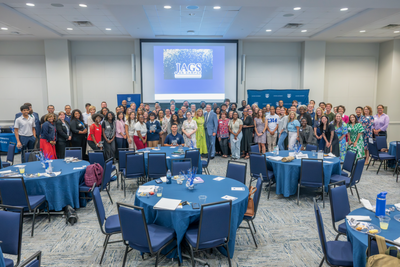
Augusta University has earned national recognition for work that has been taking shape across the university and the region for years: connecting education, research, innovation and workforce development to the needs of the community. After more than three years of collaboration with campus and community partners, AU has been designated an Innovation and Economic Prosperity (IEP) institution by the Association of Public and Land-Grant Universities. This national designation recognizes public research universities that work with public and private sector partners to advance and support economic development in their states and regions. For AU, the IEP designation is both a celebration and a commitment. It recognizes significant work already underway while challenging the university to become even more connected, accessible, measurable and strategic in its economic and community engagement. It also marks an important milestone in its evolution as a public research university, workforce partner, innovation catalyst and community anchor. More than a recognition of programs already underway, the IEP process offered AU an opportunity to examine in depth how many areas of work intersect and how those connections can generate greater impact for students, partners and communities. “I am grateful to our steering committee and the entire team of campus and community partners whose resolve and determination made this achievement possible,” said Augusta University President Russell T. Keen. “Their efforts truly epitomize our ‘It can be done’ mindset. At its heart, economic prosperity is about people. It means helping students build meaningful careers, preparing the workforce our state needs, turning discoveries into solutions and working alongside our neighbours to build healthier, stronger communities.” AU‘s IEP journey began in early 2023 with an expansive group of CSRA community partners. A steering committee and subcommittees brought together 42 participants representing the university and partners across economic development, K-12 education, local government, community foundations, health systems, the University System of Georgia, the Technical College System of Georgia, the Department of Energy, the Department of Defense, entrepreneurs and other regional stakeholders. This collaborative work continued through significant transitions, including the local impact of Hurricane Helene. The group explored a broad definition of economic prosperity – one that goes beyond traditional measures to include talent development, experiential learning, applied research, entrepreneurship, healthcare access, innovation and mutually beneficial partnerships. “Augusta University has a unique opportunity, and responsibility, to help drive economic prosperity across the communities we serve,” said Tina Baggott, vice president of Corporate and Community Engagement. “Our work brings together innovation, workforce development and meaningful community partnerships to address the needs of today while helping to prepare our communities for the challenges of tomorrow. The APLU Innovation and Economic Prosperity designation affirms our commitment to working alongside industry, government and community partners to turn ideas into impact, talent into opportunity, and partnerships into lasting economic and community growth.” Using APLU’s Commission on Economic and Community Engagement assessment tools, peer benchmarking, institutional data, surveys and more than 38 focus groups and individual conversations, the outcome represents the collective work of many in the region, with AU at the helm. “Receiving the IEP designation is a tremendous recognition of what is possible when we bring people together around a shared purpose,” said Lynsey Steinberg, director of Academic Entrepreneurship at AU. “Augusta University has incredible talent, innovative ideas, and strong community partners, and when we connect those strengths, we can make a real difference in supporting regional prosperity. Over the past three years, we have seen what can happen when people collaborate, elevate one another and work toward something bigger than themselves. This designation celebrates that work, but more importantly to keep building relationships, creating connections, and finding new ways to make a meaningful impact together.” AU’s public mission is equally central to economic prosperity. The university extends healthcare, education, research and community engagement throughout Georgia, including rural and underserved communities. Through its health sciences enterprise, telehealth, clinical education, community partnerships and expansion of programs and campuses, AU is strengthening both access and the talent pipeline required to meet critical workforce needs. “Augusta University has a unique opportunity, and responsibility, to help drive economic prosperity across the communities we serve.” Tina Baggott, vice president of Corporate and Community Engagement. The IEP process reinforced the importance of innovation infrastructure – the systems and connections that help move ideas from discovery to real-world impact. From translational research and commercialization to makerspaces, entrepreneurship programming, interdisciplinary collaboration and the Regional Innovation Advisory Committee – which is focused on advancing AU’s strategic goals of community engagement, student success and research excellence by fostering cross-sector collaborations – AU is building pathways for innovation to move beyond campus into communities, industries and the economy. “Augusta University’s APLU Innovation and Economic Prosperity designation underscores the university’s important role in strengthening the Augusta region as a place to live, work, invest, and visit,” said Jennifer Bowen, Chief Strategy Officer and Senior Vice President & Film Commissioner at Destination Augusta. “Through innovation, workforce development, research, and community partnerships, AU helps build the talent, opportunities, and economic vitality that make our community more competitive and enhance the region’s appeal as a destination.” The work does not end with this designation. Findings from the IEP self-study have been incorporated into AU’s Growth and Improvement Plan, with priorities focused on stronger coordination, clearer access for partners, improved measurement, increased visibility, workforce alignment and a more intentionally connected regional innovation economy. Economic engagement is also helping shape the university’s next long-term strategic plan, ensuring decisions about academic programs, research, partnerships, infrastructure and investment remain connected to the needs of the communities AU serves. Augusta University will be recognized for this achievement during the APLU Annual Meeting in November in San Antonio, Texas.

NBA stars and Achilles injuries: The road back to peak performance
A new NBA season brings plenty of storylines, from star players in new uniforms to the debut of promising rookies. But for players recovering from Achilles tendon injuries, returning to the court is just the beginning, says the University of Delaware's Karin Grävare Silbernagel. Regaining strength, explosiveness and consistent performance can take longer to achieve, said Silbernagel, a professor of physical therapy who studies tendon injuries and rehabilitation, with a focus on Achilles tendon ruptures, ankle function and long-term physical performance. Her research explores why recovery involves more than healing tissue or returning to competition. Strength, movement, tendon function and the ability to perform under the demands of sport all matter, she said. In a recent study, Silbernagel and colleagues examined single-leg jumping in people about two years after an Achilles tendon rupture. They found that fatigue affected ankle power differently on the injured and uninjured sides, highlighting how an injury can influence movement and the way the body distributes physical demands even well into recovery. Silbernagel can discuss: • Why returning to the court does not necessarily mean an NBA player has regained full strength, explosiveness or durability. • How clinicians assess recovery and readiness to return to sport after an Achilles tendon rupture. • How rehabilitation, progressive loading and return-to-sport testing can help guide recovery. • What research reveals about lingering changes in movement and function after tendon injuries. • What Achilles injuries can mean for athletic performance over time. Silbernagel leads the Delaware Tendon Research Group and consults with professional sports teams. Her research has helped inform clinical guidelines for treating tendon injuries. To reach Silbernagel directly and arrange and interview, visit her profile and click on the "contact" button. Interested reporters can also send an email to MediaRelations@udel.edu.
