
university Experts
Connect for media, speaking, professional opportunities & more.

Is Government Corruption Becoming a Defining Issue in the Midterm Elections?
With the U.S. midterm elections just days away, concerns about government corruption are emerging as an important issue for voters, raising questions about how Americans define corruption, whom they hold responsible and how those perceptions could influence their decisions at the ballot box. In an Oct. 26 interview featured on NPR's All Things Considered, Ray La Raja, professor of political science at the University of Massachusetts Amherst and co-director of the UMass Amherst Poll, discussed growing public concern about corruption and the competing political narratives surrounding the Trump administration's efforts to combat fraud. The segment, The Trump Administration Is Taking on Fraud Ahead of the Midterm Elections, reported by NPR's Emily Feng, examined President Donald Trump and Vice President JD Vance's efforts to make government fraud and abuse a central policy focus ahead of the elections. La Raja, who surveyed Americans about corruption in September, found widespread concern about the issue, consistent with other national polling showing that nearly nine in ten Americans are worried about government corruption. "I believe this is pretty much off the charts," La Raja told NPR, emphasizing the extent of public concern. He also highlighted the connection between corruption and the economic issues that traditionally motivate voters."But it's especially powerful when people are already upset about the issue that usually motivates voters, and that's the economy." View his profile His research reveals important differences in how Democrats and Republicans perceive the problem. While Democrats overwhelmingly identify the presidency as a source of corruption, Republicans tend to view corruption as a more systemic problem involving government bureaucracy and fraudulent claims against federal programs. His research offers valuable insight into how political messaging, public trust, economic anxiety and partisan perceptions intersect during a consequential election. An expert in American politics, elections, polling, political parties, campaign finance and political reform, La Raja brings extensive research experience to questions about voter attitudes, democratic accountability and the forces influencing political participation. With the midterm elections approaching on Tuesday, Nov. 3, Ray La Raja is available to speak with journalists seeking expert analysis of government corruption, voter concerns, political messaging, public opinion and the issues shaping the 2026 elections. To arrange an interview with La Raja, click on his ExpertFile profile below.



Could Artificial Intelligence Improve a Country's Credit Rating? New Research Says Yes
Artificial intelligence is already transforming industries, reshaping labour markets and changing how governments deliver services. Now, new research suggests AI development may also influence something far less obvious: a country's ability to secure favourable credit ratings and access lower-cost capital. A study co-authored by Lance Y. Hunter, PhD, a professor at Augusta University, and Glen Biglaiser, PhD, Regents Professor at the University of North Texas, finds a significant positive relationship between national AI development and sovereign bond ratings. Published in the International Area Studies Review, the research examines sovereign bond ratings across 101 countries between 2020 and 2023, using ratings from Moody's and Standard & Poor's alongside measures of national AI readiness. Lance Hunter, PhD, is a political science professor at Augusta University whose expertise in political behavior, elections and political communication makes him a valuable resource for journalists covering the growing influence of artificial intelligence on American politics. View his profile AI and Economic Confidence The researchers found that countries with more advanced AI capabilities generally received higher sovereign bond ratings, even after accounting for a range of economic, political and social factors. Their analysis suggests AI development may strengthen national economies by increasing productivity, improving government efficiency and supporting economic growth. These improvements can contribute to stronger public finances and greater confidence in a government's ability to repay its debts. The findings have potentially significant implications for governments seeking to attract investment, finance infrastructure and reduce borrowing costs. Government Efficiency Matters One of the study's most notable findings concerns the relationship between AI development and government effectiveness. Using statistical mediation analysis, the researchers found that government effectiveness accounted for 32.2% of the relationship between AI development and Standard & Poor's ratings and 26.1% of the relationship with Moody's ratings. The research also identified national income and gross savings as contributing factors, reinforcing the connection between technological development, economic performance and sovereign creditworthiness. The findings suggest that national AI strategies may have financial implications extending beyond innovation and industrial competitiveness. Opportunities and Risks The researchers also caution that AI's economic benefits are not guaranteed. While greater adoption can increase productivity and improve public services, poorly managed implementation could contribute to job displacement, inequality and economic instability. Their findings underscore the importance of responsible AI development, particularly policies that support workers while encouraging technological innovation. The study, Artificial Intelligence Development and Sovereign Bond Ratings, offers a new perspective on how emerging technologies may influence international finance and government borrowing. As governments worldwide increase investments in artificial intelligence, Hunter's research raises important questions about whether technological readiness could become an increasingly influential consideration in assessments of national economic strength. Lance Y. Hunter, PhD, is available to provide expert insight into the relationship between artificial intelligence, government effectiveness, sovereign debt, international political economy and the economic implications of emerging technologies. To connect with Dr. Hunter for an interview or learn more about his research, visit his profile below.


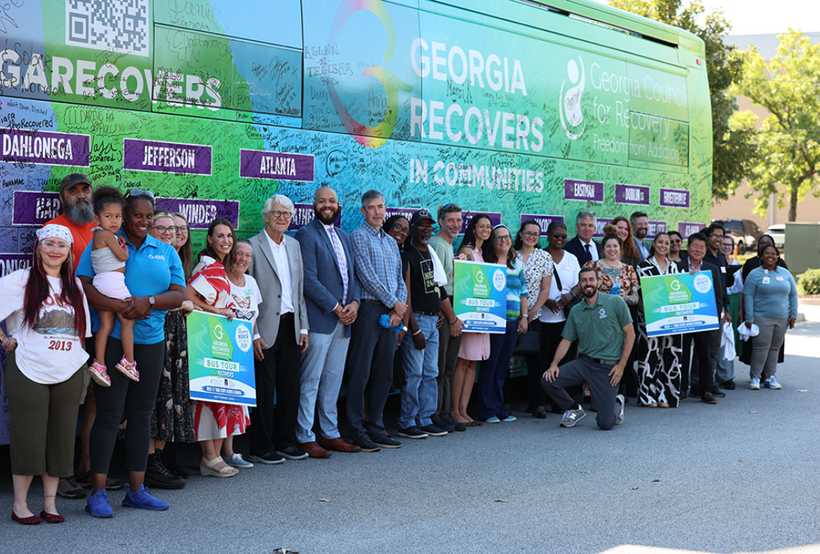
$2.5 Million Grant Targets Georgia's Overdose Crisis
As communities across Georgia continue to confront substance use disorders and the challenges of addiction recovery, researchers at Augusta University are expanding efforts to improve overdose prevention and access to treatment. The university's School of Public Health has received a three-year, $2.5 million grant from the Substance Abuse and Mental Health Services Administration to strengthen overdose prevention initiatives across several high-risk regions of Georgia. The project will involve partnerships with treatment and recovery organizations in Augusta and surrounding counties, northwest Georgia, south central Georgia and southeast Georgia. Aaron Johnson, PhD, Associate Dean for Research and Community Engagement and Director of the Institute for Public and Preventive Health, is helping lead the initiative. View his profile “Part of the project will be here in Augusta and surrounding counties with Serenity Behavioral Health as a partner, and we also identified three more high-risk areas in Georgia, which include six counties in northwest Georgia, six counties in south central Georgia and four counties in southeast Georgia. We will work with treatment and recovery organizations in those areas to address overdoses,” said Aaron Johnson, PhD, associate dean for research and community engagement and director of the Institute for Public and Preventive Health at SPH. The funding announcement coincides with Augusta University's recent hosting of the Augusta Recovers event, which brought together researchers, healthcare professionals, recovery advocates and community organizations to examine the barriers preventing individuals from accessing addiction treatment and recovery support. Among the concerns raised were shortages of recovery services in rural communities, difficulties recruiting healthcare providers and the importance of directing opioid settlement resources to underserved areas. Johnson emphasized that expanding treatment and recovery services beyond major urban centres will be essential to addressing the crisis. The initiative, recently featured in Jagwire, Augusta University's official news publication, highlights Dr. Johnson's work and the importance of collaboration among universities, healthcare providers, government agencies and community organizations in developing effective approaches to overdose prevention. As communities across the country look for effective ways to address the opioid crisis, J. Aaron Johnson, PhD, is available to provide expert insight into overdose prevention, substance use treatment, rural healthcare challenges and evidence-based recovery strategies. To connect with Dr. Johnson for an interview or learn more about his research, visit his profile below.


In my last article, I wrote about couples retiring together. The dishwasher. The thermostat. The 1,500 Tuesdays. If you are retiring solo, you may have read it with a certain amount of satisfaction, thinking, Thank God I don't have to deal with that. Sorry. This week is about you. There are, admittedly, some advantages to retiring solo. Nobody questions why you bought another pair of golf shoes. The thermostat stays exactly where you left it. If the dishwasher is loaded incorrectly, the list of suspects is short. You can eat dinner at 4:30 or 9:00, watch whatever you want on television, and go to bed with a book without anyone asking when you are going to turn out the light. But retiring solo has its own complications. While you may be living without a partner, you aren't retiring without relationships. In fact, those relationships may matter more than ever. Adult children, siblings, friends and neighbours begin to take on different roles in our lives. Work friendships fade. Social circles shift. Things we once did as two may now have to be done as one. Underneath all of that is a question we don't spend nearly enough time thinking about when we plan for retirement: Who are your people? When Solo Wasn't the Plan There are people who retire solo by choice, people who arrive there after a divorce, and people who would give almost anything not to be there at all. Statistics Canada reported that 4.4 million Canadians lived alone in 2021, representing 15 per cent of adults. Living alone becomes increasingly common as we age (Statistics Canada, 2022). But numbers can only tell us how many people live alone. They can't tell us how they got there, and that matters. For someone who has lost a spouse after decades together, solo life isn't necessarily an exciting new chapter of independence. There is an empty chair at dinner and a quietness in the house that wasn't there before. But I suspect some of the hardest losses are much smaller. There is nobody to ask whether you fed the dog, what time you want to leave, whether you need anything from the grocery store, or what you feel like having for dinner. Nothing profound, just thousands of tiny conversations that made up a life. The older I get, the more I realize how much of life unfolds in those unremarkable moments. We photograph birthdays, weddings, anniversaries and vacations, but sometimes the person drinking coffee across from you on an ordinary Tuesday morning turns out to be the event. For anyone who finds themselves alone because somebody died, I think we need to be careful with our cheerful retirement advice. There is no timetable for rebuilding a life, and grief doesn't respond well to project plans, motivational sayings or well-meaning people telling you it's time to "get out there." Eventually, though, perhaps the question begins to change. "How do I live without this person?" can slowly become "What might my life become now?". That isn't replacing anyone. It's continuing, carrying them with you. Living Alone and Being Lonely Are Not the Same Thing You can live alone and have a wonderfully full life. You can also be married and profoundly lonely. A second toothbrush has never been a reliable measure of human connection. Still, retirement removes something many of us didn't realize work was providing: a surprising number of people. Think about an ordinary working day. Someone says good morning. Someone asks about your weekend. There is coffee, hallway chatter, gossip, meetings, lunch, and the person who drops by your office to tell you something that absolutely could have been an email. None of those interactions seemed particularly important at the time, but together they created the social fabric of the day. Then one Friday you retire, and come Monday morning, most of it is gone. Research supports what many retirees discover instinctively. Social isolation and loneliness are related but not the same. Low social participation among older Canadians has been linked to poorer health and a higher risk of mortality. In other words, those seemingly insignificant interactions may not be so insignificant after all (Gilmour & Ramage-Morin, 2020). I see a version of this in the fitness classes I teach. People don't just arrive, exercise and leave. They come early. They talk. They know who has a bad knee, who just got back from Florida, who has a grandchild who got into university, and who hasn't shown up for a couple of classes. Sometimes I think the ten minutes before class are every bit as important as the class itself. Someone is expecting you, and there is something wonderfully ordinary and incredibly important about that. Who Are Your People? Couples tend to have a built-in default. Something happens, and you tell your spouse. You need a ride home after a medical procedure, and there is an obvious candidate. You have a terrible day, hear a ridiculous story, or get wonderful news, and you know who you're going to call first. When you're solo, that role can gradually shift to a best friend, sibling, neighbour or adult child. Before long, one person has become the emergency contact, travel companion, dinner date, sounding board, tech support and the person expected to answer the phone when something goes bump in the night. That's a fairly demanding job description. Your daughter may adore you, yet not want to be your entire social life. Your best friend may love travelling with you, but occasionally want to travel with someone else. Your sister may happily drive you home from a colonoscopy. Friendship has limits, but apparently that isn't one of them. Maybe the answer isn't to find your person at all. Maybe it's to find your people. Who could you call at 2 a.m.? Who makes you laugh? Who would notice if you hadn't heard from them for a few days? Who knows when you need company and when you need to be left alone? Who can tell you you're being ridiculous and still survive the experience? We have spent decades being told to diversify our investment portfolios. I think our relationship portfolios deserve the same consideration. And there is another side of independence that we don't talk about enough. Independence is wonderful, right up until the day you get tired of it. There is a difference between being perfectly capable of handling something yourself and occasionally wishing you didn't have to. The furnace breaks, the car won't start, or you have an important medical appointment, and, of course, you can deal with it. Sometimes what you miss isn't help. It's backup. Someone who simply says, "I'll come with you," even though you both know you could go alone. Your Children Love You. They Also Have Lives. Retirement can rewrite the relationship with adult children, too. You retire, and they hear: Mom has time. Suddenly there are grandchildren to pick up, dogs to sit, deliveries to receive, and errands that somehow land on the desk of the person who no longer has one. Much of this can be wonderful. Having more time for family is one of retirement's great gifts, and being involved with grandchildren can bring enormous joy and purpose. But helping can quietly become being on call, just as needing companionship can quietly become expecting your children to provide it. Nobody has necessarily done anything wrong. The relationship changed, and nobody held a meeting. So maybe hold one. Your children can be an important part of your retirement without being responsible for creating it, and you can be important in their lives without automatically becoming the unpaid Uber driver, dog walker, daycare provider, or the person who waits between noon and 5:00 for the new dishwasher to arrive. Love each other. Help each other. Just don't confuse retirement with unlimited availability. Learning to Occupy the World as One Then there are all the little firsts. The first restaurant. The first trip. Maybe, eventually, the first date. You walk into a restaurant and say, "Table for one." The host smiles brightly. "Right this way," and off you go, past the tables by the window, past the cozy booth, and around the corner to a tiny table directly outside the noisy kitchen door. Apparently, this is where they keep the single people. "Table for one" can be funny until you remember that, for some people, it used to be a table for two. But I wouldn't give up restaurants because of it. Sit at the bar. Bring a book. Become a regular somewhere. Ask another solo friend to join you sometimes, and other times don't. Take yourself somewhere nice because good food and a decent table aren't benefits reserved for couples. I especially wouldn't overlook the neighbourhood diner or watering hole. These places often become little communities. One of the women in my spinning class is in her 80s and started a euchre club that became so popular that she now has a waiting list. I love that story because she didn't wait for someone to invite her into a social life. She created one and then invited everybody else. Sometimes community isn't something you find. It's something you build. Travel requires a little nerve, too. There is something liberating about choosing where you go, when you get up, and whether visiting six museums in one afternoon sounds fascinating or like a human-rights violation. Then you discover the single supplement, the travel industry's charming way of saying, "Congratulations on your independence." That will be another $1,800. There may also be a moment when you see something beautiful and instinctively turn to share it with someone who isn't there. That's the part the travel brochures don't mention. But there may also come a morning when you realize you've travelled to somewhere you wanted to go, figured it out, and had a wonderful time. Both feelings can be true. And then, perhaps, there is dating. If you're my vintage, you may remember the old Canadian Togethers dating-service commercial: "Adult, alone, unattached? Tired of the bar scene?" I can practically hear it. Back then, joining a dating service seemed positively daring. Today, strangers can reject one another from the comfort of their sofas with a single swipe. Apparently, this is progress. Some people would rather have another colonoscopy. Others discover, happily, that companionship, romance and sex did not get the memo about retiring at 65. Enjoy it. Take your time. Keep your head along with your heart. Being 70 does not make everyone trustworthy. Age brings wisdom, just not universally. Make Yourself Expected Somewhere The more I think about solo retirement, the less I believe the goal is to ensure you're never alone. Solitude can be wonderful. There is pleasure in having your own space, your own routines, and no one asking why you're eating cereal for dinner. What matters is having somewhere you belong. Become a regular at the coffee shop where they know your order. Join the fitness class where someone notices when your bike is empty. Volunteer somewhere that counts on you. Make the lunch date. Know your neighbours. Join the euchre game, or, like my spinning participant, start one. Put things on the calendar, because Tuesday can quickly become Friday when nobody expects you anywhere. And don't just build a life full of people you can call when you need something. Build one where people call you. Be the person who remembers a birthday, walks someone's dog when they're sick, makes the lasagna, gives a ride, listens to the story, or notices when someone else hasn't shown up. There is enormous purpose in being needed. Connection isn't simply having a support system. It's participating in other people's lives and allowing them to participate in yours. The Public Health Agency of Canada identifies retirement, illness and the loss of a spouse as later-life transitions that can strain our sense of independence and connection, and encourages older adults to stay connected with family, friends, health professionals and community organizations (Public Health Agency of Canada, n.d.). That sounds very official. I would translate it more simply: keep showing up. And if your world starts to feel smaller, pay attention. If loneliness becomes persistent, tell someone. Call a friend. Talk to your doctor. Look for a community group. In Canada, 211 is a free and confidential service that connects people with government and community-based, non-clinical health and social services. In most of Canada, you can simply dial 2-1-1 (211 Canada, n.d.). Asking for company isn't imposing. You may find the other person was hoping someone would call, too. We spend a lot of retirement planning asking whether we have enough money. If you're retiring solo, perhaps there are two other questions worth asking just as seriously: Who are my people? And whose person am I? Maybe that's the real difference between retiring solo and retiring alone. One describes who lives in your house. The other describes how you live in the world. So build your community before you desperately need one. Be brave enough to walk into the restaurant, book the trip, take the class, call the friend, and occasionally admit you'd like some company. Create reasons to get dressed in the morning and places where someone notices your arrival. More importantly, create a life in which your absence would leave a small hole in someone else's day. And if the restaurant tries to seat you beside the kitchen, smile and ask for the table by the window. The couples get the dishwasher. Surely we can give the solos the good table. Don’t retire... ReWire! Sue My Book is Available for Order: I hope you will consider ordering a copy of Your Retirement Reset for yourself, a friend, or someone you love. Published by ECW Press and is available through Indigo or Amazon and McNally Robinson. If you like supporting Canadian booksellers, check with your local independent bookstore too. Most can order it.

Two years after the 2024 election, where does civil discourse stand?
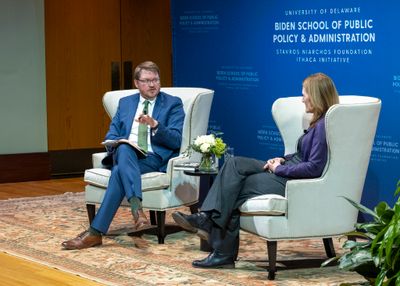
Election season has brought the expected vicious political campaign ads, heated online disagreements and difficult dinner table conversations with family and friends. But the University of Delaware’s Timothy Shaffer says there’s still room for civil discourse. Shaffer, UD’s inaugural Stavros Niarchos Foundation (SNF) Chair of Civil Discourse, studies how people can engage across significant differences while maintaining the relationships and democratic institutions that make disagreement possible. As chair of UD's SNF Ithaca Initiative, Shaffer works with students, educators and civic leaders to develop and practice constructive engagement across differences. He can comment on the following through the lens of the first midterm election since the vitriolic 2024 general elections. • What has changed since 2024: How have the past two years affected the way Americans talk about politics, disagreement and democracy? • Polarization and dialogue: Is political disagreement itself the problem, or is the greater challenge engaging constructively across differences? • The role of disagreement: Why civil discourse doesn't require consensus and how listening to competing perspectives can strengthen democratic engagement. • Politics and personal relationships: How to navigate political differences with family, friends, neighbors and colleagues without letting disagreements become personal. • Social media and the 2026 election: How online environments shape political conversations, what Shaffer expects as Election Day approaches, and how people can engage more constructively across differences. To reach Shaffer and arrange an interview, visit his profile page and click on the "contact" button. Interested reporters can also send an email to MediaRelations@udel.edu.

Augusta University Researchers Uncover New Clues to Dangerous Pregnancy Complication
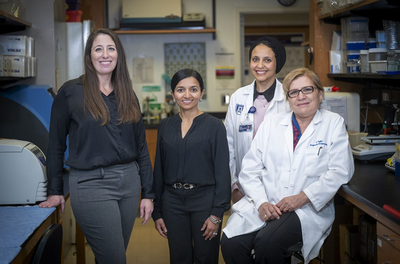
(From left) Jessica Faulkner, PhD, Champa Woodham, MD, Mona Elgazzaz, PhD, and Safia Ogbi (research manager in Faulkner’s lab) A significant discovery by researchers at Augusta University's Medical College of Georgia is shedding new light on preeclampsia, a potentially life-threatening pregnancy complication affecting an estimated 2% to 8% of pregnancies worldwide. Published in Arteriosclerosis, Thrombosis, and Vascular Biology, the research reveals that a protein commonly used to assess preeclampsia risk may also contribute directly to the disease by triggering excess production of the hormone leptin. The discovery establishes a previously unknown connection between two biological markers long associated with preeclampsia and could help researchers identify new approaches to treatment. Jessica L. Faulkner, PhD, associate professor in the Department of Physiology at the Medical College of Georgia and the study's lead author, explained the importance of the findings. “Preeclampsia patients have elevated levels of both sFlt-1 and leptin, but the relationship between those two factors has remained unclear. Our findings show that sFlt-1 directly increases leptin production and suggest that leptin may be an important link between placental dysfunction and the cardiovascular complications of the disease.” Using human placental tissue, cultured cells and animal models, the research team demonstrated that elevated levels of sFlt-1 increase leptin production, contributing to the blood vessel dysfunction characteristic of preeclampsia. When researchers blocked leptin signaling in pregnant mice, much of that dysfunction was reversed. The research was made possible through collaboration between Faulkner's laboratory and the Medical College of Georgia's Maternal-Fetal Medicine program, led by Champa Woodham, MD. Woodham emphasized the importance of connecting laboratory discoveries with clinical care. “Preeclampsia remains one of the most challenging conditions we manage in maternal-fetal medicine because patients can progress from appearing clinically stable to becoming critically ill very quickly. What makes this research particularly exciting is that it takes sFlt-1, a biomarker we are already using clinically to help assess a patient’s risk and gives us a deeper understanding of how it may actually contribute to the disease process.” Mona Elgazzaz, MD, PhD, a postdoctoral fellow in Faulkner's laboratory and the study's first author, highlighted the potential treatment implications. “Uncovering the crosstalk between sFlt-1 and leptin is crucial because it introduces new potential targets for treating preeclampsia by modulating the proteins that regulate leptin production.” The findings are especially significant because current treatment options remain limited, with delivery of the placenta remaining the only definitive cure. Although additional research is needed before these discoveries can translate into clinical treatments, the findings offer a promising new direction for understanding and potentially treating a condition that continues to threaten maternal and infant health worldwide. The study was supported by the National Institutes of Health and the American Heart Association. For journalists covering maternal health, pregnancy complications, cardiovascular disease and emerging medical research, Augusta University's research team offers important expertise on the science behind preeclampsia and the potential implications of this discovery. To learn more or arrange an interview with the researchers, contact AU's External Communications Team mediarelations@augusta.edu to arrange an interview today.

GLP-1 medications such as Ozempic, Wegovy and Zepbound are transforming treatment for obesity and diabetes, with some now being used to treat obstructive sleep apnea. But could these increasingly popular medications also affect your teeth and gums? A researcher at Augusta University's Dental College of Georgia is investigating that question, highlighting a potential connection between GLP-1 medications, sleep apnea treatment and oral health. John C. Comisi, DDS, DMD, interim chair and professor in the Department of General Dentistry, recently published a review in Clinical Oral Investigations examining how obstructive sleep apnea and GLP-1 medications may influence the oral microbiome — the complex community of bacteria that helps maintain healthy teeth and gums. A New Question About GLP-1 Medications Obstructive sleep apnea can affect oral health through repeated oxygen disruptions, inflammation, mouth breathing and dry mouth. Treating the condition could improve some of these problems, but GLP-1 medications may introduce additional considerations. “OSA affects much more than sleep,” Comisi said. “The changes that occur throughout the body can also change the environment in the mouth. As we increasingly use medications to treat OSA, we need to understand what those treatments may mean for oral health.” Comisi's review suggests that successful treatment of sleep apnea could improve the oral environment by reducing mouth breathing, acid reflux and other contributing factors. However, reports involving semaglutide have also raised questions about dry mouth and changes in saliva, which plays an important role in protecting against tooth decay and gum disease. “There are potentially competing effects happening at the same time,” Comisi said. “Treating sleep apnea could improve several conditions that contribute to an unhealthy oral environment, while the medication itself could potentially affect salivary function. We simply do not have the prospective human studies yet to know what the overall effect will be.” The review, featured in an Oct. 6 Augusta University Jagwire article, calls for additional research tracking patients using GLP-1 medications, including changes in saliva, oral bacteria, cavities and gum disease. It also highlights the importance of communication between dentists and other health care providers, particularly when patients taking GLP-1 medications require dental procedures involving sedation or general anesthesia. With GLP-1 medications becoming increasingly common, understanding their broader effects on oral health is an emerging area of research with important implications for patients and dental professionals. John C. Comisi, DDS, DMD, is interim chair and professor in the Department of General Dentistry at Augusta University's Dental College of Georgia. His expertise provides a valuable perspective on the intersection of dental health, medication use and emerging approaches to patient care. If you're interested in speaking with Dr. John Comisi about GLP-1 medications, sleep apnea, dry mouth, oral health and the implications of these treatments for dental care, contact AU's External Communications Team mediarelations@augusta.edu to arrange an interview today.

Expert Insight: Tariff Turmoil Is Changing How Businesses Price Their Products
Tariffs are no longer simply a trade policy issue. They are becoming a significant challenge for businesses trying to manage costs, protect profits and remain competitive in an increasingly unpredictable global marketplace. A recent Reuters Plus feature, Why Tariff Volatility Makes Pricing a Forever Process, produced for global consultancy Simon-Kucher, examines how rapidly changing tariffs are forcing companies to continuously reassess their pricing strategies and supply chains. Among the experts featured is Anna Nagurney, Eugene M. Isenberg Chair in Integrative Studies at the Isenberg School of Management at the University of Massachusetts Amherst. View her profile Nagurney, an internationally recognized expert in supply chain networks and disruption management, points to the extraordinary pace of trade policy changes. She estimates that U.S. tariff regulations changed approximately 50 times during 2025, creating uncertainty for manufacturers, wholesalers, retailers and consumers. "The speed and uncertainty created a great deal of challenges for manufacturers, wholesalers, retailers and, of course, consumers." Why Even Domestic Businesses Are Vulnerable One of the article's central messages is that businesses do not have to import products directly to feel the impact of tariffs. Higher costs can spread throughout interconnected supply chains, affecting suppliers, transportation networks and ultimately consumers. Nagurney emphasizes the importance of viewing supply chains as networks rather than simple, linear systems. By identifying critical suppliers, examining vulnerabilities and preparing for potential disruptions, businesses can make better decisions before costs escalate. She also cautions that smaller companies may struggle to absorb tariff-related increases without jeopardizing their financial stability. As businesses face continued uncertainty, Nagurney can provide valuable perspective on how tariffs influence supply chains, consumer prices, business competitiveness and the broader economy. An experienced commentator on global supply chain disruptions, Nagurney has provided analysis to major news organizations, including The New York Times, Associated Press, NPR, The Washington Post, The Boston Globe and The Wall Street Journal. If you're interested in speaking with Anna Nagurney about tariffs, supply chain disruptions, pricing pressures, international trade and economic uncertainty, simply click on her profile to arrange an interview today.


Blood Clots Can Sideline Elite Athletes. Could Microrobots Offer a New Approach?
Blood clots have sidelined or ended the careers of several elite athletes, drawing attention to a potentially life-threatening condition. The University of Delaware's Sambeeta Das is part of a team that has developed tiny, magnetically guided robots that could offer a new approach to removing such blockages. The list of athletes affected by blood clots includes NBA champion Chris Bosh, whose career ended after recurring clots; tennis great Serena Williams, who survived two life-threatening pulmonary embolisms; San Antonio Spurs center Victor Wembanyama, who was shut down in February 2025 when deep vein thrombosis was discovered in his right shoulder; and Philadelphia Eagles quarterback Jalen Hurts, whose recent diagnosis of blood clots in his lungs has drawn national attention. In a published study, Das and her colleagues demonstrated that magnetic microrobots could mechanically break apart clusters of human liver cancer cells and clear them from narrow channels designed to model blood vessels. The robots used mechanical forces rather than drugs or chemicals to disperse the clusters. The research offers an early proof of concept for using microrobots to remove unwanted cellular material in confined spaces. Das can discuss how the technology works, its potential application to blood-clot removal, the challenges of targeting blockages inside the body, and what further research is needed to explore its use in patients. To contact Das and arrange an interview, visit her profile and click the “Contact” button. Reporters can also email MediaRelations@udel.edu.

Are Small-Dollar Political Donations Making American Politics More Divisive?
Small-dollar political donations have long been celebrated as a way to reduce the influence of wealthy contributors and give ordinary Americans a greater voice in elections. But new research suggests that the growing influence of these donors may also be contributing to political polarization and rewarding candidates who generate attention rather than build consensus. In an article published in The Atlantic, titled Small-Dollar Campaign Donors Are Hurting the Political System, journalist Idrees Kahloon examines how the explosion of grassroots political fundraising has changed American campaigns, drawing attention to research challenging the assumption that small donations necessarily produce healthier democratic outcomes. Among the researchers examining this trend is Ray La Raja, professor of political science and co-director of the UMass Amherst Poll at the University of Massachusetts Amherst. View his profile La Raja is co-author, with Zachary Albert of Brandeis University, of the 2026 book Small Donors in US Politics: Myth and Reality, which examines who contributes to political campaigns, what motivates their donations and how their growing influence affects elections and political representation. Their research finds that small-dollar donors are often more politically engaged, more partisan and more ideologically committed than the average voter. While these contributions can broaden participation in campaign financing, they can also encourage candidates to pursue national attention and emotionally charged fundraising appeals rather than focus on local concerns or legislative compromise. The findings raise important questions about whether the growing influence of small donors is strengthening political representation or creating new incentives for polarization. The issue is particularly relevant ahead of the 2026 midterm elections, as candidates and political parties compete for campaign contributions in an increasingly nationalized fundraising environment. La Raja's work also examines the role of political parties in campaign finance and whether reforms designed to reduce the influence of large donors have produced unintended consequences. With campaign fundraising, political polarization and democratic accountability increasingly connected, La Raja offers journalists a research-based perspective on one of the less understood forces shaping American elections. If you're interested in speaking with Ray La Raja about campaign finance, small-dollar political donations, political polarization, election reform and the influence of money on American democracy, simply click on his profile to arrange an interview today.